I'd like to spank the Academy

Archive for the ‘Historical’ Category

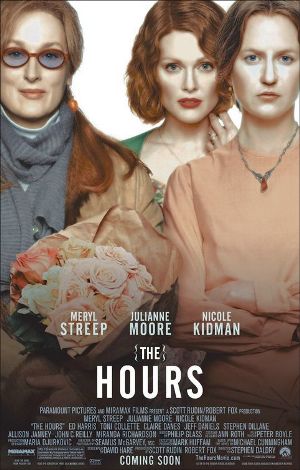
The Hours (2002)

The_Hours_posterDirected by Stephen Daldry

When I saw the poster for this movie, my first thought was, “Wait. It says Nicole Kidman is in this movie, but none of those three women are Nicole Kidman. Why isn’t she on the poster, and why doesn’t the third lady on the poster get higher billing?” So I looked it up on IMDb and realized that the makeup people did an amazing job; they managed to make Nicole Kidman look frumpy.

So what’s the story? Three different women from three different time periods have three parallel days that are all connected by parties, mental illness, and Virginia Woolf’s novel Mrs. Dalloway. I realize that doesn’t sound terribly exciting, but it’s a hard movie to sum up.

The Good: Like I said earlier, the makeup artists were amazing. They did a good job making Nicole Kidman look like Virginia Woolf, but they also did a fabulous job of aging Julianne Moore fifty years. Apparently, they weren’t eligible for an Oscar because a little bit CGI was used to make Nicole Kidman’s false nose look flawless, but still. Major kudos to them.

Major kudos also goes to the editors. The director is telling three different stories, but he jumps around from story to story often. The editing had to make that feel seamless and show the parallels in the different stories. It was very well done.

The soundtrack was beautiful, a lovely piano score. I thought it sounded very similar to the music from The Truman Show; sure enough, Philip Glass did the scores for both. But even though it wasn’t the most original, it was so lovely that it made me want to find some sheet music and learn it.

The acting was excellent. Nicole Kidman completely inhabited Virginia Woolf. Julianne Moore played a frustrated 1950s housewife, and Meryl Streep gave a moving performance as the woman of today (or 2001. But that was today when the movie was made.). John C. Reilly played Moore’s incredibly devoted husband, and Ed Harris was a poet dying of AIDS, a former lover of Meryl Streep’s character. Miranda Richardson felt completely natural as Virginia Woolf’s sister Vanessa.

The Bad: This movie is based on a book (which I haven’t read, so I can’t compare anything), and it shows. All three main character women spend a lot of time staring into space. I’m sure that in the novel, they are having deep thoughts, but those thoughts don’t always make it across on the screen. That got annoying.

I also felt like the three stories didn’t fit together as well as they should. Meryl Streep’s character had many parallels to Mrs. Dalloway, even down to the names, and her story dovetailed neatly with Julianne Moore’s, but the only connection that Julianne Moore had to Virginia Woolf was that she was reading Mrs. Dalloway, and I wanted it to be better than that.

The Ugly: Confession time: I struggle with depression. I have been suicidal in the past. I am a woman who doesn’t quite fit in her society. And even with all that, I never felt a deep connection with this movie. Maybe it was because we couldn’t get a deep look at these women’s inner thoughts, but it felt so shallow. The only woman I really felt like we got a good, sympathetic look at was Virginia Woolf; I would have happily watched an entire Virginia Woolf biopic starring Nicole Kidman and Stephen Dillane because they were the only very well-developed characters. That shouldn’t happen in a character-driven movie.

Oscars Won: Best actress in a leading role (Nicole Kidman).

Other Oscar Nominations: Best picture; best actor in a supporting role (Ed Harris); best actress in a supporting role (Julianne Moore); best director; best writing, adapted screenplay; best costume design; best film editing; best music, original score.
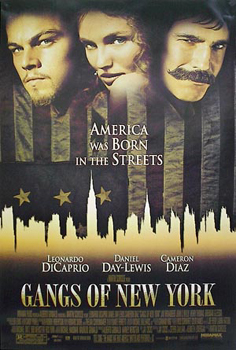
Gangs of New York (2002)

gangsofnyDirected by Martin Scorsese

There were two discs in the DVD case when I picked this movie up from the library, but I figured that one was the movie and one had special features like most DVDs do. Nope! I was wrong. For whatever reason, this movie is spread over two DVDs, with parts of the movie and special features on both discs. Yes, Gangs of New York is a long movie, but it’s shorter than Saving Private Ryan and The Thin Red Line, and they each managed to be on one disc. I kind of get the feeling that whoever made that decision wanted to make the movie feel more epic, but it really just made it seem long.

So what’s the story? In New York City in 1846, two rival gangs battle it out for supremacy. Bill the Butcher, the leader of the American-born Natives, kills the Priest, leader of the Irish Dead Rabbits. Sixteen years later, Amsterdam, the son of the Priest, comes back for revenge.

The Good: The set direction was fabulous. Every little detail combined to make me feel like I had been transported back to the 1860s. I thought the costume design was good, too, but this movie made me realize that I know very little about historical clothing when it comes to the poor, so I could be wrong on this one. But I can’t imagine anyone would put men in those ridiculously ugly plaid trousers unless it was accurate.

The story was good one. Revenge plots are always exciting, and there were some good moments where Amsterdam struggled between admiration of Bill the Butcher and his desire for revenge.

The best acting in the movie was done by men in supporting roles. The standout actor was Brendan Gleeson. He didn’t have a lot of screen time in his role as an Irish mercenary unaffiliated with any gang, but he played his part so convincingly. His scenes were among the best in the movie. Jim Broadbent as real-life corrupt politician Boss Tweed was hilarious, and Gary Lewis made a very intense Irishman in the wrong gang. The only lead actor who did a very good job was Daniel Day-Lewis. His performance was sometimes over the top, but so was his gang-leader character, so it worked.

The Bad: Leonardo DiCaprio. His acting wasn’t terrible all the time, but his Irish accent came and went, especially when he narrated. Were there no actors that were actually Irish that could have played the part? It would have helped a lot.

The story followed Amsterdam as he followed his plan to get revenge on Bill the Butcher. Everything led up to that, and then the climax was actually about the New York City draft riots of 1863. Yes, the draft and the dissatisfaction of the poor people about it were touched on throughout the movie, but not enough for it to be the climax. I thought that that was kind of sloppy storytelling. Also, sixteen years after 1846 would have been 1862, not 1863, so they got their year wrong, too.

Also, what were so many Chinese people doing in New York in the 1860s? Especially Chinese women? That rang false. I wouldn’t be surprised to see Chinese immigrants on the West Coast at the time, but I don’t think there were very many in New York.

The Ugly: When I told my younger brother about my quest to watch these movies, he said he’d seen some nominees from 2002 and that Gangs of New York was a pretty good movie – except Cameron Diaz ruined it. Now that I’ve seen it, I have to agree. I feel like Amsterdam was so focused on revenge that he wouldn’t have the emotion left over to fall in love. If he did fall in love, it would have to be with someone amazing. Cameron Diaz never made me feel like Jenny Everdeane was anything special. She spent most of the movie looking either smug or confused. Maybe another actress could have done a better job, but since Cameron Diaz was chosen, that part of the story should have been left out altogether.

Speaking of leaving things out…This movie is almost three hours long, and I felt every second of it. It actually took me over four and half hours to watch because I kept falling asleep and having to find my place again. Granted, I had a cold, but still. Other three-hour movies have managed to keep my attention. Saving Private Ryan is actually a little bit longer than Gangs of New York, but I was surprised to find that out because the time flies by in Saving Private Ryan. I’m not asking for non-stop action; I like character development and plot intricacies. But this movie had too many scenes that didn’t move the action along or even really develop the characters. It needed to be cut down.

Oscars Won: None

Oscar Nominations: Best picture; best actor in a leading role (Daniel Day-Lewis); best director; best writing, original screenplay; best cinematography; best art direction – set direction; best costume design; best film editing; best sound; best music, original song (“The Hands That Built America”).

Doctor Dolittle (1967)

doctor dolittleDirected by Richard Fleischer

An actual conversation:

Me: Guess what I watched last night! Doctor Dolittle! The one with Rex Harrison.

My mother (in a horrified voice): WHY?

Me: For my blog. It was nominated for best picture.

My mother: Well, you really took one for the team on that one.

Contrary to the way this conversation makes it sound, Doctor Dolittle is not an evil movie. It is, however, a rather tedious movie in which forty-five minutes’ worth of plot is stretched to fill two and half hours.

So what’s the story? Dr. Dolittle is a kindly country doctor who learns to talk to animals with the help of his parrot, Polynesia. Because he can communicate with animals better than humans, he decides to be a vet instead of a doctor. For reasons not made clear in the movie, he wants to find the Great Pink Sea Snail and talk to it, so after he gets enough money and breaks out of the insane asylum, he goes on a voyage to find it.

The Good: As I watched this movie, I kept thinking what a nightmare it must have been to make. It was the 1960s, so the animals aren’t CGI or puppets, but real live animals. If you count the ducks and the goats and the pigs and the cows and the bears and the ridiculously cute lion cubs and all the other animals, there must be hundreds of animals.  I can’t even imagine trying to orchestrate such a thing. That alone is very impressive.

There was some fun humor. I even laughed out loud a couple of times. I enjoyed the song that Emma sang as she was storming away from meeting Dr. Dolittle for the first time.

I will also admit that Rex Harrison did a good job. Although on the surface the role of Dr. Dolittle is quite similar to that of Henry Higgins in My Fair Lady (a middle-aged linguist who doesn’t get on well with people), he didn’t play the roles the same way. Dr. Dolittle is much kinder and gentler, and it showed in Harrison’s face.

The Bad: There wasn’t much of a story. The movie kind of meandered around various vignettes. There’s the house scene, where we and Stubbins are introduced to the doctor and his many animal friends. There’s the ugly scene between Bellowes and the doctor. There’s the courtroom scene. There’s the breaking out of jail scene. There’s the voyaging scene and the island scene. I remember being amused by the book when I was a child, which makes me think that there was good source material, but the writers couldn’t seem to find a straightforward linear story from it.

Also, the love triangle was…odd. I could see no reason for Emma to fall for Dr. Dolittle, the middle-aged linguist, over Matthew, the charming young Irishman. I don’t care what My Fair Lady teaches us. Attractive young women do not fall in love with middle-aged linguists who don’t get on with people and can’t sing. I don’t buy it.

The Ugly: It was two and one-half hours long. With fourteen mediocre musical numbers. Enough said.

Oscars Won: Best effects, special effects; best music, original song (“Talk to the Animals”).

Other Oscar Nominations: Best picture; best cinematography; best film editing; best sound; best music, original music score; best music, scoring of music, adaptation or treatment; best art direction-set direction.

A Curiosity: Richard Attenborough is in this movie for about as long as Judi Dench is in Shakespeare in Love, but Richard Attenborough sings a song. He got a Golden Globe for best supporting actor for this. I didn’t know he could sing. And I’m not sure that what he did counted as being a supporting actor. I wish I knew how these things are judged.

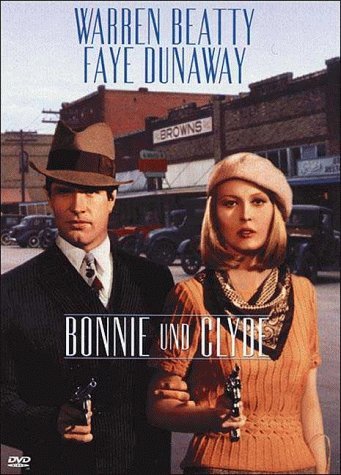
Bonnie and Clyde (1967)

bonnie and clyde posterDirected by Arthur Penn

When I was growing up, my family had a book of pictures from classic Hollywood films. One of those pictures was from Bonnie and Clyde; it interested me because it was a picture of a girl with a great hat (that beret!) holding a gun standing in front of a cool old car. I wondered why she was doing that. Later on, I found out about the bank robbers from the 1930s, but still didn’t know very much about this movie going in.

So what’s the story? Bonnie, a young waitress in 1930s Texas, catches Clyde trying to steal her mother’s car one day. Rather than turn him in, Bonnie goes with Clyde into town. When Clyde points out to her that she hates her life and wants more, Bonnie decides to run away with him. They start robbing banks and stores together, always managing to keep one step ahead of the police. Clyde’s brother Buck and Buck’s wife Blanche come to visit and become part of the gang.

The Good: The cast was very good. I had never seen Faye Dunaway in anything. I knew her name, but I hadn’t ever seen any of her movies. She was fantastic as Bonnie. Estelle Parsons won an Oscar for her portrayal of Blanche, which I felt was well-deserved. She did a very good job as a woman who was not happy about associating with criminals at first, but then enjoying the lifestyle as long as the money came in. I grew up watching Gene Hackman in Hoosiers (often, because it was one of my dad’s favorite movies), so it was really fun to see him in such a different role.

The ending was one of the best endings I have ever seen. It wasn’t overdone or cheesy, which would have been easy to do. It was restrained and elegant instead. Perfect.

The Bad: The music got on my nerves. It was probably fairly authentic, but it felt more stereotypical to me – these were hicks from Texas, so they must listen to hick music.

Also, Faye Dunaway’s look was more 1960s than 1930s. I feel like that was a problem for a long time in historical movies, though, and everyone else looked right. I guess they just wanted the leading lady to look more glamorous than 1930s would have allowed.

The Ugly: I had no emotional connection to this movie. I understand feeling stifled by society’s expectations and wanting a bigger life, but going on a crime spree is not a good way to break out of the oppression of everyday life. The Barrow Gang killed lots of innocent people and stole from others. I know it was the Depression and money was scarce, but I’m sure the small town grocers they robbed were struggling, too. I felt no sympathy for Bonnie and Clyde whatsoever, and I hate that this movie made them seem almost noble for what they did.

Oscars Won: Best actress in a supporting role (Estelle Parsons); best cinematography.

Other Oscar Nominations: Best picture; best actor in a leading role (Warren Beatty); best actress in a leading role (Faye Dunaway); best actor in a supporting role (Gene Hackman); best actor in a supporting role (Michael J. Pollard); best director; best costume design; best writing, story and screenplay – written directly for the screen.

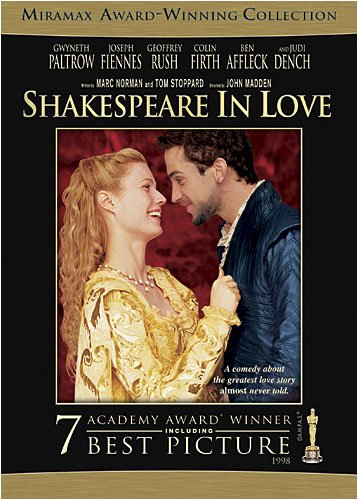
Shakespeare in Love (1998)

shakespeare in love posterDirected by John Madden

I hadn’t seen this movie when it first came out, so all I really knew about it was that according to everyone, it stole the best picture Oscar from Saving Private Ryan (which I also hadn’t seen). I think I was half expecting it to be terrible after all the outrage. And I know I am about to damn this movie with faint praise, but it was cute. There was nothing really wrong with it.

So what’s the story? Shakespeare, a young playwright with a good reputation, is struggling to write his next play. He finds a muse in Viola De Lesseps, a young woman so obsessed with the theater that she is willing to break the law and perform on stage disguised as a man. There are some misunderstandings and mishaps, but eventually Shakespeare writes his masterpiece Romeo and Juliet.

The Good: I loved the production design. I felt like it was a very full picture of Elizabethan England, from the formality of the court to the disgusting dirtiness of the streets. It felt very alive. It almost made me want to live in those times. Well, no. Really too dirty for my taste. But maybe visit!

The music! It was fun and upbeat and just…fit. Loved it.

The supporting cast was great. I’m not a huge fan of either Gwyneth Paltrow or Joseph Fiennes, but I loved everyone else. Imelda Staunton as the nurse was a huge favorite of mine, as was Geoffrey Rush in his role as a befuddled producer. Colin Firth was surprising as a slightly evil stuffed shirt nobleman, and I loved Mark Williams as the tailor who wanted to be an actor. Judi Dench was good in her expanded cameo as Queen Elizabeth, even though I don’t think that eight minutes of a movie is enough to count as a supporting role. I even liked Ben Affleck’s egotistical actor. The cast was really just stellar.

The Bad: The writers played around with history a little too much for my liking. Romeo and Juliet was written in the 1590s; no one was settling Virginia until the early 1600s. But since I feel like the filmmakers weren’t trying to make any kind of serious movie, but just present a fun alternative backstory to Romeo and Juliet, I suppose I can forgive them.

The Ugly: There’s nothing really ugly about this movie. It’s just cute and sweet. But I do have a little rant. Everyone thinks the ending of this movie is so sad. But guess what? It wouldn’t have lasted. And no one seems to understand that. Whatever the real Shakespeare was like, the character in this movie was a philanderer who fell in and out of love with ease, just like Romeo. Which has always bugged me about Romeo, incidentally. I guess I just have never felt that Romeo and Juliet was a particularly romantic play, so I carry those feelings over to this movie.

Oscars Won: Best picture; best actress in a leading role; best actress in a leading role; best writing, screenplay written directly for the screen; best art direction-set direction; best costume design; best music, original musical or comedy score.

Other Oscar Nominations: Best actor in a supporting role (Geoffrey Rush); best director; best cinematography; best sound; best film editing; best makeup.

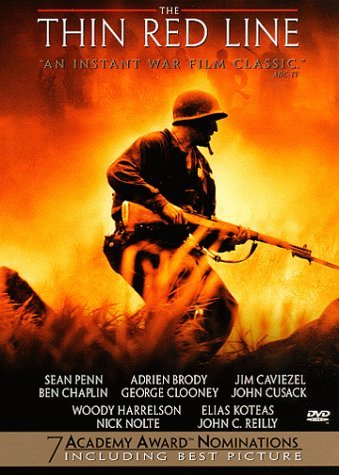
The Thin Red Line (1998)

Thin Red Line posterDirected by Terrence Malick

When the Criterion Collection DVD started off with a message from the director suggesting that it be played loud, I thought two things. First, Terrence Malick has never lived in an apartment building with neighbors who get mad over the smallest noise. (Seriously. My neighbors complained to the landlord last week when I was watching Parks and Recreation reruns. At nine o’clock.) Second, Terrence Malick has control issues. He obviously cares very much about his movie, but he doesn’t seem to realize that once it is out in the world, people will do what they please with it.

So what’s the story? This movie doesn’t exactly have a cohesive, concise storyline. It follows the progress of the Battle of Guadalcanal on the Solomon Islands during World War II, but through the points of view of many soldiers.

The Good: There were excellent performances from many people. Elias Koteas as the sympathetic captain and Ben Chapin as the man desperately in love with his wife were the ones who stood out for me, but that’s possibly because I sympathized with their characters the most. Nick Nolte was great as a slightly bitter career Army officer, Jim Caviezel fantastic as always as a lowly private, Sean Penn convincing as a crusty sergeant.

After I watched the movie, I did some research and found out that if Terrence Malick had had his way, this movie would have been six hours long. So I’m also going to give the editors props for cutting it down to the more manageable three hours.

The movie was beautiful, but that was a double-edged sword for me. I have a feeling that soldiers running away from the enemy don’t tend to notice the giant lizards clinging to trees and the flying foxes hanging in the branches overhead. Maybe I’m wrong. (Please tell me if I’m wrong; if you have experience with situations like this and you did notice, let me know!)

The Bad: They had Adrian Brody and he got to do nothing! All he did was look terrified in various positions: standing and looking terrified, crouching and looking terrified, kneeling and looking terrified. He’s such a good actor; it made me crazy that he didn’t really have a story.

I didn’t like the music, either. Yes, it was nice music (Hans Zimmer, even!), but it never seemed to underscore what was going on. I understand the concept of using music that contrasts the action to make it stand out starkly, but this movie didn’t do that for me. The music just made me think that they were trying to glorify war, like when glorious music played as the soldiers charged up the hill. The music that played as the American soldier told the Japanese soldier that the birds were going to come and eat him was just felt off-kilter. Much of the music did.

The Ugly: This movie was three freaking hours long. It got boring. There were too many characters who could be called main characters, so the movie wasn’t really about anyone. It was just a rather nebulous collection of things that happened to a bunch of people who were in the same place at the same time. I felt like this was a movie made to impress other movie makers, not for the general public. I have a list of works of art in my head that I can appreciate as being well done, but which I personally did not like. This movie has joined that list.

Oscars Won: None

Oscar Nominations: Best picture; best director; best writing, screenplay based on material previously produced or published; best cinematography; best sound; best film editing; best music, original dramatic score.

Saving Private Ryan (1998)

saving private ryan posterDirected by Steven Spielberg

 As I sat watching the battle for the bridge at the end of this movie for the second time, I couldn’t hold back my tears. But it wasn’t because the movie characters were dying; it was because similar scenes actually happened. I couldn’t help but wonder what war does to the souls of men, and I cried for the brave men who fought and died a bit inside each time they killed someone. I think that’s the greatest thing that Saving Private Ryan does. It reminds us that ordinary men sacrificed not just their lives, but bits of their souls, to protect the world from unimaginable evil. It makes us ask the question that is asked at the end: Am I a good person? Do I deserve the sacrifices that were made?

So what’s the story? After D-Day, three of the Ryan brothers have died. The youngest is still alive, and the war department decides that he is going to go home. Captain John Miller is ordered to take a small squad of men to go find him somewhere in Normandy. As they search for Private Ryan, they continue to face the dangers of war.

The Good: There is so much good in this movie, it’s hard to get it all down. All of the performances were perfect, from the thirty seconds we see of Mrs. Ryan to the more than two hours of Tom Hanks. It was surprising, but nice, to see Vin Diesel playing something other than an action hero.

The screenplay allowed us to catch glimpses of the soldiers as men. For example, when Captain Miller orders Caparzo to leave the kids behind, Caparzo says he can’t, because the little girl reminds him of his niece. Just that little line made me see Caparzo at a big family gathering with kids running around and screaming and playing. He probably wasn’t joining in on the play, but he was the kind of uncle who would give a kid a nickel to go buy a soda. There were little things like that sprinkled throughout that just made everyone seem more alive.

I loved the cinematography. I’m not sure whose call it was to use more muted colors, but those colors made it seem more like a memory than something that was currently happening. I thought it was a brilliant decision.

When the small group first heads out, I was extremely frustrated. I didn’t know any of the soldiers’ names, and they were all wearing their helmets, so I couldn’t tell them apart very well. But as the movie went on, I realized that the viewers were having the same experience as Upham of being thrown together with men they didn’t know, but would grow fond of as the story progressed. It made for very effective storytelling.

The Bad: Tom Hanks did not give a bad performance, but he never became Captain John Miller to me. He became a captain who cared about his men, a man who missed his family, a man who was losing himself and didn’t know how to stop it, but he still remained Tom Hanks. (Captain Tom Hanks, maybe?) It’s not his fault or the fault of the movie. I think it might be the media. We see actors in magazines and on the internet so often as real people that sometimes it’s hard to suspend the disbelief and let them be who they are supposed to be in the role. On the other hand, I had no problem with the other actors at all. I was watching for Nathan Fillion and almost didn’t catch him, and I didn’t realize Ted Danson was in this movie at all until I looked at the cast list. That was good. Tom Hanks just couldn’t break the “That’s Tom Hanks!” barrier in my mind.

The frame story bugged the heck out of me. Having the old man at the end was fine, but starting with him just felt wrong, somehow. (Although I would like to know how they find people who look so much like an old version of someone. The resemblance in this movie really is amazing.)

The Ugly: War is ugly. That’s all there is to it. And because this movie is so accurate, it is extremely hard to watch. I watched most of it twice, but I couldn’t handle watching the first half hour again. I am so grateful for the men who did what they did in the war, and I am so glad that I will never have to do that myself.

Oscars Won: Best director; best cinematography; best sound; best film editing; best effects, sound effects editing.

Other Oscar Nominations: Best picture; best actor in a leading role (Tom Hanks); best writing, screenplay written directly for the screen; best art direction-set direction; best makeup; best music, original dramatic score.

La vita è bella-Life is Beautiful (1998)

life is beautiful posterDirected by Roberto Benigni

When I was a sophomore in high school, my history teacher broke precedent and offered us extra credit if we went to a certain movie that was playing at the arthouse cinema downtown. Getting extra credit for watching a movie was a no-brainer to me, so one cold, snowy Saturday night in January, I called up my best friend to see if she wanted to go see it with me. Her mom asked what the movie was about, and when Tiffany said that it was a comedy about the Holocaust, her mom flipped out and almost refused to let her go. The extra credit was too good to pass up, though, so my brother drove us down to the theater. When we got there, my jaw dropped. The line for tickets wound out the door, filled the sidewalk, and bumped up onto the street. We didn’t get in to the early showing and barely made it into the late one. But after I had seen Life is Beautiful, I understood. I knew why people were willing to stand on the sidewalk in the dark and the freezing cold to experience this movie.

So what’s the story? Guido is a young man who moves to the city hoping to open a bookshop but willing to work as a waiter until that dream comes true. He meets the beautiful Dora, his “pricipessa,” and wins her heart when he shares with her the joy he finds in life. Despite the disapproval of Dora’s mother, they marry and have a little boy, Giosuè. But it’s not safe to be a Jew in Italy during World War II, and Guido, his uncle, and Giosuè are taken to a labor camp. Dora insists on going, even though she is not Jewish. Giosuè is too young to understand what’s going on, and Guido is determined to keep Giosuè in the dark. He invents a story that the camp is game with challenges to be won. Life in the camp gets harder and darker, but Guido keeps up his spirits and humor so that his child won’t see the horrors of the concentration camp.

The Good: Roberto Benigni had to tread very carefully with this film. When you are making a comedy about such a serious topic, everything has to be perfect. If it’s too over the top, it will be disrespectful. If it’s too subtle, people are going to wonder if it was meant to be funny. I think Nicola Piovani managed to walk that line perfectly with his musical score. The music underscored the darker moments, but also brightened the happier ones.

The acting was also marvelous. Roberto Benigni showed so many facets of a complex man, a man willing to do anything and everything for love. Nicoletta Braschi, Benigni’s real-life wife, did an excellent job playing a woman who finds the courage to accept love and fight to keep it when she finds it. Giorgio Cantarini is adorable as Giosuè. The rest of the cast was excellent, as well.

The Bad: The only thing I don’t like about this movie is that Guido’s friend Ferruccio disappears. Once Dora and Guido leave the restaurant, he never shows up again. While I realize that friendships shift and change over time, I would have liked to have seen him again. But really, that’s a tiny quibble.

The Ugly: Never ever ever watch this movie dubbed. Only watch it in its original Italian with subtitles. I checked the movie out on VHS not long after it was released on video, and I was shocked that it wasn’t in Italian. The dubbing made me almost physically sick. It loses so much of its charm and life when its dubbed. Don’t do it!

Oscars Won: Best foreign language film; best actor in a leading role (Roberto Benigni); best music, original dramatic score

Other Oscar Nominations: Best picture; best director; best writing, screenplay written directly for the screen; best film editing

Elizabeth (1998)

220px-Elizabeth_PosterDirected by Shekhar Kapur

I am not a historian, let alone an expert on the Tudor era, but I do flatter myself that I know a little bit more about history than the average American (which, sadly, is not that difficult because very few people here understand the value of history. But that’s a whole nother topic.). Having said that, nothing annoys me more than a movie that pretends to be historical, but is riddled with inaccuracies (*cough* Ever After *cough*) or has added made-up events because it makes a better story. If the original story isn’t interesting enough, why are you making a movie about it at all?

So what’s the story? Elizabeth tries to find her place as queen amid the danger and intrigue of the Tudor court.

The good: The costumes were gorgeous. I felt like they did a good job of showing the shifting of the fashions over time. The makeup was also well done. The makeup artists did an excellent job of making Cate Blanchett age just a few years, making her look older, but still young. They also avoided the problem that plagues so many historical movies; the actors did not look like 20th century people dressed in costume. I’m not sure what they did differently from some of the other movies of 1998, but somehow it worked.

The bad: The first time there is a shot looking down into a lofty stone hall from above, it’s really awesome. By the twentieth time, I feel like the director and/or cinematographer is saying, “Look at these cool shots we can do! Aren’t we awesome?” I was also annoyed by the martyr scene in the beginning. I felt like it was only included so that it could foreshadow the ending, which felt really heavy handed.

I didn’t much care for the production design, either. It has always seemed to me that this time was rather alive and noisy and messy, but everything seemed to be so…sterile. Too perfectly posed, maybe. It just made me feel more disconnected from the movie, rather than drawn in.

The ugly: The movie starts off with a definite date: 1554. And that is the last date we see in the movie. Although Elizabeth looks subtly older as the movie goes on, the viewer is left with no idea how much time has passed. Is it a matter of months or years? Considering that specific places are labeled, this lack of dates is disconcerting. Of course, since so many things in the movie didn’t happen anyway (a poisoned dress?), I guess they couldn’t have done dates. It annoyed the crap out of me, though.

Oscar Wins: Best makeup

Other Oscar Nominations: Best picture; best actress in a leading role; best cinematography; best costume design; best art direction-set direction; best music, original dramatic score.

(Random thought inspired by this movie: If Elizabeth had married the Duke of Anjou, her mother-in-law would have been Catherine de Medici. This is the only circumstance in which I can accept the poisoned dress as a possibility, because Catherine de Medici was CRAZY! I would totally watch the alternate history movie of this story if it existed.)