I'd like to spank the Academy

Archive for the ‘Academy Awards’ Category

The 55th Academy Awards: My Verdict

220px-Oscar-1982I chose to review the movies of 1982 this month partly out of vanity. My birthday was this month, and I was born in 1982 (yep, I’m old). When I was young, I always thought of the movies nominated in this year as “my movies,” even though I hadn’t seen any of them except E.T., and hadn’t really heard of Missing or The Verdict. That didn’t matter. Everything that happened in 1982 still belonged to me in some vague way. Yes, I had some funny ideas as a kid, but some of that feeling still remains. I have some awesome movies to be proud of.

There were a couple of awards given that I don’t agree with, but I can understand (or perhaps conjecture would be a better word) why they were given. For example, Jessica Lange won the award for best supporting actress for Tootsie, even though her performance wasn’t particularly special. However, she was also nominated for best actress the same year for the movie Frances. But since she was up against Meryl Streep in her role as Sophie in Sophie’s Choice, there was no way Jessica Lange was going to win. I almost feel like the Academy was acknowledging her work in Frances more than in Tootsie. I could be wrong, which is why I’m going with “conjecture” and reminding everyone that I have no affiliation with the Academy at all.
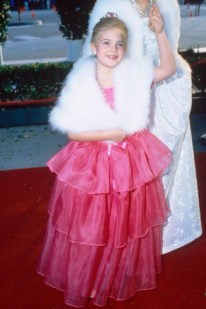
drew barrymore

Look how cute Drew Barrymore was on the red carpet!

I would also have argued that best art direction-set decoration should have gone to Blade Runner. While recreating a historical time and place isn’t easy, creating an entire world is ever harder. My best guess for that award is that everyone was just blown away by Gandhi and wanted to give it everything they could. Again, “guess” is the operative word there.

One thing I do not understand is the failure to nominate Sophie’s Choice for best picture. It’s a fabulous movie. I accidentally watched the whole thing one day when I took it home from work check whether or not a patron’s complaint that the brand new disc didn’t work was legitimate or not. I was only going to watch twenty minutes or so, but I couldn’t stop. Holocaust movies are never fun, but they are often compelling. I would have put it on the nomination list over The Verdict, which is a fine movie, but not really extraordinary like Sophie’s Choice. I think some people may be surprised that An Officer and a Gentleman wasn’t nominated for best picture, but I have never seen it, so I have no opinion on that.

I will also admit that I have a secret wish that “Eye of the Tiger” had won for best song. It was nominated, so I can feel semi-classy when I listen to it during my morning run (“I’m listening to on Oscar-nominated song today!”), but it lost out to a cheesy 80s love song (“Up Where We Belong”) which, again, might not be so bad in a different arrangement that is lighter on the synthesizer and drums. It’s hard to tell. Maybe someday someone should un-cheesify all the classic love songs of the 80s and see if they actually are good songs.

When I was trying to decide how I would rank the movies, I realized something interesting: I liked Missing better than I liked Gandhi. I’m not sure if it’s because I’ve been feeling cynical about the state of the world lately or frustrated that people don’t seem to want to open their eyes and see what people in other places going through or if Missing just truly is the better movie. Because I am not a robot, it’s not always easy to put my feelings aside when I’m trying to judge how “good” a movie is. Whatever it is, I’m going to go with how I feel, because it’s my blog.

So how do I rank the nominees?

5. The Verdict
4. E.T. the Extra Terrestrial
3. Gandhi
2. Tootsie
1. Missing

With the exception of The Verdict, these movies were very hard to put in order. 1982 was a good year for movies. I will be forever proud to have these movies as “mine.”

The 25th Academy Awards: My Verdict

The 25th Academy Awards were delightfully controversial. I like it when the Academy gets things wrong, because it gives me more to write about. And who doesn’t like a good gripe session? That’s one of the best things about award season: complaining that the judges got it wrong.

So what went wrong this time? Well, the movie from 1952 that has emerged (or perhaps endured) as a classic of American filmmaking wasn’t even nominated for best picture. It was only nominated for two Oscars at all: best supporting actress and best musical scoring. What is this icon that the Academy almost completely overlooked? Singin’ in the Rain. Yep, Gene Kelly’s classic musical about Hollywood got no recognition in its time. And yet Ivanhoe was nominated for best picture. I will never understand how the Academy works.

The winner for best picture is equally puzzling. The Greatest Show on Earth isn’t a bad movie, but it’s definitely not best picture-worthy. Every other nominee that from that year (with the exception of Ivanhoe) is a better movie than The Greatest Show on Earth. I would have voted for High Noon myself. Even if Singin’ in the Rain had been nominated, I still would have voted for High Noon. Why? Because it’s got so much depth to it. It’s about standing up for what’s right, even if you have to stand alone. Apparently, this was not a message that went over well in Hollywood during the McCarthy hearings, and the writer of the film was blacklisted (and eventually moved to England). That explains why it didn’t win best picture, but it’s doesn’t excuse the Academy for being so very, very wrong.

A third odd thing about these awards is that the movie that won the most Academy Awards wasn’t even nominated for best picture. The Bad and the Beautiful won awards for best supporting actress (Gloria Grahame, who was also in The Greatest Show on Earth that year), screenplay, costumes, and cinematography, and Kirk Douglas, the star, was nominated for best actor. It’s another movie about Hollywood. The Academy currently loves movies about Hollywood. (Birdman and The Artist are two recent films about show business that won best picture.) They must not have been as interested in movies about themselves as they are now, but it really surprises me.

Some awards make complete sense to me. Gary Cooper completely deserved his Oscar for his work in High Noon, and the editing of High Noon was excellent, also. The Quiet Man had beautiful cinematography, and the costumes and art direction of Moulin Rouge bring Paris to life. John Ford did some good directing in The Quiet Man.  On the other hand, I cannot for the life of me understand how The Greatest Show on Earth won for best screen story; it’s a very typical story, and kind of blah. But I haven’t seen any of the other movies that were nominated for that particular award, so it may actually have been the best that year. I also am strongly against the song “High Noon (Do Not Forsake Me, Oh My Darlin’)”. There are parts that are not horrible, but rhyming “his’n” and “prison” should automatically disqualify you from receiving an Oscar.

I’ve always felt that the Academy Awards should be free from politics. Even if the Academy doesn’t like the message of the movie, greatness should be recognized. The Academy failed in 1952 for the worst of reasons. I hope they have learned from that and voters in the future will refuse to be swayed from voting for the best because of how they think they “should” vote.

So how do I rank the nominees?

5. Ivanhoe
4. The Greatest Show on Earth
3. Moulin Rouge
2. The Quiet Man
1. High Noon

Join me next week for Paul Newman, politics, crossdressers, and aliens!

74th Academy Awards: My Verdict

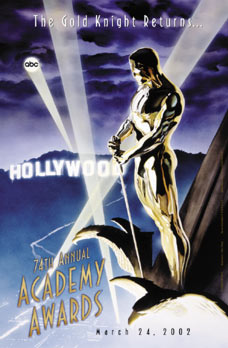
74_academy_awards_posterI don’t have much to say about the 74th Academy Awards. The Oscars were quite spread out that year. No movie won more than four awards, and based solely on what I’ve seen, I feel like the awards went to people who deserved them. I would have picked Helen Mirren in Gosford Park over Jennifer Connelly in A Beautiful Mind for best supporting actress, but that’s just my preference. Jennifer Connelly didn’t do a bad job, and I’m not upset that she won. I just would have voted for Helen Mirren. I feel the same way about the award for best makeup. While A Beautiful Mind had fabulous aging makeup and the makeup in Moulin Rogue! was so good I didn’t even recognize Jim Broadbrent, The Fellowship of the Ring would have deserved best makeup just for the Hobbit feet.  I guess there were a lot of technically proficient movies made in 2001. The biggest thing I learned from this year is that I need to watch more movies, because apparently five a week isn’t enough. After watching Russell Crowe’s fabulous performance in A Beautiful Mind, I don’t understand how anyone else could have won best actor. On the other hand, I haven’t seen Training Day; maybe Denzel Washington’s performance is just as amazing. Not having seen all the movies makes it really hard to judge whether or not the Academy got it right. I guess I will just have to content myself with saying that Russell Crowe gave the best performance that I saw from the movies that year.

Man, it is really hard to write my opinions when I feel like the Oscars went to the right people. Controversy makes for much better blogging.

So how do I rank the nominees?

5. Moulin Rogue!
4. The Lord of the Rings: The Fellowship of the Ring
3. In the Bedroom
2. Gosford Park
1. A Beautiful Mind

Look, they’re in alphabetical order! That pleases my librarian mind to no end.

Join me next week for gunfights, boxing matches, nightclubs, jousting tournaments, circus performances, and actual controversy in the awards!

The 21st Academy Awards: My Verdict

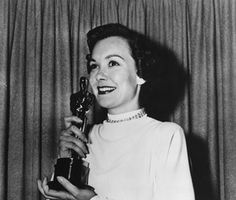
jane wyman

Jane Wyman with her Oscar for Best Actress.

Here’s an interesting fact: if you push “save draft” instead of “publish,” your blog post does not show up on your blog. Crazy, right? So I apologize that this post didn’t show up a couple of weeks ago when I reviewed the movies from 1948. I’m also sorry that I’ve been AWOL in general; I got bit by an organizing bug and started cleaning my house. That never happens, so I had to take full advantage of it. But I’m back on track for the coming week, and hopefully I will be able to get back in my blogging groove. So without further ado, I present the 21st Academy Awards.

One thing that I love about doing this project is that I get to see a lot of movies that I’ve been meaning to watch, but have never gotten around to. But it’s sad, too, because some of those movies that I want to watch and expect to be watching (mostly because they’re so famous) turn out not to have been nominated for best picture. For 1948, those movies include Key Largo, I Remember Mama, and Joan of Arc with Ingrid Bergman. I will still probably watch them someday, but it makes it easier if I have an excuse.

Well, I’m going to dive right in and say that I have no idea why Hamlet won best picture. It’s a fine movie, albeit kind of boring, but I would say that Johnny Belinda, The Treasure of the Sierra Madre, and The Snake Pit are all much better movies. Plus, they’re not boring. Maybe everyone thought that if they didn’t vote for a classic Shakespeare directed by Sir Laurence Olivier, a classic Shakespearean, it meant that they were all boorish hicks who didn’t know great art when they saw it. I don’t know. Whatever reasons the Academy members had to vote for Hamlet that year, they were wrong; it was not the best picture of 1948.

Having said that, I feel like I should say that Hamlet isn’t a bad movie. It has its high points; Laurence Olivier is definitely a high point. He is truly fantastic as Hamlet (except for the blond hair, which looks too unnatural) and completely deserved his best actor Oscar. I think it would have been a hard year to choose acting awards, though. There were many good performances across all the movies.

I do find the lack of nominations for The Treasure of the Sierra Madre interesting. It had many good elements, like cinematography, art direction, and music, that weren’t even nominated. Humphrey Bogart should also have been nominated for best actor. I feel like The Treasure of the Sierra Madre got snubbed in lots of categories. Admittedly, I haven’t seen all of the movies that were nominated for all the awards, but I find it hard to believe that there were that many movies that were that much better than The Treasure of the Sierra Madre in so many categories. But I am glad that John Huston won best director; he deserved it.

John Huston must have been crazy-busy for a couple of years leading up to 1948. He not only wrote, directed, and appeared in The Treasure of the Sierra Madre, but also wrote and directed Key Largo. I’m not sure how he did that, but it was an impressive feat. I can barely find time to work one job, watch a few movies a week, and keep my house in a semi-clean condition. There’s no way I could write and direct one classic movie, let alone two. He had serious talent.

1948 was an interesting year for nominees because two of the movies dealt with serious contemporary issues: mental illness and rape. Those are still serious issues, and movies about those topics are still rare. I was really impressed that the people working on The Snake Pit and Johnny Belinda were brave enough to tackle those topics.

How do I rank the nominees?

5.The Red Shoes
4.Hamlet
3.The Snake Pit
1.Johnny Belinda and The Treasure of the Sierra Madre(tie)

Why the tie? Both movies are so good in their different ways that I couldn’t put one above the other. Fun fact: They tied for best motion picture-drama in the Golden Globes that year. I think the Globes did a better job picking than the Academy that year.

The 45th Academy Awards: My Verdict

45th_Academy_AwardsAll I can think to say about the 45th Academy Awards is: What were they thinking? Some of the awards and nominees are so odd. So many people were put into the wrong category. For example, while Paul Winfield did an excellent job as the father in Sounder, he wasn’t in most of the movie. I would have thought he belonged in the best supporting actor category. And frankly, The Godfather is not about Vito Corleone, but about Michael. Al Pacino should have been nominated for best actor, not best supporting actor (Al Pacino thought so too, and didn’t attend the ceremony out of protest). I understand that Marlon Brando was an established actor, but his role in The Godfather was a supporting role, and that’s where his nomination belonged. I also felt that the man who actually won for best supporting actor didn’t even deserve to be nominated. Joel Grey did a fine job singing and dancing in Cabaret, but he didn’t appear outside of his cabaret performer makeup. He was only shown onstage at the Kit-Kat Club. We know nothing of his character’s life, backstory, anything. I just don’t understand that nomination. If the Academy wanted to award great singing and dancing, then that’s fine. But the award is called “Best Actor in a Supporting Role,” not “Best Singer and Dancer”. And if they did want to give an award for a singer in a supporting role, I would have nominated John Cullum for his role as Edward Rutledge in 1776. He not only sings, but he also acts. Maybe I’m just not as good a judge of acting as I thought I was, but the nomination (and win) of Joel Grey is truly puzzling to me.

I will admit right here that 1776, although a musical, is one of my favorite movies. I could watch that movie over and over and be happy about watching it every time. I love the songs and the music and actors. The costume design is fantastic, too. And yet it was only nominated for one Oscar – cinematography. That also confuses me. 1776 does have a couple of flashy cinematographic moments, but overall, it doesn’t compare to the cinematography of The Godfather or Deliverance, neither of which were nominated. Cabaret won for cinematography, which is odd. It didn’t have bad cinematography, but it wasn’t nearly as impressive as The Godfather.

Actually, I’m just now realizing that of the awards that I feel able to judge, the only awards I would have given to Cabaret are best actress and best film editing. Liza Minnelli was admittedly fabulous as Sally Bowles, and I liked the way they cut between the musical numbers in the Kit-Kat Club and Sally’s real life. It was effective. But I would have given best director to Francis Ford Coppola for The Godfather over Bob Fosse. I can’t judge best sound, and I have no clue whatsoever what “Best Music, Scoring Original Song Score and/or Adaptation” means. I know that the number of Academy Awards won does not necessarily correlate with how good a movie actually is, but I feel like The Godfather got a little shafted. It only won three awards to Cabaret’s eight.  At least the Academy got one award right – The Godfather truly deserved its best picture win.

How do I rank the nominees?

5. Deliverance
4. Sounder
3. Cabaret
2. The Emigrants
1. The Godfather

Join me next week for reviews of dramas about murder, rape, mental illness, and ballet!

The 80th Academy Awards: My Verdict

AcademyAwards-2008As much as I love old movies, the best thing about 2007’s best picture nominees as compared to those from 1956 is that I didn’t have to watch any three-hour epics, let alone three. It was kind of a relief.

Anyway, aside from all being mercifully short (at least comparatively), the movies from 2007 are kind of a mixed bag. There’s a period romance, a quirky independent comedy, a cerebral mystery, a period drama, an extremely violent period thriller. Okay, so three of the five movies are period movies based on novels, but they are all very different, which made for a very fun viewing week. It also made for an interesting year at the Oscars, because the awards themselves were spread out. The movie that won the most Oscars (No Country for Old Men) only won four. There was no one movie that was clearly better than all the others; on the other hand, none of the nominees were unworthy. There were five very good movies all nominated for best picture in 2007.

2007 is actually a year that I wish that there would have been a couple of ties. Javier Bardem was so good in No Country for Old Men, and he totally deserved recognition for his acting, but I wish Tom Wilkerson had also won for Michael Clayton. He also did an amazing job. I know, I know, ties are rare, but they can happen. I feel the same way about Tilda Swinton and Saoirse Ronan. They were both fantastic, and I wouldn’t have been able to pick one if I had to vote. Actually, no, I might have voted for Saoirse Ronan just because if she hadn’t done as well as she did, Atonement would have been ruined, but Michael Clayton wouldn’t have suffered as much if Tilda Swinton had been a little bit off her game. But still. They were both amazing performances. I’m actually a little bit sad that the movies that were nominated for best picture didn’t get more acting nominations. I like it when I’ve seen all the performances; then I feel like I can really have an opinion on whether or not the right actors got them. Sadly, in this year of male-centric movies, I missed a lot of the acting nominees. If I could somehow make this blog my full-time job, I might be able to watch all the movies that were nominated for an award, but alas. It is not to be.

The one random winner that I am going to mention is the winner for best original song. I remember when I watched the Oscars in 2007 that I was sad that none of the songs from Enchanted won. But just recently, I discovered the song “Falling Slowly” from the movie Once. I don’t remember how I happened upon it, but it is a beautiful song. While all the songs from Enchanted are cute songs, “Falling Slowly” is a truly wonderful song. If you don’t know it, go find it and listen to it. It’s great.

I’m having a really hard time putting the movies in order this time around. I thought all of them were really good. So know that my rankings below might be different if I were doing them at a different time of day or if I were in a slightly different mood:

5. Atonement
4. Michael Clayton
3. Juno
2. There Will Be Blood
1. No Country for Old Men

And just because I ranked No Country for Old Men in the number one spot doesn’t mean it’s a movie I would like to watch over and over again. It’s fantastic, but I don’t think I could sit through it again. Ugh. It’s hard to justify my own rankings sometimes. But that just feels right.

The 29th Academy Awards: My Verdict

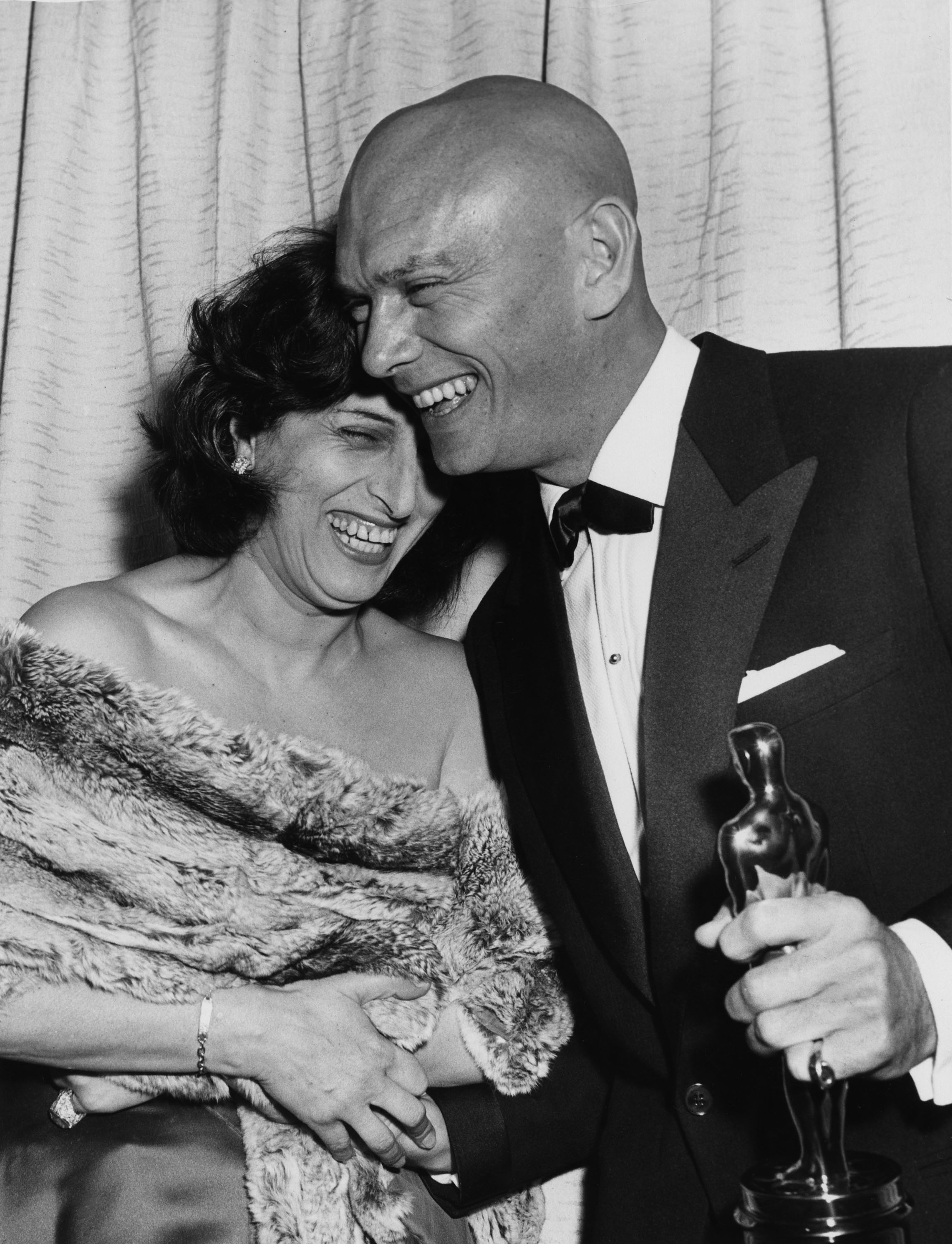
yul brynner

Yul Brynner receives his Academy Award from Anna Magnani.

After I decided I was going to watch all of the movies that have been nominated for best picture, I typed up a list of all the nominees and winners by year and crossed out all the ones I had already seen. There were two years where I had seen every single nominee, but not the movies that had actually won best picture. 1956 was one of those years. (If you’re curious, the other one is 1995. No, I’ve never seen Braveheart. Don’t judge.) So this week was a week of watching some old favorites and way too many epic movies (three of the movies this week were three hours or more) and trying to figure out why in the world The Ten Commandments hadn’t won best picture; I thought biblical epics had always been favorites for best picture wins. But I also got to see a fun new movie that I probably would never have watched if not for this blog.

Having seen so many of the movies and having loved so many of them for so long makes it really hard for me to be impartial. Do I think The Ten Commandments deserved the award for best art direction-set direction because I love the movie, or do I truly think that it was better than The King and I? Actually, no, I think The Ten Commandments should have gotten that one. And best costume design. And since I also love The King and I, I’m not showing too much favoritism, right? But it would have been a hard year to vote on some things. The music in all the movies I watched was equally good. While Yul Brynner did an excellent job in The King and I, and I don’t begrudge him the award at all,  James Dean was equally good in Giant. Actually, I’m a little bit surprised that James Dean didn’t win; sentimentality often plays a part in who wins, and James Dean’s nomination was posthumous. Anyway, a lot of good things happened in motion pictures in 1956.

However, I don’t agree with the best picture winner. Around the World in Eighty Days was fun, and the cinematography was amazing, and the sheer amount of work that it must have taken is mind-boggling. While it deserved recognition for all of that, the movie that I think is the best of the five didn’t win a single Academy Award. Friendly Persuasion is my pick for best picture. In a year of epics, it stands out as a quiet movie about a single family. Everything about it is good, from the acting to the music to the screenplay. The characters are all so alive; they have their virtues, but they also have flaws. Many of the characters are facing inner struggles, which are hard to portray in a movie, but the actors are so good that you can see the struggle inside. The characters aren’t judged for their decisions, either. Each one makes his choice, but the movie doesn’t condemn anyone for what they do. The viewers may or may not disagree with what everyone does, but that’s left to the viewer. The movie itself is neutral, which isn’t often the case, especially when it comes to war movies. I think that was a real feat in and of itself. That’s why I think Friendly Persuasion was the best movie from 1956.

How do I rank the nominees?

5. Giant
3. Around the World in Eighty Days and The Ten Commandments (tie)
2. The King and I
1. Friendly Persuasion

Why a tie? Around the World in Eighty Days drags a bit at times, while The Ten Commandments is interesting all the way through. However, the screenplay for The Ten Commandments is not the best. Around the World in Eighty Days has an excellent screenplay. It also doesn’t take itself too seriously, which I always admire in a movie. I would have given The Ten Commandments the edge just because I like it so much, but that’s not fair, so it’s a tie.

The 54th Academy Awards: My Verdict

220px-54th_Academy_AwardsSome of the best picture nominees for 1981 were very typical. Inspirational dramas and historical epics often get nominated for best picture. But action/adventure movies and dark comedies are rarely ever nominated. I truly wonder why that is. If a movie makes us laugh, does that mean it doesn’t teach us about life? If there is more action than dialogue in a movie, does that automatically mean that it can’t make people think? And what does a “good” movie consist of? Raiders of the Lost Ark has entertainment value beyond measure, but it’s not about a serious subject. Reds is about the Russian Revolution, which is very serious. And Reds is rather dull. So which movie is better? Since both have good production values, I’m going with Raiders of the Lost Ark. Yes, art should show us something about life or ourselves. It should make us think about good and evil or if the life we’re living measures up to what we want it to be, but a movie can do that and be fun at the same time. I feel like the Academy may not value fun enough. That’s a huge lesson I took from the 1981 nominees (and from the fact that Guardians of the Galaxy wasn’t nominated for this last year).

The advantage to 1939 having so many nominees is that I saw almost all of the Oscar-nominated performances; that made it easy to judge whether or not I agreed with the decisions. But in 1981, things were spread out a little bit more. While it would be awesome to watch every movie ever nominated for every Academy Award, I have a job and a semblance of a life and simply don’t have the time to do that. So while I can’t say that Katharine Hepburn’s performance in On Golden Pond was the best performance of the year, I can say it was the best of those that I saw. I know that many people think she and Henry Fonda won only because of sentiment. Here are two actors from the golden age of Hollywood playing elderly people! Look how sweet! But I honestly thought Katharine Hepburn deserved her award. Henry Fonda, on the other, was also good, but not as good as Burt Lancaster in Atlantic City. Burt Lancaster made me care about an old criminal; he made Lou believable as a lover and a fighter. It was a much more difficult role than that of Norman Thayer, Jr., cranky yet lovable retired college professor. And Burt Lancaster is a Hollywood legend, too. If the Academy felt the need to give the award to an older actor, it should have been him.

Even though I love Raiders of the Lost Ark, I still think that the best movies need to be entertaining and meaningful. Chariots of Fire managed to do both. It’s the story of two men standing up for their principles through the medium of athletics. That’s not a typical story, and it is so well-written with such alive characters that you have to keep watching to find out if they will triumph. Raiders of the Lost Ark is gripping, too, but that’s because the action is non-stop. Practically every scene ends with a cliffhanger. You keep watching to make sure that everyone lives. It’s easier to keep people’s attention that way. It’s harder to keep people interested in characters who aren’t doing anything but running. That’s why I have to give the edge to Chariots of Fire. I think Raiders of the Lost Ark is a classic that will endure because people enjoy it, and I’m glad. But while I think it might be harder to convince someone to watch Chariots of Fire, the person who does will be more richly rewarded.

How do I rank the nominees?

5. Reds
4. On Golden Pond
3. Atlantic City
2. Raiders of the Lost Ark
1. Chariots of Fire

The 12th Academy Awards: My Verdict

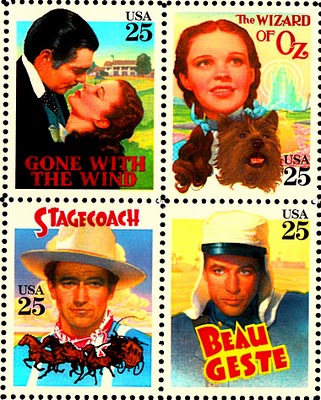
oscars-1940When I was a little girl helping out at my dad’s law office by putting stamps on envelopes, there was a set of stamps that honored movies from 1939. I knew The Wizard of Oz, of course, and I was vaguely familiar with Gone with the Wind, but I hadn’t seen Stagecoach or Beau Geste. The fact that they were on stamps meant they must be important, though; the Post Office wouldn’t let anything unimportant be on a stamp, I thought.  Now I’ve seen all four of those movies, and it turns out I was right. They were important. 1939 was an amazing year for movies. The fact that one of those movies on the stamps wasn’t even nominated for best picture shows how many excellent movies were made that year. Beau Geste isn’t the only amazing movie made that year that wasn’t nominated, either. Other classics that I’ve seen from 1939 include The Private Lives of Elizabeth and Essex; Gunga Din; The Hunchback of Notre Dame; Bachelor Mother; Young Mr. Lincoln; and Four Feathers. I’m sure there are even more that I haven’t seen. I don’t know why it happened that year, but people made some amazing movies.

1940_Hattie_McDaniel_Bainter

Hattie McDaniel receiving her Oscar for Best Supporting Actress from actress Fay Bainter.

After watching all the movies that were nominated for best picture, I became very grateful that I wasn’t a member of the Academy in 1939. The fact that I wasn’t born was a big deterrent to that possibility, of course, but I wouldn’t have wanted to try to choose what the best anything was for that year. So many amazing things happened. There was lots of good acting. Yes, Robert Donat won for Goodbye Mr. Chips, and I think he did an amazing  job and totally deserved an award for it, but that doesn’t mean that Clark Gable didn’t do just as well as Rhett Butler in Gone with the Wind. Geraldine Fitzgerald broke my heart as Isabella in Wuthering Heights, but if she had gotten official recognition, than Hattie McDaniel wouldn’t have gotten her Oscar, which she also completely deserved. How did those Academy members decide who was the best? I couldn’t have done it. Which score was best? Of Mice and Men? Gone with the Wind? The Wizard of Oz? The Wizard of Oz won, and it has wonderful music, but is it better than Gone with the Wind? Who can say? It almost makes me wonder if the Academy members got together to see if they could spread the awards around as much as possible instead of just giving them all automatically to Gone with the Wind. I can just see an old man saying, “Yes, Gone with the Wind has amazing music, but the music in The Wizard of Oz is every bit as good, and The Wizard of Oz won’t win any acting awards. Let’s give them music so that they know we recognize what a great movie it is.” Or maybe people truly voted for what they thought was the best in each category. I guess I will never know, but I’m glad I didn’t have to make any hard decisions about the movies that year.

Over the course of this project, I have noticed that every year, at least one actor is in more than one best picture-nominated movie. In 1998, both Geoffrey Rush and Joseph Fiennes were in Elizabeth and Shakespeare in Love. Sydney Poitier and Beah Richards had roles  in In the Heat of the Night and Guess Who’s Coming to Dinner in 1967. 2002 was the year of John C. Reilly. He appeared in three of the five movies that year and was nominated for his role in Chicago. In 1939, I noticed three people who were in at least two of the nominees. Astrid Allwyn played a pretty, slightly spoiled society girl in both Love Affair and Mr. Smith Goes to Washington. Geraldine Fitzgerald gave  excellent performances in Dark Victory and Wuthering Heights. And Thomas Mitchell played a drinking man in three movies. He was a drunk newspaperman in Mr. Smith Goes to Washington; in Gone with the Wind he plays Irish Southern gentleman Gerald O’Hara; and in Stagecoach, he plays a doctor who is being run out of town on account of his drunken ways. He won the best supporting actor Oscar for Stagecoach, and he did a good job, but I can’t help but wonder if the award was given with all of those performances in mind. I wonder that partially because I think Claude Rains should have won for Mr. Smith Goes to Washington, but maybe only doing one movie wasn’t enough to impress the Academy in 1939.

As I was watching all of these amazing movies, I kept thinking that it was a pity that they were made the same year as Gone with the Wind, because Gone with the Wind was just too big to fail. It was critically acclaimed and a runaway hit at the box office. Seeing all of these great movie that didn’t win made me wonder if Gone with the Wind was really better than all of those other movies, or if the hype was what made it win best picture. And then I watched Gone with the Wind again, and I realized that yes, it really did deserve its Oscar wins. David O. Selznick and Victor Fleming (and George Cukor, the director he replaced) and all the other men and women who worked on that movie did an amazing job. Everything–acting, cinematography, costume design, music, story and screenplay– came together to make (in my opinion, anyway) a near-perfect film. Although almost any one of those films would have won best picture any other year, Gone with the Wind truly was the best picture of 1939.

How do I rank the nominees?

10. Wuthering Heights
9. Dark Victory
8. Love Affair
7. Of Mice and Men
6. Goodbye, Mr. Chips
5. Ninotchka
4. The Wizard of Oz
3. Stagecoach
2. Mr. Smith Goes to Washington
1. Gone With the Wind

Join me next week to hear about Nazis, Communists, gangsters, old people, and missionaries!

The 75th Academy Awards: My Verdict

75th-annual-academy-awardsThe 2002 best picture nominees are really a mixed bag. We’ve got a musical about murderesses, a drama about women reading a classic novel, a fantasy flick about short heroes, a Holocaust picture, and a non-musical West Side Story. It was all over the map. But they did have one thing in common: they were all based on/inspired by other works. Nothing was very original. Gangs of New York, being inspired by a nonfiction book about gangs in New York, did have to make up a story to tie all the things about gangs together, but still. I found it interesting that a bunch of not-so-fabulous movies were all based on something else. Is that why they were all not-so-fabulous? People were trying to tell other people’s stories instead of their own?

As I have looked at past winners and nominees, I have noticed a couple of trends. The Academy likes World War II/Holocaust movies (Schindler’s List, Life is Beautiful, Saving Private Ryan, Casablanca) and movies about show business (All About Eve, The Artist, even this year’s winner Birdman). In 2002, they had to make a choice between a show business movie and a Holocaust movie, and apparently, the Academy prefers show business over the Holocaust. It’s not terribly surprising, I suppose, because everyone likes movies they can relate to. People also like to feel like their lives are important enough to make movies about, so show business movies make show business people feel validated, I suppose. But really, how did Chicago win, considering its lack of meaning? I think there is a song from that musical that explains it:

Give ’em the old Razzle Dazzle
Razzle dazzle ’em
Show ’em the first rate sorcerer you are
Long as you keep ’em way off balance
How can they spot you’ve got no talents?
Razzle dazzle ’em
And they’ll make you a star!

Chicago was a dazzling movie. It was big and loud and fun and there were lots of flashy costumes and it had Richard Gere tap dancing. Richard Gere! It made people excited, and they didn’t notice what was lacking. The Pianist, on the other hand, wasn’t exactly flashy, and it definitely wasn’t fun. It was heartbreaking and hard to watch. But I think it was the better movie. Roman Polanski knew what he wanted to say with his story, while Rob Marshall presented a beautiful package filled with nothing.

How do I rank the nominees?

5.Gangs of New York
4.The Lord of the Rings: The Two Towers
3.Chicago
2.The Hours
1.The Pianist

Join me next week for a bunch of movies that are always overshadowed by Gone with the Wind and The Wizard of Oz!