I'd like to spank the Academy

Posts tagged ‘Tearjerker’

Amour (2012)

amourDirected by Michael Haneke

I wasn’t planning on taking this last week off. I had watched several of the movies and was reviewing my notes to write my posts when I got hit by a migraine that didn’t wear off for a few days. This meant that I got ahead in the audiobooks I’m currently listening to (Pinocchio: bizarre and pedantic; and Two Years Eight Months and Twenty-Eight Nights: bizarre and amazing, in case you were curious), but it was not helpful for blogging. But it’s gone and I’m glad to be back writing again.

I’m not hugely familiar with French cinema, but I like to think that I’ve seen more French movies than the average American. The French movies I have seen tend to be move a little more slowly, be a little more introspective, and end much more depressingly than American movies, so I wasn’t expecting a happy love story about an elderly French couple when I watched this movie, no matter what the cover looked like. But Amour was so much sadder than I would have been able to anticipate, mostly because it was so heartbreakingly real.

So what’s the story? Anne and Georges are a happily married couple. They are elderly retired music teachers, but they still live in their beautiful apartment by themselves. They read books and go to concerts and see their friends and play Chopin on their beloved piano. All that changes when Anne has a stroke and the realities of old age intrude upon their lives.

The Good: The acting is superb. Emmanuelle Riva was so perfect as Anne that I forgot that she was an actress playing a stroke victim; I thought that I was truly watching a woman whose body and mind had failed her. Jean-Louis Trintignant was amazing as Georges, a man watching his beloved wife slip away, but stubbornly doing his best to fight for her and care for her.

The soundtrack for the movie was also perfect. The only music in the movie was music that the couple played themselves on the piano or that they  were actually listening to. It added to the realism of the film. Any musical score that had played in the background to underscore the emotions or tell the viewer what they were supposed to be feeling would have detracted from the emotion that the movie brings just from the subject matter and acting.

The Bad: Because the movie is so realistic and captures so perfectly the burden of caring for a disabled loved one, it drags sometimes. Taking care of sick people isn’t fun or glamorous, and sometimes it’s downright dull. Amour needed to be that way, but watching people do dull things isn’t a completely fascinating way to spend two hours. I will admit to nodding off a couple of times. (And no, I do not wish to hear any comments along of the lines of “if you think this is boring, go watch Transformers!” Life is boring sometimes, and watching someone else’s life is boring. This truth doesn’t detract from my intelligence or from the beauty of the movie.)

The Ugly: There is nothing lovely about physical and mental decline. It is a horrible thing to see. Just like life can be boring, life can be horrible. This movie is very hard to watch because of that. Amour is a stark reminder of reality and not for the faint of heart, for those who only wish to see movies about the young and happy. It’s a beautiful portrayal of a terrible subject. Although I’m glad that I saw it, I don’t think I will ever be able to watch it again.

Oscar Won: Best foreign language film of the year.

Other Oscar Nominations: Best motion picture of the year; best performance by an actress in a leading role (Emmanuelle Riva); best achievement in directing; best writing, original screenplay.
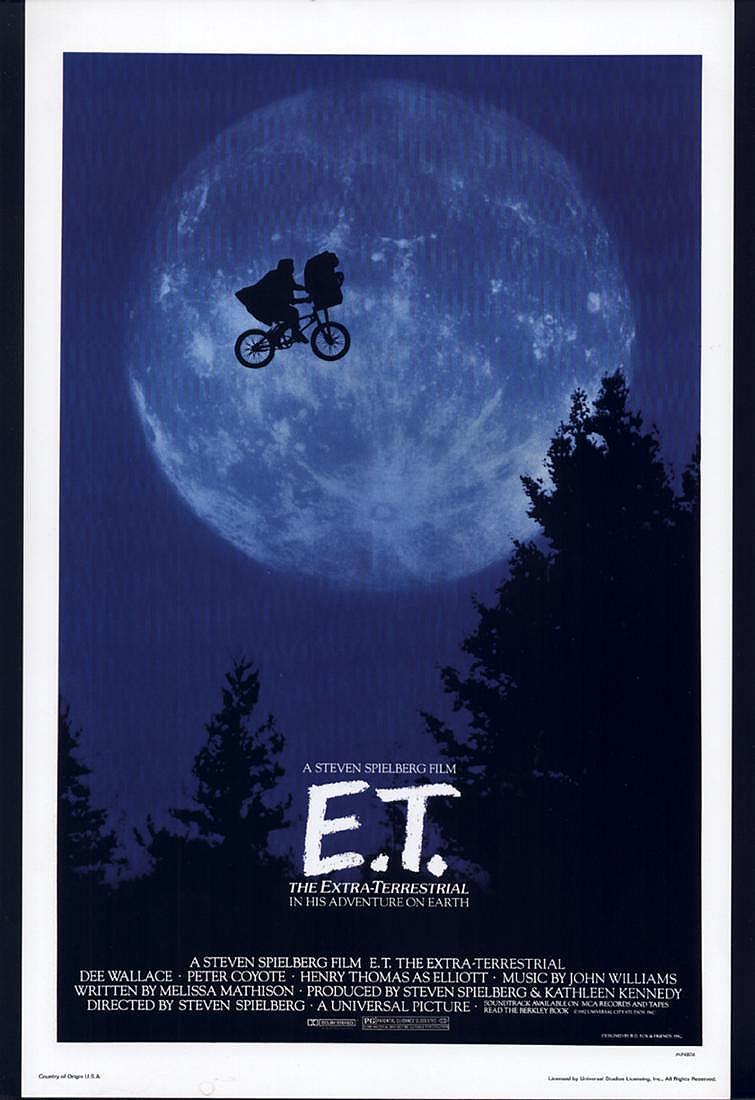
E.T. The Extra-Terrestrial (1982)

ETDirected by Steven Spielberg

Even though I am a child of the 1980s, I didn’t grow up with this movie. I’d seen it a few times, but not a lot. My mom didn’t approve of some of the language the kids used, which is fair. (For some reason, people in the ‘80s thought it was really funny for kids to use bad language. I’m so glad that phase of our society is mostly over.) It was interesting to go back and watch it as an adult with a different understanding. I felt like even though E.T. is about kids, that doesn’t necessarily mean that it’s only for kids.

So what’s the story? A bunch of aliens come to Earth to collect plants. They are interrupted by a group of alien-hunters, who cut one alien off from being able to return to the ship. He is left behind when the ship takes off. He makes his way to the suburbs, where he is found by Elliott, an unhappy young boy. Elliott and the alien, whom he christens E.T., form an unshakable bond as Elliott tries to keep E.T. a secret from adults and help E.T. return home.

The Good: It’s scary to make a movie about children. Child actors can make or break a movie. The children in E.T. were breathtakingly good. Henry Thomas is completely convincing as Elliott. Little sister Gertie is played by Drew Barrymore; this is the only role of hers that I think she does a good job in. Robert MacNaughton is big brother Mike. He has a couple of rough patches acting-wise, but nothing terrible. The three kids truly act like a family. They squabble, they call each other names, the little sister can’t be trusted with secrets, and they pull together when they need to. They know they can depend on each other when it’s important. That’s what a family is.

Of course, this isn’t only due to the acting; the screenwriter, Melissa Mathison, had a lot to do with that. Her screenplay is fantastic, even if she does occasionally have the kids say things that I don’t think they would say in real life. The story could have been bogged down in cheesiness, but the screenwriter managed to keep the movie balanced on the fine line between heartfelt and ridiculous. She also manages to give a sense of backstory without bogging down the movie, which can be another hard thing to balance.

John Williams’s musical score is glorious. I can’t get it out of my head, but I don’t mind too much because it’s so beautiful. Not only is it beautiful, it fits the movie perfectly. It doesn’t overwhelm the movie at all. Williams is a master at using the orchestra, too. The instruments he uses are always the right ones for his themes.

This movie is thirty-three years old, but the special effects hold up. My brother would say that that’s because they don’t use CGI, and I think that’s a good explanation. As CGI gets better and better, the older CGI things end up looking fake, where a well-done robot alien or the overlay of one shot over another to change the background will always look real. I was impressed.

The cinematography was exceptional, also. Part of the reason the adults are so threatening is that no adults (with the exception of Henry’s mother) have faces until close to the end of the movie. The first scene is especially effective because of this. It’s shown from E.T.’s point of view, and we see that he is an intelligent, but frightened, being trying to reunite with his people. It’s heartbreaking and scary all at the same time.

The Bad: Everything worked well, but it can be stressful to see these kids trying to keep E.T. a secret from the adult world. Kids in danger movies are hard for me sometimes, and in this case, while I completely understood the reasoning behind their actions, that didn’t stop me from wanting to step in and help them. I know that won’t bother everyone, though.

The aforementioned children-swearing thing did bug me. I was glad to know that Henry Thomas actually objected to some stronger language and pointed out that he would never say that, so his character shouldn’t, either. And it’s not so much the language I object to, although it’s not my favorite. I hear worse than that every day at work. It’s just that it makes everything feel less realistic for words like that to be coming out of a nine-year-old’s mouth.

The Ugly: I have to go with “nothing” for this one. E.T. is an incredibly well-made movie.

Oscars Won: Best sound; best effects, visual effects; best effects, sound effects editing; best music, original score.

Other Oscar Nominations: Best picture; best director; best writing, screenplay written directly for the screen; best cinematography; best film editing.

Moulin Rouge (1952)

Poster - Moulin Rouge (1952)_11Directed by John Huston

I will freely admit that part of the reason I’m doing 1952 right now is because after watching Moulin Rouge! (2001), I was curious about this movie. I wasn’t sure if the 2001 version was a drug-induced remake of the same story or a weird Baz Luhrmann fantasy that had nothing to do with John Huston’s movie. It turns out that except for the setting, they don’t really have much to do with each other. That made me glad, because I much prefer John Huston’s vision over Luhrmann’s, and I hate it when people are more familiar with subpar remakes than with the fantastic originals.

So what’s the story? Aristocrat Henri de Toulouse-Lautrec turns his back on his privileged upbringing to become an artist during the heady days of late 19th century France.

The Good: Josè Ferrer. Toulouse-Lautrec is a complicated character in this movie. He’s an angry drunk who is convinced that life won’t bring him anything good. Ferrer does an excellent job with that.

Henri has two different women in his life: Marie Chalet and Myriamme Hayam. Colette Marchand is Marie Chalet, a beautiful, yet poor, woman who doesn’t mind Henri’s deformities. Marie is a hateful, pettish gold-digger, and Marchand plays her perfectly. The more sympathetic, mature Myriamme is played heart-breakingly well by Suzanne Flon.

Another great thing about this movie is that it has Zsa Zsa Gabor. Even though she has top billing after Jose Ferrer, her role is rather small. But you can tell that she’s having so much fun basically playing herself that you just have to love her. I have to admit, I find the Gabor sisters fascinating; they were kind of like the Kardashians (famous for no good reason), but super classy. I think they would have interesting people to know. And I will stop crushing on Zsa Zsa now and move on.

There is some clever camera work in this movie. In real life, Toulouse-Lautrec was 5’1”. Josè Ferrer was much taller. He spent quite a bit of the movie walking on his knees to be closer to the right height. You can’t tell, and I love that you can’t tell. This movie would have been just silly if they had done a bad job with Henri’s height because it’s so central to the story.

The dancing in the movie is ridiculously amazing. I have never seen the cancan done in real life, but I had a vague idea that it involved high kicks while balancing on one foot. I would suggest that even if you don’t ever watch this movie, at least google the cancan scene from this movie. It takes serious skill and athleticism to do it. I was blown away. Oh, and in case you’re wondering (or worried), no, the dancers don’t wear split bloomers. The movie’s from the 1950s; that would have been too scandalous.

I love how 19th century Paris and Toulouse-Lautrec’s art were brought to life. The clothes and the colors and the costumes are all fantastic. There are rich people and poor people and you can differentiate between them (which isn’t always the case in the movies). The costume and makeup people paid close attention to the art and took some of the clothes, makeup, and hairstyles straight from his paintings. I loved it. I also loved the two interludes where the paintings themselves were flashed on the screen to music that matched them. It was a good way to show passage of time and also to highlight what Toulouse-Lautrec did and what lower-class Paris was like at the time. It was very cool.

Even though I minored in art history in college, I don’t know much about Toulouse-Lautrec’s life in general. Seeing as how this is a biopic based on a novel based on his life, it’s probably not completely accurate. But I liked the story. It didn’t make Henri out to be perfect, but it gave him more dignity than he had in Moulin Rouge! (2001), which was something that really bothered me about that movie.

The Bad: I can’t think of anything about this movie that’s bad. It’s mostly good, except for the ending, which flies past “bad” and lands in “ugly”.

The Ugly: The ending is so cheesily bad. It rivals Goodbye, Mr. Chips for cheesy badness.

Oscars Won: Best art direction-set decoration, color; best costume design, color.

Other Oscar Nominations: Best picture; best actor in a leading role (Josè Ferrer); best actress in a supporting role (Colette Marchand); best director; best film editing.

Random Fact: It is really hard to type “Moulin Rouge”. My fingers want to type “Moulin Rogue,” which works, too, but it sounds like a superhero who patrols the streets of Paris. (“Who was that masked man by the mill?” “Don’t you know? That was the Moulin Rogue!”)

Another Random Fact: Peter Cushing (AKA Grand Moff Tarkin) has a small role in this movie. Watch for him at the horse races!

Moulin Rouge! (2001)

moulin rouge!Directed by Baz Luhrmann

I was a freshman in college when Moulin Rouge! came out, and I had a friend who was obsessed with the soundtrack. Whenever we would go and hang out and play games at his apartment, that CD would be playing. It made watching the movie kind of surreal; the music had seeped into my subconscious without my knowledge. I knew all the music, but I had never seen the movie before (overprotective friends again), so I had a strange sense of déjà vu. I’m not sure that helped my general perception of the movie, which was of noise, color, and oddness.

So what’s the story? Young Christian comes to Paris from Great Britain so that he can write about the Bohemians ideals of truth, beauty, freedom, and love. At the famous nightclub Moulin Rouge, he meets and falls for Satine, a performer/prostitute who has dreams of being a real actress. Will they be able to find happiness in the noisy, colorful life that is Paris?

The Good: There was some good acting. Nicole Kidman did a nice job as Satine, even if I did think she was Amy Adams ninety percent of the time. Jim Broadbent was excellent as Zidler, the owner of the Moulin Rouge, who is sympathetic to Satine and Christian’s love, but who also wants his own dreams to come true. Ewan McGregor is a little bit nondescript as Christian at the beginning of the movie, but he does jealousy and heartbreak well towards the end. Toulouse-Lautrec is played by John Leguizamo, who does a good job of showing the yearning for a love that he will never have.

Before I talk about the cinematography, I want to make something clear. I don’t get carsick. I don’t airsick or seasick or rollercoaster sick. But I have known to get sick from certain visual stimuli. I can’t play first-person shooter games, for example, or any first-person games, really. I have run, not walked, out of IMAX movies because I was about to be sick. Moulin Rouge! did the same thing to me. The jerky, constantly moving cinematography did not make agree with my stomach. Or with my head. So I was watching Moulin Rouge through a haze of headache and stomachache. But just because I didn’t like the cinematography and it didn’t agree with my stomach doesn’t mean the cinematography is bad, per se; it’s creative and different and fits with the whirling gaiety of the nightclub. I just didn’t personally like it. I wish I had a section called “Things I didn’t personally like, but can respect for their artistry.” That would make writing reviews easier sometimes. But I since I didn’t feel it was bad, I’m going to leave cinematography in the good category.

The makeup and costumes and production design were over the top and crazy, but so were the lives of the denizens of the Moulin Rouge. Like the crazy cinematography, it worked for the film and what the filmmakers were trying to do accomplish. Again, I’m not sure I liked it that much, but it was admirable.

The Bad: The music rubbed me the wrong way. Yes, it is very clever to use modern music in a movie that takes place over a hundred years ago, but I feel like the filmmakers were a little too clever sometimes, like they were drawing attention to their own cleverness. I feel like they were saying, “Look how clever we are! We used ‘Smells Like Teen Spirit’ to show how immature all these men are who frequent nightclubs! Aren’t we smart?” It became more of a gimmick than something meaningful.

The Ugly: The story was terrible, unoriginal, and uninspired. It was kind of a cheap rip off of Cabaret combined with La bohème. (Possible spoilers ahead) Christian and Satine fell in love for no reason at all. The Duke was silly and not believable as a real person. Also, if you were coughing up blood in 19th century Paris, you knew you were dying of consumption. Tuberculosis wasn’t uncommon then. And while I’m no expert, I’m pretty sure that if you are about to die from tuberculosis, you don’t have the energy to appear in a musical theater production, especially not one based in India with lots of high-energy dancing. The ending is curiously flat. The movie as a whole feels more like an excuse to do crazy musical numbers with modern music than a movie that has anything meaningful to say.

Oscars Won: Best art direction-set decoration; best costume design.

Other Oscar Nominations: Best picture; best actress in a leading role (Nicole Kidman); best cinematography; best film editing; best makeup; best sound.

The Red Shoes (1948)

red-shoes-02Directed by Michael Powell and Emeric Pressburger

This was another movie I first saw on Turner Classic Movies (TCM) about ten years ago. I wonder now if they were spotlighting the movies from 1948, because it seems strange that I would have seen both The Snake Pit and The Red Shoes at the same time if they weren’t. Anyway, when I saw The Red Shoes then, I liked it so much that I when I was home from college on a break, I checked it out from the library and made my younger sisters watch it. I was kind of excited to see it again, but I didn’t like it nearly so much this time around. That made me wonder what has changed about me or my tastes. I’m not sure what it is, but whatever happened in the last ten years, I noticed some definite weaknesses that I hadn’t noticed before.

So what’s the story? Two young artists, composer Julian Craster and dancer Victoria Page, are taken under the wing of ballet master Boris Lermontov. With his guidance and support, both are able to soar to new heights in their respective arts. But when Julian and Victoria fall in love, they will have to live with the consequences of their choices.

The Good: The dancing is beautiful. Moira Shearer, who played Victoria, was a ballerina, not an actress. Her acting is competent, nothing special, but her dancing is glorious. Leonide Massine is Ljubov, the choreographer/featured performer (sorry, I don’t really know ballet terms) of Ballet Lermontov. He’s a fabulous dancer (and a very good actor).

Most of the acting isn’t anything special, but Anton Walbrook does an excellent job as Boris Lermontov, the man who cares about his ballet company more than anything in the world, who only values people for what they can contribute to his art.

I loved the music. The composer, Brian Easdale, had to not only write a score, but also music for ballets. It was all really very lovely.

The Bad: The Red Shoes ballet kind of annoyed me. There were a couple of special effects (like the red shoes suddenly appearing on Victoria’s feet, magicked on by the shoemaker) that wouldn’t have really worked in a real stage ballet. I hate it when a movie is supposed to be showing something real, but takes advantage of movie special effects. It’s cheating. And stupid.

The Ugly: When you take a creative writing class, one of the first things you learn is “Show, don’t tell.” That means that you shouldn’t say, “Victoria and Julian are madly in love;” you should actually show them talking together more than once. You should show meaningful looks and lingering hand holding. This rule should apply to movies, but the writers of The Red Shoes apparently had never heard of it. The love story was extremely weak, which made it hard to believe the rest of the movie. I’m not sure how I missed that the first time around, but I must not have been as discerning when it comes to love stories ten years ago as I am now.

Oscars Won: Best art direction-set decoration, color; best music, scoring of a dramatic or comedy picture.

Other Oscar Nominations: Best picture; best writing, motion picture story; best film editing.

Dark Victory (1939)

dark victory posterDirected by Edmund Goulding

People who care about such things may notice that I have gone out of order. Yes, I realize d comes before g in the alphabet, so yes, this should have been the first review of the week. But I don’t watch the movies in alphabetical order; I watch them as I want to watch them. And I had watched Goodbye, Mr. Chips earlier in the week, but stupid daylight savings time prevented me from getting to Dark Victory until later than I wanted. So write your congressman and say you want to put an end to daylight savings time.

So what’s the story? The reason I hadn’t watched Dark Victory was that the story just didn’t appeal to me. Judith Traherne is a young sporting socialite; she breeds and rides horses and hunts and all that kind of stuff. She’s had blinding headaches for the last six months, but when she misses a jump when riding her horse, she realizes something is seriously wrong. She is diagnosed with a brain tumor and has it removed, but the doctor knows that someday it will come back; Judith will be dead before then end of a year.

The Good: This movie had the potential to be either incredibly melodramatic or deadly dull. In order to avoid that, the viewer has to care about Judith. Bette Davis makes you care. Judith tries to pretend that she’s not really worried at the beginning, but Bette Davis lets us see beneath the strong words and actions to the scared young woman. She glows when she falls in love; she becomes tough, yet brittle when she feels like that love has betrayed her. I  found myself in complete sympathy with Judith, even though our lives are so very different. If this movie had starred a lesser actress, it would have been soapy garbage. Bette Davis saved it from that.

The supporting cast is also stellar. Geraldine Fitzgerald as Judith’s personal secretary and best friend is a standout. I hadn’t seen her in anything before, but I think I get to see her in a few more nominees, which makes me happy.

The Bad: Max Steiner wrote the soundtrack for this film, and the music is nice, but it’s  very dramatic. I realize that that was the trend of the time, but I like my soundtracks to be a little more subtle.

The Ugly: I think the fact that Bette Davis is so good kind of highlights a major weakness of this movie. The storyline is tripe. It’s silly and contrived and over dramatic. My advice for watching this movie is to allow yourself to get swept up in the fabulous acting and don’t think too hard about anything else. Also, Humphrey Bogart in a small supporting role with a bad fake Irish accent? No. Very ugly.

Oscars Won: None.

Oscar Nominations: Best picture; best actress in a leading role (Bette Davis); best music, original score.

Fun fact: There’s a very attractive young playboy in Dark Victory who looked kind of familiar to me, but I couldn’t place him, so I looked him up on IMDb. Turns out the very attractive playboy would be president of the United States a little over forty years later. Weird.