I'd like to spank the Academy

Posts tagged ‘strong female lead’

Sounder (1972)

sounderDirected by Martin Ritt

I think my third grade teacher hated children. What is my evidence for this? She made us read not only The Red Pony by John Steinbeck, but also Sounder by William H. Armstrong. While both are good books (SPOILER ALERT), the beloved animal dies at the end of both books. It does not make for happy reading for eight and nine year old children. The only thing that could have made the year worse was if we had also read Where the Red Fern Grows by Wilson Rawls. (We read Summer of the Monkeys instead.) Because I remembered how depressing and sad that year was, I wasn’t particularly looking forward to watching Sounder. But the screenwriter was smart, and the movie ends much more happily than the book does.

So what’s the story? During the Depression, sharecroppers David Lee and his father Nathan spend their nights hunting with their dog, Sounder, hoping to get any kind of meat to put on the table. One day, in desperation, Nathan steals a ham from his work. He is arrested and sent to a work camp. The town sheriff won’t tell David Lee and his mother and younger siblings where Nathan has been sent, so David Lee and Sounder go off in search of Nathan.

The Good: There are some nice performances in this movie. Kevin Hooks did a great job of carrying the movie as David Lee, which is a hard job for a teenager. Cicely Tyson plays Rebecca, Nathan’s wife, who is determined to keep the farming going without her husband. She does a beautiful job as the tough, yet loving woman. Paul Winfield is Nathan, a man trying so hard to provide for his family in an impossible time. The major standout for me, though, was Janet MacLachlan, who plays Camille, a teacher who cares. She shone in every scene she was in.

I liked the plot. I like seeing movies about people who love each other and who try to help each other through bad times. Sounder managed to tell the story without being cheesy, which is a hard thing to do.

The Bad: Even though all the performances were lovely, and even though I liked the story of the family, I felt like the movie rambled some. There were some unnecessary scenes. Or maybe they were necessary, but they just didn’t feel like they tied in to the rest of the movie. It dragged a bit, and that made it hard for me to connect with the movie, even though I felt for the people and their plight.

The Ugly: This is a G-rated movie, and there’s not anything horribly offensive in it, but it’s sad. Black sharecroppers in the South during the Depression did not have an easy time of it. This is a so-called “family movie,” but I would suggest not letting small children watch it on their own. I think it’s a movie that parents should talk about with their children so that children can understand what the family was going through.

Oscars Won: None.

Oscar Nominations: Best picture; best actor in a leading role (Paul Winfield); best actress in a leading role (Cicely Tyson); best writing, screenplay based on material from another medium.

Cabaret (1972)

cabaretDirected by Bob Fosse

Okay, I’m back. I’m finally better enough that my writing once again makes sense. And I’m glad, because I’ve missed this. Now on to 1972!

I liked musicals when I was young. I’m not sure why. Maybe I liked believing in a place where people burst spontaneously into song and dancing with your enemy could solve problems. Maybe I didn’t notice that story and character development tend to suffer when the director has to make room for musical numbers. Maybe I liked the happy endings. But whatever it was that I liked as a child is gone now. Musicals make me very impatient. I still retain a nostalgic liking for the musicals I liked growing up, but I have a hard time with musicals that I am seeing for the first time. Since Cabaret has adult themes, it is not a musical I grew up with. Although I can see some of what people like about it, I didn’t particularly care for it.

So what’s the story? Young English author Brian Roberts moves to Germany in the 1930s. At his boardinghouse, he meets Sally Bowles, an effervescent American nightclub singer/aspiring actress. Together they experience the heady turmoil of pre-World War II Berlin.

The Good: I will give Cabaret props because even though it has musical numbers, all of the musical numbers take place in the nightclub. No one randomly breaks into song on the street or anywhere else. I did like that aspect of Cabaret as a musical. It made it realistic enough that I didn’t want to throw something at the TV.

The acting was good. Liza Minelli made a wonderful Sally, a woman who finds every experience in life worth trying, a woman who just loves life for life’s sake. I quite liked Michael York as Brian, the quiet Englishman who’s not quite sure of his sexuality or what he wants out of life. But the people who I really loved (and whose story I found more interesting than that of Sally and Brian’s) were Fritz Wepper and Marisa Berenson as a gold-digging man and a rich young woman, respectively. Both characters were extremely compelling, and being unsure if they will get a happy ending after all makes them semi-tragic.

The Bad: Even though the characters didn’t randomly burst into song, I didn’t feel like the songs added anything to the movie. The songs could have all been cut, and the only thing it would have done to the movie is make it shorter. There wasn’t even any fabulous dancing to make the musical numbers worth it. And I think some of the cabaret dancers were men in drag, but I couldn’t ever be sure, so I was distracted during the musical numbers trying to figure it out.

The Ugly: There wasn’t anything ugly about Cabaret per se, but I had a really hard time connecting to the movie at all. I can’t even blame being sick, because I was really into other movies I watched while I was sick. Anyway, I’m just going to have to risk the wrath of the internet and say I think Cabaret is overrated.

Oscars Won: Best actress in a leading role (Liza Minnelli); best actor in a supporting role (Joel Grey); best director; best cinematography; best art direction-set direction; best sound; best film editing; best music, scoring original song score and/or adaptation.

Other Oscar Nominations: Best picture; best writing, screenplay based on material from another medium.

Juno (2007)

JunoDirected by Jason Reitman

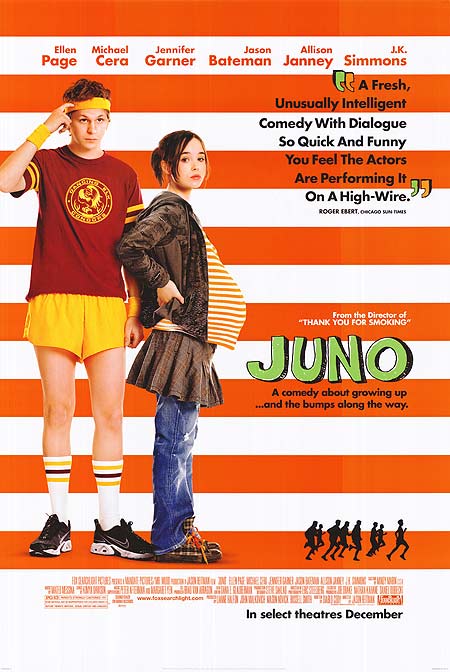
When people rave about a quirky independent comedy, I always worry a little. Is the movie really that good, or are people afraid to say they don’t like it for fear of being seen as uncool or unsophisticated? Because let’s face it, not every independent movie is good. Some are downright boring. But because they aren’t made by the established Hollywood studios, independent movies are seen by a certain set of people as being automatically amazing. Then more and more people jump on the bandwagon and suddenly this independent movie is the best movie ever made, according to popular opinion. And then I watch it and I have no clue what everyone sees in it. (Sorry for the tirade. I just hate pretentious people.) Anyway, that wasn’t the case with Juno. It’s a fun, funny, enjoyable movie–and I’m not just saying that to please the hipsters.

So what’s the story? Sixteen-year-old Juno has sex for the first time with her best friend/unacknowledged crush Paulie Bleekman and ends up pregnant. She goes to get an abortion, but just can’t do it. She decides to put the baby up for adoption. She looks for potential adoptive parents in the Penny Saver ads and finds Vanessa and Mark, a seemingly perfect couple. Juno hits it off with Mark right away, but has a harder time connecting to the worried, perfectionist Vanessa. But there are many surprises in store for everyone during Juno’s pregnancy.

The Good: I like the cast. Ellen Page makes a very believable sixteen-year-old who’s trying to figure out life. Michael Cera is at his awkward best as Paulie Bleekman. Jennifer Garner is delightful as uptight Vanessa. Jason Bateman captures just the right attitude as Mark, the man who’s not ready to grow up. Allison Janney is Bren, Juno’s dog-obsessed stepmom who is still unsure of her relationship with Juno, but is willing to support her to the end. I decided I wanted to be friends with J.K. Simmons when he wore a fedora to the Oscars this year; Juno makes me want to be his friend even more. As Juno’s dad, he’s a little rough around the edges, but he loves his daughter and will do anything for her. So yeah. The cast was awesome.

I liked the music, too. I like happy acoustic guitar music. Does that make me a hipster? Ugh! I am having so many mixed feelings about liking anything about this movie.

The screenplay was excellent. Diablo Cody managed to make the viewer like Mark and hate Vanessa at first and then slowly reverse position. That was very clever. There were a lot of good, funny lines, too. Very well done all around.

The Bad: Leah didn’t fit in the movie. She was funny, and the actress was good, but the friendship didn’t feel real. In my experience, cheerleaders aren’t BFFs with quirky, semi-loner musicians.

The Ugly: I didn’t find any in Juno. There were some awkward moments, but awkwardness is a part of adolescence. Juno herself was a little more clever and self-confident than most high school juniors I’ve met, but it’s a movie.

Oscar Won: Best writing, original screenplay.

Other Oscar Nominations: Best motion picture of the year; best performance by an actress in a leading role (Ellen Page); best achievement in directing.

The King and I (1956)

king and iDirected by Walter Lang

This is the second movie I’ve watched this week that I’ve seen more times than I can count, but it’s the first movie this week that was based on a play which was based on a book which was based on a true story. I loved musicals when I was young(which I think is funny considering how little patience I have with them now), and this was one of my favorite musicals. I can still sing along with all of the songs, and I think it will always have a special place in my heart.

So what’s the story? Anna Leonowens, a widowed Englishwoman, comes to Siam (now Thailand) to be the governess to the children of the king.

The Good: I love the music in this movie. I don’t love all of the songs, because I think there are one or two that slow the movie down, but most of them are enjoyable. And the score is amazing. All I have to do is see the cover of this movie and I have “The March of the Siamese Children” in my head. Not only that, but I am happy to have that song in my head. That never happens.

I like the lead actors in this movie. Yul Brynner plays a man who is trying to hold on to tradition and effect change at the same time. His inner struggle is plain on his face as he tries to make hard decisions. Deborah Kerr makes an excellent Anna. She is smart and determined and compassionate and courageous.

The costumes are gorgeous. Because of this movie, I have had a lifelong dream of polkaing in a dress with a giant hoopskirt. But Anna’s dresses are not the only beautiful ones in The King and I. The women of the court also wear lovely things. Even the king’s clothes are very sumptuous. It’s all very fun.

As impatient as I am with musical numbers that don’t help advance the plot or at least help with characterization, I love the Uncle Tom’s Cabin ballet. It’s different and beautiful and mesmerizing. I’m glad it’s in the movie.

The Bad: It bothers me a little bit that many of the “Asian” people in The King and I were played by Latinos. I can see the reasoning behind hiring Rita Moreno, because she’s amazing, and who wouldn’t pick Rita Moreno if she were a choice? But were the producers really unable to find enough children to play the king’s children who were, if not Thai, at least Asian? There weren’t ten to fifteen Asian kids living in California in 1956?

The Ugly: I have seen this movie many times, and it never bothered me before, so maybe I’m being ultra picky, but the attitude of the movie toward Siam in general and the king in particular is very condescending. There is very much an air of “everything in European culture is good because the Europeans are so enlightened, but there is nothing good about Siamese culture.” The king is only admired because he is trying to westernize his country. He makes silly mistakes (like wanting to send only male elephants to America) that are then corrected by the superior Englishwoman. At one point, Anna tells her young son, Louis, that in many ways, the king was no older than Louis. Really? This is a grown man who had ruled a country and managed to keep it independent in a time of colonization. He is very different from an eight-year-old. I think this might not bother me so much if these characters weren’t based on real people, but since they are, I feel like the characterization of the king and the attitude toward Siam in general is very disrespectful. And yes, I understand that The King and I is from a different era, which is why I can still enjoy this movie. But I can also understand why it’s banned in Thailand. Not that I advocate banning, but I can sympathize with the feelings behind the banning in this particular case.

Oscars Won: Best actor in a leading role (Yul Brynner); best art direction-set direction, color; best costume design, color; best sound, recording; best music, scoring of a musical picture.

Other Oscar Nominations: Best picture; best actress in a leading role (Deborah Kerr); best director; best cinematography, color.

Giant (1956)

giantDirected by George Stevens

I had seen Giant before I watched it for my blog, but only once. I was probably seventeen, and while I was seriously underwhemed with the way the stars were aged, I liked the movie overall. But now that I’m older and more analytical (and possibly more cynical), I’m not as impressed with it as I once was.

So what’s the story? Texas rancher Jordan “Bick” Benedict, Jr. has come to Maryland to buy a stallion to improve his breeding stock. There he meets Leslie, a lovely and spirited society girl. After talking to each other for less than ten minutes, they are deeply in love. They marry and go back to Reata, Jordan’s ranch in dry, dusty Texas. They spend the next 25 years adjusting not only to each other, but to the changing world around them.

The Good: Perhaps because of his early death, James Dean still haunts pop culture. Before I actually saw him in anything, I thought people were overreacting a bit when they talked about how a great young actor was lost. But he really was that good. He brings a pathos to Jett Rink, a low-class ranch hand who strikes oil. Without James Dean, Jett would have been a slightly ridiculous character, but James Dean allows us to see his motivations, his dreams and desires. He makes him human. James Dean died before the filming of Giant was completed, but he left his mark on the film and on film history.

Three supporting actors really stood out. Mercedes McCambridge is Luz Benedict, Jordan’s crusty older sister. She loves Reata more than anything and can do anything a man can do on the ranch. (SPOILER ALERT)Her death, which happens so conveniently soon after Leslie comes to Texas, is really quite touching. Chill Wills plays Uncle Bawley, a kindly older gentleman who helps Leslie understand Texas and the Benedict children understand life. Jordan Benedict III is played by Dennis Hopper in what must have been one of his first big movie roles. Jordy is a rather quiet young man, but he is deeply passionate below the surface. It’s a very fine performance.

The Bad: I really enjoyed the first half of Giant. Up until the point where Jett finds his oil, it’s tight and focused. After that, it feels looser and more meandering. It doesn’t feel like it has a central focus. Jordan and Leslie and their relationship aren’t as important as they were, but nothing steps up to fill that vacuum. I don’t know if that’s how it is in the novel that Giant is based on, but it made the second half feel less meaningful and somewhat disconnected from the first half.

Giant must begin sometime in the 1920s since the movie spans 25 or 30 years, but you can’t really tell from the costume design. Elizabeth Taylor’s clothes are waaaay too 1950s-fashionable for the 1920s. The other costumes are not as bad. I guess it was decided that it wouldn’t do to have Elizabeth Taylor wearing thirty-year-old fashions. But I want Luz II’s white formal. It’s gorgeous.

The Ugly: The makeup in this movie is so bad that I have been using it as my standard of bad makeup for fifteen years. Elizabeth Taylor, Rock Hudson, and James Dean are “aged” thirty years by wearing grey wigs. That’s about it. That makes it hard to believe that Elizabeth Taylor and Rock Hudson are parents with grown children, let alone grandparents. It’s a little bit silly.

The thing I hated most about this movie is Leslie. She doesn’t grow or change at all in the course of the movie, even though she’s supposed to be about eighteen when she marries Jordan. She swoops in from Maryland and teaches all the ignorant, backward Texans what is acceptable in life. Yes, the Texans do have some deplorable attitudes, but the fact that Leslie is the only enlightened one is very grating. How exactly did a rich doctor’s daughter have so much life experience at eighteen that she has so much wisdom? It’s hard to watch a three-hour movie with a paragon as the main character. It makes it hard to suspend your disbelief.

Oscars Won: Best director.

Other Oscar Nominations: Best picture; best actor in a leading role (James Dean); best actor in a leading role (Rock Hudson); best actress in a supporting role (Mercedes McCambridge); best writing, best screenplay – adapted; best art direction-set direction, color; best costume design, color; best film editing; best music, scoring of a dramatic or comedy picture.

Friendly Persuasion (1956)

friendly-persuasion-movie-poster-1956-1020505962Directed by William Wyler

I had a bad day the day I watched this movie. I hadn’t felt well all day at work, but I didn’t feel bad enough to take time off. About five minutes after I got home from work, I was violently ill. It lasted about half an hour. I was feeling sick and weak when I put Friendly Persuasion in the DVD player.  But the moment the opening notes of the theme song started, I felt much better. Watching this movie is like being wrapped in a giant puffy quilt or getting a hug from someone you love. That may be because I was raised on this movie, but I like to think that the sweetness of this movie could make anyone’s day better.

So what’s the story? Jess and Eliza Birdwell are Quakers living in southern Indiana during the Civil War. Their older son, Joshua, is old enough to fight in the war, but the family’s pacifist beliefs keep him from joining up. Their daughter, Martha, is in love with their Methodist neighbor, who is a soldier. And their younger son, Little Jess, is in constant battle with Samantha the Goose. The family tries to simply go about their lives, but the war is about to come to them, forcing them all to make decisions of faith and love and conscience.

The Good: The cast is perfect. Jess is played by Gary Cooper, who makes Jess a slightly mischievous man who believes in his religion, but sometimes struggles to live up to the standards it sets for him. Dorothy McGuire plays Eliza, the Quaker minister who sometimes has to fight to keep her family on the straight and narrow. Anthony Perkins (yes, the same Anthony Perkins who is in Psycho) plays Josh, whose conscience tells him that fighting is a sin, but that his family is worth fighting for. Phyllis Love plays the lovesick Mattie almost uncomfortably perfectly. Robert Middleton plays family friend Sam Jordan with humor and love. Everyone is just good.

Okay, this is a weird thing, but I was struck as I watched  Friendly Persuasion this time by the goose. Or possibly geese? I’m not sure how one goes about training a goose. I can’t imagine that it’s easy. But that goose does all sorts of things. Even if it’s many geese all doing one trick, it would have taken lots of work. So hats off to the animal trainers for this movie!

I love the music for this movie. Pat Boone sings the theme song, and it’s beautiful. It reflects the mood of the movie: slow, yet loving. Dimitri Tiomkin’s score is also good, reinforcing the love and joy found in the Birdwells’ home life.

And speaking of the home life, I love that this family is a family. The children sometimes tease each other. They sometimes fight. The father defers to his wife, but he sometimes teases her and sometimes gangs up with his kids to get her to relax. The writers made the characters real people with faults and virtues. I love that.

The Bad: The plot isn’t perfectly linear. It meanders a bit. There are some scenes that add to the characterization of the people, but don’t necessarily add to the overarching Civil War plot. I’m okay with this in this movie because all these scenes are so delightful, but that also might be because I’ve loved Friendly Persuasion for a long time. Other people might not be so forgiving.

As Quakers, the Birdwells use speech that is a little bit different. They use “thee” and “thy” instead of “you” and “yours”. But to my German-speaking ear, they don’t use them quite correctly. This is apparently accurate for the Quakers, but it bothered me a little bit. It took me about a quarter of the movie to be okay with it.

The Ugly: I don’t think there is anything ugly about Friendly Persuasion, unless you object to a feel-good movie about a family trying to live according to their consciences.

Oscars Won: None

Oscar Nominations: Best picture; best actor in a supporting role (Anthony Perkins); best director; best writing, best screenplay – adapted; best sound, recording; best music, original song (“Friendly Persuasion (Thee I Love)”).

Raiders of the Lost Ark (1981)

raidersDirected by Steven Spielberg

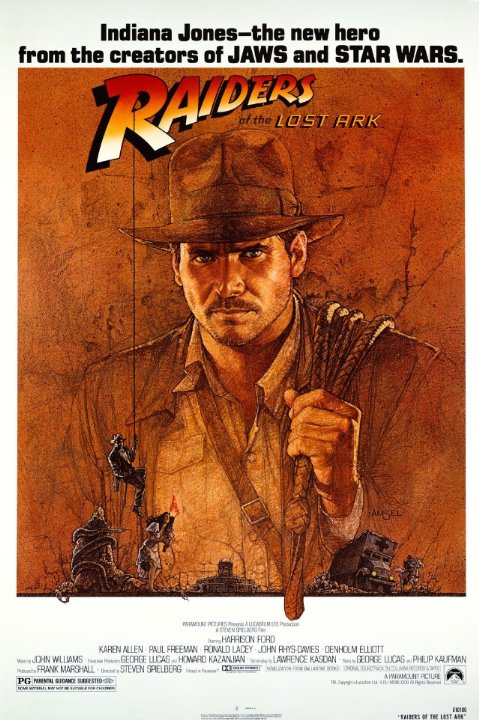
When I was little, I was seriously confused by this movie’s title. For a long time, I thought it was Raiders of the Lost Dark, and I could never figure out how the dark got lost. When I finally figured out it was Raiders of the Lost Ark, I was still confused. There was not a single reference to Noah in the entire movie. That didn’t keep me from liking the movie; I just ignored the confusing title and went along for the ride. And what a ride it is. Raiders of the Lost Ark remains one of the most purely fun movies I have ever seen, even though now it appears to have a new title: Indiana Jones and the Raiders of the Lost Ark.

So what’s the story? Dr. Indiana Jones, a professor of archaeology, is approached by two United States government officials. It seems that the Nazis are looking for the Ark of the Covenant because they believe it has mystical powers. Jones’s old mentor, Abner Ravenwood, is the world’s foremost expert on the Ark, but no one can locate him. Jones is tasked with finding first Ravenwood and then the Ark so that the Ark will be kept out of Nazi hands.

The Good: The thing that really sticks out for me in this movie is the pacing, which is kind of an odd thing to notice first off. But there is never a dull moment. It jumps from action scene to action scene. Even when there is a break from actual action, the scenes aren’t dull. The screenplay is fun enough and light enough to make even the longest talking scenes entertaining. It also means you can’t look away; you’ll miss something important if you do.

The characters in Raiders of the Lost Ark are very well-written, well-rounded characters. Marion Ravenwood is one of the best action movie heroines ever, I think. She never stands around and waits to be rescued. If there is danger, she always jumps in and gives as good as she gets. Yes, sometimes she does end up having to be rescued, but she only gets rescued after she’s done everything she possibly can to get out of the situation herself. She’s kind of an anomaly, not just for action movies, but for movies in general. Karen Allen played her perfectly. Indiana Jones is also a good character. He may be a terrible archaeologist since he is willing to destroy ancient temples to get the artifacts that he wants, but he’s still a good character. He can use a whip and shoot a gun and ride a horse and all those other things that good action heroes can do, but he’s also smart and not invincible. He gets hurt more than once. He would have completely lost that fight against the bald muscular German mechanic if not for the airplane propeller. I like that. What can I say? I’m a fan of imperfect main characters. Harrison Ford was a fabulous choice for the part.

I found myself admiring the production design that had been done for this movie. The designers not only had to make the audience believe that the action was taking place in the 1930s, but in various countries in the 1930s. It was really well done. Everything from the cars to the clothes to the buildings added up to a convincing 1930s.

John Williams wrote an amazing score for Raiders of the Lost Ark. It’s kind of dramatic, but so is the movie. The music underscores the action at the right moments and helps convey emotion. It’s very good, and it’s held up well. It’s as much fun to listen to now as it was thirty years ago.

The Bad: The action moves quickly, which prevents the viewer from asking too many questions. But something has always bothered me: how does Indiana Jones survive on the outside of a submarine that submerges? I know he’s pretty awesome, but I don’t think he can hold his breath that long. There might be other plot holes, too, but the awesomeness of the movie prevents me from thinking too hard about them.

The Ugly: If you don’t like spiders or snakes, beware. Raiders of the Lost Ark has plenty of both. It also has some graphic violence and special effects which hold up amazingly well. When I was a little girl, my parents would always tell me to close my eyes at certain parts so I wouldn’t get scared. As I grew up, I would close my eyes at those points out of habit. I don’t think I had seen the whole movie until I watched it this week. Sure enough, it is not much fun to watch faces melt and heads explode. (Honestly, though, it’s not the most violent or the worst violence I’ve seen in a movie; it’s not even the worst I’ve seen in the Oscar nominees. But I had to find something to put in The Ugly.)

Oscars Won: Best art direction-set direction; best sound; best film editing; best effects, visual effects.

Other Oscar Nominations: Best picture; best director; best cinematography; best music, original score.

Other Oscar Won: Special achievement award to Ben Burtt and Richard L. Anderson for sound effects editing.

On Golden Pond (1981)

On_golden_pondDirected by Mark Rydell

I’ve always liked the image evoked by the title of this movie. Golden Pond always sounded like such a lovely and peaceful place. But although I love Katharine Hepburn, I had never seen this movie. It was one of those that I always vaguely felt in the back of my mind that I should watch, but I had never made the effort. It turns out that it was a little bit hard to watch. My father is aging faster than I would like, and although I’ve always had a good relationship with him, this movie poked a sad spot in my heart. If actors like Katharine Hepburn and Henry Fonda can get old, what’s to stop the rest of humanity? It’s not comfortable to be confronted with mortality.

So what’s the story? Norman and Ethel are opening their summer house on the lake when they get a letter from their semi-estranged daughter, Chelsea. She wants to come for Norman’s 80th birthday and bring her boyfriend Bill to meet them. With Bill and Chelsea comes Billy, Bill’s thirteen-year-old son. Chelsea asks if they can leave Billy with Norman and Ethel while Chelsea and Bill go to Europe for a month. Norman, Ethel and Billy learn lessons about growing up and growing old during their summer together on Golden Pond.

The Good: Katharine Hepburn is good as always, although it is a little strange to see the normally elegant Hepburn flipping someone off and calling Henry Fonda “Old Poop.” But she sparkles with happiness at being in her beloved place and just generally glows. Henry Fonda also does a fine job as Norman, who is getting old and unsteady and losing his memory a bit. But it’s Doug McKeon as Billy who was the real surprise. He manages to hold his own while playing opposite two screen legends. He puts on a show of bravado, but underneath he’s a kid who is feeling abandoned and unwanted. His friendship with the irascible Norman is a lovely thing to see.

The filming location is lovely. I’m not sure where it was filmed, but the natural beauty of the land led to some nice cinematography.

The Bad: While I’m pretty sure the point of this movie was the reconciliation between Chelsea and Norman, I didn’t much care for the parts with Jane Fonda at all. She made Chelsea come off as a spoiled brat, even though Chelsea is a grown woman. The reasons for Chelsea’s problems with Norman were never made very clear, either. Yes, he’s a grumpy person and tends to snipe at people, but he does that to everyone. If the estrangement was about something other than that, it’s never said. That isn’t Jane Fonda’s fault; that’s just slightly sloppy storytelling. But it made Chelsea look oversensitive and whiny.

The movie is a bit over-scored for my taste. The music is good music, but there’s just too much of it for such a quiet movie. And during the scene in Purgatory Cove, the music sounded downright jaunty, even though the scene was not. It didn’t work for me.

The Ugly: I always hate admitting this because it makes me feel whiny and immature, but I got bored. There were scenes that I loved, but some parts just dragged on. I liked it a lot better once Chelsea and Bill left and it was just Ethel, Norman, and Billy. I could have watched more of that odd fellowship. Why did Chelsea have to be in it and ruin it with her whining? (And yes, I realize that I’m whining about whining.)

Oscars Won: Best actor in a leading role (Henry Fonda); best actress in a leading role (Katharine Hepburn); best writing, screenplay based on material from another medium.

Other Oscar Nominations: Best picture; best actress in a supporting role (Jane Fonda); best director; best cinematography; best sound; best film editing; best music, original score.

Gone with the Wind (1939)

gone with the windDirected by Victor Fleming

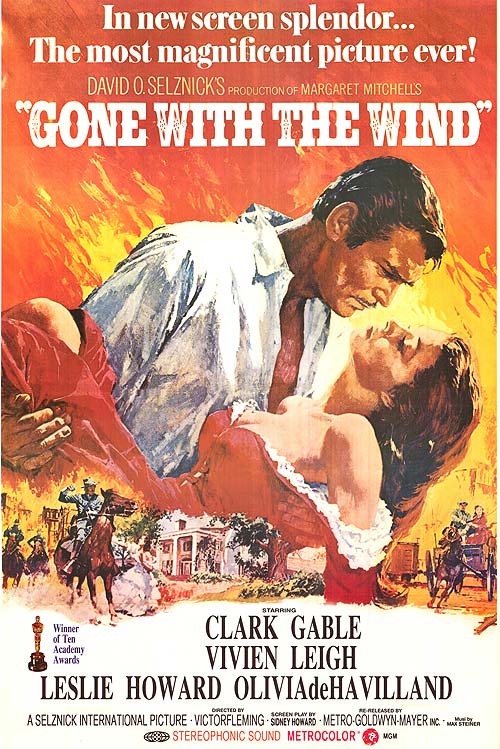
As I’ve been doing this project, I’ve noticed something that a lot of nominees have in common: they are freaking long. I have felt every minute of some of those three-hour movies (I’m looking at you, Thin Red Line!), while others have kept me captivated. Gone with the Wind is almost four hours long, but I didn’t feel it. I had seen bits and pieces growing up, but I watched the whole movie in one sitting when I was eleven. I’ve seen it several times since, including once in the theater when it was re-released for an anniversary event. And every single time I’ve watched it, I’ve been glued to the screen. It doesn’t matter that I know how it ends. The world of Gone with the Wind was so skillfully built that I can’t tear myself out of it. The characters are so real that they almost feel like friends; their triumphs and miseries become ours. That, my friends, is how you make a three-hour-plus movie fly by.

So what’s the story? Spoiled Southern belle Scarlett O’Hara’s world comes crashing down around her when the American Civil War begins. Her life of parties and flirting is over. As she tries to adjust to the harsh realities of her new life, she learns that she will do anything to keep what she loves. (That summary makes it sound boring. Trust me, it’s not.)

The Good: There are so many good things in Gone with the Wind that it’s hard to know where to start. I think I will change it up and start with cinematography. Gone with the Wind is a beautiful movie, full of glowing sunsets and billowing ball gowns. It’s not always pretty, though; the scene at the depot where the soldiers are lying dead in rows is tragic. The birth of Melanie’s son, where everything is shown in silhouette, is exquisitely done. These are just the highlights, though; there are lots of scenes where the camera work more quietly underscores the action or the emotion of the scene.

The costume design is also good. This movie is why I can complain about other movies’ lack of good historical costume. In Gone with the Wind, the fashions change with the times, like fashion does in real life. Not only that, but the clothes are fairly accurate (as far as I know. I am not a fashion historian; I have only picked up tidbits here and there.). I do know that the shape of the hoops change correctly for the times, which may only be a small detail, but it shows that the designer cared enough to do actual research.

The score is sweeping and beautiful and just a little bit over the top, which fits the epicness of this movie. Everything about Scarlett is dramatic, and it’s appropriate that the music in her movie is, too.

It is very easy to forget in this day and age that in 1939, everything in a movie was real. If you wanted a huge crowd of people, you had to hire actual people. If you wanted a fire, you had to burn something. There are some crazy special effects in this movie. I seriously wonder how they managed to film some of the scenes. Special effects took a certain kind of creativity back in the day, and have to give kudos to the special effects people for this movie.

Whoever adapted the giant book Gone with the Wind into a single (albeit long) movie was amazing. He found the most important things, the things that would make a compelling movie and took those out. He knew what to leave out; it was all good stuff – Ellen’s backstory, Scarlett’s other children, Will Benteen – but wasn’t necessary to the movie. Those extra things that fleshed out the novel would have bogged down the movie. It’s an excellent adaptation.

The entire cast of Gone with the Wind is stellar. After I had watched Dark Victory, I was thinking that maybe Bette Davis should have gotten the best actress Oscar, but when I saw Vivien Leigh’s performance again, I had to admit that Vivien Leigh deserved it. Clark Gable as gave an awesome performance as Rhett Butler. He is so good as the strong, manly lover hiding his love behind pride and lust. The flash of hurt on his face when Scarlett admits that she’s marrying him for his money…so sad. And that kind of thing happens more than once. It’s very subtle and very good. Olivia de Havilland plays Melanie Wilkes so beautifully. She manages to be an angelic, self-sacrificing person and yet not make you hate her. And she was only 23 when the movie came out. That was some serious acting for such a young woman. There is some controversy over Hattie McDaniel’s role as Mammy, Scarlett’s nurse/surrogate mother, but she plays the role well and allows us to see the main characters in a different light as she isn’t shy about expressing her opinions.

The Bad: This is an extremely frustrating movie to watch. Rhett loves Scarlett, but is too proud to admit that he’s actually fallen in love. Scarlett is too caught up with her make-believe love for Ashley to notice. When Rhett makes her notice, he is so ashamed of what he’s done that he doesn’t see the opening Scarlett is giving him. When he rejects her at that point, Scarlett is too proud to say anything. Grrrrr. These are two very strong, proud people who are so scared of showing weakness that they can’t allow happiness in. It makes me want to shake them both.

The Ugly: The movie laments the passing of a “beautiful, genteel” culture, but glosses over the evils that that culture is built upon. Slavery made that lifestyle possible, and so it’s hard to feel too sorry for the O’Hara family when they have to pick their own cotton and for Ashley Wilkes when he is splitting rails. Yes, it’s hard, and it’s not what they were brought up to do, but they were brought up to live off of the misery of others. Ashley briefly acknowledges this, but only briefly. Frankly, it was a culture that deserved to die. I can still enjoy the movie, but it doesn’t make me mourn the passing of the Old South.

Oscars Won: Best picture; best actress in a leading role (Vivien Leigh); best actress in a supporting role (Hattie McDaniel); best director; best writing, screenplay; best cinematography, color; best art direction; best film editing.

Other Oscar Nominations: Best actor in a leading role (Clark Gable); best actress in a supporting role (Olivia de Havilland); best sound, recording; best effects, special effects; best music, original score.

Other Oscars Won: Honorary award to William Cameron Menzies “for outstanding achievement in the use of color for the enhancement of dramatic mood in the production of Gone with the Wind”.

Technical Achievement Award to R.D. Musgrave “for pioneering in the use of coordinated equipment in the production Gone with the Wind”.

Ninotchka (1939)

ninotchkaDirected by Ernst Lubitsch

 When I looked at the list of nominees from 1939, I didn’t recognize the name Ninotchka at all. My first feelings when I saw that name on the list were feelings of frustration; I didn’t want to watch a depressing Russian love story with Greta Garbo, who would probably die at the end after a dramatic illness (yes, that’s what I assumed the story was after only seeing the title). I was so pleased to find out when I watched it that it is the complete opposite of those assumptions. I was also pleased to find out that it’s a freakin’ awesome movie.

So what’s the story? The Soviet experiment is failing, and the government has sent emissaries to capitalistic countries to sell some of the treasures that they confiscated from wealthy Russians. Three rather incompetent men are sent to Paris to sell some jewels that had belonged to Duchess Swana during the Revolution. Swana finds out they have her jewels, and her lover, Leon, volunteers to get them back. He manages to gum up the process enough that the government sends Ninotchka, a very stern woman, to Paris to fix the mess. Will Leon be able to change Ninotchka’s views of the world?

The Good: This movie is hilarious. The screenplay is very well done. There are lots of good zingers from Ninotchka about the uselessness of Parisian society that manage to make fun of both communism and capitalism at the same time. So funny.

The acting is very good. Greta Garbo makes Ninotchka’s transition from a committed, no-nonsense Communist Party member to a woman in love believable. My favorite moment is when she goes out dressed in fashionable clothes instead of her practical Soviet clothes. She’s so self-conscious and feels a little bit silly, while at the same time she knows she looks good. It’s a very woman thing, and Garbo plays it perfectly. The three original envoys sent to Paris are very funny, always making excuses about why they need to spend money for the good of the Party. Melvyn Douglas as Leon was a little bland, but not terrible.

Since it’s high Parisian society in the late 1930s, the clothes are lots of fun. That is all.

The Bad: Although I completely understood why Leon fell for Ninotchka, I could never quite understand why she fell for him. I always like to understand couples in a romantic movie, but I wasn’t able to do so in Ninotchka.

The Ugly: While all of the Russians have (more or less) Russian accents, all of the Frenchmen have American accents. It’s a tiny thing, but it really distracted me.

Oscars Won: None.

Oscar Nominations: Best picture; best actress in a leading role (Greta Garbo); best writing, original story; best writing, screenplay.