I'd like to spank the Academy

Posts tagged ‘strong female lead’

Star Wars (1977)

star warsDirected by George Lucas

Happy Star Wars Day! Because it’s May the Fourth, I decided I needed to review Star Wars today. Yes, it was nominated for best picture. Even though Star Wars is an awesome movie, it seems kind of odd today when Star Wars is just a fact of life. Also, the Academy doesn’t always recognize the amazing science fiction blockbusters; it tends to skew towards the brooding independent dramas nowadays. Anyway, Star Wars blew everyone away when it came out. I’m too young to remember that. Like most of my generation, I grew up watching Star Wars. I literally don’t remember not knowing that SPOILER ALERT Darth Vader is Luke’s father. My personal favorite of the original trilogy was Return of the Jedi, because I really liked watching the primitive Ewoks destroy the Stormtroopers. Also, the Ewoks are cute. But I grew up watching them all. Often. I was incredibly excited when the movies were rereleased on big screen in 1997, although I was incredibly disappointed at some of the changes George Lucas made. I was super excited for the new trilogy that started with The Phantom Menace, but now I pretend those movies just don’t exist. I cried last December when I sat in a theatre and watched those yellow letters move across the screen. I cried when Han and Leia saw each other again. So yeah. You could say I like Star Wars. That made it really hard to write an objective review. But I have tried my best, and for those who think I am being too hard on Star Wars, reach out with your feelings, and you’ll know the truth.

So what’s the story? For those of you who don’t know, farm boy Luke Skywalker accidentally becomes embroiled in a fight for the freedom of the galaxy when two droids with the plans to destroy the evil Empire come into his life.

The Good: There really are many amazing things about Star Wars that I think even a non-fan would admit to. The soundtrack, for example. John William’s score may be one of the best movie scores ever written. I love that many of the characters have their own musical themes, or leitmotifs, if we want to be fancy about it. And the orchestrations are wonderful. It seems like the perfect instrument is always chosen to play at a particular time. It’s truly a magical soundtrack.

For the most part, the acting is good. Alec Guinness was apparently annoyed that he was remembered for Star Wars instead of his other movies (if you haven’t seen it, I recommend Kind Hearts and Coronets; it’s hilarious and Guinness is amazing), but he did a good job anyway. Harrison Ford was perfectly cast as Han Solo, the mercenary smuggler with a conscience. Carrie Fisher is fabulously fierce as Princess Leia, a princess with attitude who withstands torture to protect what she believes in. Leia may be a diplomat, but she’s not a prim and proper princess. She’s fantastic. All of the other roles, from the droids to the aliens to denizens of the Empire, are also well cast. There are too many people to mention in one post, but everyone does wonderful work (with one exception that I discuss later).

Once again, special effects win over CGI. Most of the special effects still look good almost forty years later. That’s just amazing to me. When so many movies nowadays looking dated after two or three years because they used CGI, it makes me happy that older movies still look realistic because of old-fashioned effects. The sound effects were also ridiculously good. Every alien race, every droid sounds different. That must have taken some serious creativity to be able to come up with sounds for all of those different creatures.

The story might not be original (more on that later), but the screenplay is. Lucas managed to balance humor and seriousness perfectly. I also think that it’s very clever how George Lucas let us know what Chewbacca and R2-D2 are saying by the reactions of Han Solo and C-3PO, respectively, instead of using subtitles. It draws the viewer more into the movie, I think. And honestly, who doesn’t know at least one quote from Star Wars? It’s a very memorable screenplay.

All of these elements – the music, the acting, the special effects, the screenplay – are great, but what really makes Star Wars so special is the world building. George Lucas created an entire galaxy and filled it with all sorts of different aliens and droids and humans. He imagined different sorts of planets, from planets that are nothing but deserts to swamp planets inhabited by seven-foot-tall furry aliens to planets that are completely peaceful and have no weapons. He imagined a princess who rescues her rescuers when their plan goes wrong. There are good guys and bad guys, yes, but there are also people who couldn’t care less about the Empire and are just trying to live their lives the best way they know how. The many books that have been written that take place in the Star Wars galaxy is a testament to what a fertile field it is for all kinds of stories. To me, that is the most amazing thing about Star Wars.

The Bad: The story is completely unoriginal. George Lucas himself has admitted that he closely followed elements of Joseph Campbell’s book The Hero with a Thousand Faces as he wrote the story of Star Wars. Of course, having Luke follow the same familiar pattern that we’ve seen heroes go through throughout literature for thousands of years may be what makes the story so endearing. One could argue that even though much of the “far, far away” galaxy is unfamiliar, placing Luke in the story pattern as many of our myths connects the story back to us. Still, if you’re looking for story originality, you will not find it in Star Wars.

Like I said before, most of the actors are great. However, Mark Hamill has some cringe-worthy moments as Luke Skywalker. He doesn’t do quiet sadness very well. He’s not terrible throughout the entire movie, but sometimes it’s so bad.

The Ugly: Even though Star Wars takes place “a long time ago, in a galaxy far, far away”, the men all have Earth-style 1970s haircuts. The style isn’t really flattering on anyone, even the swoon-worthy rogue Han Solo. That was a bad call by the hair and makeup people.

Another thing that I find terrible is how hard it is to find the original 1977 theatrical version instead of the updated one released in the late 1990s. People should be able to have access to the movie that they fell in love with. My theory is that once an artist releases his work to the public, it belongs to the public as much as it belongs to the artist. Thanks to my awesome brother who was far-sighted enough to snap up the originals on DVD during the short time they were available, I was able to see the movie I grew up with (Thanks, Jon!). But even on those DVDs, the original movies are only on the bonus disc. They aren’t the main event. I would really like to see a beautifully restored edition of the original versions on DVD. (Are you listening, Disney? Or Fox? Or whoever owns the original movies? It would be a big money-maker. Lots of people would love you. Please?)

Oscars Won: Best art direction-set direction; best costume design; best sound; best film editing; best effects, visual effects; best music, original score; special achievement award for Ben Burtt for sound effects for the creation of the alien, creature, and robot voices.

Other Oscar Nominations: Best picture; best actor in a supporting role (Alec Guinness); best director; best writing, screenplay written directly for the screen.

Zero Dark Thirty (2012)

PrintDirected by Kathryn Bigelow

When I’m deciding which year of movies I want to watch next, sometimes I let a random number generator pick. But when I chose the movies of 2012, I had a very specific reason in mind: I was in the mood to watch an action movie. There haven’t been a lot of action movies nominated for best picture, but I was certain that 2012 had two: Zero Dark Thirty and Argo. I hadn’t seen either one, but I knew that Zero Dark Thirty was about the assassination of Osama Bin Laden, which was exciting, so it had to be an action movie, right? Guess what. I was wrong. Don’t get me wrong; it’s a fantastic movie. It’s definitely not an action movie, though.

So what’s the story? Maya is a young CIA operative sent to Pakistan to protect the US from future terrorist attacks. It takes her ten long years of ferreting out information from the thinnest threads, but she is finally certain that she knows where Osama Bin Laden is hiding. Now she just has to convince the rest of the CIA.

The Good: Jessica Chastain is fabulous as Maya, the woman who believes in what she’s doing and refuses to budge on what she believes is correct. She’s tenacious and single-minded and tough. She doesn’t care about what other people think and she’s not ever going to give up. The part itself may seem a little cold, but Jessica Chastain does an excellent job. Her acting makes the ending perfect.

The supporting cast is solid. I love it when a movie has even the smallest role perfectly cast, and Zero Dark Thirty is one of those movies. If I made a list of everyone who does an amazing job in this movie, it would be really long, so I will just mention a couple. Jason Clarke and Jennifer Ehle both make fantastic CIA operatives. Kyle Chandler is good as Joseph Bradley, Maya’s boss who doesn’t really believe in her lead, but who knows that ignoring her is a bad idea. Joel Edgerton and Chris Pratt make excellent Seal Team Six members. But again, everyone is so spot on that it’s hard to pick out the best people.

I’ve watched other movies based on historical events that play fast and loose with dates and places (cough, Elizabeth, cough). I appreciated how places and dates were so specific. I even like the “chapters” that helped keep the story moving and showed how time passed, because frankly, spy work seems to move very slowly sometimes, and it would have been boring if every single step that Maya made to draw the lines and make the connections had been shown.

I loved the beginning. The lack of any images made the voices of September 11th so compelling that it drew me in and made me remember my September 11th experience. I don’t think that could have been done nearly so well if scenes from that day had been splashed on the screen.

The soundtrack is amazing. Music is used sparingly, so that when it happens, it really makes an impact. Most of the action happens to natural noises, which makes it more realistic, and the occasional music unobtrusively underscores the emotion. That was an excellent choice.

The screenplay manages not only to tell the story of what happened, but to make the characters feel real and believable. They have backstories and lives outside of what’s going on thanks to the screenplay, which I understand was rewritten after Osama Bin Laden was killed. I think it would be fascinating to know what the ending was going to be before that happened.

The Bad: Even though we all know how the story ends, the tension during the Seal Team Six scene is almost unbearable. That’s probably a good thing from a storytelling point of view, but for me, it’s as uncomfortable as watching a horror movie, especially since there are innocents involved.

The Ugly: The first twenty minutes or so of the movie are mostly scenes of torture, and there are other scenes of torture throughout. Bigelow doesn’t pull any punches or soften these scenes, and they are hard to watch. I know a lot of people believe that torture is sometimes necessary; I don’t want to get involved in any discussion about that. I’m just saying that it’s not an easy thing to see, especially knowing that torture happens in real life.

Oscar Won: Best achievement in sound editing (tied with Skyfall).

Other Oscar Nominations: Best motion picture of the year; best performance by an actress in a leading role (Jessica Chastain); best writing, original screenplay; best achievement in film editing.

Silver Linings Playbook (2012)

silver linings playbookDirected by David O. Russell

I’ve mentioned before that I have mental health issues; depression is what I have to put up with. It’s not fun, and it’s not easy. It has been especially hard in the past because mental illnesses aren’t something you talk about. If you tell someone you have cancer or diabetes, they will sympathize with you, whereas there are still people out there who don’t believe that depression is a real thing. “Just look on the bright side,” they say. “Go running. Eat better. You’re just feeling down.” But people who are just having a bad day don’t seriously fantasize about slitting their wrists or driving their car off a cliff. They haven’t written letters to their families explaining why they felt the need to do this. People who are just feeling down don’t skip their favorite activity of the year for which they have VIP passes because they are crying all day for no particular reason and can’t stop. They don’t sit and think about how worthless they are and how no one really would miss them if they were gone and how their pets would really be happier with another family anyway. Yes, everyone has off days now and then, but for me, those things were my reality. Every. Single. Day. Now that I’ve found an antidepressant that works for me, those things are thankfully not a part of my life as often as they were, but this is why I appreciate movies like Silver Linings Playbook that bring to life people struggling with real issues that are so misunderstood. It’s also why I started this movie three or four times before I could actually watch it all the way through and why I still wouldn’t have seen it if it weren’t for my medication. It’s too real and too painful, too hard to watch when I wasn’t doing well. Sorry for the very long ramble, but it’s a subject close to my heart and I apparently had a lot to say about it.

So what’s the story? Pat Salitano has just been released from a mental institution after fulfilling a court-ordered eight month stint there. He is determined to get his life back to normal and win back his ex-wife, Nikki, who has not only left him, but gotten a restraining order against him. He meets a young woman named Tiffany who wants him to join a dance contest with her. Hoping that this will show Nikki that he has turned his life around, Pat agrees.

The Good: The acting was wonderful. Bradley Cooper as Pat, Jennifer Lawrence as Tiffany, and Robert De Niro and Jacki Weaver as Pat’s parents were amazing. I loved the subtle hints in Robert De Niro’s acting and character that showed that he, too, was dealing with mental health issues, although they were undiagnosed in his case. I thought that casting grumpy-faced Julia Stiles in the part of Veronica, a woman not really satisfied with anything, was brilliant, and I also liked John Oritz in the role of Ronnie, Veronica’s husband.

The music fit the movie perfectly, just kind of laid-back piano and guitar music. Nothing overblown or loud or fancy, because the story isn’t any of those things. It’s a small, intimate story about people working through their problems and finding out that when dreams die, it’s okay to find new ones.

I liked the screenplay. It made all the characters very real, not caricatures of people with mental illness. Or of people living in Philadelphia, for that matter. It helped make the people come alive. I appreciated, too, the humor in the screenplay. Yes, mental illnesses are serious, but funny, random things happen to everyone, regardless of their health. Also, I have felt the same way as Pat about Hemingway (and other authors) at times, so I loved that someone finally said it.

The Bad: I don’t really have anything to complain about here. I really liked the movie, except for two issues that were so bad for me that they have to go in the ugly category.

The Ugly: The age difference between Jennifer Lawrence and Bradley Cooper bothered me throughout the entire movie. I didn’t know at the time what the age difference was, but I would have put Pat at 42 and Tiffany around 23 just looking at them. There is really only a fifteen year age gap between Bradley Cooper and Jennifer Lawrence, but still. It felt kind of icky to me. While Jennifer Lawrence did a fabulous job, I would have been happier with someone a little older.

I would have been fine with it, though, except for the ending.  (SPOILER ALERT) I talked myself into being okay with the age gap because they were just friends, two people who were dealing with similar issues. Age isn’t as big an issue there. But then they were shown being in love and having a relationship, and I didn’t like that. It didn’t seem to fit the movie. I really, really wanted them to just stay friends. I wanted them to each know that they had someone they could depend on who understood them, but somehow by having them fall in love, it cheapened the movie for me. That ending made it seem that unless a man and a woman fall in love, their relationship is pointless. The movie became just another romantic comedy instead of a comedy about people dealing realistically with mental issues, and that bothered me. Silver Linings Playbook is still worth watching, but it became less meaningful to me personally.

Oscars Won: Best performance by an actress in a leading role (Jennifer Lawrence).

Other Oscar Nominations: Best motion picture of the year; best performance by an actor in a leading role (Bradley Cooper); best performance by an actor in a supporting role (Robert De Niro); best performance by an actress in a supporting role (Jacki Weaver); best achievement in directing; best writing, adapted screenplay; best achievement in film editing.

Beasts of the Southern Wild (2012)

beasts-of-the-southern-wild-posterDirected by Benh Zeitlin

The nice thing about doing this project is that sometimes, I get around to watching movies that I’ve been meaning to watch for a while. Beasts of the Southern Wild is one of those movies. I’ve been wanting to see it since it came out, but I haven’t ever had the time, the desire, and the DVD at the same time. Now that the stars have aligned and I’ve seen the movie, my opinion of it is: huh? I had heard it was a fantasy, so I was expecting something along the lines of Pan’s Labyrinth. It wasn’t like that at all. I liked it, but was left confused (and a little disappointed) when it was over.

So what’s the story? Little Hushpuppy lives with her daddy, Wink, in a poverty-stricken Mississippi River Delta area known as The Bathtub. She loves her community and her daddy, but when the polar ice caps melt, The Bathtub is flooded, ancient animals called aurochs are released from the ice, and Wink becomes desperately ill. Hushpuppy must confront her fears and go on an epic journey to save her daddy.

The Good: The whole time I was watching Beasts of the Southern Wild, a quote from Shakespeare’s A Midsummer Night’s Dream kept running through my head: “And though she be but little, she is fierce.” Quvenzhané Wallis was fantastic as Hushpuppy. She had the most determined, ferocious look I have ever seen on a child. I couldn’t believe she was only five when she did that acting. And she didn’t do a good job of acting for a child; she did a good job of acting, period. It was an incredible performance. I can’t get over it.

The soundtrack fits the movie (and Hushpuppy) perfectly. There are moments of dreamy bells that reminded me of childhood fantasies and imagination. There are some great zydeco fiddles and accordions that are reminiscent of the area. It’s very moving and very well-done.

I don’t know the technical term for this, but I really liked the look of the movie. The blending of the fantastical elements with the more realistic elements of the Southern poverty worked really well. It’s not quite set decoration; maybe art direction fits. Whatever you choose to call, it was artfully done.

The Bad: I don’t like the feeling that I don’t know what to make of this movie. I admired Hushpuppy’s ferocity and determination, the love that everyone had for The Bathtub, but I don’t understand how that translates into their need to blow up the levees. I kept thinking that it reminded me of something like The Odyssey, but it wasn’t quite a direct retelling of that story. The lines were extremely blurred between the reality of Hushpuppy’s situation and the fantasies that she created to cope with reality, so it’s hard for me to know what happened and what didn’t. I really don’t like feeling this way about a movie. Maybe I just need to watch it again someday.

The Ugly: I didn’t find anything bad enough about this movie to make it into the ugly category. Beasts of the Southern Wild is very good as a whole. It’s just a confusing good.

Oscars Won: None.

Oscar Nominations: Best motion picture of the year; best performance by an actress in a leading role (Quvenzhané Wallis); best achievement in directing; best writing, adapted screenplay.

Amour (2012)

amourDirected by Michael Haneke

I wasn’t planning on taking this last week off. I had watched several of the movies and was reviewing my notes to write my posts when I got hit by a migraine that didn’t wear off for a few days. This meant that I got ahead in the audiobooks I’m currently listening to (Pinocchio: bizarre and pedantic; and Two Years Eight Months and Twenty-Eight Nights: bizarre and amazing, in case you were curious), but it was not helpful for blogging. But it’s gone and I’m glad to be back writing again.

I’m not hugely familiar with French cinema, but I like to think that I’ve seen more French movies than the average American. The French movies I have seen tend to be move a little more slowly, be a little more introspective, and end much more depressingly than American movies, so I wasn’t expecting a happy love story about an elderly French couple when I watched this movie, no matter what the cover looked like. But Amour was so much sadder than I would have been able to anticipate, mostly because it was so heartbreakingly real.

So what’s the story? Anne and Georges are a happily married couple. They are elderly retired music teachers, but they still live in their beautiful apartment by themselves. They read books and go to concerts and see their friends and play Chopin on their beloved piano. All that changes when Anne has a stroke and the realities of old age intrude upon their lives.

The Good: The acting is superb. Emmanuelle Riva was so perfect as Anne that I forgot that she was an actress playing a stroke victim; I thought that I was truly watching a woman whose body and mind had failed her. Jean-Louis Trintignant was amazing as Georges, a man watching his beloved wife slip away, but stubbornly doing his best to fight for her and care for her.

The soundtrack for the movie was also perfect. The only music in the movie was music that the couple played themselves on the piano or that they  were actually listening to. It added to the realism of the film. Any musical score that had played in the background to underscore the emotions or tell the viewer what they were supposed to be feeling would have detracted from the emotion that the movie brings just from the subject matter and acting.

The Bad: Because the movie is so realistic and captures so perfectly the burden of caring for a disabled loved one, it drags sometimes. Taking care of sick people isn’t fun or glamorous, and sometimes it’s downright dull. Amour needed to be that way, but watching people do dull things isn’t a completely fascinating way to spend two hours. I will admit to nodding off a couple of times. (And no, I do not wish to hear any comments along of the lines of “if you think this is boring, go watch Transformers!” Life is boring sometimes, and watching someone else’s life is boring. This truth doesn’t detract from my intelligence or from the beauty of the movie.)

The Ugly: There is nothing lovely about physical and mental decline. It is a horrible thing to see. Just like life can be boring, life can be horrible. This movie is very hard to watch because of that. Amour is a stark reminder of reality and not for the faint of heart, for those who only wish to see movies about the young and happy. It’s a beautiful portrayal of a terrible subject. Although I’m glad that I saw it, I don’t think I will ever be able to watch it again.

Oscar Won: Best foreign language film of the year.

Other Oscar Nominations: Best motion picture of the year; best performance by an actress in a leading role (Emmanuelle Riva); best achievement in directing; best writing, original screenplay.

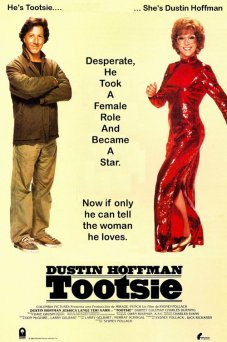
Tootsie (1982)

tootsieDirected by Sydney Pollack

I had seen Tootsie before, when I was probably ten or eleven. At that time in my life, I just thought it was weird. Why in the world would a man dress as a woman? Why could nobody see that Dorothy was a man? I didn’t understand the gender politics at play, either, so I was just left with an impression of oddness. This is why eleven-year-olds shouldn’t review movies made for adults. Tootsie is fabulous and hilarious and still relevant today, which is honestly kind of sad. There should have been more progress made in equality in the workplace in the last thirty-three years.

So what’s the story? Michael Dorsey is an actor who can’t get work. Even though he’s good, he has a reputation of being difficult to work with. Desperately in need of money, Michael decides to become Dorothy Michaels in order to try out for a role on a soap opera that a female friend didn’t get.  Michael soon finds out that when he puts on his dress and his makeup, he also puts on a different personality as Dorothy, inadvertently becoming a crusader for women’s rights. He also finds himself falling for his female coworker, but he can’t tell her who he really is. Will Michael be able to pull off his deception? Does love really conquer all? And will Michael ever lend his dresses to Julie?

The Good: The screenplay is brilliant. Both funny and meaningful, it manages to show Michael’s growth as a person without ever being preachy or obvious. It’s a tough balancing act, and the screenwriters pulled it off. After I watching Tootsie, I’ve been thinking about why more comedies aren’t nominated for best picture; watching lots of heavy dramas isn’t always the most fun. I’ve decided that it’s because the best movies introduce you to a new idea or make you think, and it is much easier to do that with a dramatic story than with a comedic one. The writers for Tootsie managed that, partly by letting the characters in the movie be real people, who sometimes get off killer zingers and who sometimes have no idea what to say. I love it. (Incidentally, this is one of the few times that I have recognized the name of a screenwriter as it flashed on the screen during the opening scenes: Larry Gelbart is one of the writers and producers of the television show M*A*S*H*, which is grew up watching with my parents and then grew to appreciate when I watched reruns on the Hallmark Channel in college. M*A*S*H* balances comedy with hard topics in the same way.)

The acting is fabulous all around. Dustin Hoffman plays Michael Dorsey and Michael Dorsey playing Dorothy Michaels so well that it’s indescribable. It’s a performance that needs to be seen, not just talked about. Teri Garr is wonderful as Sandy, the friend whose role Michael steals. She’s frustrated as an actress and as a woman, but she has hope that maybe things will get better. I love the role, and I love Teri Garr in it. Charles Durning plays Les, a man who falls in love with Dorothy. His reactions later on in the movie are priceless. Bill Murray is Jeff, Michael’s sarcastic playwright roommate. George Gaynes plays John Van Horn, the star of the soap opera who believes that he has the right to kiss all of his female coworkers. Michael’s bewildered agent is played by Sydney Pollack, who also directed the movie. Even the small roles are incredibly well-played. It’s one of those casts that melds together well and plays perfectly off each other. I love it.

The makeup is very good. Dustin Hoffman is listed twice in the credits, both as Michael Dorsey and as Dorothy Michaels. I think that decision was made because Dustin Hoffman is basically unrecognizable when he’s made up as Dorothy. It’s quite the feat.

The Bad: For being a movie about women being powerful, Julie and Sandy are both kind of stereotypical and weak. Sandy gets weepy and hysterical often at the drop of a hat, and Julie doesn’t have much personality. She’s brave to have a baby on her own in the 1980s, and she’s a sweet girl, but she doesn’t go very deep. It’s kind of disappointing that the only woman who is very strong and who bucks female stereotypes is a man.

The Ugly: The soundtrack is everything that is bad about ‘80s music. I’m not sure how it sounded originally, but it hasn’t aged well. The theme song (“It Might Be You”) is over-synthesized, which makes it super-cheesy. It might be a beautiful song if it was a bit more simplified, but it nothing about the 80s was simple or subtle, and the music in Tootsie suffers because of that.

Oscar Won: Best supporting actress (Jessica Lange).

Other Oscar Nominations: Best picture; best actor in a leading role (Dustin Hoffman); best actress is a supporting role (Teri Garr); best director; best writing, screenplay written directly for screen; best cinematography; best sound; best film editing; best music, original song (“It Might Be You”).

The Quiet Man (1952)

the-quiet-man-movie-poster-1952-1010203160Directed by John Ford

 As a librarian, I spend a lot of time using the alphabet, so yes, I realize that I by reviewing The Quiet Man today, I am doing things out of order. But Maureen O’Hara died on Saturday, and I’ve been thinking about her and her movies a lot the last couple of days. Because of Miracle on 34th Street and The Parent Trap (the originals of both, NOT the inferior remakes), I grew up admiring Maureen O’Hara as a strong, beautiful woman, completely unafraid to be herself, no matter what society thought. After reading obituaries and tributes to her the last couple of days, I get the feeling that she truly was that way. Since Maureen O’Hara plays another beautiful, strong woman in The Quiet Man, I’m posting my review of it today as my little tribute to a wonderful actress.

I grew up watching John Wayne movies, so I’m not sure how I missed this one. No, it’s not a Western, but I’d seen lots of other non-Western John Wayne movies. But even though I had never actually seen The Quiet Man, I had seen E.T. the Extraterrestrial, so I was really excited to finally know which movie included the dramatic kissing scene that E.T. watches on TV. It was a gap in my movie trivia knowledge, and I was ecstatic to have it filled in. Beyond that bit of trivia, I was glad to finally see The Quiet Man for another reason: it’s a dang good movie!

So what’s the story? Sean Thornton left Ireland for America with his parents when he was three years old, but his mother always talked of Ireland as if it were paradise, so he decides to move back and buy the cottage where he was born. He sees fiery-spirited redhead Mary Kate Danaher as soon as he steps foot in the village of Innesfree and decides that she is the girl for him. Unfortunately, Sean offends Mary Kate’s brother almost as soon. Although Mary Kate makes no secret about her reciprocation of Sean’s feelings, will her brother and her Irish customs keep them apart?

The Good: I’m going to mention cinematography first, because this movie is so beautiful that it literally made me cry. During the race, when the horses are pounding across the beach with the green mountains in the background…oh, it’s amazing. I can’t even begin to describe the beauty of it all. I know that Ireland is beautiful, but photographers still have to have an eye to capture the beauty, and the cinematographer did a fabulous job.

This movie is perfectly cast. I can’t think of another actress who could have done a better job at playing Mary Kate than Maureen O’Hara. She’s strong and proud and just plain wonderful. John Wayne is good as always as the man who is trying to live his dream, but who just doesn’t understand the culture of the woman he loves. He’s confused and frustrated, but so wholly in love. John Wayne and Maureen O’Hara were good friends in real life, and they have excellent on-screen chemistry.

The supporting cast is also so good. Ward Bond makes a surprisingly convincing Irish priest. Victor McLagen, although perhaps a little old to look like Maureen O’Hara’s brother, is full of bluster and silly pride as Will Danaher. Barry Fitzgerald brings a fabulous sense of humor to the role of Michaleen Oge Flynn, and his real-life brother Arthur Shields is excellent as the Protestant Reverend Cyril Playfair. Mrs. Playfair, played by Eileen Crowe, is mischievous and fun. I love them all!

The musical score is gorgeous. Victor Young used a lot of old Irish melodies, but also wrote some beautiful themes of his own. The music complements the movie perfectly.

The story and screenplay are fabulous. I’m not a huge fan of romantic comedies in general, because they’re just so fake. But The Quiet Man is so real. Two proud, stubborn people fall in love, but have a hard time adjusting to each other. Even though they love each other, they don’t completely understand one another. Movies don’t usually show that. Romantic comedies also tend to end with the wedding as the happy ending, but The Quiet Man is not like that. I wish more moviemakers would be brave enough to tell a real story like this one.

The Bad: Because I am a modern woman, I was incredibly uncomfortable with the scene where Sean drags Mary Kate off the train and pulls her across the fields and through the village. Yes, she was asking something of him that he didn’t want to do, but he wasn’t trying to understand her culture, either. Also, I’m not sure how accurate the Irish culture was portrayed. It felt very stereotypical to me, but maybe the stereotype happened because of reality. I don’t know. I just had to turn off the cultural sensitivity part of my brain, and then I was okay.

The Ugly: Nothing, unless you are even more sensitive than I am about the dragging through the fields scene.

Oscars Won: Best director; best cinematography, color.

Other Oscar Nominations: Best picture; best actor in a supporting role (Victor McLaglen); best writing, screenplay; best art direction-set direction, color; best sound, recording.

Random Fact: Even though The Quiet Man won an Oscar for best color cinematography, I once had a library patron who refused to check out the copy we have because it wasn’t in black and white, which, according to her, was the original. I did some research and apparently, ABC only had a black and white print, so that’s what was shown on broadcast TV for a while. The patron never did believe me that The Quiet Man was originally in color. Sigh.

In the Bedroom (2001)

in the bedroomDirected by Todd Field

Even when I recognize the titles of the movies that I’m watching, I don’t always know anything else about them. Sometimes, though, the title gives me a very good idea of what the movie is about. Other times, I am completely wrong. I had never really wanted to see In the Bedroom because I was convinced it was a raunchy sex comedy. That couldn’t be farther from the truth. I was surprised to find that it is instead a slow-moving drama about how a family deals with tragedy. I think I will have to stop judging movies based on their titles.

So what’s the story? Frank Fowler is a college student home for the summer. To his mother’s dismay, he starts dating Natalie, an older woman with two little boys. Natalie also has an ex-husband with a temper. As the summer heats up, tensions mount, and tragedy soon follows.

The Good: In Ian McEwan’s (rather dull) novel Saturday, two people are discussing Tolstoy, and one says, “The genius is in the details.” I feel that way about In the Bedroom. Everyone is believable, partly because the screenplay allows for details. When she’s depressed, Ruth Fowler sits on her couch, watching pointless TV and smoking. Matt Fowler likes to meet his son, Frank, for lunch. Natalie makes awkward conversation with her boyfriend’s college-educated parents, trying to get them to like and accept them. These little scenes, while not action-packed, reveal character and make the people real. The realism makes the sadness later much more real.

Because the screenplay moves so slowly, the acting had to be incredible. Tom Wilkinson and Sissy Spacek are Matt and Ruth Fowler, who are trying to understand and be supportive of their son’s choices, while at the same time not being happy about them. Marisa Tomei is Natalie, a woman who enjoys dating a younger man, but can also see his naiveté. Frank is played by Nick Stahl. He makes Frank a very sweet young man who is enthusiastic about life, but doesn’t really understand that choices have consequences. They are all a joy to watch.

The cinematography was interesting. It would have been very easy to film this movie about a normal family with straightforward camera angles, but instead the filmmakers took the opportunity to use the camera to show that people have inner lives and thoughts. I liked that a lot.

The Bad: Because this movie allows for the details, for the normal conversations between ordinary people, it gets a little boring sometimes. But guess what? Life is boring sometimes. I’m still trying to figure out how I feel about the ending, though. It might have been too exciting to be believable.

The Ugly: I spent a lot of time being annoyed that Natalie and Frank spent so much time with her boys when both Frank and Natalie kept insisting it was only a summer fling. It seemed like such an irresponsible thing to do, to let kids get attached to a boyfriend you’re only planning on dating for a few months. It made me grumpy.

Oscars Won: None.

Oscar Nominations: Best picture; best actor in a leading role (Tom Wilkinson); best actress in a leading role (Sissy Spacek); best actress in a supporting role (Marisa Tomei); best writing, screenplay based on material previously produced or published.

Johnny Belinda (1948)

johnny-belinda-movie-poster-1948-1020435490Directed by Jean Negulesco

When I was a little girl, my family always had a copy of Leonard Maltin’s Movie Guide on hand. This was in the days before IMDb, and we liked to look up people who looked familiar in movies to figure out what other movies they had been in. In the back of the books was a list of the Oscar winners for best picture, actor, actress, and director for every year. Johnny Belinda was on that list because of Jane Wyman’s win, but that was all I knew about the movie before I saw it. I had a vague idea it was about a boxer; I’m not sure why. It most definitely is not. It’s a beautiful and moving story about people in a small town.

So what’s the story? Dr. Robert Richardson is the new doctor in a small fishing village in Nova Scotia. He goes out to the mill to help the mill owner and his sister deliver a calf. There he meets Belinda, the owner’s daughter, who is a deaf-mute. Because she can’t communicate, everyone in town assumes she is mentally incapable, but the doctor recognizes her intelligence and teaches her lip-reading and sign language. Belinda begins to blossom under his tutelage, but when she is raped and becomes pregnant, the town turns on her and the doctor.

The Good: Johnny Belinda was deservedly nominated in all four acting categories. Jane Wyman plays Belinda with sensitivity and tact, never over-acting. It’s a fabulous performance. Lew Ayres is the outsider doctor who ties to a more modern society allow him to help a woman who would have been stuck in her own world for her entire life. Belinda’s father is played by Charles Bickford. He grows from an impatient, rather uncaring father to a man who is proud of his smart, beautiful daughter. Agnes Moorehead, perhaps best known for her role of Endora in Bewitched is Belinda’s aunt Aggie. Aggie isn’t impressed with Belinda’s progress and is unkind to Belinda until Belinda becomes pregnant. At that point, Aggie becomes protective and loving. It’s a quick turnaround, but it’s very realistic. All of those performances were fantastic. And they weren’t the only ones. Stephen McNally is nicely creepy as the cocky Locky McCormick (and yes, his name is Locky, not Lucky; it’s short for Laughlin, apparently), and Jan Sterling plays the vain, pettish Stella perfectly. The whole movie is very well-cast.

The screenplay was also excellent. The story is sad, yes, but there were moments of humor, because that’s life. I loved the part where Dr. Richardson takes Belinda into a bigger city to see a doctor about her deafness. She looks into the window of a store and sees a brassiere for the first time. She has no idea what it is, and asks Dr. Richardson to explain it to her. He has no words for her, and the look on his face is priceless. Moments like that keep the movie from being too depressing. The subject matter is not easy, but the screenplay treats it sensitively. It’s very well done.

The music underscores the movie well. It helps plot Belinda’s moods and her growth as she becomes more a part of her world. The cinematography helped with that, too. Both elements added a lot to the movie.

The Bad: I had a hard time figuring out what time period the movie was set in. The townspeople didn’t look particularly modern, but the doctor’s clothes were completely 1940s. But then I thought about my grandma. She grew up in a small cabin in backwoods Tennessee in the 40s. Her family didn’t have electricity until after World War II. I’m sure her family wasn’t wearing the latest fashions, either. So although it took me awhile, I don’t have a major beef with it. If you’re aware that it’s contemporary to the time that the movie was made, it shouldn’t bother you at all.

The narration at the beginning bothered me, but I can’t think of another way they could have established some of the background without a lot of conversation that would have seemed kind of stilted and pointless, so I guess I can’t really complain.

The Ugly: I have never seen a more obvious stunt dummy than in this movie. I know this movie was made in the 1940s, but still. Real bodies don’t move like that. It makes a high-tension moment a little less dramatic.

Oscar Won: Best actress in a leading role (Jane Wyman).

Other Oscar Nominations: Best picture; best actor in a leading role (Lew Ayres); best actor in a supporting role (Charles Bickford); best actress in a supporting role (Agnes Moorehead); best director; best writing, screenplay; best cinematography, black-and-white; best sound, recording; best film editing; best music, scoring of a dramatic or comedy picture.

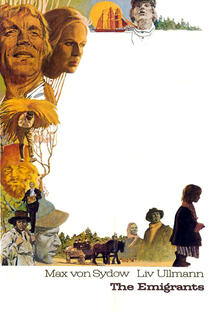
Utvandrarna – The Emigrants (1971)

emgrants posterDirected by Jan Troell

I knew when I started this project that I would have trouble finding some of the movies, but I thought that the ones that would be hard to find would be some of the more obscure ones from the 1930s and 40s, not from the 70s. And I wouldn’t even say that Utvandrarna is obscure; some of my library coworkers remembered seeing it when it came out. Not only that, the Academy thought this movie was so awesome that it was nominated for Best Foreign Language Film the year it came out in Sweden, and then for Best Picture when it was released in America the following year. Despite all this awesomeness, none of the three library systems that I have cards for had it. I had to order it from a university library in Minnesota. The fact that it’s so hard to get makes me really sad, because it’s a fabulous movie.

So what’s the story? Life in Sweden is hard in the 19th century. Abusive employers, failed crops, and a strict religion give different members of a family different reasons to leave Sweden for America. Utvandrarna chronicles this family’s journey from Sweden to Minnesota.

The Good: The acting is amazing. Liv Ullman is Kristina, who grows from a young newlywed to a mother of many children. She has some heartbreaking moments as she portrays the struggles of daily life in Sweden and the trials of moving a large family to an utterly foreign country. Kristina’s husband is Karl Oskar. He yearns for a better life for his family, but is unsure of how to reach that goal. Max von Sydow does an excellent job at showing Karl Oskar’s torment. The other standout in my mind was Monica Zetterlund as Ulrika, a reformed prostitute. She’s an outcast because of her past, but she both wants and disdains acceptance. She’s a fascinating character and Zetterlund’s performance was fantastic. The other actors were all just as good. No one seemed out of place or bad at acting.

I loved the set design. I’m kind of obsessed with ships, and I’ve always thought it would be kind of cool to sail across the Atlantic in a reenactment of what some of my immigrant ancestors did, but after seeing Utvandrarna, I’m not sure I could do it. I really got a sense of the tininess of the ship and the cramped quarters. The scenes on the ship were almost claustrophobic. The other sets were just as good at building the world of the 1840s. The costumes were good, too. I’m not an expert on Swedish farming clothes of the 1840s, but at they felt right for the time and place.

The Bad: While the set design and costume design seemed authentically 1840s, the hair screamed 1970s. The men’s haircuts were especially bad. They all had Luke Skywalker hair. (And yes, I realize Star Wars came later than this movie, but they still had Luke Skywalker hair.)

The Ugly: Utvandrarna was nominated for five Oscars over two separate years. It has a compelling story and great acting. And yet it is unavailable here in North America except for in an edited, DUBBED form. Dubbing is the worst. I thought this was what The Criterion Collection was for – to preserve fantastic movies that may not be the most popular at the moment. Come on, Criterion Collection people! If the movie is that impressive with dubbing, how amazing would it be in Swedish with English subtitles?

Oscars Won: None.

Oscar Nominations 1973: Best picture; best actress in a leading role (Liv Ullman); best director; best writing, screenplay based on material from another medium.

Oscar Nominations 1972: Best foreign language film.