I'd like to spank the Academy

Posts tagged ‘Opinions’

The 29th Academy Awards: My Verdict
yul brynner

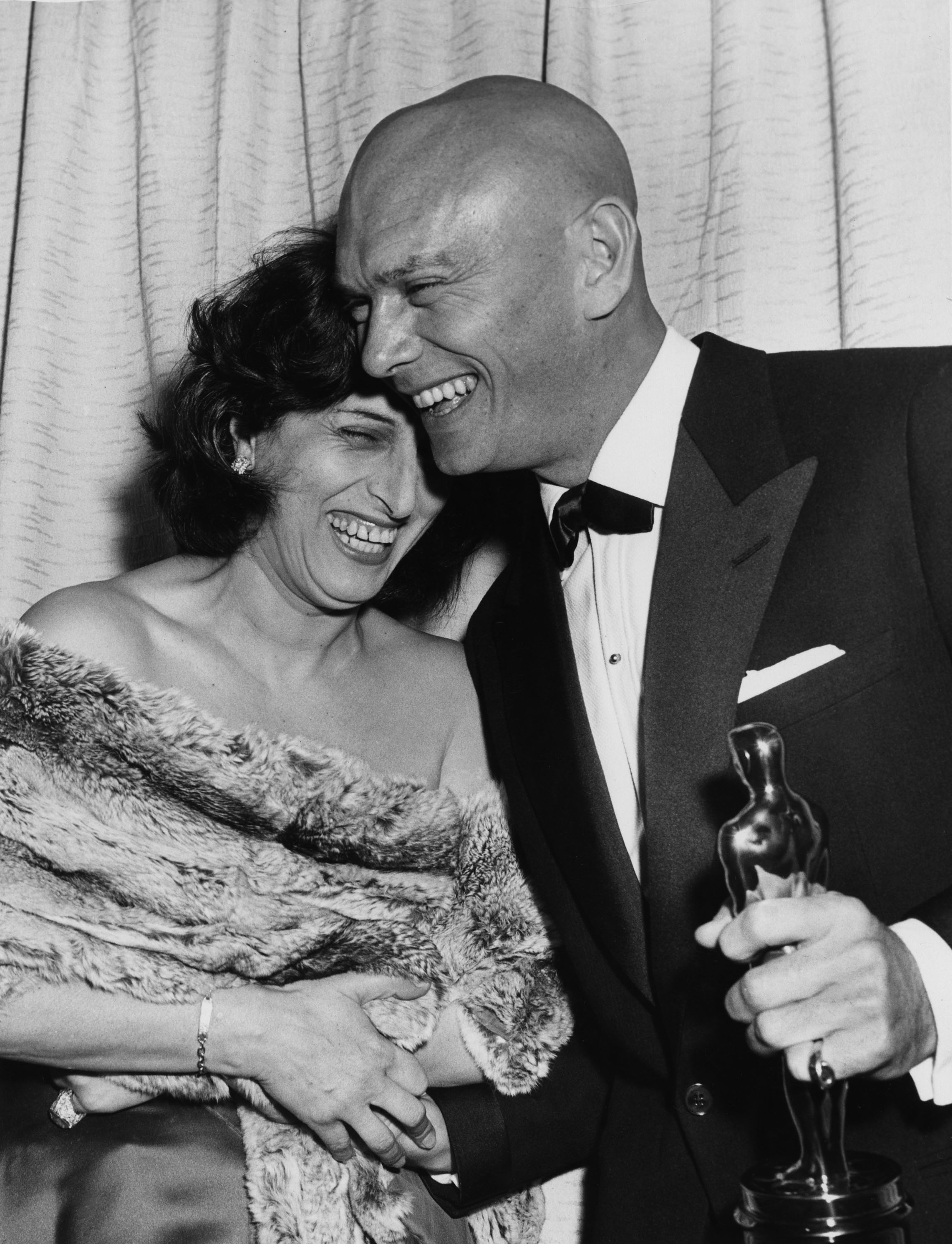
Yul Brynner receives his Academy Award from Anna Magnani.

After I decided I was going to watch all of the movies that have been nominated for best picture, I typed up a list of all the nominees and winners by year and crossed out all the ones I had already seen. There were two years where I had seen every single nominee, but not the movies that had actually won best picture. 1956 was one of those years. (If you’re curious, the other one is 1995. No, I’ve never seen Braveheart. Don’t judge.) So this week was a week of watching some old favorites and way too many epic movies (three of the movies this week were three hours or more) and trying to figure out why in the world The Ten Commandments hadn’t won best picture; I thought biblical epics had always been favorites for best picture wins. But I also got to see a fun new movie that I probably would never have watched if not for this blog.

Having seen so many of the movies and having loved so many of them for so long makes it really hard for me to be impartial. Do I think The Ten Commandments deserved the award for best art direction-set direction because I love the movie, or do I truly think that it was better than The King and I? Actually, no, I think The Ten Commandments should have gotten that one. And best costume design. And since I also love The King and I, I’m not showing too much favoritism, right? But it would have been a hard year to vote on some things. The music in all the movies I watched was equally good. While Yul Brynner did an excellent job in The King and I, and I don’t begrudge him the award at all,  James Dean was equally good in Giant. Actually, I’m a little bit surprised that James Dean didn’t win; sentimentality often plays a part in who wins, and James Dean’s nomination was posthumous. Anyway, a lot of good things happened in motion pictures in 1956.

However, I don’t agree with the best picture winner. Around the World in Eighty Days was fun, and the cinematography was amazing, and the sheer amount of work that it must have taken is mind-boggling. While it deserved recognition for all of that, the movie that I think is the best of the five didn’t win a single Academy Award. Friendly Persuasion is my pick for best picture. In a year of epics, it stands out as a quiet movie about a single family. Everything about it is good, from the acting to the music to the screenplay. The characters are all so alive; they have their virtues, but they also have flaws. Many of the characters are facing inner struggles, which are hard to portray in a movie, but the actors are so good that you can see the struggle inside. The characters aren’t judged for their decisions, either. Each one makes his choice, but the movie doesn’t condemn anyone for what they do. The viewers may or may not disagree with what everyone does, but that’s left to the viewer. The movie itself is neutral, which isn’t often the case, especially when it comes to war movies. I think that was a real feat in and of itself. That’s why I think Friendly Persuasion was the best movie from 1956.

How do I rank the nominees?

5. Giant
3. Around the World in Eighty Days and The Ten Commandments (tie)
2. The King and I
1. Friendly Persuasion

Why a tie? Around the World in Eighty Days drags a bit at times, while The Ten Commandments is interesting all the way through. However, the screenplay for The Ten Commandments is not the best. Around the World in Eighty Days has an excellent screenplay. It also doesn’t take itself too seriously, which I always admire in a movie. I would have given The Ten Commandments the edge just because I like it so much, but that’s not fair, so it’s a tie.

The 54th Academy Awards: My Verdict

220px-54th_Academy_AwardsSome of the best picture nominees for 1981 were very typical. Inspirational dramas and historical epics often get nominated for best picture. But action/adventure movies and dark comedies are rarely ever nominated. I truly wonder why that is. If a movie makes us laugh, does that mean it doesn’t teach us about life? If there is more action than dialogue in a movie, does that automatically mean that it can’t make people think? And what does a “good” movie consist of? Raiders of the Lost Ark has entertainment value beyond measure, but it’s not about a serious subject. Reds is about the Russian Revolution, which is very serious. And Reds is rather dull. So which movie is better? Since both have good production values, I’m going with Raiders of the Lost Ark. Yes, art should show us something about life or ourselves. It should make us think about good and evil or if the life we’re living measures up to what we want it to be, but a movie can do that and be fun at the same time. I feel like the Academy may not value fun enough. That’s a huge lesson I took from the 1981 nominees (and from the fact that Guardians of the Galaxy wasn’t nominated for this last year).

The advantage to 1939 having so many nominees is that I saw almost all of the Oscar-nominated performances; that made it easy to judge whether or not I agreed with the decisions. But in 1981, things were spread out a little bit more. While it would be awesome to watch every movie ever nominated for every Academy Award, I have a job and a semblance of a life and simply don’t have the time to do that. So while I can’t say that Katharine Hepburn’s performance in On Golden Pond was the best performance of the year, I can say it was the best of those that I saw. I know that many people think she and Henry Fonda won only because of sentiment. Here are two actors from the golden age of Hollywood playing elderly people! Look how sweet! But I honestly thought Katharine Hepburn deserved her award. Henry Fonda, on the other, was also good, but not as good as Burt Lancaster in Atlantic City. Burt Lancaster made me care about an old criminal; he made Lou believable as a lover and a fighter. It was a much more difficult role than that of Norman Thayer, Jr., cranky yet lovable retired college professor. And Burt Lancaster is a Hollywood legend, too. If the Academy felt the need to give the award to an older actor, it should have been him.

Even though I love Raiders of the Lost Ark, I still think that the best movies need to be entertaining and meaningful. Chariots of Fire managed to do both. It’s the story of two men standing up for their principles through the medium of athletics. That’s not a typical story, and it is so well-written with such alive characters that you have to keep watching to find out if they will triumph. Raiders of the Lost Ark is gripping, too, but that’s because the action is non-stop. Practically every scene ends with a cliffhanger. You keep watching to make sure that everyone lives. It’s easier to keep people’s attention that way. It’s harder to keep people interested in characters who aren’t doing anything but running. That’s why I have to give the edge to Chariots of Fire. I think Raiders of the Lost Ark is a classic that will endure because people enjoy it, and I’m glad. But while I think it might be harder to convince someone to watch Chariots of Fire, the person who does will be more richly rewarded.

How do I rank the nominees?

5. Reds
4. On Golden Pond
3. Atlantic City
2. Raiders of the Lost Ark
1. Chariots of Fire

The 12th Academy Awards: My Verdict

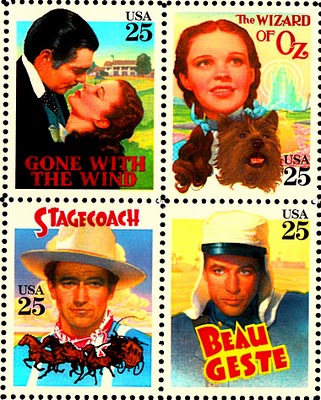
oscars-1940When I was a little girl helping out at my dad’s law office by putting stamps on envelopes, there was a set of stamps that honored movies from 1939. I knew The Wizard of Oz, of course, and I was vaguely familiar with Gone with the Wind, but I hadn’t seen Stagecoach or Beau Geste. The fact that they were on stamps meant they must be important, though; the Post Office wouldn’t let anything unimportant be on a stamp, I thought.  Now I’ve seen all four of those movies, and it turns out I was right. They were important. 1939 was an amazing year for movies. The fact that one of those movies on the stamps wasn’t even nominated for best picture shows how many excellent movies were made that year. Beau Geste isn’t the only amazing movie made that year that wasn’t nominated, either. Other classics that I’ve seen from 1939 include The Private Lives of Elizabeth and Essex; Gunga Din; The Hunchback of Notre Dame; Bachelor Mother; Young Mr. Lincoln; and Four Feathers. I’m sure there are even more that I haven’t seen. I don’t know why it happened that year, but people made some amazing movies.

1940_Hattie_McDaniel_Bainter

Hattie McDaniel receiving her Oscar for Best Supporting Actress from actress Fay Bainter.

After watching all the movies that were nominated for best picture, I became very grateful that I wasn’t a member of the Academy in 1939. The fact that I wasn’t born was a big deterrent to that possibility, of course, but I wouldn’t have wanted to try to choose what the best anything was for that year. So many amazing things happened. There was lots of good acting. Yes, Robert Donat won for Goodbye Mr. Chips, and I think he did an amazing  job and totally deserved an award for it, but that doesn’t mean that Clark Gable didn’t do just as well as Rhett Butler in Gone with the Wind. Geraldine Fitzgerald broke my heart as Isabella in Wuthering Heights, but if she had gotten official recognition, than Hattie McDaniel wouldn’t have gotten her Oscar, which she also completely deserved. How did those Academy members decide who was the best? I couldn’t have done it. Which score was best? Of Mice and Men? Gone with the Wind? The Wizard of Oz? The Wizard of Oz won, and it has wonderful music, but is it better than Gone with the Wind? Who can say? It almost makes me wonder if the Academy members got together to see if they could spread the awards around as much as possible instead of just giving them all automatically to Gone with the Wind. I can just see an old man saying, “Yes, Gone with the Wind has amazing music, but the music in The Wizard of Oz is every bit as good, and The Wizard of Oz won’t win any acting awards. Let’s give them music so that they know we recognize what a great movie it is.” Or maybe people truly voted for what they thought was the best in each category. I guess I will never know, but I’m glad I didn’t have to make any hard decisions about the movies that year.

Over the course of this project, I have noticed that every year, at least one actor is in more than one best picture-nominated movie. In 1998, both Geoffrey Rush and Joseph Fiennes were in Elizabeth and Shakespeare in Love. Sydney Poitier and Beah Richards had roles  in In the Heat of the Night and Guess Who’s Coming to Dinner in 1967. 2002 was the year of John C. Reilly. He appeared in three of the five movies that year and was nominated for his role in Chicago. In 1939, I noticed three people who were in at least two of the nominees. Astrid Allwyn played a pretty, slightly spoiled society girl in both Love Affair and Mr. Smith Goes to Washington. Geraldine Fitzgerald gave  excellent performances in Dark Victory and Wuthering Heights. And Thomas Mitchell played a drinking man in three movies. He was a drunk newspaperman in Mr. Smith Goes to Washington; in Gone with the Wind he plays Irish Southern gentleman Gerald O’Hara; and in Stagecoach, he plays a doctor who is being run out of town on account of his drunken ways. He won the best supporting actor Oscar for Stagecoach, and he did a good job, but I can’t help but wonder if the award was given with all of those performances in mind. I wonder that partially because I think Claude Rains should have won for Mr. Smith Goes to Washington, but maybe only doing one movie wasn’t enough to impress the Academy in 1939.

As I was watching all of these amazing movies, I kept thinking that it was a pity that they were made the same year as Gone with the Wind, because Gone with the Wind was just too big to fail. It was critically acclaimed and a runaway hit at the box office. Seeing all of these great movie that didn’t win made me wonder if Gone with the Wind was really better than all of those other movies, or if the hype was what made it win best picture. And then I watched Gone with the Wind again, and I realized that yes, it really did deserve its Oscar wins. David O. Selznick and Victor Fleming (and George Cukor, the director he replaced) and all the other men and women who worked on that movie did an amazing job. Everything–acting, cinematography, costume design, music, story and screenplay– came together to make (in my opinion, anyway) a near-perfect film. Although almost any one of those films would have won best picture any other year, Gone with the Wind truly was the best picture of 1939.

How do I rank the nominees?

10. Wuthering Heights
9. Dark Victory
8. Love Affair
7. Of Mice and Men
6. Goodbye, Mr. Chips
5. Ninotchka
4. The Wizard of Oz
3. Stagecoach
2. Mr. Smith Goes to Washington
1. Gone With the Wind

Join me next week to hear about Nazis, Communists, gangsters, old people, and missionaries!

The 75th Academy Awards: My Verdict

75th-annual-academy-awardsThe 2002 best picture nominees are really a mixed bag. We’ve got a musical about murderesses, a drama about women reading a classic novel, a fantasy flick about short heroes, a Holocaust picture, and a non-musical West Side Story. It was all over the map. But they did have one thing in common: they were all based on/inspired by other works. Nothing was very original. Gangs of New York, being inspired by a nonfiction book about gangs in New York, did have to make up a story to tie all the things about gangs together, but still. I found it interesting that a bunch of not-so-fabulous movies were all based on something else. Is that why they were all not-so-fabulous? People were trying to tell other people’s stories instead of their own?

As I have looked at past winners and nominees, I have noticed a couple of trends. The Academy likes World War II/Holocaust movies (Schindler’s List, Life is Beautiful, Saving Private Ryan, Casablanca) and movies about show business (All About Eve, The Artist, even this year’s winner Birdman). In 2002, they had to make a choice between a show business movie and a Holocaust movie, and apparently, the Academy prefers show business over the Holocaust. It’s not terribly surprising, I suppose, because everyone likes movies they can relate to. People also like to feel like their lives are important enough to make movies about, so show business movies make show business people feel validated, I suppose. But really, how did Chicago win, considering its lack of meaning? I think there is a song from that musical that explains it:

Give ’em the old Razzle Dazzle
Razzle dazzle ’em
Show ’em the first rate sorcerer you are
Long as you keep ’em way off balance
How can they spot you’ve got no talents?
Razzle dazzle ’em
And they’ll make you a star!

Chicago was a dazzling movie. It was big and loud and fun and there were lots of flashy costumes and it had Richard Gere tap dancing. Richard Gere! It made people excited, and they didn’t notice what was lacking. The Pianist, on the other hand, wasn’t exactly flashy, and it definitely wasn’t fun. It was heartbreaking and hard to watch. But I think it was the better movie. Roman Polanski knew what he wanted to say with his story, while Rob Marshall presented a beautiful package filled with nothing.

How do I rank the nominees?

5.Gangs of New York
4.The Lord of the Rings: The Two Towers
3.Chicago
2.The Hours
1.The Pianist

Join me next week for a bunch of movies that are always overshadowed by Gone with the Wind and The Wizard of Oz!

The 40th Academy Awards: My Verdict

40th_Academy_Awards1967 was a year of turmoil in America. The US was fighting the unpopular Vietnam War, which lead to many protests. There were race riots in Buffalo, Tampa, Newark, Minneapolis, and Milwaukee. It was the year of the Summer of Love in San Francisco. Thurgood Marshall became the first African American Supreme Court Justice. Society was changing, and the best picture nominees for that year (well, most of them anyway) reflect that change. Two of the movies were about race relations. Two were about sticking it to the man and living your own life. And one was about a man in 19th century England who could talk to animals.

After I watched Doctor Dolittle, I tried to figure out why it had been nominated. I came to the conclusion that maybe only five movies had been made that year, that every person in Hollywood was so busy working on those five that they didn’t have time to make any more. But that turned out not to be true. Lots of movies came out that year. Then I thought that maybe all the other movies that year were terrible, even worse than Doctor Dolittle. But here is a list of movies that also came out in 1967:

Camelot (although I’m grateful it wasn’t nominated, because I saw it once years ago and have no desire to ever see it again).
Cool Hand Luke
The Dirty Dozen
In Cold Blood
The Jungle Book
Thoroughly Modern Millie (see comment to Camelot above)
To Sir, With Love (which also starred Sydney Poitier. How did he have time to be in so many movies?)
Wait Until Dark

I haven’t seen all of them, but I have seen most of them, and even the worst ones from that list are better than Doctor Dolittle. So now the only explanations I can think of are bribery or nepotism, but I have no proof (or foundation, really) for that bit of conjecture. And now I am done with thinking about that anomaly of awfulness and can go on to the movies that were actually good.

It was Guess Who’s Coming to Dinner that started me on this blog journey. It is so amazingly good. When I looked up to see if it had won best picture, I was shocked to see that it hadn’t. But then when I saw the list of nominees, I suddenly wasn’t surprised anymore. I hadn’t seen any of the movies except Doctor Dolittle, which I had seen as a child, but I recognized them all. They have become iconic.

After watching them all, I thought it was interesting that even though the movies were exploring the same themes, they were all so different. Guess Who’s Coming to Dinner brought race relations to a simple home setting, while In the Heat of the Night explored bigotry in a southern town. Bonnie and Clyde dealt with people rebelling by going on a crime spree; Ben Braddock in The Graduate chose to rebel by having an affair. But all four of those movies showed people who weren’t going to accept the world they were presented. They were going to do whatever they could to break the chains of tradition that were holding them back from the life they wanted.

Lots of people think that the Academy got it wrong this year. They think that The Graduate should have won. And in some respects, it is a better movie than In the Heat of the Night. It was more innovative in some of its techniques. It played around with editing and cinematography in new and interesting ways. But I think the reason people wish The Graduate had won has more to do with relatability. Lots of people have felt like they wanted something different from life than what their parents expect from them. Many people have been in situations that have made them feel as awkward as Ben. Not as many people have found themselves risking their lives to solve a crime in small-town Mississippi.

But I feel like In the Heat of the Night deserved the win. I partly feel that way because I feel like In the Heat of the Night  had a more important message. Don’t get me wrong. I really liked The Graduate and I could sympathize with Ben, but his problems are more first-world problems. He can’t figure out what he wants to do with his life? That’s a problem, but at least he has options. In the Heat of the Night takes place in a town where many people don’t have options. Because of the attitudes of the people around them, they are stuck with the hard lives they are born in to. I don’t know whether something like message is considered when people actually vote for best picture, but it matters to me. In the Heat of the Night has both good technique and an important message. To me, that makes it the best picture of 1967.

How do I rank the nominees?

5. Doctor Dolittle
4. Bonnie and Clyde
2. The Graduate and Guess Who’s Coming to Dinner (tie, because I really can’t decide between them)
1. In the Heat of the Night

Be sure to join me next week for music, epic heroism, mental illness, and truly terrible plaid pants!

The 71st Academy Awards: My Verdict

Gwyneth Paltrow, Judi Dench, James Coburn, Roberto Benigni

Gwyneth Paltrow, Judi Dench, James Coburn, Roberto Benigni

These movies were the Oscar nominees when I was a sophomore in high school, and I remember thinking even then how odd it was that all five were historical movies. Not only that, they only came from two time periods: World War II and Tudor England. Filmmakers had all of human history to choose from, and they made that many movies from two time periods in one year? It was just strange coincidence.

At the same time, it made it kind of fun for me to watch them all at once. It was interesting to watch the World War II movies, all of which are about different aspects of that war (Pacific theater, European theater, the Holocaust) and reflect on the very different experiences of people in the same war. Watching Guido fight for his family made me think about Captain Miller and his men, and how they were fighting so that Guido and others like him could live in his town and have a bookshop and be happy. Although the movies didn’t really overlap, together they made me see a bigger picture.

The two Elizabethan pictures, on the other hand, just made me kind of hate Joseph Fiennes. He plays the same role in both movies: a slightly slimy married man having an affair with a naïve young woman who is unaware of his marriage. I’m not sure how he ended up in both movies in such similar roles, but I guess he plays Elizabethan adulterers well. Geoffrey Rush is in both films, too, but the men he plays are polar opposites: Elizabeth’s spy and assassin in Elizabeth; a slightly befuddled producer in Shakespeare in Love. Because they are so different, he makes it work much better than Joseph Fiennes.

But that brings up another issue I saw in all these historical movies. The makeup has to be done very well, or else the viewer will see the actor, not the character. As much as I loved Ben Affleck and Rupert Everett in Shakespeare in Love, they didn’t look like 16th century men. They looked like Ben Affleck and Rupert Everett in funny clothes. Thin Red Line had the same problem; so did Saving Private Ryan, although to a lesser extent. I wasn’t familiar with any of the actors in Life is Beautiful, so it wasn’t a problem there. Elizabeth was the one movie where I didn’t feel that with any actor. Yes, Joseph Fiennes was obviously Joseph Fiennes, but since I’ve only ever seen him in Elizabethan garb, my first thought was not, “Oh, there’s Joseph Fiennes!”, but “Oh, there’s Shakespeare!” Since I’m not a makeup artist, I’m not sure what would have to be done to fix it, but it is a problem.

So do I believe Shakespeare in Love truly was the best picture of the year? Nope. It was a fine movie. It was a cute love story. But I feel that in order to be the best picture, a movie should be more than cute. A movie needs to mean something, to reveal something about the human condition. And while Shakespeare in Love did many things well, it didn’t have a deeper meaning. Life is Beautiful did. Saving Private Ryan did. I would have accepted either of those as best picture over Shakespeare in Love. The fact that Shakespeare in Love won makes me wonder exactly what Harvey Weinstein did in his campaign to convince the Academy that it was the best movie.

If I could change the past, which would I have picked?  For me, it would have been a contest solely between Life is Beautiful and Saving Private Ryan, but in the end I would have to go with Saving Private Ryan. I don’t like feeling like I’m jumping on a bandwagon, but I really do feel that Saving Private Ryan was unfairly slighted. It is a masterful piece of storytelling and filmmaking. The meticulous recreation of D-Day alone should have been enough to win the Oscar, but it went beyond that. It really is an amazing movie, and in my opinion, the best picture of 1998.

How do I rank the nominees?

5. Elizabeth
4. The Thin Red Line
3. Shakespeare in Love
2. Life is Beautiful
1. Saving Private Ryan

Join me next week for sex, crime, race relations, and talking animals!