I'd like to spank the Academy

Posts tagged ‘historical’

Driving Miss Daisy (1989)

Driving Miss DaisyDirected by Bruce Beresford

It has taken me forever to finally get my thoughts about Driving Miss Daisy written down. It’s partly because my feelings about it are complex, but it’s also because I have a new boyfriend, and while I like to write about movies, there are many things that are more enjoyable that I can do with my boyfriend, so this has been put on the back burner for a bit. Once I get in the rhythm of having a boyfriend again, posts should start appearing with more regularity. So without further ado, I present my thoughts on Driving Miss Daisy:

As is oddly common with so many of these movies from 1989, Driving Miss Daisy is a movie I grew up watching. Again and again and again and again. Yet somehow, I haven’t ever gotten tired of it. In fact, immediately after I finished watching Deliverance and was traumatized by it and wanted to get it out of my head, I turned on Driving Miss Daisy. It calmed me down and got the scary, icky feeling to go away. It reminded me that there is good in this world.

So what’s the story?  After 72-year-old Miss Daisy Worthen crashes yet another car, her son Boolie decides that she needs a chauffeur. Against her wishes, Boolie hires Hoke Colburn for the job. Although Miss Daisy refuses to even acknowledge that Hoke’s existence at first, their relationship slowly becomes one of mutual admiration and friendship, something amazingly unusual between and white woman and a black man in pre-Civil Rights era Georgia.

The Good: Because I have a hard time explaining everything else, I’m going to start with the screenplay. It’s easy. The screenplay is wonderful. The author, Alfred Uhry, adapted his own Pulitzer-prize winning play for the screen. In my opinion, the best way to get a good movie from another medium is to have the author of the original medium write the screenplay. They know why they wrote the play/book/short story and can put that motivation and intention into the screenplay. They are able to take out the less important things and expose the important core more easily than some random screenplay writer. Anyway, back to the screenplay – it’s delightful. The speech patterns and expressions of the American South are fun, and in this case, you get to hear ways of talking from the black people and the white as Hoke and Daisy become close and share so much of their lives.

Here is where I come to the tricky part that I’m not sure how to explain. To show the passage of time in a movie that spans 25 years, everything had to come together perfectly–and everything did. The film elements do double duty; they show things about the characters, like social class and funny characteristics, but they also have to show the passage of time. Instead of making one long paragraph explaining how all the film elements came together to really show that the relationship took time to grow from nothing to tolerance to true friendship, I’ll write about each one separately to highlight how exactly it did its job.  

Acting: Jessica Tandy as Daisy and Morgan Freeman as Hoke both give amazing performances. Daisy, who is described as “too much there,” is intelligence, fierce and iron-willed, unyielding in her ideas of standards. Tandy shows how Daisy softens as she ages, realizing in her old age that maybe some of her ideals weren’t so good after all.  Freeman plays Hoke as a man who is too proud to take money for nothing, a man who knows his own worth but isn’t pushy about it. I love the habit that Hoke has of working his mouth in a certain way; it’s something I’ve always respected about Freeman’s performance. As he ages, Hoke realizes that he and Daisy are on a much more equal footing, and he acts accordingly. Dan Akroyd is excellent as Daisy’s only child, the long-suffering Boolie. Although he respects his mother, he is often impatient with her stubborn ways. He mellows, though, especially toward the end when he realizes that he misses his mother’s funny ways. Boolie’s wife, Florine, is played by Patti LuPone. Florine tries hard to be kind to her impossible mother-in-law at the start of the movie, but eventually realizes that no matter what how hard she tries, Daisy is never going to accept her. Florine remains high-strung her entire life; some people just don’t change. LuPone shows this to perfection.

Set Decoration: As happens in life, the things surrounding the characters change. Since the movie is about driving, the cars are an obvious example of this. The car that Miss Daisy crashes, the catalyst for the events of the movie, is a brand-new 1948 Hudson. Her car is replaced by another exactly the same, but whenever Boolie decides it’s time for his mother to have a new car, every five years or so, the styles change. The car from the fifties is longer and sleeker than the 1948 Hudson, and the cars continue to get more aerodynamic as time goes on. The photography occasionally highlights the registration tag, which changes year to year as does the registration on cars in real life. Daisy often calls Boolie, and since Boolie’s wife, Florine, is fashion-forward, her telephones are, too. They have a standard black dial phone in the 1940s, but the phone Boolie uses in the 1970s is harvest gold. It’s a teeny detail, but it’s evidence of how hard the crew worked to make everything perfectly fit the time. Boolie’s factory is another place where we can see the passage of time. At the beginning, it’s full of factory workers manually running the machines. By the end, the factory has many more machines with fewer people; these people are keeping an eye on the machines rather than physically running them. Even the songs used keep the passage of time in mind. The songs are always accurate for the year. Daisy sings songs that were written before the turn of the century, ones that a woman of her age would have learned as a child. When Florine throws her <GASP> Christmas party, one of her records is “Santa Baby.” Boolie is looking skeptically at it, as it’s the first year it came out. I suppose the music isn’t usually set decoration, but in this case, where it’s used to set the year and not just the feeling of a scene, I think it fits.

Makeup/Hair: Every single makeup artist who needs to age people for a movie needs to take note of the artistry of Driving Miss Daisy. Growing up watching  this movie may be why I am so impatient of poorly-done aging. (I’m looking at you, Giant!). All of the actors get more wrinkly as the age, even Miss Daisy, who is so old to begin with. She becomes skinnier the way that some old people do as they age. Boolie gets chubbier and balder with the passage of time. Hoke looked like an old man to begin with, but the makeup (along with Freeman’s old man walk) manages to age him, too, with the wrinkles on his forehead becoming deeper and more pronounced. His hair  slowly goes from grey to white. Flourine gets some wrinkles, but she also looks incredibly preserved, leading the viewer to wonder if maybe Florine got some work done. Her hairstyles change with the times perfectly. (Also, her makeup is so well-done that I didn’t even recognize Patti LuPone, even after I realized that she was in the movie.)  Near the end of the movie, Hoke’s granddaughter drops him off at the Worthen home. She has an Afro. Again, a tiny little detail is snuck into the movie to show how much time has passed and how the world has changed.

Costumes: The costuming was so crucial for this movie. If the clothes hadn’t been right, no one would have believed that 25 years had passed throughout the movie. Daisy’s clothes don’t change much, of course, because she’s an older woman and is happy in the clothes she has. My great-grandmother was the same way; when I was in my 20s, she was wearing the same clothes I remembered from my  childhood. Hoke wears a uniform, so his clothes don’t really change. But Boolie’s clothes – oh, they change. The first time we see him, his suit pants are high-waisted and his tie is very wide. Throughout the movie, the pants’ waists get lower, the ties get skinnier, and the colors of the suits vary as the styles change. He wears a hat at the beginning, but has given up his hats by the end of the movie. He starts wearing glasses as he gets older. While Florine is always wearing year-appropriate fashions, she’s not in the movie nearly as much as Boolie is. I can imagine her picking his clothes for him so that he is always stylish, and I can see him wearing whatever she tells him to because it’s just not  worth the fight.

The Bad: The score itself  isn’t bad; I once had a film teacher say it was “nice,” and you “can tell it’s nice, because it has lots of clarinet in it. Clarinets are nice instruments.” The themes are fun and positive. The thing that bothers me is that it’s always there. It’s like the filmmakers just couldn’t stand the silence. I realize that was how film music worked at the time, but I’m glad that’s not the fashion anymore.

The Ugly: It’s too nice of a movie to have anything ugly in it per se, but there is ugly beneath the surface. I just accepted the story as it was presented in the movie when I was young, but now I feel kind of uncomfortable watching it. There’s almost an undertone of “Isn’t the white lady wonderful because she made friends with a black man?” The only thing that makes me okay with watching the movie is that Alfred Urhy based his play/screenplay on the relationship of his white southern grandmother and her black chauffeur. I guess I would like to see the story from both sides: how did Hoke feel about the relationship? How did the growth of this friendship change or not change his life? Part of me wants to say it was just the South in the 1940s-1970s and to accept what’s there, but the rest of me wants to point out that Hoke has a life outside of being Daisy’s driver, and we don’t get to see any of that. It’s a two-sided story that only gets told from one point of view.  

Oscars Won: Best picture; best actress in a leading role (Jessica Tandy); best writing, screenplay based on material from another medium; best makeup.

Other Oscar Nominations: Best actor in a leading role (Morgan Freeman); best actor in a supporting role (Dan Aykroyd); best art direction-set direction; best costume design; best film editing.

Born on the Fourth of July (1989)

Born_On_The_4th_Of_JulyDirected by Oliver Stone

Happy Independence Day! I thought that there could be no better day to review Born on the Fourth of July than actually on July 4. I remember when this movie came out. I was pretty sure it was about someone whose birthday was July 4, and I thought there could be no better thing. Fireworks on your birthday! How fun is that?* What I didn’t know was that even though Ron Kovic was actually born on the Fourth of July, the movie is not about someone’s amazing birthdays year after year.

So what’s the story? All-American kid Ron Kovic decides that it’s his duty to join the Marines and fight in Vietnam to stop the spread of Communism. He is injured and sent back home to a VA hospital, where he learns that he will never walk again. As he slowly becomes disillusioned by the way the government treats the veterans, he realizes that it’s possible to love America without blindly following the leaders. Ron begins to make his anger known, eventually becoming an anti-war activist.

The Good: I’ve never thought of Tom Cruise as a serious actor. He does action movies, and he does a good job in action movies, but I would not have guessed that Cruise could pull off a role like Ron Kovic. He does a really good job of being a man with a message, not just a man with a pretty face. The rest of the cast is also good, but the true standout is Willem Dafoe. He plays Charlie, another Vietnam vet who is also paralyzed. He’s not in the movie for very long; I’d say ten minutes at the most. But what he does in those minutes is amazing. His scene with Cruise is the best in the movie, the moment that made me connect with Ron more than at any other time. Although he was not nominated for best supporting actor, Dafoe’s performance is Oscar-worthy.

I was struck by the cinematography. When I hear the word “cinematography,” I often think of sweeping panoramic views. Born on the Fourth of July does have those, but Robert Richardson, the cinematographer, also uses extreme close-ups: the character’s faces fill the whole screen. This helps to highlight the inner struggles that the characters are feeling, as their world shrinks to nothing but what’s going on inside their heads. The editors worked with these shots, interchanging the shots of the characters as they argued to show that the characters were so wrapped up in themselves or their point of view that they couldn’t see anything else.

John William’s score is beautiful. Much of the orchestration uses a solo trumpet, which is reminiscent of soldiers fighting in wars, but which also represents Ron Kovic’s lonely fight, first against his own disillusionment, and then against the United States Government.

The Bad: The soundtrack is not great. Pop songs of the era are sprinkled throughout the movie. While some of the songs used fit naturally into the movie’s action, other songs seem to be placed completely randomly. There were way too many songs used, and “American Pie” was used twice. It almost felt like someone decided that they were going to put every single one of their favorite songs from the 1970s into the movie. It was so distracting.

I will get this out of the way before I criticize the storytelling of Born on the Fourth of July: Yes, I understand that this movie is based on a true story/an autobiography, and as such, had less leeway with how the story goes. However, what really bothers me about this movie was that they tried to show Kovic’s entire life. It starts with his idyllic childhood, showing him playing war and baseball with his friends, watching television with his family, and having his first kiss. Then it jumps to his high school days, with wrestling and the prom. Then Ron is on his second tour of duty for about 15 minutes, and then in the hospital, etc. Biopics do not usually try to show an entire life. There might be a flashback to childhood, or people may discuss their past with each other, but cramming in an entire life doesn’t really work. I suppose it’s the way it is because the real Ron Kovic wrote the screenplay with Oliver Stone; he probably felt like every bit of his life was important. But because Stone and Kovic tried to shove everything in, I had a harder time connecting to this movie. The characters were there and gone in a flash. I know that people can have an impact on you in just a few minutes in real life, but it didn’t allow for any relationships to come off as meaningful. Even Kyra Sedgwick’s character, Donna, who it seems is supposed to be Ron’s girlfriend, barely interacts with him. I had a hard time feeling Ron’s trauma from the war because only one quick incident from the war was shown. I feel like Stone and Kovic should have picked more impactful moments and perhaps taken a bit of liberty with the storyline to give it more focus. The meandering way that Kovic wanders through his story works well for books, but it’s not nearly as effective in movies. I usually like it when an author does the screenplay based on his work, but I think that’s not as good an idea for an autobiography.

I hate to compare movies; it’s just not fair. However, since The Deer Hunter, Coming Home, and Born on the Fourth of July are all stories about the Vietnam War and how it affected the people caught up in it, my subconscious comparison is more understandable. Both The Deer Hunter and Coming Home worked better as movies because they didn’t try to tell the backstories of every relationship. The backstories of the relationships come out more naturally in those movies because we see what their relationships are now. In The Deer Hunter, we don’t have to be told that Michael’s group of friends have been friends forever; it’s obvious in the way they interact with each other. We don’t have to be told that the whole town is devastated by the loss of their sons; it’s evident in the reactions of the people in the town to the tragedies of war. Born on the Fourth of July doesn’t get this quite right.

The Ugly: Again, I understand that it’s a true story, but it was incredibly selfish of Kovic to go tell Wilson’s family that Kovic himself had accidentally killed Wilson. It was self-indulgent, and while it may have been cathartic for him, it just added to the pain that the Wilson family was feeling. That scene left a bad taste in my mouth.

Oscars Won: Best director; best film editing.

Other Oscar Nominations: Best picture; best actor in a leading role (Tom Cruise); best writing, screenplay based on material from another medium; best cinematography; best sound; best music, original score.

*I could have a holiday celebrated with fireworks on my birthday, too, but I live in the wrong country.


The Life of Emile Zola (1937)

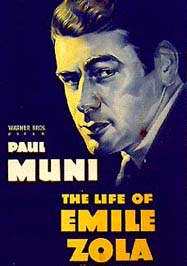
The_Life_of_Emile_Zola_posterDirected by William Dieterle

Alfred Dreyfus=Dreyfus Affair=Emile Zola=J’acusse. Alfred Dreyfus was Jewish and this whole story has nothing to do with Richard Dreyfuss. This is what I remember from the European history class that I took in high school. I could not have told you what the Dreyfus Affair was about, just that it had happened. I knew Zola was an author who championed the lower and middle classes, but even though I’m a librarian and librarians are supposed to have read every book ever, I have never read anything by him. That is everything I knew about Emile Zola before I watched this movie. Yes, I realize it’s a biopic and therefore full of half-truths or stuff made up to make it more interesting, but I will never forget the intricacies of the Dreyfus Affair or the booming character of Emile Zola.

So what’s the story? The young writer Emile Zola has a penchant for getting into trouble.He writes about prostitutes, oppressed coal miners, and the ineptness of the French army. He loses jobs and gets called into the office of the Censor of Paris more than once on account of his controversial books, but he refuses to stop exposing the uncomfortable truths of French society. However, Zola eventually stops writing. His wealth insulates him from the poverty around him. The story stops following Zola at this point, and switches to the story of Alfred Dreyfus. The higher-ups of the French army discover that someone has been passing secret military information to the Germans. They decide to pin the blame on Alfred Dreyfus, mostly because he’s Jewish. Dreyfus proclaims his innocence, but he is convicted and exiled anyway. Evidence is later found that Dreyfus is not the traitor, but the army doesn’t want to admit their mistake and tries to cover up what they have found. At this point, Anatole French, one of Zola’s writer friends, urges Zola to remember his commitment to social justice and intercede on Dreyfus’s account. Zola is reluctant, but eventually writes what would become his most famous and influential piece: J’accuse.

The Good: Emile Zola was quite the character. It would have been easy to overplay him, to ham it up and turn him into a caricature of the man. Paul Muni, however, plays him with more subtlety. His optimism, his despair, his desire to stand up for the underdog, his self-satisfaction in later life, are all brought out brilliantly by Muni. Muni’s delivery of Zola’s last speech in court was so amazing that it brought me to tears. It’s a truly great example of acting.

Paul Muni is not the only great actor in this film. Joseph Schildkraut plays Alfred Dreyfus to perfection, bewildered as to why his beloved France would do this to him, despairing as he realizes that nothing he can do will convince the army that he’s innocent, joyful when he’s released and reinstated into the army. Gale Sondergaard is Dreyfus’s stalwart wife, determined to do everything in her power to reveal the truth and exonerate her husband. Zola’s defense attorney, played by Donald Crisp (not Claude Rains, even though he looks like Claude Rains here), doesn’t have a large role in the movie, but Crisp does such a good job expressing his exasperation with the court that blocks him at every turn. The brave Colonel Georges Piquart, the only officer to stand up for the truth, was very well portrayed by Henry O’Neill. I love a well-cast movie.

The screenplay was very good. The writers managed to be inspiring without crossing the line into cheesiness, there was enough humor to balance out the drama, and I loved the foreshadowing of the (paraphrased) line that if you get too fat, you can’t see past your own stomach. I assume some of Zola’s words were his own, especially his dramatic last speech, but it’s all woven seamlessly together.

The clothing and makeup were well done. The clothing styles changed as the years passed, giving a hint to how much time had gone by. The makeup captured the real-life people excellently. The movie Dreyfus matches photographs of the real Dreyfus so well it’s almost uncanny. The makeup done to age the actors was also good.  I don’t know what happened in the years between 1937 and 1956 when Giant was made, but makeup artists in the 1930s were wonderful at using makeup to make actors look decades older.

The Bad: The actual words that were spoken were good, but the screenplay was rather disjointed. The story started with Zola’s life, and then completely cut Zola out while it explored the Dreyfus affair. Zola came back eventually, but it just felt odd to change perspectives like that.

It was very hard to tell the many mustachioed army officers apart. I know the mustaches were the fashion of the time, and since they were officers, it makes sense that they were in uniform, but I was never exactly sure who was who. Dreyfus wore glasses and Colonel Piquart had a longer face, which helped, but other than that, I could not tell you which officer was which. It got very confusing.

The Ugly: Although there were some slight problems with The Life of Emile Zola, there was nothing so bad that it fell into the ugly category.

Oscars Won: Best picture; best actor in a supporting role (Joseph Schildkraut); best writing, screenplay.

Other Oscar Nominations: Best actor (Paul Muni); best director; best writing, original story; best art direction; best sound, recording; best assistant director; best music, score.

Mind-boggling Fact: The Dreyfus Affair wasn’t completely resolved until 1906, only 31 years before The Life of Emile Zola was made; Alfred Dreyfus himself died in 1935. That means that the Dreyfus Affair was as close in time to the filmmakers as 1986 is to us. 1986 is not that long ago. Crazy, right?

In Old Chicago (1937)

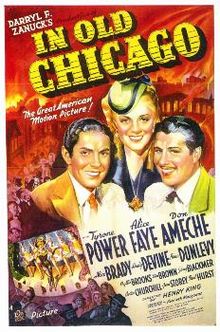
In old chicagoDirected by Henry King

Chicago politics. The Chicago Fire of 1871. Close brothers who become rivals. With all of these elements, what could go wrong? A lot, actually. While there were some exciting scenes, In Old Chicago left much to be desired.

So what’s the story? The O’Leary brothers are polar opposites. Straight-arrow Jack is an attorney who always fights for the underdog. Charmingly roguish Dion runs a saloon, but he has bigger plans. He will use anyone and anything to get what he wants. Jack and Dion’s ideals will be tested for once and all on the night of the Great Chicago Fire of 1871.

The Good: There was some good acting. Alice Brady stole the show as Mrs. O’Leary (yes, THAT Mrs. O’Leary). Don Ameche is strong as Jack, and Alice Faye makes a wonderful singer/saloon owner/woman in love with Dion. Dion’s character is a little inconsistent, but Tyrone Power does an excellent job with what he’s given.

The production design was impressive. There is a huge contrast in all the buildings, from the opulence of the saloons to the humble O’Leary home to the elegance of the Mayor’s office. It brought to life the different factions of Chicago society. Also, the streets were disgustingly muddy. Historical films don’t always remember to put in small details like that. I loved it.

I wasn’t going to be impressed with the actual fire scenes; it was 1937. How convincing could it be? That was a bad call on my part. The fire is amazing, possibly even better than the burning of Atlanta in Gone with the Wind two years later. It was just…wow.

The Bad: While I acknowledge that several scenes take place in saloons and that the producers were trying to showcase Alice Faye’s famous voice, there were too many musical numbers. They slowed down the conniving and the action, and they weren’t particularly entertaining.

While In Old Chicago has a good story with lots of potential drama, the movie felt really shallow. The screenplay left the characters feeling flat and uninteresting, except for Dion. He has the opposite problem. His character changes at the drop of a hat. One minute he’s a rogue with a twinkle in his eye, the next he’s completely evil. Then suddenly, he remembers how much he loves his brother and is perfectly good. It’s just not believable.

The Ugly: Rape isn’t a joke, although they play attempted rape as funny twice. Forcing a girl to kiss you and then threatening to rape her will not get you a business partner or a loving wife. Not cool, 1937.

Oscars Won: Best actress in a supporting role (Alice Brady); best assistant director.

Other Oscar Nominations: Best picture; best writing, original story; best sound, recording; best music, score.

The Deer Hunter (1978)

the-deer-hunterThe Deer Hunter
Directed by Michael Cimino

I knew The Deer Hunter was about Vietnam; I didn’t know that it was going to hurt my heart so badly.

So what’s the story? Mike, Steve, Nick, John, Stan, and Axel are a group of regular guys. They celebrate together, drink together, hang out together, hunt together. But then Mike, Nick, and Steve sign up to go fight in Vietnam. Their decision will change everyone’s lives forever.

The Good: In order to hurt the audience so much, the screenplay and actors first had to make us care about this group of very normal friends from a small town in Pennsylvania. Steve’s wedding is the setting to showcase the personalities of this diverse group. Mike (Robert De Niro) is slightly more mature than his friends. He takes things that he cares about very seriously. Nick (Christopher Walken) cares deeply about his friends and his girlfriend, Linda (Meryl Streep). Steven (John Savage) is so in love and so excited to marry Angela (Rutanya Alda) that he is willing to ignore the opinions that his Russian mother has about his fiance. Stan (John Cazale) is a ladies man who can’t understand anyone else’s point of view. John (George Dzundza) sings in the church choir, runs his bar, and is generally content with his life. He takes it upon himself to be the general peacemaker in the group and feels bad that his bad knees prevent him from going to Vietnam with his friends. Axel (Chuck Aspegren) is a good-hearted goofball who only seems to know one phrase. This extended setup not only makes us care, but it makes it hurt so much more when Mike, Steve, and Nick change so much, which the actors portray so heart-breakingly well. There is more that I want to say about the acting and the screenplay, but I’m trying so hard not to spoil anything for anyone. I will say this: some of the changes that people go through are more subtle than others; Christopher Walken does a ridiculously incredible job as Nick; I was glad that The Deer Hunter only showed some of the Vietnam War, because then you were able to feel the atrocities of war without being overwhelmed by them; and if you watch closely, the story mirrors itself, allowing the viewers to see people’s different reactions to the same or similar events. (If you’ve seen it and want to discuss it with me in the comments, be sure to label it if you put in spoilers.)

The music is beautiful and unobtrusive. The soundtrack is more classical than other soundtracks from 1978; no wailing saxophones here. The use of classical and popular music is managed very well. The chosen songs fit the moment they are in exactly. Stanley Meyers’s original theme, “Cavatina (Theme from The Deer Hunter)”, is fabulous, played quietly by guitarist John Williams (no, not THAT John Williams). It is iconic, one of those pieces that will always be associated with this movie. When I write these reviews, I usually like to listen to the soundtrack of the film I’m reviewing, but listening to “Cavatina” breaks my heart all over again, so I had to listen to other instrumental music so that I wasn’t too sad to write.

The editing was brutally disorienting at times. One moment the gang is all happy at home, and the next, Mike is fighting for his life in Vietnam. These cuts happen throughout the movie, and they can be disconcerting because we have no idea how we got there or what happened between the scenes. But life feels that way sometimes when we suddenly look around and realize where we are in life and then wonder how we got there. It’s also how we tell stories to people. No one ever says, “The ground starting shaking, and so I got in my car and drove down Main and then I turned right onto Elm and left onto High Street, went straight for two miles, and then I saw a monster rising out of the ground!” We leave out things that are not pertinent to the story. That’s why this editing works for this movie; it’s a story about everyday people, and the editing reflects that.

The Bad: Mike was a little too mature and heroic to be believable as a person. He’s too close to perfection for my liking.

The Ugly: Scenes of war will always be ugly and brutal and sad, which is why I’m glad The Deer Hunter acknowledges that no one is unaffected by war, and why I am also glad that the filmmakers were somewhat restrained in how much actual brutality they put into this movie.

Oscars Won: Best picture; best actor in a supporting role (Christopher Walken); best director; best sound; best film editing.

Other Oscar Nominations: Best actor in a leading role (Robert De Niro); best actress in a supporting role (Meryl Streep); best writing, screenplay written directly for the screen; best cinematography.

Argo (2012)

Directed by Ben Affleck

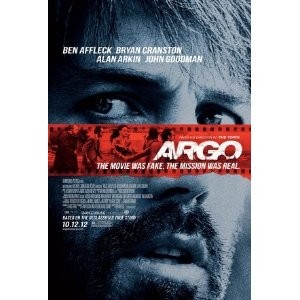
Okay, so argoit’s been awhile again. Apparently, because I wrote about my depression and how it was doing so much better in my Silver Linings Playbook post, my depression decided to remind me how powerful it actually can be. So yeah. Sorry if you’ve been waiting and hoping and wishing for my Argo review and my wrap-up of 2012; I’ve been trying not to slit my wrists. But at least I’ve been successful!

As I said in my Zero Dark Thirty review, I was excited for the 2012 movies because I got to watch two action movies that had been nominated for best picture. But just like Zero Dark Thirty, Argo is also not an action movie. It’s exciting, and it’s fun, and it has wonderfully tense moments, but it’s not an action movie. I think I might have watched the only action movie ever nominated when I watched Raiders of the Lost Ark. Argo is a fantastic movie, and I truly enjoyed it, but it’s not an action movie. It was also weird watching it on the heels of Zero Dark Thirty because they are so similar. Both movies are more spy film than action flick, both are based on true stories, both take place in the Middle East, both even have Kyle Chandler. So while I recommend seeing both films, don’t watch them back to back.

So what’s the story? During the takeover of the American embassy in Iran in 1979, six Americans manage to escape to the home of the Canadian ambassador. As the occupation of the embassy drags on, the U.S. government tries frantically to come up with an idea to get the six out before the Iranians realize that they aren’t in the embassy with the other civil servants they have taken hostage. Tony Mendez, a CIA officer whose job is extracting people from bad situations, finally comes up with “the best bad idea”—produce a fake movie, complete with screenplay, casting, and movie posters. He will then fly to Iran to “scout locations” and fly back with the six Americans as members of the production company. It’s a risky plan; can they pull it off?

The Good: I don’t know the term for what I’m about to admire, but I love that Argo looks like a movie from the late seventies or early eighties. The film quality is grainier, less sharp than current movies. No high definition here! I liked that the old Warner Brothers logo was used at the beginning of the film, too. It was a small thing, but helped set the tone for the movie.

Argo was a well-cast film. Everyone from Ben Affleck as Tony Mendez to John Goodman as legendary make-up artist John Chambers to Bryan Cranston as Mendez’s boss, Jack O’Donnell was fantastic. I was especially glad to see Victor Garber playing a sympathetic character (the Canadian ambassador) for once. He seems like the nicest man, but in the movies I’ve seen him in, his characters are always jerks (Mayor Shinn in The Music Man, the lecherous professor in Legally Blond, the money-grubbing lawyer in Eli Stone). Alan Arkin is a delight as the “producer” of Mendez’s movie, and the people playing the six non-hostages were also good. I didn’t feel like there was a false note in the casting.

The pacing of the movie was great. The director managed to keep the feeling of a lot of time going by balanced with the tension of having to get the people out. It would have been very easy to err in either direction – either with the movie dragging as the hostages stayed inside for months, or with the action happening too quickly to be believable.

Even though I feel like I know more about history than the average American, I didn’t know much about the Iran Hostage Crisis. We didn’t tend to get to more recent things in any of my history classes just because there was so much to cover in a year, and I wasn’t alive when it actually happened, so I appreciated the overview of the modern history of Iran at the beginning. Some of the movie wouldn’t have made sense without that background.

Alexandre Desplat’s score was a haunting, beautiful mix of Middle Eastern and Western music. It was subtle enough to underscore the drama of the situation without being overwhelming.

The Bad: While the casting was all good, I had a hard time keeping the six escapees straight. They didn’t get enough screen time for the viewers to understand their characters, so they all kind of blended together. I would have liked to have seen more of John Goodman and Alan Arkin and the Hollywood end of things, also. I feel like a lot of that was glossed over to give Ben Affleck more screen time and make Mendez seem more heroic.

Because I put off writing this review, I had to watch Argo twice in order to feel like I could give it an honest, helpful review. The first time, I loved it. It was one of those moments when you want to tell everyone you know that they should see it. A few weeks later, when I saw it for the second time, I just couldn’t get into it. I already knew what was going to happen, so there was no tension for me. This seems to be a flaw in the movie, but I can’t put my finger on why I didn’t care so much the second time around. It might be because I felt no connection to the characters; I’m not sure. But I feel like a movie that is named the best picture of the year should be able to be enjoyed more than once.

The Ugly: I didn’t find anything bad enough about Argo to be in this category. It’s flaws were minor.

Oscars Won: Best motion picture of the year; best writing, adapted screenplay; best achievement in film editing.

Other Oscar Nominations: Best performance by an actor in a supporting role (Alan Arkin); best achievement in music written for motion pictures, original score; best achievement in sound mixing; best achievement in sound editing.

Zero Dark Thirty (2012)

PrintDirected by Kathryn Bigelow

When I’m deciding which year of movies I want to watch next, sometimes I let a random number generator pick. But when I chose the movies of 2012, I had a very specific reason in mind: I was in the mood to watch an action movie. There haven’t been a lot of action movies nominated for best picture, but I was certain that 2012 had two: Zero Dark Thirty and Argo. I hadn’t seen either one, but I knew that Zero Dark Thirty was about the assassination of Osama Bin Laden, which was exciting, so it had to be an action movie, right? Guess what. I was wrong. Don’t get me wrong; it’s a fantastic movie. It’s definitely not an action movie, though.

So what’s the story? Maya is a young CIA operative sent to Pakistan to protect the US from future terrorist attacks. It takes her ten long years of ferreting out information from the thinnest threads, but she is finally certain that she knows where Osama Bin Laden is hiding. Now she just has to convince the rest of the CIA.

The Good: Jessica Chastain is fabulous as Maya, the woman who believes in what she’s doing and refuses to budge on what she believes is correct. She’s tenacious and single-minded and tough. She doesn’t care about what other people think and she’s not ever going to give up. The part itself may seem a little cold, but Jessica Chastain does an excellent job. Her acting makes the ending perfect.

The supporting cast is solid. I love it when a movie has even the smallest role perfectly cast, and Zero Dark Thirty is one of those movies. If I made a list of everyone who does an amazing job in this movie, it would be really long, so I will just mention a couple. Jason Clarke and Jennifer Ehle both make fantastic CIA operatives. Kyle Chandler is good as Joseph Bradley, Maya’s boss who doesn’t really believe in her lead, but who knows that ignoring her is a bad idea. Joel Edgerton and Chris Pratt make excellent Seal Team Six members. But again, everyone is so spot on that it’s hard to pick out the best people.

I’ve watched other movies based on historical events that play fast and loose with dates and places (cough, Elizabeth, cough). I appreciated how places and dates were so specific. I even like the “chapters” that helped keep the story moving and showed how time passed, because frankly, spy work seems to move very slowly sometimes, and it would have been boring if every single step that Maya made to draw the lines and make the connections had been shown.

I loved the beginning. The lack of any images made the voices of September 11th so compelling that it drew me in and made me remember my September 11th experience. I don’t think that could have been done nearly so well if scenes from that day had been splashed on the screen.

The soundtrack is amazing. Music is used sparingly, so that when it happens, it really makes an impact. Most of the action happens to natural noises, which makes it more realistic, and the occasional music unobtrusively underscores the emotion. That was an excellent choice.

The screenplay manages not only to tell the story of what happened, but to make the characters feel real and believable. They have backstories and lives outside of what’s going on thanks to the screenplay, which I understand was rewritten after Osama Bin Laden was killed. I think it would be fascinating to know what the ending was going to be before that happened.

The Bad: Even though we all know how the story ends, the tension during the Seal Team Six scene is almost unbearable. That’s probably a good thing from a storytelling point of view, but for me, it’s as uncomfortable as watching a horror movie, especially since there are innocents involved.

The Ugly: The first twenty minutes or so of the movie are mostly scenes of torture, and there are other scenes of torture throughout. Bigelow doesn’t pull any punches or soften these scenes, and they are hard to watch. I know a lot of people believe that torture is sometimes necessary; I don’t want to get involved in any discussion about that. I’m just saying that it’s not an easy thing to see, especially knowing that torture happens in real life.

Oscar Won: Best achievement in sound editing (tied with Skyfall).

Other Oscar Nominations: Best motion picture of the year; best performance by an actress in a leading role (Jessica Chastain); best writing, original screenplay; best achievement in film editing.

Lincoln (2012)

Lincoln_2012_Teaser_PosterDirected by Steven Spielberg

This is yet another post that I had already written, but lost when I lost my flashdrive. On the bright side, that means I get to celebrate President’s Day by posting about Lincoln, which is a happy coincidence. It’s a great movie about a great man. I feel like I’m gushing, and I’m sorry, but it really is an amazing movie.

So what’s the story? In the last days of the American Civil War, Abraham Lincoln wheels and deals and does everything he can in order to pass the 13th Amendment to the Constitution, which will abolish slavery in the United States forever. He has a deadline, however; if the South rejoins the Union before the amendment passes, they will defeat the amendment and keep slavery legal.

The Good: Daniel Day-Lewis does it again. The man is a chameleon. I could pass him on the street and not have a clue who he is because he always becomes his character. I felt like I was watching real footage of Abraham Lincoln. Before I started watching these Oscar-nominated movies, I thought Daniel Day-Lewis was overrated. I will never think that again. I cannot believe how amazing he is in this part.

I am rarely struck by makeup and hairstyling, but there are so many actors in Lincoln that I am familiar with – and I didn’t recognize any of them except for Tommy Lee Jones. Even Sally Field is practically unrecognizable. Everyone looks period-correct, and it is impressive. The costuming adds to this, of course. You can see the different classes and stations in society through the clothes, and I love it.

Speaking of actors, the supporting cast is fantastic. Sally Field makes a wonderful Mary Todd Lincoln. She shows all the complexities of the woman, including her awareness of how her illness made Lincoln’s life more difficult. Tommy Lee Jones always plays crusty men well, but he is also tender in his portrayal of Thaddeus Stevens. I don’t usually like James Spader, because he always makes me feel slimy, but since his character is slimy, he works so perfectly. I didn’t feel that anyone did a poor job. This is another perfectly-cast movie.

The production design and the sets were another aspect that made the movie historically believable. The rooms were low-ceilinged and dim, even during the day. Everything is slightly dingy, as if covered by the ash of the fires. There is mud and dirt and grime and that’s how life was then.

John William’s score is surprisingly subtle for him. It’s beautiful and stirring and simple and just right for a movie about a brave, simple man.

The Bad: There is nothing bad about this movie. Nothing bothered me about it at all, except perhaps Tommy Lee Jones’ wig, but Thaddeus Stevens had a bad wig in real life, so there wasn’t much choice there.

The Ugly: There are some short ugly war scenes and reminders of the cost of keeping the war going so that the amendment could pass, but that’s realism, not bad filmmaking.

Oscars Won: Best performance by an actor in a leading role (Daniel Day-Lewis); best achievement in production design.

Other Oscar Nominations: Best motion picture of the year; best performance by an actor in a supporting role (Tommy Lee Jones); best performance by an actress in a supporting role (Sally Field); best achievement in directing; best writing, adapted screenplay; best achievement in cinematography; best achievement in film editing; best achievement in costume design; best achievement in music written for motion pictures, original score; best achievement in sound mixing.

Les Misèrables (2012)

Les-miserables-movie-poster1Directed by Tom Hooper

This was one of the posts that I lost when I lost my flash drive. As much as I hate rewriting things that I’ve already written, I won’t have a hard time rewriting this one. I have a lot to say about Les Misèrables in general, the musical and this movie version of it in particular.

When I went to study in London about ten years ago, I wasn’t planning on seeing the stage version of Les Misèrables. The touring coming comes to my town often enough, and I wanted to see things I wouldn’t have the chance to see at home. But then I saw a poster of the cast, and the man playing Enjolras was really attractive (I might use the term “super hot” if I weren’t trying to be taken seriously), so I let my friends persuade me to go with them. I knew many people who had seen the musical and thought it was the best thing ever, and I had read an abridged version of the book before I saw the play and seen the movie version from the 1930s and knew that there was fantastic material to work with, so I was expecting really good things. I was really disappointed. I kind of wish I could find the scathing essay I wrote about it. I told my friends that I didn’t really like it, and that got spread around the entire group I had come with, kind of like in the claymation version of Rudolph the Red-Nosed Reindeer when they find out that Herbie doesn’t like to make toys.  (“Melanie didn’t like Les Misèrables!”) I got a lot of weird looks after that from people in my study abroad group, but I didn’t care. I got that same kind of look when I told people I had no desire to see this movie because I didn’t much care for the musical, kind of a mix of shock and disgust. I was never planning on seeing this movie. Stupid best picture nomination. I wasted three hours of my life to see a subpar version of a subpar play.

So what’s the story? Convict Jean Valjean is released from prison. He steals some silver from a priest, who tells the police that he gave Jean Valjean the silver. The priest then tells Valjean that he has to turn his life around. Valjean does so, changing his name so that the stigma of having been a convict won’t follow him throughout his life. However, Javert, a policeman who worked at the prison, recognizes Jean Valjean for who he was, and Valjean must go on the run, taking the daughter of a factory worker with him.

The Good: Les Misèrables has some truly beautiful music. They may not be all completely memorable, and some are hard to tell from others (when I’m not actively listening to them, I always get “Bring Him Home” and “On My Own” mixed up), but they are beautiful nonetheless. I have never forgotten “Castle on a Cloud,” which I learned over twenty years ago in school, and “Stars,” “Empty Chairs at Empty Tables,” and “Do You Hear the People Sing” always give me goosebumps.

There was some decent acting. Hugh Jackman and Russell Crowe both did fine jobs as Valjean and Javert, respectively. Crowe does especially well as Javert, who is perfectly convinced that the law is always right and simply cannot reconcile justice and mercy. Anne Hathaway and Samantha Barks both gave excellent performances as women torn apart by the way French society works. Aaron Tveit and Eddie Redmayne were very good as young revolutionaries Enjolras and Marius, and although I think they took up too much time in the movie, Helena Bonham Carter and Sacha Baron Cohen were perfectly cast as the comic relief-bringing Thènardiers.

The costuming, production design, and makeup were all admirable. Early 19th century France was brought to life thanks to those elements. I always like seeing a historical movie that doesn’t only involve wealthy people. It always makes me happy to have people acknowledge that a)poor people existed, and b)that poor people had different hairstyles, homes, and clothes than wealthy people.

The Bad: I don’t whose idea it was to have the actors sing live instead of lip-synching and putting in the songs later, but it was a bad idea. This movie would have been so much easier to watch if there hadn’t been so many cringe-worthy notes. I think the only person who pulled off all her singing with no problems was Samantha Barks, who played Èponine.

I have never understood the ending. It makes no sense to me to have all the people who have died throughout the movie/Jean Valjean’s life would be together in one place singing about the same thing. All those various people weren’t fighting for the same future, exactly. Also, if Heaven is a barricade as the finale hints, I don’t really want to go to Heaven.

The Ugly: Amanda Seyfried should never have been cast in this movie. Her singing is terrible to the point of distraction. She does have the right look, but I’m sure there are other innocent-looking blondes who could have sung the part much, much better.

Most of the other reasons I didn’t like the movie have to do with the weaknesses of the musical itself. Way too much time is spent on the Thènardiers at the expense of other things from the novel that would have made things make more sense. I wish a bit more time had been spent on the bishop, for example; that felt kind of glossed over. I hated that Javert didn’t recognize Valjean because of his face, but because he was strong. I can understand that people change after twenty years, but I’m sure that Javert had met other strong men in prison before. There was nothing really special for Javert to recognize him. (In the novel, in case you’re wondering, Valjean acts like a human jack to get carts off of men. That’s not something you see often, and makes a lot more sense. Not sure why that was changed.) I was annoyed by Marius and Cosette’s literal love at first sight. They did nothing except see each other, and suddenly life wasn’t worth living without each other? There are other little bits and pieces like that throughout the movie that just add up to me being annoyed with the whole thing.

Okay, now I get to talk about how the book compares to the movie. Since seeing the musical ten years ago, I have read the unabridged version. It’s not perfect. Victor Hugo needed a friend to tell him that when your characters are racing through the sewers in a life-and-death situation, you don’t need to cut from the action to give an entire history of the sewers of Paris. But one amazing, amazing thing that Hugo did do was give everyone a history. The first fifty to one hundred pages are not about Jean Valjean at all, but about the bishop, who, we learn, has given up all of his privileges and only keeps enough of his salary to keep himself fed. The rest he gives to the poor. The only thing he kept was his silver, so when he not only allows Jean Valjean to keep the plate, but also gives him the candlesticks, it’s a huge deal. The students all have back stories, so we care a lot more when they die so uselessly. The Thènardiers are not funny at all. They show the corruption and evil that can happen in poorer classes. They are menacing and horrible. Also, they are the parents of Gavroche, which gets skipped over in the movie completely. There are more connections which make everything that happens much more meaningful. I realize that not everything from a 1500 page book can make it into a three-hour movie, but that’s why making  Les Misèrables into a musical was just a bad idea to begin with. My final advice? If you haven’t seen the movie already, skip it and read the unabridged book. If you have seen the movie already, read the unabridged book. You will be amazed at the depth of feeling.

Oscars Won: Best performance by an actress in a supporting role (Anne Hathaway); best achievement in makeup and hairstyling; best achievement in sound mixing.

Other Oscar Nominations: Best motion picture of the year; best performance by an actor in a leading role (Hugh Jackman); best achievement in costume design; best achievement in music written for motion pictures, original song (“Suddenly”); best achievement in production design.

Django Unchained (2012)

django unchainedDirected by Quentin Tarantino

 When I first decided to watch all of the best picture-nominated movies, I wasn’t planning on blogging about them. I wasn’t watching them in any order at all; I would just watch what I felt like or had access to. Since Django Unchained streams on Netflix, it was easy to get, so I watched it probably about a year ago. I hated it. I’m not a big fan of violence, but Quentin Tarantino obviously is. (Yes, this is the first Tarantino film I’ve seen.) I can understand why some people would find the movie funny, but it’s not my kind of humor. I was so glad that I had watched it and could check it off my list. But then I realized that if I were going to write a fair review of a movie, I would have had to have seen it recently. So I reluctantly watched it again this week. I still don’t like it, but I can admit that there elements of the film that are excellent.

So what’s the story? German bounty hunter King Schultz needs the help of the slave Django to find three men he’s hunting. Django turns out to be remarkably good at killing white men for money, so Schultz teaches Django all the skills he will need to be a bounty hunter himself. When he has learned enough, Django and Schultz go to the plantation Candyland to rescue Django’s wife from the clutches of the evil Calvin Candie.

The Good: I have never said this of any movie, and I will probably never say it again, but the cinematography was fun. I didn’t realize fun cinematography was even a possibility until I saw Django Unchained. I can’t exactly put my finger on what makes it fun, but the camera angles are jaunty and the cinematographer uses stereotypical camera work in unconventional ways. Even if I didn’t particularly care for what was being filmed, it was filmed creatively.

Christoph Waltz gave an excellent performance as King Schultz, who was a deeply ethical con artist and bounty hunter who only used his skills to rid the world of evil people. He’s an interesting character, and Waltz portrayed him wonderfully. Leonardo DiCaprio, who is not always my favorite, does do a very good job at playing King Shultz’s opposite: a completely villainous wealthy man who cares only about himself and his property. There’s no subtlety here; he’s just completely bad. DiCaprio does it well. I didn’t even recognize Samuel L. Jackson in his role as Stephen, an obsequious slave who is as proud of Candyland as Calvin Candie himself. He did a good job.

Django Unchained kind of reminds me of The Princess Bride (1987), not in the plot or the acting or the subject matter, but  the way that it makes fun of a genre while being a movie of that genre itself. I attribute that to the screenplay. Even though it’s not my style of humor, I did laugh at the scene with the men in hoods. There was witty banter and good dialogue throughout. It was a good screenplay, even if it wasn’t my style.

The Bad: I initially liked Jamie Foxx in the role of Django, but as the movie goes on, the role gets cockier, but Jamie Foxx doesn’t. He’s a little bit too quiet for the role, I think.

At the very beginning of the movie, words appear on the screen: “1858: Two years before the Civil War”. This bothered me soooo much. The American Civil War started in 1861, not 1860. There must be a reason that Tarantino decided to put that wrong information up, but I don’t know what it is. I also don’t know why Django’s wife is named Broomhilda, when the actual name is Brunhilda (or Brunhilde, if you want to be even more German about it). I can’t handle when people get little details wrong. Again, I’m sure Tarantino did that on purpose, but I was just annoyed.

The Ugly: I hate violence, especially when it’s violence for violence’s sake. Django Unchained has tons of over-the-top graphically bloody violence. Sometimes it’s even played for laughs. It never made me laugh, and the sprays of blood and guts everywhere were overdone. I know, I know, that’s a Quentin Tarantino thing, but it’s not my thing, and I don’t think it’s necessary.

Oscars Won: Best performance by an actor in a supporting role (Christoph Waltz); best writing, original screenplay.

Other Oscar Nominations: Best motion picture of the year; best achievement in cinematography; best achievement in sound editing.