I'd like to spank the Academy

Posts tagged ‘Families’

An Unmarried Woman (1978)

unmarried_womanAn Unmarried Woman
Directed by Paul Mazursky

Before I watched An Unmarried Woman, I knew two things about it: that it was about a woman going through a divorce, and that it hadn’t been released on DVD. These two little pieces of information made me assume that it wasn’t going to be very good. There are lots of mediocre movies about divorced women, and if it had never been released on DVD, how good could it be, really? And then I actually watched it, and I was blown away.

So what’s the story? Erica loves her life. She loves her husband, he loves her, and they have an amazing sex life. She has wonderful friends, a great relationship with her teenaged daughter, and the financial freedom to work a part-time job at an art gallery. When her husband tells her he’s leaving her for a younger woman, Erica’s life is turned upside down. She’s been with him for most of her adult life and doesn’t know who she is without him. With the support of her daughter, friends, therapist, and new men in her life, Erica learns for the first time in her life how to be herself.

The Good: The screenplay is amazing. It is so completely real, both emotionally and conversationally. It’s not dated at all; only three things would have to be changed to make it completely up to date: Erica’s friend refers to herself as “manic depressive,” where today we would use “bipolar;” the same friend uses lithium to deal with her mental illness, which is not commonly used today; and Erica’s daughter Patti tells her mother that her friend got an abortion for $200, but (based on an internet search), abortions are more expensive than that now. Setting those tiny details aside, Paul Mazursky’s screenplay could have been written today. It captures exactly what it feels like to be a woman in transition. As a woman whose life has not turned out how she planned it, I could completely relate.

The cast was wonderful. Jill Clayburgh was utterly fantastic as Erica, showing the range of emotions that a woman goes through when the life that she knew was gone. Erica’s husband, Martin, is played by Michael Murphy, who shows the nuances of emotion that people feel when they are trying to make themselves happy, even when it ends up hurting others. Lisa Lucas, who plays Patti, Erica and Martin’s daughter, is equally good at portraying the emotions of a teenager who is dealing not only with her parents’ breakup, but with the minefield of teenage life. Cliff Gorman plays the role of the sleazy artist perfectly. Kelly Bishop gives a wonderful performance as Erica’s supportive, feminist, manic depressive friend Elaine. Another thing I really love about the cast is that besides being incredibly talented, they are all normal-looking. They look like people you could run into on the street in any city in America. I find it much easier to believe a story about normal (albeit fairly wealthy) people when they look like normal people than when they look like models.

The music in An Unmarried Woman reflected the story in a way that I’m not sure I’ve ever seen before. There is really only one melody (I would call it Erica’s leitmotif), but the instrumentation and key are changed based on the situation. Sometimes it is happy, sometimes it is angry, sometimes sad. It reflects Erica’s mood and emotions throughout the movie.

Because this is a character-driven movie as opposed to a plot-driven one, some of the scenes don’t seem to advance the plot. They are basically little vignettes of moments in Erica’s life. But because of the placement of these little scenes throughout the movie, these moments are able to subtly show Erica’s growth and development as she accepts her new life. That is one of the wonders of editing.

The Bad: Although I loved what the music did, I didn’t always love the music itself. While I loved having the emotions portrayed through one melody, the saxophone-heavy instrumentation was one of the few things that made me remember that this movie came out almost forty years ago. It’s very dated and sometimes distracting.

I had a problem with some of the things that Erica’s daughter Patti said. Some of her lines were flat-out perfect, but I have a hard time believing that Patti, a fifteen-year-old girl, would tell her mother’s boyfriend, whom Patti has just met, that she (Patti) is still a virgin. I was never in the situation of meeting a parent’s new love interest, so maybe some people would do it, but it didn’t feel natural to me. There were a couple of interactions like that throughout the movie that made me feel that although Mazursky apparently understands women incredibly well, he doesn’t know that much about teenaged girls.

The Ugly: Beyond some of the clothes, there is nothing that can be called ugly in this movie. (And the clothes are really more dated than ugly. I think there is a difference.)

Oscars Won: None.

Oscar Nominations: Best picture; best actress in a leading role (Jill Clayburgh); best writing, screenplay written directly for the screen.

Justification: Yes, I fully realize that An Unmarried Woman only comes first in alphabetical order if we throw out one of the rules of alphabetization and don’t ignore the “an”. But it gets to come first because it was the first best picture nominee that I had watched in a long time. So I will stifle my librarian instincts and acknowledge the “an”.

Lincoln (2012)

Lincoln_2012_Teaser_PosterDirected by Steven Spielberg

This is yet another post that I had already written, but lost when I lost my flashdrive. On the bright side, that means I get to celebrate President’s Day by posting about Lincoln, which is a happy coincidence. It’s a great movie about a great man. I feel like I’m gushing, and I’m sorry, but it really is an amazing movie.

So what’s the story? In the last days of the American Civil War, Abraham Lincoln wheels and deals and does everything he can in order to pass the 13th Amendment to the Constitution, which will abolish slavery in the United States forever. He has a deadline, however; if the South rejoins the Union before the amendment passes, they will defeat the amendment and keep slavery legal.

The Good: Daniel Day-Lewis does it again. The man is a chameleon. I could pass him on the street and not have a clue who he is because he always becomes his character. I felt like I was watching real footage of Abraham Lincoln. Before I started watching these Oscar-nominated movies, I thought Daniel Day-Lewis was overrated. I will never think that again. I cannot believe how amazing he is in this part.

I am rarely struck by makeup and hairstyling, but there are so many actors in Lincoln that I am familiar with – and I didn’t recognize any of them except for Tommy Lee Jones. Even Sally Field is practically unrecognizable. Everyone looks period-correct, and it is impressive. The costuming adds to this, of course. You can see the different classes and stations in society through the clothes, and I love it.

Speaking of actors, the supporting cast is fantastic. Sally Field makes a wonderful Mary Todd Lincoln. She shows all the complexities of the woman, including her awareness of how her illness made Lincoln’s life more difficult. Tommy Lee Jones always plays crusty men well, but he is also tender in his portrayal of Thaddeus Stevens. I don’t usually like James Spader, because he always makes me feel slimy, but since his character is slimy, he works so perfectly. I didn’t feel that anyone did a poor job. This is another perfectly-cast movie.

The production design and the sets were another aspect that made the movie historically believable. The rooms were low-ceilinged and dim, even during the day. Everything is slightly dingy, as if covered by the ash of the fires. There is mud and dirt and grime and that’s how life was then.

John William’s score is surprisingly subtle for him. It’s beautiful and stirring and simple and just right for a movie about a brave, simple man.

The Bad: There is nothing bad about this movie. Nothing bothered me about it at all, except perhaps Tommy Lee Jones’ wig, but Thaddeus Stevens had a bad wig in real life, so there wasn’t much choice there.

The Ugly: There are some short ugly war scenes and reminders of the cost of keeping the war going so that the amendment could pass, but that’s realism, not bad filmmaking.

Oscars Won: Best performance by an actor in a leading role (Daniel Day-Lewis); best achievement in production design.

Other Oscar Nominations: Best motion picture of the year; best performance by an actor in a supporting role (Tommy Lee Jones); best performance by an actress in a supporting role (Sally Field); best achievement in directing; best writing, adapted screenplay; best achievement in cinematography; best achievement in film editing; best achievement in costume design; best achievement in music written for motion pictures, original score; best achievement in sound mixing.

Silver Linings Playbook (2012)

silver linings playbookDirected by David O. Russell

I’ve mentioned before that I have mental health issues; depression is what I have to put up with. It’s not fun, and it’s not easy. It has been especially hard in the past because mental illnesses aren’t something you talk about. If you tell someone you have cancer or diabetes, they will sympathize with you, whereas there are still people out there who don’t believe that depression is a real thing. “Just look on the bright side,” they say. “Go running. Eat better. You’re just feeling down.” But people who are just having a bad day don’t seriously fantasize about slitting their wrists or driving their car off a cliff. They haven’t written letters to their families explaining why they felt the need to do this. People who are just feeling down don’t skip their favorite activity of the year for which they have VIP passes because they are crying all day for no particular reason and can’t stop. They don’t sit and think about how worthless they are and how no one really would miss them if they were gone and how their pets would really be happier with another family anyway. Yes, everyone has off days now and then, but for me, those things were my reality. Every. Single. Day. Now that I’ve found an antidepressant that works for me, those things are thankfully not a part of my life as often as they were, but this is why I appreciate movies like Silver Linings Playbook that bring to life people struggling with real issues that are so misunderstood. It’s also why I started this movie three or four times before I could actually watch it all the way through and why I still wouldn’t have seen it if it weren’t for my medication. It’s too real and too painful, too hard to watch when I wasn’t doing well. Sorry for the very long ramble, but it’s a subject close to my heart and I apparently had a lot to say about it.

So what’s the story? Pat Salitano has just been released from a mental institution after fulfilling a court-ordered eight month stint there. He is determined to get his life back to normal and win back his ex-wife, Nikki, who has not only left him, but gotten a restraining order against him. He meets a young woman named Tiffany who wants him to join a dance contest with her. Hoping that this will show Nikki that he has turned his life around, Pat agrees.

The Good: The acting was wonderful. Bradley Cooper as Pat, Jennifer Lawrence as Tiffany, and Robert De Niro and Jacki Weaver as Pat’s parents were amazing. I loved the subtle hints in Robert De Niro’s acting and character that showed that he, too, was dealing with mental health issues, although they were undiagnosed in his case. I thought that casting grumpy-faced Julia Stiles in the part of Veronica, a woman not really satisfied with anything, was brilliant, and I also liked John Oritz in the role of Ronnie, Veronica’s husband.

The music fit the movie perfectly, just kind of laid-back piano and guitar music. Nothing overblown or loud or fancy, because the story isn’t any of those things. It’s a small, intimate story about people working through their problems and finding out that when dreams die, it’s okay to find new ones.

I liked the screenplay. It made all the characters very real, not caricatures of people with mental illness. Or of people living in Philadelphia, for that matter. It helped make the people come alive. I appreciated, too, the humor in the screenplay. Yes, mental illnesses are serious, but funny, random things happen to everyone, regardless of their health. Also, I have felt the same way as Pat about Hemingway (and other authors) at times, so I loved that someone finally said it.

The Bad: I don’t really have anything to complain about here. I really liked the movie, except for two issues that were so bad for me that they have to go in the ugly category.

The Ugly: The age difference between Jennifer Lawrence and Bradley Cooper bothered me throughout the entire movie. I didn’t know at the time what the age difference was, but I would have put Pat at 42 and Tiffany around 23 just looking at them. There is really only a fifteen year age gap between Bradley Cooper and Jennifer Lawrence, but still. It felt kind of icky to me. While Jennifer Lawrence did a fabulous job, I would have been happier with someone a little older.

I would have been fine with it, though, except for the ending.  (SPOILER ALERT) I talked myself into being okay with the age gap because they were just friends, two people who were dealing with similar issues. Age isn’t as big an issue there. But then they were shown being in love and having a relationship, and I didn’t like that. It didn’t seem to fit the movie. I really, really wanted them to just stay friends. I wanted them to each know that they had someone they could depend on who understood them, but somehow by having them fall in love, it cheapened the movie for me. That ending made it seem that unless a man and a woman fall in love, their relationship is pointless. The movie became just another romantic comedy instead of a comedy about people dealing realistically with mental issues, and that bothered me. Silver Linings Playbook is still worth watching, but it became less meaningful to me personally.

Oscars Won: Best performance by an actress in a leading role (Jennifer Lawrence).

Other Oscar Nominations: Best motion picture of the year; best performance by an actor in a leading role (Bradley Cooper); best performance by an actor in a supporting role (Robert De Niro); best performance by an actress in a supporting role (Jacki Weaver); best achievement in directing; best writing, adapted screenplay; best achievement in film editing.

Life of Pi (2012)

Life_of_Pi_2012_PosterDirected by Ang Lee

Just as there are movies that I’m watching for this blog that I have been wanting to see for a long time, there are movies for that I’m watching for this blog that I have never had any intention of seeing. These are not the movies that I haven’t heard of before or ones that I think are violent, but movies that for some reason or other I really, really don’t want to see. Life of Pi was one of those movies. I read the book about ten years ago, and I loved it – until the part where Pi comes to the mysterious island. After that happened, I lost my ability to suspend my disbelief. Because of this, I developed an antipathy towards the book, and I really didn’t care to see the movie. But since I make sacrifices to fulfill my goals, I watched Life of Pi.

So what’s the story? Teenager Pi’s family, along with their literal zoo full of animals, is moving from India to Canada. Before they make it to their new home, there is a shipwreck, and Pi ends up as the only human survivor on a lifeboat with four of the animals, including a Bengal tiger named Richard Parker.

The Good: Life of Pi is based on a rather complex book. It’s not just the story of a boy on a lifeboat with a tiger. His unusual name is explained, as is his conversion to three different religions. I was impressed at how well the book was adapted as a screenplay. The writer, David Magee, managed to fit in the frame story as well as the flashbacks to great effect.

I didn’t see the 3D version of Life of Pi, so I can’t judge that aspect of the cinematography, but what I would call the “regular” cinematography was fabulous. The shots were so beautiful and so carefully set up; it was almost like watching a living painting.

The acting was very good. Pi was played by several different people, young and old, and all were good. Pi’s mother Gita and father Santosh were played by Tabu and Adil Hussain respectively. They made a good couple did a wonderful job playing off each other, the mother trying to protect her son by keeping him safe from the world, the father trying to protect his son by showing him harsh realities of life.

The Bad: I don’t know if it was because I had already knew the book and therefore knew what was going to happen, but I found Life of Pi to be rather tedious. I loved the first hour or so; in fact, it made me wish that I had been born in a zoo in India. But not long after the shipwreck happened, I realized that I was no longer mentally involved in the movie. I’m not sure exactly why I stopped caring about Pi, but I just wanted it all to be over.

I also felt that Pi’s conversion to Islam was glossed over. His first introduction to Hinduism was fully covered, as were the beginnings of his interest in Christianity, but we don’t really know how he became interested in Islam. Since all his religions were important to him, I feel like they all should have been given equal weight.

I was a little annoyed at how small Gerard Depardieu’s role was. He’s an amazing actor, and his part was little more than a cameo. I seem to remember the cook having a larger role in the book, and I wish they had taken advantage of the great actor they had hired and let him do more.

The Ugly: Three years ago, this movie won the Academy Award for best visual effects. Today, it looks fake. This is why I am so against CGI; it just doesn’t hold up well. ET, made over thirty years ago with puppets and green screens, looks more real today than Life of Pi. During many of the ocean scenes, I couldn’t help but think of The Truman Show (1998), where Truman believes himself to be sailing on the ocean but is in reality in an artificial pool of water that is nowhere near as deep as the ocean. The animals were sometimes obviously, disappointingly fake, too. It niggled at my mind and kept me from enjoying the movie as fully as I wanted to.

Oscars Won: Best achievement in directing; best achievement in cinematography; best achievement in music written for motion pictures, original score; best achievement in visual effects.

Other Oscar Nominations: Best motion picture of the year; best writing, adapted screenplay; best achievement in film editing; best achievement in sound mixing; best achievement in sound editing; best achievement in music written for motion pictures, original song (“Pi’s Lullaby”); best achievement in production design.

Django Unchained (2012)

django unchainedDirected by Quentin Tarantino

 When I first decided to watch all of the best picture-nominated movies, I wasn’t planning on blogging about them. I wasn’t watching them in any order at all; I would just watch what I felt like or had access to. Since Django Unchained streams on Netflix, it was easy to get, so I watched it probably about a year ago. I hated it. I’m not a big fan of violence, but Quentin Tarantino obviously is. (Yes, this is the first Tarantino film I’ve seen.) I can understand why some people would find the movie funny, but it’s not my kind of humor. I was so glad that I had watched it and could check it off my list. But then I realized that if I were going to write a fair review of a movie, I would have had to have seen it recently. So I reluctantly watched it again this week. I still don’t like it, but I can admit that there elements of the film that are excellent.

So what’s the story? German bounty hunter King Schultz needs the help of the slave Django to find three men he’s hunting. Django turns out to be remarkably good at killing white men for money, so Schultz teaches Django all the skills he will need to be a bounty hunter himself. When he has learned enough, Django and Schultz go to the plantation Candyland to rescue Django’s wife from the clutches of the evil Calvin Candie.

The Good: I have never said this of any movie, and I will probably never say it again, but the cinematography was fun. I didn’t realize fun cinematography was even a possibility until I saw Django Unchained. I can’t exactly put my finger on what makes it fun, but the camera angles are jaunty and the cinematographer uses stereotypical camera work in unconventional ways. Even if I didn’t particularly care for what was being filmed, it was filmed creatively.

Christoph Waltz gave an excellent performance as King Schultz, who was a deeply ethical con artist and bounty hunter who only used his skills to rid the world of evil people. He’s an interesting character, and Waltz portrayed him wonderfully. Leonardo DiCaprio, who is not always my favorite, does do a very good job at playing King Shultz’s opposite: a completely villainous wealthy man who cares only about himself and his property. There’s no subtlety here; he’s just completely bad. DiCaprio does it well. I didn’t even recognize Samuel L. Jackson in his role as Stephen, an obsequious slave who is as proud of Candyland as Calvin Candie himself. He did a good job.

Django Unchained kind of reminds me of The Princess Bride (1987), not in the plot or the acting or the subject matter, but  the way that it makes fun of a genre while being a movie of that genre itself. I attribute that to the screenplay. Even though it’s not my style of humor, I did laugh at the scene with the men in hoods. There was witty banter and good dialogue throughout. It was a good screenplay, even if it wasn’t my style.

The Bad: I initially liked Jamie Foxx in the role of Django, but as the movie goes on, the role gets cockier, but Jamie Foxx doesn’t. He’s a little bit too quiet for the role, I think.

At the very beginning of the movie, words appear on the screen: “1858: Two years before the Civil War”. This bothered me soooo much. The American Civil War started in 1861, not 1860. There must be a reason that Tarantino decided to put that wrong information up, but I don’t know what it is. I also don’t know why Django’s wife is named Broomhilda, when the actual name is Brunhilda (or Brunhilde, if you want to be even more German about it). I can’t handle when people get little details wrong. Again, I’m sure Tarantino did that on purpose, but I was just annoyed.

The Ugly: I hate violence, especially when it’s violence for violence’s sake. Django Unchained has tons of over-the-top graphically bloody violence. Sometimes it’s even played for laughs. It never made me laugh, and the sprays of blood and guts everywhere were overdone. I know, I know, that’s a Quentin Tarantino thing, but it’s not my thing, and I don’t think it’s necessary.

Oscars Won: Best performance by an actor in a supporting role (Christoph Waltz); best writing, original screenplay.

Other Oscar Nominations: Best motion picture of the year; best achievement in cinematography; best achievement in sound editing.

Beasts of the Southern Wild (2012)

beasts-of-the-southern-wild-posterDirected by Benh Zeitlin

The nice thing about doing this project is that sometimes, I get around to watching movies that I’ve been meaning to watch for a while. Beasts of the Southern Wild is one of those movies. I’ve been wanting to see it since it came out, but I haven’t ever had the time, the desire, and the DVD at the same time. Now that the stars have aligned and I’ve seen the movie, my opinion of it is: huh? I had heard it was a fantasy, so I was expecting something along the lines of Pan’s Labyrinth. It wasn’t like that at all. I liked it, but was left confused (and a little disappointed) when it was over.

So what’s the story? Little Hushpuppy lives with her daddy, Wink, in a poverty-stricken Mississippi River Delta area known as The Bathtub. She loves her community and her daddy, but when the polar ice caps melt, The Bathtub is flooded, ancient animals called aurochs are released from the ice, and Wink becomes desperately ill. Hushpuppy must confront her fears and go on an epic journey to save her daddy.

The Good: The whole time I was watching Beasts of the Southern Wild, a quote from Shakespeare’s A Midsummer Night’s Dream kept running through my head: “And though she be but little, she is fierce.” Quvenzhané Wallis was fantastic as Hushpuppy. She had the most determined, ferocious look I have ever seen on a child. I couldn’t believe she was only five when she did that acting. And she didn’t do a good job of acting for a child; she did a good job of acting, period. It was an incredible performance. I can’t get over it.

The soundtrack fits the movie (and Hushpuppy) perfectly. There are moments of dreamy bells that reminded me of childhood fantasies and imagination. There are some great zydeco fiddles and accordions that are reminiscent of the area. It’s very moving and very well-done.

I don’t know the technical term for this, but I really liked the look of the movie. The blending of the fantastical elements with the more realistic elements of the Southern poverty worked really well. It’s not quite set decoration; maybe art direction fits. Whatever you choose to call, it was artfully done.

The Bad: I don’t like the feeling that I don’t know what to make of this movie. I admired Hushpuppy’s ferocity and determination, the love that everyone had for The Bathtub, but I don’t understand how that translates into their need to blow up the levees. I kept thinking that it reminded me of something like The Odyssey, but it wasn’t quite a direct retelling of that story. The lines were extremely blurred between the reality of Hushpuppy’s situation and the fantasies that she created to cope with reality, so it’s hard for me to know what happened and what didn’t. I really don’t like feeling this way about a movie. Maybe I just need to watch it again someday.

The Ugly: I didn’t find anything bad enough about this movie to make it into the ugly category. Beasts of the Southern Wild is very good as a whole. It’s just a confusing good.

Oscars Won: None.

Oscar Nominations: Best motion picture of the year; best performance by an actress in a leading role (Quvenzhané Wallis); best achievement in directing; best writing, adapted screenplay.

Amour (2012)

amourDirected by Michael Haneke

I wasn’t planning on taking this last week off. I had watched several of the movies and was reviewing my notes to write my posts when I got hit by a migraine that didn’t wear off for a few days. This meant that I got ahead in the audiobooks I’m currently listening to (Pinocchio: bizarre and pedantic; and Two Years Eight Months and Twenty-Eight Nights: bizarre and amazing, in case you were curious), but it was not helpful for blogging. But it’s gone and I’m glad to be back writing again.

I’m not hugely familiar with French cinema, but I like to think that I’ve seen more French movies than the average American. The French movies I have seen tend to be move a little more slowly, be a little more introspective, and end much more depressingly than American movies, so I wasn’t expecting a happy love story about an elderly French couple when I watched this movie, no matter what the cover looked like. But Amour was so much sadder than I would have been able to anticipate, mostly because it was so heartbreakingly real.

So what’s the story? Anne and Georges are a happily married couple. They are elderly retired music teachers, but they still live in their beautiful apartment by themselves. They read books and go to concerts and see their friends and play Chopin on their beloved piano. All that changes when Anne has a stroke and the realities of old age intrude upon their lives.

The Good: The acting is superb. Emmanuelle Riva was so perfect as Anne that I forgot that she was an actress playing a stroke victim; I thought that I was truly watching a woman whose body and mind had failed her. Jean-Louis Trintignant was amazing as Georges, a man watching his beloved wife slip away, but stubbornly doing his best to fight for her and care for her.

The soundtrack for the movie was also perfect. The only music in the movie was music that the couple played themselves on the piano or that they  were actually listening to. It added to the realism of the film. Any musical score that had played in the background to underscore the emotions or tell the viewer what they were supposed to be feeling would have detracted from the emotion that the movie brings just from the subject matter and acting.

The Bad: Because the movie is so realistic and captures so perfectly the burden of caring for a disabled loved one, it drags sometimes. Taking care of sick people isn’t fun or glamorous, and sometimes it’s downright dull. Amour needed to be that way, but watching people do dull things isn’t a completely fascinating way to spend two hours. I will admit to nodding off a couple of times. (And no, I do not wish to hear any comments along of the lines of “if you think this is boring, go watch Transformers!” Life is boring sometimes, and watching someone else’s life is boring. This truth doesn’t detract from my intelligence or from the beauty of the movie.)

The Ugly: There is nothing lovely about physical and mental decline. It is a horrible thing to see. Just like life can be boring, life can be horrible. This movie is very hard to watch because of that. Amour is a stark reminder of reality and not for the faint of heart, for those who only wish to see movies about the young and happy. It’s a beautiful portrayal of a terrible subject. Although I’m glad that I saw it, I don’t think I will ever be able to watch it again.

Oscar Won: Best foreign language film of the year.

Other Oscar Nominations: Best motion picture of the year; best performance by an actress in a leading role (Emmanuelle Riva); best achievement in directing; best writing, original screenplay.

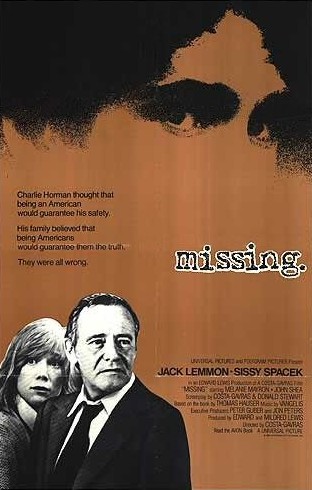
Missing (1982)

Missing_1982_filmDirected by Costa-Gravas

As I’ve been watching these Oscar-nominated movies, there have been many, especially from the 1970s and 1980s, that I haven’t really known anything about. Some of them have been less than stellar, and I can understand why they have fallen by the wayside, even for someone like me who likes watching good movies, no matter how old they are or what language they are in. Missing is not one of those movies. Missing is so awesome I want to show it to everyone I know, and I’ve been telling random people how sad I am that no one seems to have seen it. Missing makes me want to be a high school history or civics teacher so that I could show it to my class to teach them not to be too trusting of government. It makes me so mad that Missing is not a classic; it completely deserves to be one.

So what’s the story? Charlie and Beth Harmon are an idealistic young married couple who have been living in Chile for a couple of years when a right-wing coupe happens. They are going to leave the country soon, so Beth goes to say good-bye to a couple of friends. She gets stuck overnight because of the curfew. When she finally makes it home, Charlie is gone. About two weeks after his disappearance, Charlie’s conservative businessman father, Ed Horman, comes to help Beth navigate the waters of diplomacy and bureaucracy. What they find out together will change their lives forever.

The Good: I’m tired of starting with acting, so I’m going to start with music today. Vangelis’s score is beautiful and haunting. It’s more orchestral than the music in Chariots of Fire, and where he does use the synthesizer, it fits the time much better. The other thing that is great about the music is that it is not constant. Lots of the movie has no music, so that where there is music, it has a much greater impact.

The acting is wonderful. Sissy Spacek is wonderful as Beth, who changes from a vibrant, loving young woman to a frantic wife to a jaded and accepting woman in the course of just a few weeks. It’s a marvelous performance. Jack Lemmon is fantastic as Ed, who starts out so convinced that he’ll be able to fix everything with connections, but slowly comes to realize the truth. I’ve only ever seen Jack Lemmon in comedies, so this was a revelation. John Shea plays idealistic, happy-go-lucky Charlie. He’s not in the movie much, but he leaves an impact when his character is gone. Government agent Captain Ray Tower is played rather chillingly by Charles Cioffi. He’s so scary in part because he’s so friendly, but you can tell he’s hiding the truth.

This is going to sound silly, but the set decoration was so clever at one point. Beth and Ed are at the US Embassy, trying to get answers about what happened to Charlie. The US Ambassador is telling them that he’s probably in hiding and that they shouldn’t worry about him. While he is talking to them, he is standing directly under a picture of Richard Nixon. This movie takes place in 1973, so Nixon was the president then, but by the time Missing was made in 1982, everyone knew that Nixon was a liar. To see a man appointed by that president standing underneath him subtly, yet effectively, underscored the fact that the ambassador was also a liar.

The screenplay was very good. It made the characters come alive. It also made the movie completely gripping. I was so angry that I had to stop watching to go to work. I wanted to know what happened, and I wanted to know NOW! It was fantastic.

I have no concrete examples of why I felt this way, but I though the directing was very good. It’s hard to define good directing, because it’s hard for me to know how much of a hand the director had in various aspects of the movie, but I really felt good directing at play here.

The Bad: The only complaint I have is that Beth and Charlie’s friend Terry has 1980s poufy hair. As a free-spirited 1970s woman, Terry’s hair should have been longer and straighter. I know, tiny quibble. But it bothered me.

The Ugly: War is always ugly, and there are some shocking images and situations in this movie. It’s not the easiest movie to watch because of this, and also because this is a true story. Art that is great tends to bring up issues that might make people uncomfortable, but that doesn’t mean that these issues should be ignored. I think it’s better for people to know what is wrong in their world than to believe that everything is perfect when corruption is hiding underneath.

Oscar Won: Best writing, screenplay based on material from another medium.

Other Oscar Nominations: Best picture; best actor in a leading role (Jack Lemmon); best actress in a leading role (Sissy Spacek).

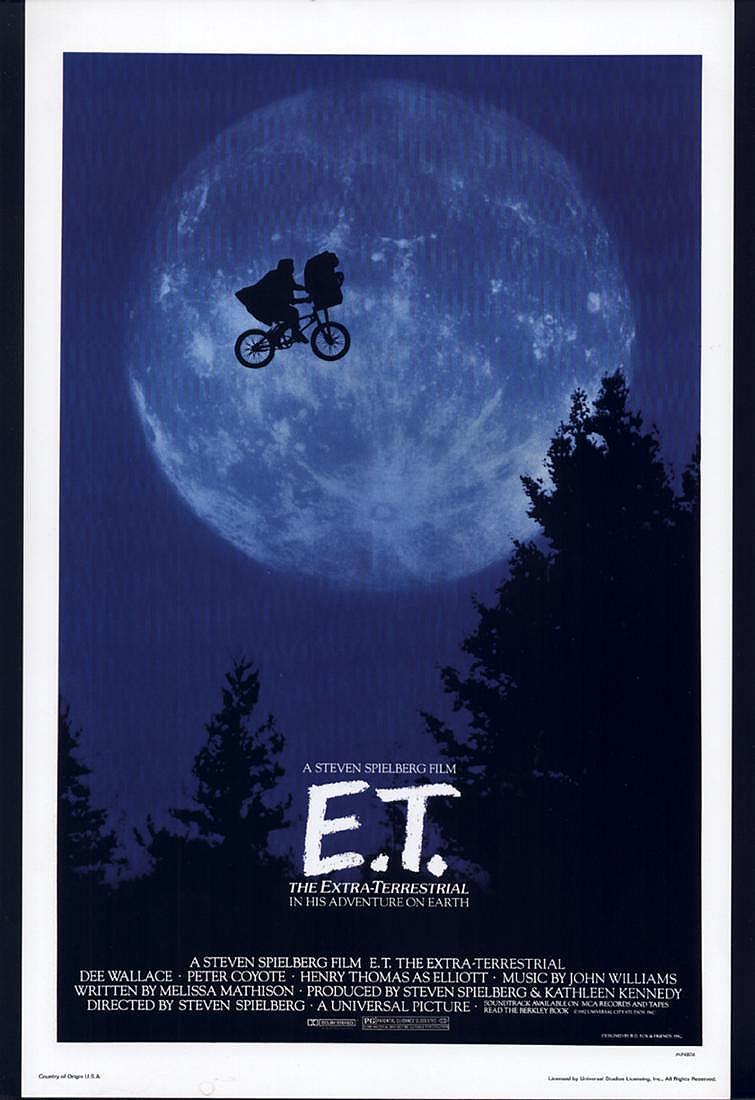
E.T. The Extra-Terrestrial (1982)

ETDirected by Steven Spielberg

Even though I am a child of the 1980s, I didn’t grow up with this movie. I’d seen it a few times, but not a lot. My mom didn’t approve of some of the language the kids used, which is fair. (For some reason, people in the ‘80s thought it was really funny for kids to use bad language. I’m so glad that phase of our society is mostly over.) It was interesting to go back and watch it as an adult with a different understanding. I felt like even though E.T. is about kids, that doesn’t necessarily mean that it’s only for kids.

So what’s the story? A bunch of aliens come to Earth to collect plants. They are interrupted by a group of alien-hunters, who cut one alien off from being able to return to the ship. He is left behind when the ship takes off. He makes his way to the suburbs, where he is found by Elliott, an unhappy young boy. Elliott and the alien, whom he christens E.T., form an unshakable bond as Elliott tries to keep E.T. a secret from adults and help E.T. return home.

The Good: It’s scary to make a movie about children. Child actors can make or break a movie. The children in E.T. were breathtakingly good. Henry Thomas is completely convincing as Elliott. Little sister Gertie is played by Drew Barrymore; this is the only role of hers that I think she does a good job in. Robert MacNaughton is big brother Mike. He has a couple of rough patches acting-wise, but nothing terrible. The three kids truly act like a family. They squabble, they call each other names, the little sister can’t be trusted with secrets, and they pull together when they need to. They know they can depend on each other when it’s important. That’s what a family is.

Of course, this isn’t only due to the acting; the screenwriter, Melissa Mathison, had a lot to do with that. Her screenplay is fantastic, even if she does occasionally have the kids say things that I don’t think they would say in real life. The story could have been bogged down in cheesiness, but the screenwriter managed to keep the movie balanced on the fine line between heartfelt and ridiculous. She also manages to give a sense of backstory without bogging down the movie, which can be another hard thing to balance.

John Williams’s musical score is glorious. I can’t get it out of my head, but I don’t mind too much because it’s so beautiful. Not only is it beautiful, it fits the movie perfectly. It doesn’t overwhelm the movie at all. Williams is a master at using the orchestra, too. The instruments he uses are always the right ones for his themes.

This movie is thirty-three years old, but the special effects hold up. My brother would say that that’s because they don’t use CGI, and I think that’s a good explanation. As CGI gets better and better, the older CGI things end up looking fake, where a well-done robot alien or the overlay of one shot over another to change the background will always look real. I was impressed.

The cinematography was exceptional, also. Part of the reason the adults are so threatening is that no adults (with the exception of Henry’s mother) have faces until close to the end of the movie. The first scene is especially effective because of this. It’s shown from E.T.’s point of view, and we see that he is an intelligent, but frightened, being trying to reunite with his people. It’s heartbreaking and scary all at the same time.

The Bad: Everything worked well, but it can be stressful to see these kids trying to keep E.T. a secret from the adult world. Kids in danger movies are hard for me sometimes, and in this case, while I completely understood the reasoning behind their actions, that didn’t stop me from wanting to step in and help them. I know that won’t bother everyone, though.

The aforementioned children-swearing thing did bug me. I was glad to know that Henry Thomas actually objected to some stronger language and pointed out that he would never say that, so his character shouldn’t, either. And it’s not so much the language I object to, although it’s not my favorite. I hear worse than that every day at work. It’s just that it makes everything feel less realistic for words like that to be coming out of a nine-year-old’s mouth.

The Ugly: I have to go with “nothing” for this one. E.T. is an incredibly well-made movie.

Oscars Won: Best sound; best effects, visual effects; best effects, sound effects editing; best music, original score.

Other Oscar Nominations: Best picture; best director; best writing, screenplay written directly for the screen; best cinematography; best film editing.

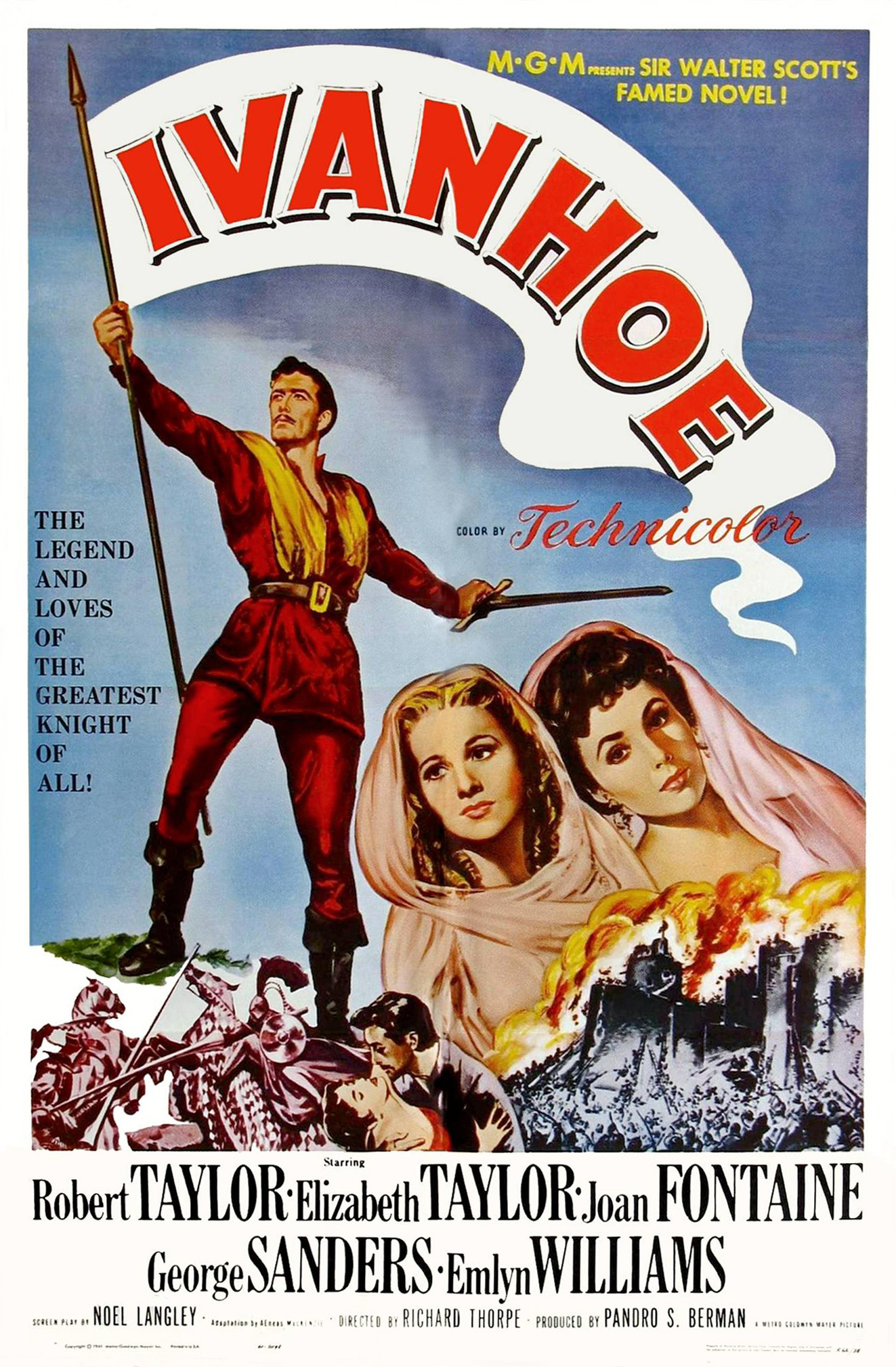
Ivanhoe (1952)

Ivanhoe (1952)_01

Directed by Richard Thorpe

I read Sir Walter Scott’s novel Ivanhoe when I was fourteen or fifteen, and I thought it was fabulous. It has all the necessary elements for an excellent swashbuckling story: adventure, romance, chivalry, and jousting. I had high hopes for the movie, too, but sadly, they were dashed. The elements were all still there, but something was missing. It didn’t feel alive somehow.

So what’s the story? Saxon knight Ivanhoe, who has been to fight in the Crusades, refuses to believe that King Richard is dead. As he makes his way back to England, he rides past every castle he can find, hoping that his English singing will attract the attention of a captive king. This long and slightly foolish plan works; King Richard throws him a letter explaining that he is being held for random. Prince John knows about the ransom, but refuses to pay it so that he can be king instead of his brother. When Ivanhoe reaches England, he not only has to raise the ransom, but right many wrongs and rescue damsels in distress.

The Good: The music is beautiful. It’s scored by Miklos Rozsa, who would go on to score Ben-Hur several years later. The music is very rich and full. The adjective I want to use is “orchestral,” but I’m not sure that would mean anything to anyone else. Hmm. How to put it? He uses the full orchestra to great effect. That makes it sound really boring, but it’s not. It’s really quite stirring.

The best actors in Ivanhoe were not the main characters. The person whose acting stood out to me the most was George Sanders as the villainous Norman knight De Bois-Guilbert. Even though his character was not the most chivalrous, his emotions rang true and he managed to take his flat character and make viewers pity him. It was impressive.

Other people with smaller parts were also able to make the most of their parts. Emlyn Williams as Ivanhoe’s slave-turned-page, Wamba, provided some welcome comic relief. Cedric, Ivanhoe’s bitter Saxon father, was played excellently by Finlay Currie. And Guy Rolfe was the vilest and scariest Prince John I have ever seen.

Although I read the book several years ago, I remember thinking that Rowena was terribly disappointing for a Saxon princess. She was just so blah. (That impression may have been wrong; like I said, it was a while ago.) But in this version, she has spirit and is a lot more awesome. Joan Fontaine did a very good job of showing her strength, her pride, and her jealousy, even if I thought she was a little old for the part. (Side note – this is the first time I’ve seen Joan Fontaine and thought, “Oh, yeah. She and Olivia de Havilland are totally sisters.” The resemblance really shines in this movie.)

The jousting scenes were pretty cool, even if some of the men’s colours were not manly looking. That was a seriously impressive sport, although I’m glad it’s not a big thing anymore because it also looks incredibly dangerous.

 The Bad: Robert Taylor is terribly miscast as Ivanhoe. He doesn’t even bother to try an English accent, which is a little jarring when everyone around him has one. He’s too old to convincingly be a young, dashing knight, and he’s much too solemn.

There is a scene where Ivanhoe has been taken captive, along with Rowena, Rebecca, Cedric, and Wamba. Robin of Locksley (yes, THAT Robin of Locksley) comes with his men to free them. There’s a huge battle with falling rocks and longbows and battering rams and swordfights, and it should be awesome. But it’s not. Watching people fire arrows at each other gets really boring after a while, and the swordplay is not well-choreographed. It may be the most disappointing medieval battle scene in a movie ever.

The Ugly: Elizabeth Taylor is so wooden as the Jewess Rebecca. She is extremely beautiful, but a damsel in distress should show some actual distress once in a while, instead of just looking pretty and putting her hand to her mouth. When she spoke, she sounded like she was reading lines, not speaking from her heart.

The worst thing about this movie was that it was so stiff. There was no sense of fun. There was no swash to the buckle, so to speak. Everything was taken so seriously. I wanted to say, “Hey! People! You’re in a castle! You’re fighting baddies! You’ve got awesome clothes! Smile once in a while. Look like you’re having fun!” No one ever did. Most of the separate elements were fine, but it just didn’t meld in a good way. A movie like this, set in the same time period and with so many of the same elements as The Adventures of Robin Hood (1938), is going to get compared to that movie. It needed to distinguish itself in some way, and sadly, it didn’t.

Oscars Won: None.

Oscar Nominations: Best picture; best cinematography, color; best music, scoring of a dramatic or comedy picture.