I'd like to spank the Academy

Posts tagged ‘Everyman’

Great Expectations (1946)
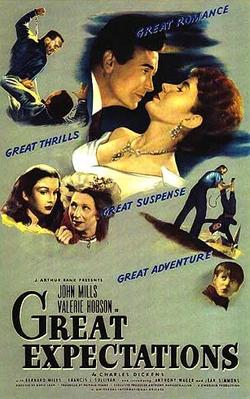
Great_expectationsDirected by David Lean

I read Great Expectations, the Dickens novel this movie was based on, when I was fifteen. I had to read it for my English class. And guess what? I hated the book. However, I was blown away by the opening scene of this movie when my teacher showed it to us during class. It was so moody and so perfect. It was proof to me that they could make a good movie from a not-so-great book.*

So what’s the story? Young Philip Pirrip, called Pip,  lives an uneventful life with his sister and her blacksmith husband, Joe, until one day when they hear that a convict has escaped from a nearby convict ship. Pip meets the convict in the graveyard and feeds him until the convict is recaptured. A year later, Pip’s  interesting life continues when he is asked to come to the home of the mysterious Miss Havisham, a recluse living in a great house. There he meets the beautiful, yet horrible, Estella, with whom he immediately falls in love even though she treats him so terribly. He continues to visit Miss Havisham and Estella until one day he is informed that someone has set up an annuity for him so he can live like a gentleman in London. Who is his mysterious benefactor? What is Miss Havisham’s secret? Why is Estella such a brat?

The Good: Great Expectations is a movie filled with light and shadow, both figuratively and literally. The cinematographer, Guy Green, did a remarkable job painting the book’s theme of the impossibility of judging good from bad simply from appearances with his choices of when to use bright lights and when to use darkness and shadow. Miss Havisham’s house is dark and brooding, rather  like the lady herself.
Screenshot_20181102-092323_FilmStruck

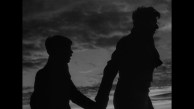
I couldn’t find an example of the chase scene online, so I took a screenshot while watching Great Expectations on my phone. I heartily apologize to the copyright owner if this is a violation, but I did it in admiration and I’m not making any money from this blog. 

Pip’s rooms in London are generally filled with the careless light of a young man finding himself wealthy for the first time in his life, yet when a menacing figure comes into the room, it is suddenly filled with shadow. The best part, though, is when Pip, Joe, and the policemen are chasing the convict over the marshes. The men are shadows against a slightly lighter background. No words are spoken; it’s a pantomime of shadows set to music. I honestly don’t remember if I saw the whole movie in my English class, but I remembered that particular scene for twenty years.

miss-havisham-estella-and-pip-16jd1x9

Estella, Miss Havisham, and Pip in the ruined mansion.

The movie is so well cast. The actors not only do an amazing job in their respective roles, but they also have really good chemistry together. Even the actors in small parts are great. Tony Wager shines as young Pip. John Mills is excellent as Pip in his later years, even though he looks waaaay too old to be a young man just starting out in London. Alec Guinness has the enthusiasm and carelessness needed for the character of Herbert Pocket, while Francis L. Sullivan plays the solicitor Mr. Jaggers to world-weary perfection. Bernard Miles is sweetly humble as Joe, and Martita Hunt is fabulous as the cold, haughty Miss Havisham. Finlay Currie brings a goodness to the role of Magwich the convict while still retaining his rough edges. I just realized that I basically listed the entire cast, so that just goes to show how brilliantly the movie was cast.      

Historical costuming is often a challenge. Many, many costume designers feel the need to bring the clothes “up to date” by using contemporary hairstyles or completely decide to ignore the time period altogether and put the characters in whatever they think looks good. The designer here managed to resist the temptation; the clothes are both period- and class-appropriate.  

The screenplay is a good adaptation of Dickens. Some Dickens adaptations I have seen are much too sunny when compared to his books (I’m looking at YOU, “Oliver!”[1968]). Others have been so bleak. But Dickens himself was a master of of striking the balance of showing the bleakness of his times while celebrating the wonderful things and odd characters in life. The writers of this adaptation of Great Expectations did an excellent job finding their own balance.

The Bad: Besides John Mills looking too old to play Pip as a young gentleman, it is never explained why Pip has a high class accent when he was raised by a blacksmith. It’s such a tiny thing, but it bothered me throughout the movie.

The Ugly: I waited in vain for an explanation of why Pip loved Estella. She was always, always mean to him and to everyone else. She was pretty, but there was literally no other reason for Pip to love her beyond her beauty. I don’t think it’s completely the movie’s fault; Dickens didn’t explain it, either. But I would really love to see any glimmer of a reason for a good soul like Pip to spend his life wanting a thoroughly unpleasant person. (Although I did just realize that maybe he thinks that is how men should be treated based on how he sees his sister treat Joe. Still, I want a better reason.)

Oscars Won: Best cinematography, black-and-white; best art direction-set decoration, black-and-white.

Other Oscar Nominations: Best picture; best director; best writing, screenplay.

*(Don’t worry, though. I reread Great Expectations ten years later, and realized that it’s actually an enjoyable book when a) you’re reading it for pleasure rather than because you are forced to, and b) when you have enough life experience to be able to relate to it.)

Dead End (1937)

dead endDirected by William Wyler

“There was blood on his hands…and a price on his head!” I knew absolutely nothing about Dead End before I watched it, but this tagline made me pretty sure it was film noir. I was so excited; I love film noir. Turns out Dead End is not film noir, but something better: a look at the life of poverty-stricken people in New York’s Lower East Side.

So what’s the story? Drina is single and poor, struggling to raise her younger brother, Tommy. She has always been in love with Dave, a man who worked hard to put himself through college so he could escape the slums, but who can’t get a job now. Dave is falling for Kay, a young woman living in the fancy new apartment building that backs onto Drina and Dave’s block. Tommy is the leader of a street gang; he’s getting into more and more trouble lately. One day, a mysterious man comes to the block. On that one fateful day, the tensions between rich and poor, wealth and poverty, and law and crime all come to a head.

The Good: The lead actors (Sylvia Sydney as Drina and Joel McCrae as Dave) were amazing. Their performances were so good that I can’t figure out why I wasn’t familiar with their names. They both deserved to have much bigger careers than they did. Humphrey Bogart did a good job as always, as did some of the teens in Tommy’s gang.

The filmmakers used several elements to contrast the realities in the lives of the rich and poor. At the beginning, they use editing to show alternating scenes as both groups get ready for the day. The costumes also show class contrast. Drina has one dress on throughout the day, and although it’s clean and pressed, it’s not fashionable. We see Kay in a couple of dresses: a fashionably simple, blindingly white day dress, and a beautiful evening gown. The gang of teenage boys wear a variety of clothes, many of which are obviously hand-me-downs, while the teen boy who lives in the apartment house wears a tailored suit. Martin wears (and brags about) his expensive clothes, while Dave wears worn shirts and trousers. Those living in the poor neighborhood use more slang than the wealthy apartment dwellers; their grammar is also not always perfect. These things all come together to subtly remind viewers of the contrasting lives.

The musical score in Dead End is perfect for the movie; there isn’t one. Sure, there’s some music over the opening credits, and again at the “The End” placard, but the only other music in the movie is the naturally occurring music throughout the day: the player piano in the bar; the kazoo that one of the boys joyfully plays; the songs people sing; the jazz records of the wealthy. This adds to the realism of the movie.

More than anything else, though, the story and screenplay made me love this movie. Dead End speaks for people who don’t have voices, people who are doing their best but who can’t make it out of poverty. It shows why people get stuck in the poverty cycle. It explores that while all people have dreams, sometimes you can’t have all of your dreams. Fighting for your dreams is important, but that doesn’t mean that you’ll get what you’re fighting for. Doing your best isn’t always good enough. The wealthy are not only privileged in their money, but also with the law. They have connections that can get them what they want. On the other hand, just because they are wealthy doesn’t mean that they don’t deserve the protections of the law. All of this was packed into one movie that takes place in one day. That was extraordinarily well done.

The Bad: While Tommy’s gang has some good actors in their midst, some of them are not so great. Also, some of them have such thick New York accents that it’s hard for this person from “out West” to tell what they are saying sometimes.

There were a few parts that felt a little bit slow, but everything is important at some point, so don’t let your attention wander.

The Ugly: This is still happening. People are still living in poor, crime-ridden parts of town. They want to move to a nicer place, but they don’t have the money. Kids still get in over their heads in gangs. Some people decide that they would rather have the money that comes with a life of crime than live an honest life. Some people try to get out of the life, but society makes it hard for them. The justice system comes down harder on poverty-stricken people. I have never ever said that a movie should be remade, but I think this one should be. Not because it’s a bad movie, but because many people won’t watch a black-and-white movie to save their lives. I also think some of the parallels to today might be lost on some people. But this is partially what the humanities are for: to help people understand other people whose lives are so completely different than their own.

Oscars Won: None.

Oscar Nominations: Best picture; best actress in a supporting role (Clair Trevor); best cinematography; best art direction.

The Deer Hunter (1978)

the-deer-hunterThe Deer Hunter
Directed by Michael Cimino

I knew The Deer Hunter was about Vietnam; I didn’t know that it was going to hurt my heart so badly.

So what’s the story? Mike, Steve, Nick, John, Stan, and Axel are a group of regular guys. They celebrate together, drink together, hang out together, hunt together. But then Mike, Nick, and Steve sign up to go fight in Vietnam. Their decision will change everyone’s lives forever.

The Good: In order to hurt the audience so much, the screenplay and actors first had to make us care about this group of very normal friends from a small town in Pennsylvania. Steve’s wedding is the setting to showcase the personalities of this diverse group. Mike (Robert De Niro) is slightly more mature than his friends. He takes things that he cares about very seriously. Nick (Christopher Walken) cares deeply about his friends and his girlfriend, Linda (Meryl Streep). Steven (John Savage) is so in love and so excited to marry Angela (Rutanya Alda) that he is willing to ignore the opinions that his Russian mother has about his fiance. Stan (John Cazale) is a ladies man who can’t understand anyone else’s point of view. John (George Dzundza) sings in the church choir, runs his bar, and is generally content with his life. He takes it upon himself to be the general peacemaker in the group and feels bad that his bad knees prevent him from going to Vietnam with his friends. Axel (Chuck Aspegren) is a good-hearted goofball who only seems to know one phrase. This extended setup not only makes us care, but it makes it hurt so much more when Mike, Steve, and Nick change so much, which the actors portray so heart-breakingly well. There is more that I want to say about the acting and the screenplay, but I’m trying so hard not to spoil anything for anyone. I will say this: some of the changes that people go through are more subtle than others; Christopher Walken does a ridiculously incredible job as Nick; I was glad that The Deer Hunter only showed some of the Vietnam War, because then you were able to feel the atrocities of war without being overwhelmed by them; and if you watch closely, the story mirrors itself, allowing the viewers to see people’s different reactions to the same or similar events. (If you’ve seen it and want to discuss it with me in the comments, be sure to label it if you put in spoilers.)

The music is beautiful and unobtrusive. The soundtrack is more classical than other soundtracks from 1978; no wailing saxophones here. The use of classical and popular music is managed very well. The chosen songs fit the moment they are in exactly. Stanley Meyers’s original theme, “Cavatina (Theme from The Deer Hunter)”, is fabulous, played quietly by guitarist John Williams (no, not THAT John Williams). It is iconic, one of those pieces that will always be associated with this movie. When I write these reviews, I usually like to listen to the soundtrack of the film I’m reviewing, but listening to “Cavatina” breaks my heart all over again, so I had to listen to other instrumental music so that I wasn’t too sad to write.

The editing was brutally disorienting at times. One moment the gang is all happy at home, and the next, Mike is fighting for his life in Vietnam. These cuts happen throughout the movie, and they can be disconcerting because we have no idea how we got there or what happened between the scenes. But life feels that way sometimes when we suddenly look around and realize where we are in life and then wonder how we got there. It’s also how we tell stories to people. No one ever says, “The ground starting shaking, and so I got in my car and drove down Main and then I turned right onto Elm and left onto High Street, went straight for two miles, and then I saw a monster rising out of the ground!” We leave out things that are not pertinent to the story. That’s why this editing works for this movie; it’s a story about everyday people, and the editing reflects that.

The Bad: Mike was a little too mature and heroic to be believable as a person. He’s too close to perfection for my liking.

The Ugly: Scenes of war will always be ugly and brutal and sad, which is why I’m glad The Deer Hunter acknowledges that no one is unaffected by war, and why I am also glad that the filmmakers were somewhat restrained in how much actual brutality they put into this movie.

Oscars Won: Best picture; best actor in a supporting role (Christopher Walken); best director; best sound; best film editing.

Other Oscar Nominations: Best actor in a leading role (Robert De Niro); best actress in a supporting role (Meryl Streep); best writing, screenplay written directly for the screen; best cinematography.

High Noon (1952)

high noonDirected by Fred Zinneman

I love westerns. It’s probably because I watched so many of them growing up that now they make me feel like a little kid again. Whatever the reason, I’m always glad when they show up on the list of best picture nominees. However, High Noon isn’t exactly a western. It’s a thriller that just happens to take place in the Old West. It’s about relationships and small towns and above all, people. I’ve seen it before, but it’s always exciting to watch.

So what’s the story? Will Kane has just married his Quaker sweetheart and given up his marshal’s badge when he gets a telegram that Frank Miller, a murderer that he arrested, has been let out of prison. He’s set to arrive on the noon train and hell-bent on getting revenge on the man who sent him to prison. Miller’s old gang is already waiting for him at the platform. Realizing that a true man faces his problems, Will refuses to run, but can he get the help he needs from the townspeople he’s protected in the past?

The Good: High Noon happens in real time. It’s about 10:40 when Marshal Kane gets his telegram, and an hour and twenty minutes later in real life, the train comes in. This adds to the tension in a way that very few things could have. I’m not sure if High Noon was the first movie to use this tactic, but it’s very effective.

The editing is fantastic. I love really good editing, but sometimes I feel like good editing can be hard to spot. Every once in a while, though, I’m blown away by it. That’s what happened in High Noon. After all the tension has built up and the train is finally coming into town, there are shots of all the different groups waiting for the train to stop. The editing makes that part of the movie so stressful. It’s awesome.

Once again, the acting is superb (can a movie be nominated for best picture without having at least some good acting?). Gary Cooper plays Will Kane, a man committed to his path even though it may cost him the woman he loves. Grace Kelly plays his bride, Amy, who is understandably frightened at the prospect of losing her new husband. Bitter deputy marshal Harvey is played wonderfully by Lloyd Bridges. Even Henry Morgan (aka Colonel Potter in M*A*S*H) has a small role. But the standout actress in High Noon is Katy Jurado as Helen Ramirez. She is ridiculously good in her rather complicated role.

Helen Ramirez is actually another wonderful thing about this movie. Minorities in westerns generally only have tiny roles, and they are usually horrifically stereotypical. However, while Helen is a scarlet woman, she is smart, strong, passionate, and fair. She isn’t scared of anything and she doesn’t take anything from anyone. I love her. She’s a great character.

The cinematography is great. It manages to highlight Will’s forced solitude and the attitudes of the people surrounding him. It does what good cinematography should do.

The Bad: There is nothing bad about High Noon. Everything about this movie is either on fabulous or horrifically bad. I suppose I could say that it’s not fun to watch Thomas Mitchell, one of my favorite character actors, not be awesome. That’s just how the story goes, though.

The Ugly: The title song is awful. I think I could have rationalized it as a 1950s cowboy song if it weren’t for the fact of these two lines:

He made a vow while in state prison
Vowed it would be my life or his’n.

I think it should be a crime against the arts (is that a thing? Can we make it one?) to use “his’n” as a rhyme for “prison”. Bad, bad, bad. Even then, I might have been able to make my peace with it if bits of the song (including that line) didn’t keep playing throughout the movie and reminding me of its existence. The musical score by Dimitri Tiomkin itself is very good, but this song… So bad.

Oscars Won: Best actor in a leading role (Gary Cooper); best film editing; best music, original song (“High Noon [Do Not Forsake Me, Oh My Darlin’]”); best music, scoring of a dramatic or comedy picture.

Other Oscar Nominations: Best picture; best director; best writing, screenplay.

In the Bedroom (2001)

in the bedroomDirected by Todd Field

Even when I recognize the titles of the movies that I’m watching, I don’t always know anything else about them. Sometimes, though, the title gives me a very good idea of what the movie is about. Other times, I am completely wrong. I had never really wanted to see In the Bedroom because I was convinced it was a raunchy sex comedy. That couldn’t be farther from the truth. I was surprised to find that it is instead a slow-moving drama about how a family deals with tragedy. I think I will have to stop judging movies based on their titles.

So what’s the story? Frank Fowler is a college student home for the summer. To his mother’s dismay, he starts dating Natalie, an older woman with two little boys. Natalie also has an ex-husband with a temper. As the summer heats up, tensions mount, and tragedy soon follows.

The Good: In Ian McEwan’s (rather dull) novel Saturday, two people are discussing Tolstoy, and one says, “The genius is in the details.” I feel that way about In the Bedroom. Everyone is believable, partly because the screenplay allows for details. When she’s depressed, Ruth Fowler sits on her couch, watching pointless TV and smoking. Matt Fowler likes to meet his son, Frank, for lunch. Natalie makes awkward conversation with her boyfriend’s college-educated parents, trying to get them to like and accept them. These little scenes, while not action-packed, reveal character and make the people real. The realism makes the sadness later much more real.

Because the screenplay moves so slowly, the acting had to be incredible. Tom Wilkinson and Sissy Spacek are Matt and Ruth Fowler, who are trying to understand and be supportive of their son’s choices, while at the same time not being happy about them. Marisa Tomei is Natalie, a woman who enjoys dating a younger man, but can also see his naiveté. Frank is played by Nick Stahl. He makes Frank a very sweet young man who is enthusiastic about life, but doesn’t really understand that choices have consequences. They are all a joy to watch.

The cinematography was interesting. It would have been very easy to film this movie about a normal family with straightforward camera angles, but instead the filmmakers took the opportunity to use the camera to show that people have inner lives and thoughts. I liked that a lot.

The Bad: Because this movie allows for the details, for the normal conversations between ordinary people, it gets a little boring sometimes. But guess what? Life is boring sometimes. I’m still trying to figure out how I feel about the ending, though. It might have been too exciting to be believable.

The Ugly: I spent a lot of time being annoyed that Natalie and Frank spent so much time with her boys when both Frank and Natalie kept insisting it was only a summer fling. It seemed like such an irresponsible thing to do, to let kids get attached to a boyfriend you’re only planning on dating for a few months. It made me grumpy.

Oscars Won: None.

Oscar Nominations: Best picture; best actor in a leading role (Tom Wilkinson); best actress in a leading role (Sissy Spacek); best actress in a supporting role (Marisa Tomei); best writing, screenplay based on material previously produced or published.

The Treasure of the Sierra Madre (1948)

the-treasure-of-the-sierra-madre-poster-11Directed by John Huston

The Treasure of the Sierra Madre was one of the few movies I had already seen but had no desire to see again. I checked it out from the library a while ago, probably because I had been told it was an adventure movie, which I tend to love, starring Humphrey Bogart, who is awesome. It was so boring that I didn’t even make it halfway through before giving up. So I was really surprised this time around at how much I liked this movie. It’s amazing. Now I’m wondering what was wrong with me the day I watched it the first time.

So what’s the story? Dobbs and Curtain are two American men down on their luck in Mexico. Both of them just want to make enough money to make it back to America, but they can’t find work. They meet Howard, an old prospector, who is willing to help them find gold, but he warns them that gold always carries a curse.

The Good: Like I said before, Humphrey Bogart is awesome, but I’ve never seen him quite like this before. He often plays crusty people on the fringes of society, but he always seems to have a heart of gold underneath. Not here. He’s a little frightening, really. I’m not sure why he wasn’t nominated for a best actor Oscar. Tim Holt plays Curtain, who is just an all-around nice guy with dreams of a bigger life. Howard is played by Walter Huston, director John Huston’s father. Normally I’m not a fan of nepotism, but I think this was a case where the perfect person for the role just happened to be related to the director. Huston did such a good job. He was patient with the greenhorns, yet you could see him waiting for the other shoe to drop. He had enough experience and wisdom to know how things were going to go. Huston managed to show all of that without getting annoying, which can be tricky in situations like that.

The cinematography is gorgeous. It was shot on location in Mexico, and the cinematographer took advantage of that. But there are also lots of intriguing camera angles and good moody lighting which help contribute to the movie.

The excellent score was masterfully written by Max Steiner. I’ve decided he could score pretty much anything and it would be amazing. He could score a movie of someone silently reading a phone book and it would become interesting.

The Bad: The Treasure of the Sierra Madre has the usual first half of the 20th century problem with racism, but it’s not the worst I’ve seen. It also moves a little bit slowly at times.

The Ugly: This movie has the single worst fistfight I have seen in any movie ever. The camera angles are all wrong, and you can see that the punches aren’t actually connecting, even though the foley artist is making the correct sounds. It’s sooooo bad. I was cringing all the way through.

Oscars Won: Best actor in a supporting role (Walter Huston); best director; best writing, screenplay.

Other Oscar Nominations: Best picture.