I'd like to spank the Academy

Posts tagged ‘Depression’

One Hundred Men and a Girl (1937)

One-Hundred-Men-and-a-Girl-PosterDirected by Henry Koster

Some things are definitely cute. Babies are cute. Puppies are cute. Pikachu is cute. But I hate it when people call other things cute: “That’s a cute book,” or “It was such a cute movie!” When people work hard on an artistic endeavor, they deserve to hear something more specific than the rather generic “cute”. As much as I hate it, though, I am going to have to use it now: One Hundred Men and a Girl is a cute movie.

So what’s the story? John Cardwell is a trombonist struggling to get work during the Great Depression. Every night, he waits outside the concert hall with the hope of meeting the great conductor Leopold Stokowski and getting an audition with him; however, he is never successful. After an encounter with some wealthy arts patrons who carelessly promise financial backing, his young teenaged Patricia decides she will get all the unemployed musicians together to form their own orchestra. Her grit and tenacity, along with much confusion, lead to a happy ending.

The Great: I know I don’t usually do a “great” section, but Deanna Durbin is so amazing that she needs special mention. The girl can sing. And by sing, I don’t mean that she can carry a tune or sing pop songs; Deanna Durbin had a beautiful operatic voice. She was only fifteen when One Hundred Men and a Girl was released in theaters, and it is hard to believe that she does her own singing. Not only could she sing, but Deanna Durbin could also act. She does a beautiful job in One Hundred Men and a Girl. There are moments when she’s talking fast because she’s so excited, but you can understand every word. She is completely convincing at every moment. This was my first experience with Deanna Durbin, and I remain completely blown away.

The Good: Deanna Durbin may have been the standout, but other great actors were involved in this movie. Adolphe Menjou gives a sweet performance of a man who has been ripped apart by the world, but is willing to hope again for his daughter’s sake. He goes from hopeless to grudgingly hopeful to exultant as the movie goes on. Mischa Auer brings enough humor as Michael to offset the hopelessness of the beginning. Frank Jenks brings some happy seriousness as the encouraging taxi driver, and Alice Brady is fabulous, darling as the rather thoughtless Mrs. Frost. Leopold Stokowski is a surprisingly good actor for a conductor. I have seen other real-life conductors/musicians/dancers in movies, and they are often not convincing, but Stokowski was a good actor as well as being a wonderful conductor.

The story was good. It brought the plight of people out of work because of the Depression into the forefront. It showed the good people who wanted to work, but just couldn’t find anything. It also showed the thoughtlessness of the rich. Mrs. Frost makes an impulsive promise to a young girl, then promptly forgets about it and goes out of town. She doesn’t really care about Patricia; she sees Patricia as something interesting and new in her dull, expensive life. The wealthy men who play practical jokes on each other are just as bad. While the poor are playing poker using matchsticks, these rich men bet significant amounts of money on who has the better joke. It idealizes the honest poor while uncovering the faults of the uncaring rich.

The music was awesome. I’m not sure how it was nominated for original score; most of the music was classical music. But it was amazing. I would have given them an award for best use of classical music in a musical score. The music person (not sure who it was, because there’s not really a credit for it) matched the classical music to the action perfectly. I’ve never seen it done better.

 The Bad: As talented as Deanna Durbin is with both singing and acting, she has no talent for lip-syncing. By saying she’s lip-syncing, I in no way mean to imply that she is not doing her own singing. She’s just lip-syncing to her own pre-recorded singing. And she’s bad at it. At first I just thought the audio was off, but no. It’s Deanna Durbin.

Both Patricia and her father are constantly trying to get past the doorman at the theater where Stokowski works. It gets old after a bit. Repeated jokes are not as funny as people think they are.

Why do I call One Hundred Men and a Girl cute? Because it’s a well-done, happy movie with not much depth. It’s too simplistic to be anything but cute. It’s a movie you would watch when you’re feeling down and don’t want to think too much. It’s fun, but not extraordinary. It’s just…cute.

The Ugly: There is nothing ugly about this movie. It’s too cute to be ugly.

Oscar Won: Best music, score.

Other Oscar Nominations: Best picture; best writing, original story; best sound, recording; best film editing.

Dead End (1937)

dead endDirected by William Wyler

“There was blood on his hands…and a price on his head!” I knew absolutely nothing about Dead End before I watched it, but this tagline made me pretty sure it was film noir. I was so excited; I love film noir. Turns out Dead End is not film noir, but something better: a look at the life of poverty-stricken people in New York’s Lower East Side.

So what’s the story? Drina is single and poor, struggling to raise her younger brother, Tommy. She has always been in love with Dave, a man who worked hard to put himself through college so he could escape the slums, but who can’t get a job now. Dave is falling for Kay, a young woman living in the fancy new apartment building that backs onto Drina and Dave’s block. Tommy is the leader of a street gang; he’s getting into more and more trouble lately. One day, a mysterious man comes to the block. On that one fateful day, the tensions between rich and poor, wealth and poverty, and law and crime all come to a head.

The Good: The lead actors (Sylvia Sydney as Drina and Joel McCrae as Dave) were amazing. Their performances were so good that I can’t figure out why I wasn’t familiar with their names. They both deserved to have much bigger careers than they did. Humphrey Bogart did a good job as always, as did some of the teens in Tommy’s gang.

The filmmakers used several elements to contrast the realities in the lives of the rich and poor. At the beginning, they use editing to show alternating scenes as both groups get ready for the day. The costumes also show class contrast. Drina has one dress on throughout the day, and although it’s clean and pressed, it’s not fashionable. We see Kay in a couple of dresses: a fashionably simple, blindingly white day dress, and a beautiful evening gown. The gang of teenage boys wear a variety of clothes, many of which are obviously hand-me-downs, while the teen boy who lives in the apartment house wears a tailored suit. Martin wears (and brags about) his expensive clothes, while Dave wears worn shirts and trousers. Those living in the poor neighborhood use more slang than the wealthy apartment dwellers; their grammar is also not always perfect. These things all come together to subtly remind viewers of the contrasting lives.

The musical score in Dead End is perfect for the movie; there isn’t one. Sure, there’s some music over the opening credits, and again at the “The End” placard, but the only other music in the movie is the naturally occurring music throughout the day: the player piano in the bar; the kazoo that one of the boys joyfully plays; the songs people sing; the jazz records of the wealthy. This adds to the realism of the movie.

More than anything else, though, the story and screenplay made me love this movie. Dead End speaks for people who don’t have voices, people who are doing their best but who can’t make it out of poverty. It shows why people get stuck in the poverty cycle. It explores that while all people have dreams, sometimes you can’t have all of your dreams. Fighting for your dreams is important, but that doesn’t mean that you’ll get what you’re fighting for. Doing your best isn’t always good enough. The wealthy are not only privileged in their money, but also with the law. They have connections that can get them what they want. On the other hand, just because they are wealthy doesn’t mean that they don’t deserve the protections of the law. All of this was packed into one movie that takes place in one day. That was extraordinarily well done.

The Bad: While Tommy’s gang has some good actors in their midst, some of them are not so great. Also, some of them have such thick New York accents that it’s hard for this person from “out West” to tell what they are saying sometimes.

There were a few parts that felt a little bit slow, but everything is important at some point, so don’t let your attention wander.

The Ugly: This is still happening. People are still living in poor, crime-ridden parts of town. They want to move to a nicer place, but they don’t have the money. Kids still get in over their heads in gangs. Some people decide that they would rather have the money that comes with a life of crime than live an honest life. Some people try to get out of the life, but society makes it hard for them. The justice system comes down harder on poverty-stricken people. I have never ever said that a movie should be remade, but I think this one should be. Not because it’s a bad movie, but because many people won’t watch a black-and-white movie to save their lives. I also think some of the parallels to today might be lost on some people. But this is partially what the humanities are for: to help people understand other people whose lives are so completely different than their own.

Oscars Won: None.

Oscar Nominations: Best picture; best actress in a supporting role (Clair Trevor); best cinematography; best art direction.

Captains Courageous

Directed by Victor Flemingcaptains courageous

Side note: I knew I hadn’t posted for a while, but I had no idea that it had been three months. I wouldn’t have guessed more than one. Where does the time go? I’ve decided to make another change, since two movie reviews a week are apparently more than I can handle. I’m just going to post once a week. on Thursdays, so anyone looking for a weekend movie has a new idea. And now back to our irregularly scheduled post:

I knew that I had seen Captains Courageous as a child because I remembered very clearly a scene where Mickey Rooney has an argument with the captain. It turns out that doesn’t actually happen in Captains Courageous, so I’m thinking that maybe a similar thing happens in Boys Town. But I’m still sure that I saw this movie, because my love of pea coats and fisherman’s sweaters is rooted so firmly in Captains Courageous that when I see the DVD at the library, I think, “Oh! The pea coat movie!”

So what’s the story? Spoiled, conniving, manipulative Harvey Cheyne, aged ten, is suspended from his elite boarding when the teachers find out he is blackmailing other boys and trying to bribe teachers to get what he wants. His formerly absent father decides to take Harvey with him on a business trip to Europe to try to teach him that you have to work for what you want. When Harvey tries to play a prank on the other boys on the ocean liner, he falls overboard. He is rescued by a group of fishermen, but nothing he can say will make them return to shore before their fishing season is over. Faced with spending three months on a fishing boat full of men who all have to do their part, Harvey is forced to learn that hard work at honest labor delivers more rewards than he could ever have imagined.

The Good: The screenwriters made an amazing choice for this movie. Rudyard Kipling’s novel upon which this movie is based was published in 1897. The writers decided to set the movie in 1937 instead. It would have been good if it had been set in 1897, but changing the setting made the movie much more timely. At one point, Harvey tries to manipulate one of his classmates by threatening to have his classmate’s father fired. This would have been a huge threat in the 1930s, when millions of people were out of work and starving because of the Great Depression. This setting connected people to the movie much more strongly than a historical fiction film would have.

The supporting cast was wonderful. Lionel Barrymore is excellent as Captain Disko, and Mickey Rooney does a good job is his smaller-than-I-was-expecting role of Dan, the captain’s son. I loved the other sailors (some of whom are played by rather prolific actors), who all had different personalities and came to be fond of Harvey in their own different ways. Melvyn Douglas plays Mr. Cheyne, a widower who thinks that he is giving Harvey everything he needs, only to realize that he doesn’t know his own son. It’s a small role, but Douglas’s ability makes it a tender one.

Now let’s talk about the most amazing thing in the movie: Freddie Bartholomew’s acting. I marveled throughout the entire movie as I watched a spoiled brat struggling as he turns into a young man. It’s ridiculous how good of an actor that child was. Everything in the movie hinges on the part of Harvey, and if a lesser actor had played him, the movie would have failed. I don’t have the words to describe his acting; Captains Courageous is a movie you will want to watch if you enjoy watching fine acting.

The Bad and The Ugly: Nothing exactly fits into these categories, so I had to make a new category for today:

The I Have No Idea How I Feel About This: People who have looked at the movie poster will say, “Wait a minute. Spencer Tracy’s name is on the movie poster. Why haven’t you talked about him?” It’s because I have very mixed feelings about this performance. The performance itself is not exactly bad, but Tracy’s accent is atrocious to the point that it becomes distracting. He does express various emotions well, but for me, he never quite becomes jolly Portuguese sailor Manuel; he’s just an actor doing a bad accent. It’s possible that the performance is good and the accent is ugly, but since they are so intertwined, it’s hard for me to make a judgment.

Oscar Wins: Best actor in a leading role (Spencer Tracy).

Other Oscar Nominations: Best picture; best writing, screenplay; best film editing.

Sounder (1972)

sounderDirected by Martin Ritt

I think my third grade teacher hated children. What is my evidence for this? She made us read not only The Red Pony by John Steinbeck, but also Sounder by William H. Armstrong. While both are good books (SPOILER ALERT), the beloved animal dies at the end of both books. It does not make for happy reading for eight and nine year old children. The only thing that could have made the year worse was if we had also read Where the Red Fern Grows by Wilson Rawls. (We read Summer of the Monkeys instead.) Because I remembered how depressing and sad that year was, I wasn’t particularly looking forward to watching Sounder. But the screenwriter was smart, and the movie ends much more happily than the book does.

So what’s the story? During the Depression, sharecroppers David Lee and his father Nathan spend their nights hunting with their dog, Sounder, hoping to get any kind of meat to put on the table. One day, in desperation, Nathan steals a ham from his work. He is arrested and sent to a work camp. The town sheriff won’t tell David Lee and his mother and younger siblings where Nathan has been sent, so David Lee and Sounder go off in search of Nathan.

The Good: There are some nice performances in this movie. Kevin Hooks did a great job of carrying the movie as David Lee, which is a hard job for a teenager. Cicely Tyson plays Rebecca, Nathan’s wife, who is determined to keep the farming going without her husband. She does a beautiful job as the tough, yet loving woman. Paul Winfield is Nathan, a man trying so hard to provide for his family in an impossible time. The major standout for me, though, was Janet MacLachlan, who plays Camille, a teacher who cares. She shone in every scene she was in.

I liked the plot. I like seeing movies about people who love each other and who try to help each other through bad times. Sounder managed to tell the story without being cheesy, which is a hard thing to do.

The Bad: Even though all the performances were lovely, and even though I liked the story of the family, I felt like the movie rambled some. There were some unnecessary scenes. Or maybe they were necessary, but they just didn’t feel like they tied in to the rest of the movie. It dragged a bit, and that made it hard for me to connect with the movie, even though I felt for the people and their plight.

The Ugly: This is a G-rated movie, and there’s not anything horribly offensive in it, but it’s sad. Black sharecroppers in the South during the Depression did not have an easy time of it. This is a so-called “family movie,” but I would suggest not letting small children watch it on their own. I think it’s a movie that parents should talk about with their children so that children can understand what the family was going through.

Oscars Won: None.

Oscar Nominations: Best picture; best actor in a leading role (Paul Winfield); best actress in a leading role (Cicely Tyson); best writing, screenplay based on material from another medium.

Of Mice and Men (1939)

1939 Of mice and men - La fuerza bruta (ing) 03Directed by Lewis Milestone

I read the book Of Mice and Men when I was a junior in high school. I didn’t care for it much; I couldn’t figure out how John Steinbeck could fit so much misery into such a short book. And I haven’t read it since, but watching this movie made me want to, because even though the movie Of Mice and Men is still sad due to the utter hopelessness of these men’s lives, the fact that someone out there understands their situation and dreams and feelings gives hope back to those who feel downtrodden by life. I’m not a Depression-era drifter, but this movie gave me some hope. It made me realize that I am not alone in what I want out of life. That’s a very powerful thing for a work of art to do.

So what’s the story? During the Depression, friends George and Lennie go from ranch to ranch looking for work. George is a small guy, but he’s smart. Lennie is hulking giant; he’s mentally slow, but he works hard and is very kind-hearted, especially towards small animals. George and Lennie have a dream of having their own small place where they can farm for themselves and do what they want to do when they want to do it. They are starting work on a new ranch. Curly, the ranch owner’s proud, jealous son, has a wife, Mae, whom he constantly suspects of cheating. Being the only woman on the ranch is lonely for her, but it’s even worse because none of the ranch hands will talk to her because Curly doesn’t like it when they do. The tensions on the ranch are about to explode and take away George and Lennie’s dreams.

The Good: This movie was exceptionally well-cast. Lon Chaney, Jr. plays Lennie and does a wonderful job of playing a kind man who truly doesn’t understand his own strength. His performance is powerful, and I’m really trying to decide why he didn’t get nominated for an Oscar for it. Burgess Meredith plays George very well. He gives a very good performance of a man torn between his love and loyalty to a friend and his frustration when that friend makes mistakes that pull them both down. Betty Field, who plays Mae, also does a good job. Mae is kind of crass and low-class, but she’s also so lonely. Her desire to really live life is just bursting out of her. I felt much sorrier for her than I remember feeling when I read the book. The rest of the cast is good, too. The hands are especially sympathetic. I don’t know how they got such perfect people for every role, but it happened.

I noticed the music from the beginning. I kept thinking it sounded more symphonic, more complex somehow than a typical 1930s movie score. I found out that Aaron Copland wrote the music, and it suddenly made sense. It was beautiful music, and it didn’t overwhelm the movie like some scores did in the 1930s. It fit the movie just perfectly.

The Bad: I can’t exactly put my finger on just why I felt this way, but I feel like it dragged a bit in some places. I can’t really think of a boring scene, but the pacing was off somehow. Maybe it’s because when I watched it, my mind wasn’t the sharpest it’s ever been. So yeah. Take that comment with a grain of salt. Or better yet, watch the movie and tell me in the comments if I was right or wrong!

The Ugly: This is not a happy story. It’s the story of men living on the fringes of society, wanting no more than the freedom to make their own decisions about life, but who can’t rise above where their circumstances have placed them. The ending is heart-wrenching, because John Steinbeck understood life, and life is not easy.

Oscars Won: None.

Oscar Nominations: Best picture; best sound, recording; best music, scoring; best music, original score.

Random Fact: This movie was adapted from the play that was based on the book. Weird, huh?

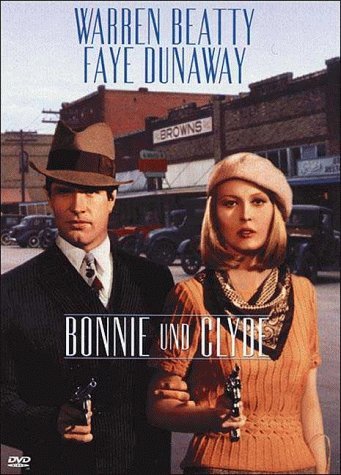
Bonnie and Clyde (1967)

bonnie and clyde posterDirected by Arthur Penn

When I was growing up, my family had a book of pictures from classic Hollywood films. One of those pictures was from Bonnie and Clyde; it interested me because it was a picture of a girl with a great hat (that beret!) holding a gun standing in front of a cool old car. I wondered why she was doing that. Later on, I found out about the bank robbers from the 1930s, but still didn’t know very much about this movie going in.

So what’s the story? Bonnie, a young waitress in 1930s Texas, catches Clyde trying to steal her mother’s car one day. Rather than turn him in, Bonnie goes with Clyde into town. When Clyde points out to her that she hates her life and wants more, Bonnie decides to run away with him. They start robbing banks and stores together, always managing to keep one step ahead of the police. Clyde’s brother Buck and Buck’s wife Blanche come to visit and become part of the gang.

The Good: The cast was very good. I had never seen Faye Dunaway in anything. I knew her name, but I hadn’t ever seen any of her movies. She was fantastic as Bonnie. Estelle Parsons won an Oscar for her portrayal of Blanche, which I felt was well-deserved. She did a very good job as a woman who was not happy about associating with criminals at first, but then enjoying the lifestyle as long as the money came in. I grew up watching Gene Hackman in Hoosiers (often, because it was one of my dad’s favorite movies), so it was really fun to see him in such a different role.

The ending was one of the best endings I have ever seen. It wasn’t overdone or cheesy, which would have been easy to do. It was restrained and elegant instead. Perfect.

The Bad: The music got on my nerves. It was probably fairly authentic, but it felt more stereotypical to me – these were hicks from Texas, so they must listen to hick music.

Also, Faye Dunaway’s look was more 1960s than 1930s. I feel like that was a problem for a long time in historical movies, though, and everyone else looked right. I guess they just wanted the leading lady to look more glamorous than 1930s would have allowed.

The Ugly: I had no emotional connection to this movie. I understand feeling stifled by society’s expectations and wanting a bigger life, but going on a crime spree is not a good way to break out of the oppression of everyday life. The Barrow Gang killed lots of innocent people and stole from others. I know it was the Depression and money was scarce, but I’m sure the small town grocers they robbed were struggling, too. I felt no sympathy for Bonnie and Clyde whatsoever, and I hate that this movie made them seem almost noble for what they did.

Oscars Won: Best actress in a supporting role (Estelle Parsons); best cinematography.

Other Oscar Nominations: Best picture; best actor in a leading role (Warren Beatty); best actress in a leading role (Faye Dunaway); best actor in a supporting role (Gene Hackman); best actor in a supporting role (Michael J. Pollard); best director; best costume design; best writing, story and screenplay – written directly for the screen.