Bonnie and Clyde (1967)
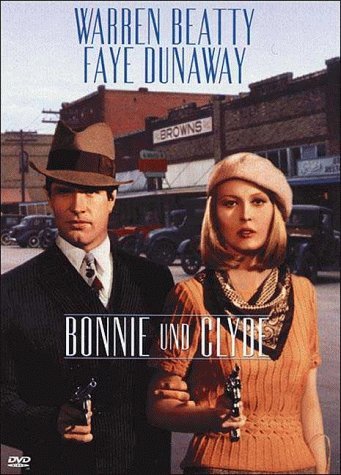 Directed by Arthur Penn
When I was growing up, my family had a book of pictures from classic Hollywood films. One of those pictures was from Bonnie and Clyde; it interested me because it was a picture of a girl with a great hat (that beret!) holding a gun standing in front of a cool old car. I wondered why she was doing that. Later on, I found out about the bank robbers from the 1930s, but still didn’t know very much about this movie going in.
So what’s the story? Bonnie, a young waitress in 1930s Texas, catches Clyde trying to steal her mother’s car one day. Rather than turn him in, Bonnie goes with Clyde into town. When Clyde points out to her that she hates her life and wants more, Bonnie decides to run away with him. They start robbing banks and stores together, always managing to keep one step ahead of the police. Clyde’s brother Buck and Buck’s wife Blanche come to visit and become part of the gang.
The Good: The cast was very good. I had never seen Faye Dunaway in anything. I knew her name, but I hadn’t ever seen any of her movies. She was fantastic as Bonnie. Estelle Parsons won an Oscar for her portrayal of Blanche, which I felt was well-deserved. She did a very good job as a woman who was not happy about associating with criminals at first, but then enjoying the lifestyle as long as the money came in. I grew up watching Gene Hackman in Hoosiers (often, because it was one of my dad’s favorite movies), so it was really fun to see him in such a different role.
The ending was one of the best endings I have ever seen. It wasn’t overdone or cheesy, which would have been easy to do. It was restrained and elegant instead. Perfect.
The Bad: The music got on my nerves. It was probably fairly authentic, but it felt more stereotypical to me – these were hicks from Texas, so they must listen to hick music.
Also, Faye Dunaway’s look was more 1960s than 1930s. I feel like that was a problem for a long time in historical movies, though, and everyone else looked right. I guess they just wanted the leading lady to look more glamorous than 1930s would have allowed.
The Ugly: I had no emotional connection to this movie. I understand feeling stifled by society’s expectations and wanting a bigger life, but going on a crime spree is not a good way to break out of the oppression of everyday life. The Barrow Gang killed lots of innocent people and stole from others. I know it was the Depression and money was scarce, but I’m sure the small town grocers they robbed were struggling, too. I felt no sympathy for Bonnie and Clyde whatsoever, and I hate that this movie made them seem almost noble for what they did.
Oscars Won: Best actress in a supporting role (Estelle Parsons); best cinematography.
Other Oscar Nominations: Best picture; best actor in a leading role (Warren Beatty); best actress in a leading role (Faye Dunaway); best actor in a supporting role (Gene Hackman); best actor in a supporting role (Michael J. Pollard); best director; best costume design; best writing, story and screenplay – written directly for the screen.
 The Oscar Grouch