I'd like to spank the Academy

Posts tagged ‘Based on a true story’

A Beautiful Mind (2001)
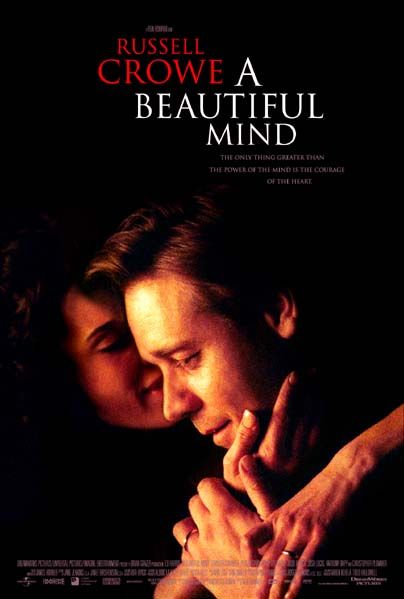
beautiful mindDirected by Ron Howard

It was late the night I put this movie in the DVD player, and I wasn’t going to watch the whole thing. But even though it’s not the most action-packed movie ever made, A Beautiful Mind is an extremely gripping movie. As it got later and later (or earlier and earlier in the morning), I kept thinking, “I should really turn this off and go to bed,” but I just couldn’t. I needed to know what happened to John Nash.

So what’s the story? John Nash is a genius mathematician from West Virginia. He doesn’t fit in with all the other Princeton graduate students, mostly because he is completely asocial. He makes a great mathematic breakthrough and gets a job at MIT with the Department of Defense. He meets and marries Alicia, but the top-secret decryption project he’s working on suddenly takes a dark turn.

The Good: The acting was superb. I haven’t seen a lot of Russell Crowe’s movies, and I wasn’t expecting much from him in A Beautiful Mind, mostly because what I’ve seen him in lately is clips from Les Miserables (no, I haven’t seen the whole thing yet, because I don’t want to watch it). Anyway, Russell Crowe became John Nash. I’m always impressed when actors can play a person with a mental disability without overacting. I loved his performance. The supporting cast was great, too. Paul Bettany as Charles, John’s crazy-fun roommate; Jennifer Connelly as John’s wife, Alicia; Ed Harris as John’s government contact; Adam Goldberg, Josh Lucas, and Anthony Rapp as John’s mathematician colleagues; and Christopher Plummer as Dr. Rosen, John’s psychiatrist are all wonderful. I don’t think any of the roles could have been easy to play, but all of the actors did very well.

The costume design was well done, especially since the year in which something happened was rarely given. The clothes were a clue to how many years had passed, and I was very thankful for that. The makeup was good, too. The stars were aged well. I didn’t much care for John Nash’s old look, but that’s because he looked uncomfortably like someone I know, and I couldn’t get past that. But everyone looked definitely, believably older (unlike the people in Giant, which is still my baseline of terribleness when it comes to aging in movies).

The screenplay was good. John Nash’s story could not have been an easy one to tell without giving too much away, but the writers did an excellent job.

The Bad: The music was beautiful, but there were some moments when James Horner copied his own music. At the very beginning of the movie, the music sounded exactly like the music from Sneakers, which I wasn’t even aware James Horner had scored. I had to look it up to be sure. Later on, there are bits from Titanic, which has a brilliant score. It makes me sad that someone who is as obviously talented as James Horner reuses his own stuff.

The Ugly: There wasn’t anything ugly in A Beautiful Mind. It’s a well-made movie that takes a hard topic and treats it sensitivity and tact. Ron Howard deserves major kudos for this movie.

Oscars Won: Best picture; best actress in a supporting role (Jennifer Connelly); best director; best screenplay, screenplay based on material previously produced or published.

Other Oscar Nominations: Best actor in a leading role (Russell Crowe); best film editing; best makeup; best music, original score.

The King and I (1956)

king and iDirected by Walter Lang

This is the second movie I’ve watched this week that I’ve seen more times than I can count, but it’s the first movie this week that was based on a play which was based on a book which was based on a true story. I loved musicals when I was young(which I think is funny considering how little patience I have with them now), and this was one of my favorite musicals. I can still sing along with all of the songs, and I think it will always have a special place in my heart.

So what’s the story? Anna Leonowens, a widowed Englishwoman, comes to Siam (now Thailand) to be the governess to the children of the king.

The Good: I love the music in this movie. I don’t love all of the songs, because I think there are one or two that slow the movie down, but most of them are enjoyable. And the score is amazing. All I have to do is see the cover of this movie and I have “The March of the Siamese Children” in my head. Not only that, but I am happy to have that song in my head. That never happens.

I like the lead actors in this movie. Yul Brynner plays a man who is trying to hold on to tradition and effect change at the same time. His inner struggle is plain on his face as he tries to make hard decisions. Deborah Kerr makes an excellent Anna. She is smart and determined and compassionate and courageous.

The costumes are gorgeous. Because of this movie, I have had a lifelong dream of polkaing in a dress with a giant hoopskirt. But Anna’s dresses are not the only beautiful ones in The King and I. The women of the court also wear lovely things. Even the king’s clothes are very sumptuous. It’s all very fun.

As impatient as I am with musical numbers that don’t help advance the plot or at least help with characterization, I love the Uncle Tom’s Cabin ballet. It’s different and beautiful and mesmerizing. I’m glad it’s in the movie.

The Bad: It bothers me a little bit that many of the “Asian” people in The King and I were played by Latinos. I can see the reasoning behind hiring Rita Moreno, because she’s amazing, and who wouldn’t pick Rita Moreno if she were a choice? But were the producers really unable to find enough children to play the king’s children who were, if not Thai, at least Asian? There weren’t ten to fifteen Asian kids living in California in 1956?

The Ugly: I have seen this movie many times, and it never bothered me before, so maybe I’m being ultra picky, but the attitude of the movie toward Siam in general and the king in particular is very condescending. There is very much an air of “everything in European culture is good because the Europeans are so enlightened, but there is nothing good about Siamese culture.” The king is only admired because he is trying to westernize his country. He makes silly mistakes (like wanting to send only male elephants to America) that are then corrected by the superior Englishwoman. At one point, Anna tells her young son, Louis, that in many ways, the king was no older than Louis. Really? This is a grown man who had ruled a country and managed to keep it independent in a time of colonization. He is very different from an eight-year-old. I think this might not bother me so much if these characters weren’t based on real people, but since they are, I feel like the characterization of the king and the attitude toward Siam in general is very disrespectful. And yes, I understand that The King and I is from a different era, which is why I can still enjoy this movie. But I can also understand why it’s banned in Thailand. Not that I advocate banning, but I can sympathize with the feelings behind the banning in this particular case.

Oscars Won: Best actor in a leading role (Yul Brynner); best art direction-set direction, color; best costume design, color; best sound, recording; best music, scoring of a musical picture.

Other Oscar Nominations: Best picture; best actress in a leading role (Deborah Kerr); best director; best cinematography, color.

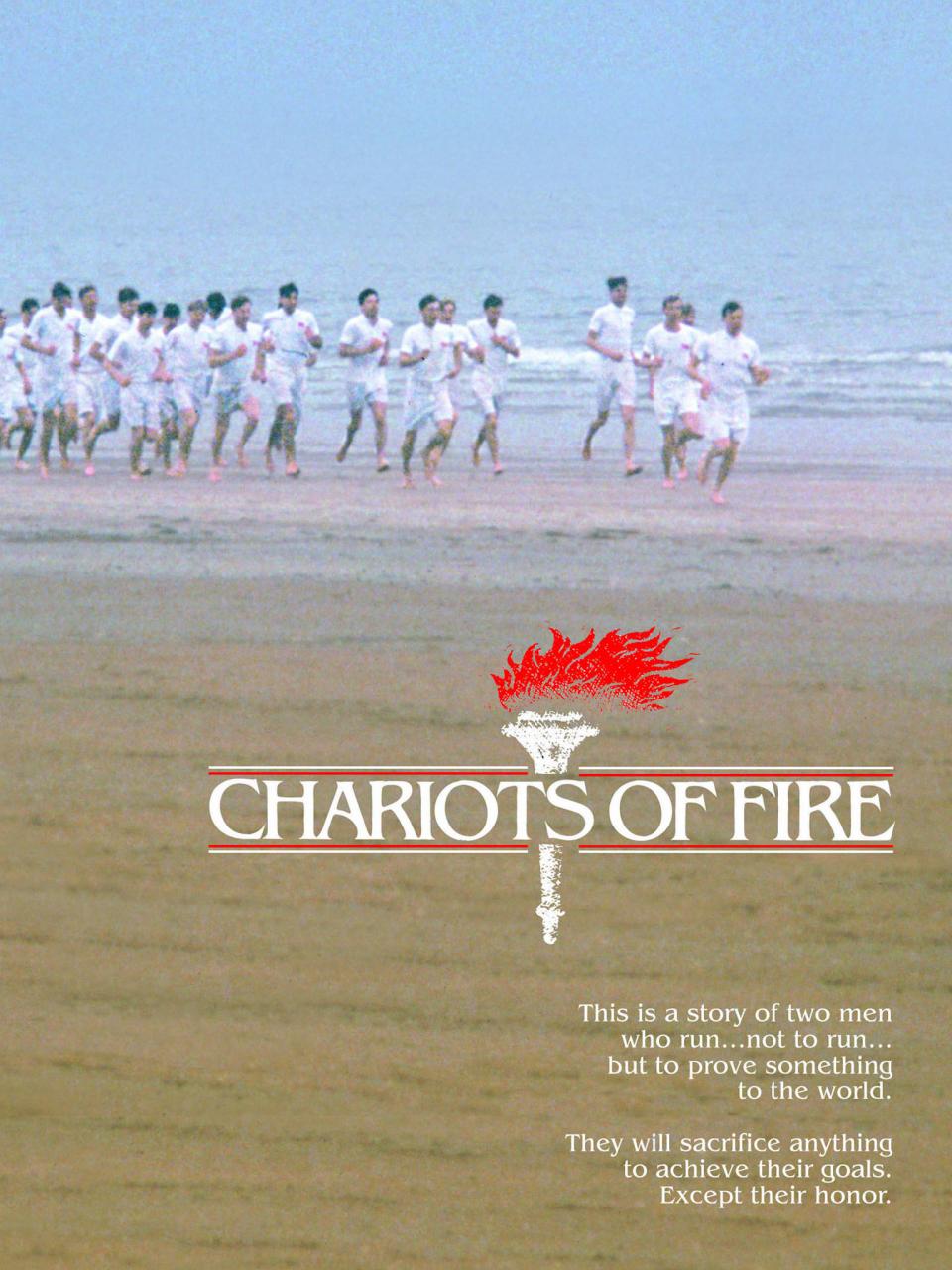
Chariots of Fire (1981)

ChariotsDirected by Hugh Hudson

This is another movie I grew up watching. My family must have an eclectic taste in movies, but I’ve never really realized that until now. Anyway, it’s always interesting to really pay attention to a movie you’ve seen a dozen times before. I noticed things and understood things differently than I ever had before. That might also have to do with the fact that I’m older and so see life a little bit differently than I did. But whatever the reason, watching Chariots of Fire again and trying to be impartial while doing so was a really good experience. And I think I will always be a little bit in love with Lord Lindsay.

So what’s the story? Harold Abrahams is an Englishman who goes to Cambridge and loves Gilbert and Sullivan. He’s also a Jew, which means that to some, he will never be entirely English. He runs to prove to everyone, not least himself, that he is as good as everyone else. Eric Liddell is a missionary who was born and grew up in China, but he also plays rugby for Scotland. He runs for the glory of God. These two men show their dedication in the 1924 Olympic games.

The Good: This movie has great acting. I’m honestly surprised that Ben Cross wasn’t nominated for a best actor Oscar for his portrayal of Harold Abrahams. Ian Charleston is just as good as Eric Liddell. The supporting actors are good as well. I noticed when I watched the famous running on the beach sequence that the four main runners (Harold, Eric, Aubrey Montague, Lord Lindsay) show their characters’ personalities in the few seconds that the camera is focused on them. It was all very well done.

This is the third movie that took place in a historical time this week, and this is the third one where the designer actually paid attention to what people were wearing at the time. Hooray for more correct historical costuming! Thank you, 1981!

I was impressed by the screenplay this time around. It’s based on a true story, but of course things are compressed or changed in time to make for a more streamlined story. All of the characters are distinct people with strong personalities. The story is inspiring, but it could have become overwhelmingly cheesy if the writers weren’t careful. The writers did an excellent job.

The Bad: I feel terrible saying this, but the music is bad. The themes are beautiful, and when the theme song is played on a piano or by an orchestra, I love it. However, the music in the movie is played on a synthesizer, and it just doesn’t work. It’s so very 1980s. It might have been fine if the movie took place in the 1980s, but it’s not okay in the 1920s. (And before anyone jumps down my throat for insulting the music, go and watch the movie. If you disagree with me after that…well, we will just have a difference of opinion. But it will be an informed difference of opinion.)

The Ugly: There is no ugly in this movie. It’s not perfect, but it’s really good.

Oscars Won: Best picture; best writing, screenplay written directly for the screen; best costume design; best music, original score.

Other Oscar Nominations: Best actor in a supporting role (Ian Holm); best director; best film editing.

Reds (1981)

220px-RedsposterDirected by Warren Beatty

I didn’t go into this movie with a very good attitude. I’m not a big Warren Beatty fan. I’m not sure why; he’s not a terrible actor. He just rubs me the wrong way, I guess. Maybe it has something to do with “You’re So Vain”. So I was already not looking forward to watching Reds because of Warren Beatty, and then I saw what the tagline was: “Not since Gone with the Wind has there been a great romantic epic like it!” That lowered my opinion of the movie even more. If a critic had compared it to Gone with the Wind, that would be one thing, but for people to say that about their own movie is silly. It makes filmmakers sound full of themselves, and it really lowered my expectations. But maybe the lowered expectations helped. Maybe I was able to enjoy Reds as much as I did only because it was better than I was expecting it to be.

So what’s the story? Louise Bryant is an outwardly respectable married woman living in Portland. She dreams of being a writer. She meets Jack Reed, a progressive journalist from the East and abandons her husband to go to New York with Jack. She meets his crowd of socialists and anarchists and is drawn in to their society as Jack travels the country agitating for socialism. Eventually the two travel to Russia and become involved in the Revolution.

The Good: Costume design! Yay! After watching many movies that couldn’t figure out how to do historical costuming, this was a nice change.

The supporting cast was very good. The standouts were Maureen Stapleton as activist and anarchist Emma Goldman and Jack Nicholson (whom I didn’t recognize behind the hair and the mustache) as playwright Eugene O’Neill. Each of them basically stole every scene they were in, and I wish they had both had a bigger part in the movie.

The Bad: I didn’t care for either Diane Keaton or Warren Beatty, which is bad since they play the main characters. Louise Bryant was supposedly this fascinating woman who attracted all kinds of men, but honestly, she was kind of bland. Yes, she got mad that her work wasn’t as good as Jack’s, but until that point and for a long while afterwards, she didn’t show much emotion. In fact, exasperation and anger with Jack were her two dominant emotions in the movie. Also, tiny annoyance, but her eye makeup was distractingly bad. Warren Beatty had a couple of good moments (the scene where Emma and Jack are arguing about the direction of the Revolution was fabulous), but there were not enough good moments to carry the movie.

This movie features elderly men and women who reminisce about Jack Reed and Louise Bryant and the times that Reds covers. While it was interesting to hear what they had to say, it really broke up the movie. The story would stop while the old people (“The Witnesses”) talked to the camera. The movie became half talking heads documentary, half biopic. While it was different and creative and probably why Warren Beatty won best director, it was distracting. Once or twice the words that The Witnesses were saying contradicted the story that was being told, which was jarring. And since there was a screenplay, it made me wonder whether what The Witnesses was saying was scripted. I felt like Beatty should have either made a documentary about Reed or just made Reds without The Witnesses. I really didn’t like it.

The Ugly: When your leads aren’t good and your story could be compelling but is too choppy due to interruptions from old people, a three hour movie doesn’t work. I got so very bored. I didn’t really care what happened to Jack and Louise. I thought that Louise was selfish and angry because she wasn’t as talented as Jack, and Jack was selfish and distracted because he was so talented, but I didn’t care about them. Gone with the Wind is forty-five minutes longer than Reds, but it flies by because the characters are so alive and compelling. You have to know what happens to them. Reds didn’t do that for me. I would have enjoyed a good documentary about Jack and Louise and their crazy New York group much more than this odd, indecisive, way-too-long movie.

Oscars Won: Best actress in a supporting role (Maureen Stapleton); best director; best cinematography.

Other Oscar Nominations: Best picture; best actress in a leading role (Diane Keaton); best actor in a leading role (Warren Beatty); best actor in a supporting role (Jack Nicholson); best writing, screenplay written directly for the screen; best art direction-set direction; best costume design; best sound; best film editing.

The Pianist (2002)

the-pianistDirected by Roman Polanski

When I was ten or so, I got interested in Holocaust literature. I think it’s because my teacher read us Daniel’s Story in class. Anyway, from that time on, I read lots of books written for children and teenagers about the Holocaust. I even read some written for adults. But that all stopped when I was sixteen. That year, my history teacher showed us footage of the liberation of the concentration camps. Reading all those books hadn’t prepared me for what the Holocaust really was. I hadn’t understood what it really meant, what it looked like when people were slowly being starved to death and being killed indiscriminately. But now I do, and now Holocaust movies are hard for me to watch. I don’t want to believe that people could treat other people that way. At the same time, even though they can be so terrible, movies about the Holocaust can also be testaments to human goodness and resilience.

So what’s the story? Wladyslaw Szpilman is a young pianist living and working in Warsaw in 1939. After Germany invades the country, Szpilman, who is Jewish, lives through the horrors of the Warsaw ghetto.

The Good: Adrien Brody. His performance is heartbreaking. His transformation from a carefree young musician to a starving, terrified shadow of a man is amazing. I cried as I watched him trying to open his can of food. Incredible.

I loved the costume design. It helped to tell the story in way I haven’t often seen. Wladyslaw starts out wearing fashionable suits, but as his life gets harder and harder, his clothes change, too. The contrasting clothing of the people in the ghetto also highlights the differences of the people. Some were dressed poorly; others had furs. Each of those people in the ghetto had a different story before they were forced together, and their clothes remind us of that. They aren’t just faceless people or numbers, but people with various pasts who faced a tragic future together.

The production design made me sad not just for the Jewish people, but for the Poles, also. Their capital was destroyed; many people died. I’m not sure how they were able to show such widespread destruction, but it was devastating to see a city in rubble.

The Bad: I know I’m not supposed to say this, especially about a Holocaust movie, but there are a couple of boring stretches in this movie. From the time Wladyslaw is separated from his family until he stops living in empty apartments, it’s not the most exciting movie. I suppose it really must have been boring trying to live silently in an apartment that is supposed to be empty, but it doesn’t make for thrilling cinema.

The Ugly: Roman Polanski was a Holocaust survivor who escaped from the Krakow ghetto, and he witnessed some horrific things. He doesn’t pull his punches in this movie, and so there is some very graphic and shocking violence. I don’t feel like it’s gratuitous in any way; it’s what happened. But that means there are some parts that are very difficult to watch.

Oscars Won: Best actor in a leading role (Adrien Brody); best director; best writing, adapted screenplay.

Other Oscar Nominations: Best picture; best cinematography; best costume design; best film editing.

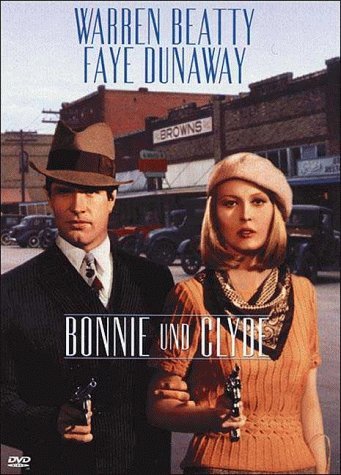
Bonnie and Clyde (1967)

bonnie and clyde posterDirected by Arthur Penn

When I was growing up, my family had a book of pictures from classic Hollywood films. One of those pictures was from Bonnie and Clyde; it interested me because it was a picture of a girl with a great hat (that beret!) holding a gun standing in front of a cool old car. I wondered why she was doing that. Later on, I found out about the bank robbers from the 1930s, but still didn’t know very much about this movie going in.

So what’s the story? Bonnie, a young waitress in 1930s Texas, catches Clyde trying to steal her mother’s car one day. Rather than turn him in, Bonnie goes with Clyde into town. When Clyde points out to her that she hates her life and wants more, Bonnie decides to run away with him. They start robbing banks and stores together, always managing to keep one step ahead of the police. Clyde’s brother Buck and Buck’s wife Blanche come to visit and become part of the gang.

The Good: The cast was very good. I had never seen Faye Dunaway in anything. I knew her name, but I hadn’t ever seen any of her movies. She was fantastic as Bonnie. Estelle Parsons won an Oscar for her portrayal of Blanche, which I felt was well-deserved. She did a very good job as a woman who was not happy about associating with criminals at first, but then enjoying the lifestyle as long as the money came in. I grew up watching Gene Hackman in Hoosiers (often, because it was one of my dad’s favorite movies), so it was really fun to see him in such a different role.

The ending was one of the best endings I have ever seen. It wasn’t overdone or cheesy, which would have been easy to do. It was restrained and elegant instead. Perfect.

The Bad: The music got on my nerves. It was probably fairly authentic, but it felt more stereotypical to me – these were hicks from Texas, so they must listen to hick music.

Also, Faye Dunaway’s look was more 1960s than 1930s. I feel like that was a problem for a long time in historical movies, though, and everyone else looked right. I guess they just wanted the leading lady to look more glamorous than 1930s would have allowed.

The Ugly: I had no emotional connection to this movie. I understand feeling stifled by society’s expectations and wanting a bigger life, but going on a crime spree is not a good way to break out of the oppression of everyday life. The Barrow Gang killed lots of innocent people and stole from others. I know it was the Depression and money was scarce, but I’m sure the small town grocers they robbed were struggling, too. I felt no sympathy for Bonnie and Clyde whatsoever, and I hate that this movie made them seem almost noble for what they did.

Oscars Won: Best actress in a supporting role (Estelle Parsons); best cinematography.

Other Oscar Nominations: Best picture; best actor in a leading role (Warren Beatty); best actress in a leading role (Faye Dunaway); best actor in a supporting role (Gene Hackman); best actor in a supporting role (Michael J. Pollard); best director; best costume design; best writing, story and screenplay – written directly for the screen.