I'd like to spank the Academy

Posts tagged ‘Based on a book’

Captains Courageous

Directed by Victor Flemingcaptains courageous

Side note: I knew I hadn’t posted for a while, but I had no idea that it had been three months. I wouldn’t have guessed more than one. Where does the time go? I’ve decided to make another change, since two movie reviews a week are apparently more than I can handle. I’m just going to post once a week. on Thursdays, so anyone looking for a weekend movie has a new idea. And now back to our irregularly scheduled post:

I knew that I had seen Captains Courageous as a child because I remembered very clearly a scene where Mickey Rooney has an argument with the captain. It turns out that doesn’t actually happen in Captains Courageous, so I’m thinking that maybe a similar thing happens in Boys Town. But I’m still sure that I saw this movie, because my love of pea coats and fisherman’s sweaters is rooted so firmly in Captains Courageous that when I see the DVD at the library, I think, “Oh! The pea coat movie!”

So what’s the story? Spoiled, conniving, manipulative Harvey Cheyne, aged ten, is suspended from his elite boarding when the teachers find out he is blackmailing other boys and trying to bribe teachers to get what he wants. His formerly absent father decides to take Harvey with him on a business trip to Europe to try to teach him that you have to work for what you want. When Harvey tries to play a prank on the other boys on the ocean liner, he falls overboard. He is rescued by a group of fishermen, but nothing he can say will make them return to shore before their fishing season is over. Faced with spending three months on a fishing boat full of men who all have to do their part, Harvey is forced to learn that hard work at honest labor delivers more rewards than he could ever have imagined.

The Good: The screenwriters made an amazing choice for this movie. Rudyard Kipling’s novel upon which this movie is based was published in 1897. The writers decided to set the movie in 1937 instead. It would have been good if it had been set in 1897, but changing the setting made the movie much more timely. At one point, Harvey tries to manipulate one of his classmates by threatening to have his classmate’s father fired. This would have been a huge threat in the 1930s, when millions of people were out of work and starving because of the Great Depression. This setting connected people to the movie much more strongly than a historical fiction film would have.

The supporting cast was wonderful. Lionel Barrymore is excellent as Captain Disko, and Mickey Rooney does a good job is his smaller-than-I-was-expecting role of Dan, the captain’s son. I loved the other sailors (some of whom are played by rather prolific actors), who all had different personalities and came to be fond of Harvey in their own different ways. Melvyn Douglas plays Mr. Cheyne, a widower who thinks that he is giving Harvey everything he needs, only to realize that he doesn’t know his own son. It’s a small role, but Douglas’s ability makes it a tender one.

Now let’s talk about the most amazing thing in the movie: Freddie Bartholomew’s acting. I marveled throughout the entire movie as I watched a spoiled brat struggling as he turns into a young man. It’s ridiculous how good of an actor that child was. Everything in the movie hinges on the part of Harvey, and if a lesser actor had played him, the movie would have failed. I don’t have the words to describe his acting; Captains Courageous is a movie you will want to watch if you enjoy watching fine acting.

The Bad and The Ugly: Nothing exactly fits into these categories, so I had to make a new category for today:

The I Have No Idea How I Feel About This: People who have looked at the movie poster will say, “Wait a minute. Spencer Tracy’s name is on the movie poster. Why haven’t you talked about him?” It’s because I have very mixed feelings about this performance. The performance itself is not exactly bad, but Tracy’s accent is atrocious to the point that it becomes distracting. He does express various emotions well, but for me, he never quite becomes jolly Portuguese sailor Manuel; he’s just an actor doing a bad accent. It’s possible that the performance is good and the accent is ugly, but since they are so intertwined, it’s hard for me to make a judgment.

Oscar Wins: Best actor in a leading role (Spencer Tracy).

Other Oscar Nominations: Best picture; best writing, screenplay; best film editing.
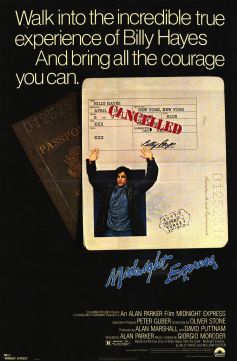
Midnight Express (1978)

midnight_express_ver2_xlgMidnight Express
Directed by Alan Parker

Like most of the other nominees from 1978, I knew nothing about Midnight Express before I watched it. Because it had “express” in the title, just like Murder on the Orient Express, Von Ryan’s Express, and Shanghai Express, I thought I was going to see an exciting train movie. I was disappointed and apprehensive to learn that it was not about trains, but about the horrifying conditions in a Turkish prison. I was fully expecting a movie as brutal as Deliverance, and I was relieved that it wasn’t nearly as bad.

So what’s the story? Young American Billy Hayes is caught trying to smuggle two kilos (or four and a half pounds) of hashish out of Turkey and sentenced to four years in prison there.

The Good: The acting is phenomenal. Brad Davis is truly amazing as Billy as he goes from terror to acceptance to insanity. Randy Quaid plays Jimmy, an inmate who is always coming up with escape plans that go awry.  Norbert Weisser shows subtle sympathy as Kurt the Swede. The sneaky prison snitch Rifki is played with quiet menace by Paolo Bonacelli. John Hurt gives a heartbreaking performance as Kurt, an English prisoner who has been there so long that he has very little hope left to hang on to.

The music is good, with the music in the chase scene being exceptional. It was a bit too synthesized in my opinion, but it’s still good.

I liked that the Turkish wasn’t translated, especially when Billy was first arrested at the airport. It was kind of disorienting, because I wasn’t sure exactly what was going on, and that echoed Billy’s experience.

The Bad: Go straight to ugly. Do not pass Go. Do not collect $200.

The Ugly: I couldn’t connect with Billy Hayes. He came off as an entitled spoiled brat. He was smuggling several pounds of hashish out of Turkey, but he seems to believe that he doesn’t deserve any sentence at all for that. Depending on the state he was in, he’d get about five years in prison for that in the US, especially since he admitted that he had the intent to sell. Smuggling carries an even greater penalty, so when he whined about having to stay four years, my opinion of him went down even more. Unfortunately, if you can’t connect with the main character in some way (or at least have some sympathy for him), a movie gets a little dull. You just want it to be over, because you just don’t care what happens.

I was upset when I found out that most of the movie was made up. If you are purporting to tell a true story,there should be more truth to your movie than the very basic plot. According to Billy Hayes, the conditions weren’t nearly as brutal as Alan Parker and Oliver Stone, who wrote the screenplay, depicted. I feel like you shouldn’t defame an entire country just for the drama.

I rarely do spoilers, but I am going to highlight the most brutal moments here so that you can make a more informed decision about watching it (SPOILERS BELOW):

  1. A cat is hung.
  2. One inmate bites off another’s tongue.
  3. A man’s head is squished on a peg and some grossness ensues.

Those are the three most brutal moments; everything else is basically as tame as the things that happen in the TV show Prison Break.

Oscars Won: Best writing, screenplay based on material from another medium; best music, original score.

Other Oscar Nominations: Best picture; best actor in a supporting role (John Hurt); best director; best film editing.

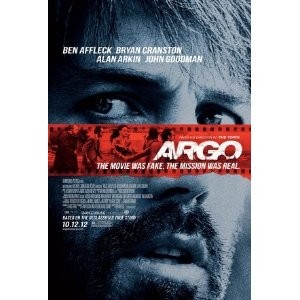
Argo (2012)

Directed by Ben Affleck

Okay, so argoit’s been awhile again. Apparently, because I wrote about my depression and how it was doing so much better in my Silver Linings Playbook post, my depression decided to remind me how powerful it actually can be. So yeah. Sorry if you’ve been waiting and hoping and wishing for my Argo review and my wrap-up of 2012; I’ve been trying not to slit my wrists. But at least I’ve been successful!

As I said in my Zero Dark Thirty review, I was excited for the 2012 movies because I got to watch two action movies that had been nominated for best picture. But just like Zero Dark Thirty, Argo is also not an action movie. It’s exciting, and it’s fun, and it has wonderfully tense moments, but it’s not an action movie. I think I might have watched the only action movie ever nominated when I watched Raiders of the Lost Ark. Argo is a fantastic movie, and I truly enjoyed it, but it’s not an action movie. It was also weird watching it on the heels of Zero Dark Thirty because they are so similar. Both movies are more spy film than action flick, both are based on true stories, both take place in the Middle East, both even have Kyle Chandler. So while I recommend seeing both films, don’t watch them back to back.

So what’s the story? During the takeover of the American embassy in Iran in 1979, six Americans manage to escape to the home of the Canadian ambassador. As the occupation of the embassy drags on, the U.S. government tries frantically to come up with an idea to get the six out before the Iranians realize that they aren’t in the embassy with the other civil servants they have taken hostage. Tony Mendez, a CIA officer whose job is extracting people from bad situations, finally comes up with “the best bad idea”—produce a fake movie, complete with screenplay, casting, and movie posters. He will then fly to Iran to “scout locations” and fly back with the six Americans as members of the production company. It’s a risky plan; can they pull it off?

The Good: I don’t know the term for what I’m about to admire, but I love that Argo looks like a movie from the late seventies or early eighties. The film quality is grainier, less sharp than current movies. No high definition here! I liked that the old Warner Brothers logo was used at the beginning of the film, too. It was a small thing, but helped set the tone for the movie.

Argo was a well-cast film. Everyone from Ben Affleck as Tony Mendez to John Goodman as legendary make-up artist John Chambers to Bryan Cranston as Mendez’s boss, Jack O’Donnell was fantastic. I was especially glad to see Victor Garber playing a sympathetic character (the Canadian ambassador) for once. He seems like the nicest man, but in the movies I’ve seen him in, his characters are always jerks (Mayor Shinn in The Music Man, the lecherous professor in Legally Blond, the money-grubbing lawyer in Eli Stone). Alan Arkin is a delight as the “producer” of Mendez’s movie, and the people playing the six non-hostages were also good. I didn’t feel like there was a false note in the casting.

The pacing of the movie was great. The director managed to keep the feeling of a lot of time going by balanced with the tension of having to get the people out. It would have been very easy to err in either direction – either with the movie dragging as the hostages stayed inside for months, or with the action happening too quickly to be believable.

Even though I feel like I know more about history than the average American, I didn’t know much about the Iran Hostage Crisis. We didn’t tend to get to more recent things in any of my history classes just because there was so much to cover in a year, and I wasn’t alive when it actually happened, so I appreciated the overview of the modern history of Iran at the beginning. Some of the movie wouldn’t have made sense without that background.

Alexandre Desplat’s score was a haunting, beautiful mix of Middle Eastern and Western music. It was subtle enough to underscore the drama of the situation without being overwhelming.

The Bad: While the casting was all good, I had a hard time keeping the six escapees straight. They didn’t get enough screen time for the viewers to understand their characters, so they all kind of blended together. I would have liked to have seen more of John Goodman and Alan Arkin and the Hollywood end of things, also. I feel like a lot of that was glossed over to give Ben Affleck more screen time and make Mendez seem more heroic.

Because I put off writing this review, I had to watch Argo twice in order to feel like I could give it an honest, helpful review. The first time, I loved it. It was one of those moments when you want to tell everyone you know that they should see it. A few weeks later, when I saw it for the second time, I just couldn’t get into it. I already knew what was going to happen, so there was no tension for me. This seems to be a flaw in the movie, but I can’t put my finger on why I didn’t care so much the second time around. It might be because I felt no connection to the characters; I’m not sure. But I feel like a movie that is named the best picture of the year should be able to be enjoyed more than once.

The Ugly: I didn’t find anything bad enough about Argo to be in this category. It’s flaws were minor.

Oscars Won: Best motion picture of the year; best writing, adapted screenplay; best achievement in film editing.

Other Oscar Nominations: Best performance by an actor in a supporting role (Alan Arkin); best achievement in music written for motion pictures, original score; best achievement in sound mixing; best achievement in sound editing.

Lincoln (2012)

Lincoln_2012_Teaser_PosterDirected by Steven Spielberg

This is yet another post that I had already written, but lost when I lost my flashdrive. On the bright side, that means I get to celebrate President’s Day by posting about Lincoln, which is a happy coincidence. It’s a great movie about a great man. I feel like I’m gushing, and I’m sorry, but it really is an amazing movie.

So what’s the story? In the last days of the American Civil War, Abraham Lincoln wheels and deals and does everything he can in order to pass the 13th Amendment to the Constitution, which will abolish slavery in the United States forever. He has a deadline, however; if the South rejoins the Union before the amendment passes, they will defeat the amendment and keep slavery legal.

The Good: Daniel Day-Lewis does it again. The man is a chameleon. I could pass him on the street and not have a clue who he is because he always becomes his character. I felt like I was watching real footage of Abraham Lincoln. Before I started watching these Oscar-nominated movies, I thought Daniel Day-Lewis was overrated. I will never think that again. I cannot believe how amazing he is in this part.

I am rarely struck by makeup and hairstyling, but there are so many actors in Lincoln that I am familiar with – and I didn’t recognize any of them except for Tommy Lee Jones. Even Sally Field is practically unrecognizable. Everyone looks period-correct, and it is impressive. The costuming adds to this, of course. You can see the different classes and stations in society through the clothes, and I love it.

Speaking of actors, the supporting cast is fantastic. Sally Field makes a wonderful Mary Todd Lincoln. She shows all the complexities of the woman, including her awareness of how her illness made Lincoln’s life more difficult. Tommy Lee Jones always plays crusty men well, but he is also tender in his portrayal of Thaddeus Stevens. I don’t usually like James Spader, because he always makes me feel slimy, but since his character is slimy, he works so perfectly. I didn’t feel that anyone did a poor job. This is another perfectly-cast movie.

The production design and the sets were another aspect that made the movie historically believable. The rooms were low-ceilinged and dim, even during the day. Everything is slightly dingy, as if covered by the ash of the fires. There is mud and dirt and grime and that’s how life was then.

John William’s score is surprisingly subtle for him. It’s beautiful and stirring and simple and just right for a movie about a brave, simple man.

The Bad: There is nothing bad about this movie. Nothing bothered me about it at all, except perhaps Tommy Lee Jones’ wig, but Thaddeus Stevens had a bad wig in real life, so there wasn’t much choice there.

The Ugly: There are some short ugly war scenes and reminders of the cost of keeping the war going so that the amendment could pass, but that’s realism, not bad filmmaking.

Oscars Won: Best performance by an actor in a leading role (Daniel Day-Lewis); best achievement in production design.

Other Oscar Nominations: Best motion picture of the year; best performance by an actor in a supporting role (Tommy Lee Jones); best performance by an actress in a supporting role (Sally Field); best achievement in directing; best writing, adapted screenplay; best achievement in cinematography; best achievement in film editing; best achievement in costume design; best achievement in music written for motion pictures, original score; best achievement in sound mixing.

Les Misèrables (2012)

Les-miserables-movie-poster1Directed by Tom Hooper

This was one of the posts that I lost when I lost my flash drive. As much as I hate rewriting things that I’ve already written, I won’t have a hard time rewriting this one. I have a lot to say about Les Misèrables in general, the musical and this movie version of it in particular.

When I went to study in London about ten years ago, I wasn’t planning on seeing the stage version of Les Misèrables. The touring coming comes to my town often enough, and I wanted to see things I wouldn’t have the chance to see at home. But then I saw a poster of the cast, and the man playing Enjolras was really attractive (I might use the term “super hot” if I weren’t trying to be taken seriously), so I let my friends persuade me to go with them. I knew many people who had seen the musical and thought it was the best thing ever, and I had read an abridged version of the book before I saw the play and seen the movie version from the 1930s and knew that there was fantastic material to work with, so I was expecting really good things. I was really disappointed. I kind of wish I could find the scathing essay I wrote about it. I told my friends that I didn’t really like it, and that got spread around the entire group I had come with, kind of like in the claymation version of Rudolph the Red-Nosed Reindeer when they find out that Herbie doesn’t like to make toys.  (“Melanie didn’t like Les Misèrables!”) I got a lot of weird looks after that from people in my study abroad group, but I didn’t care. I got that same kind of look when I told people I had no desire to see this movie because I didn’t much care for the musical, kind of a mix of shock and disgust. I was never planning on seeing this movie. Stupid best picture nomination. I wasted three hours of my life to see a subpar version of a subpar play.

So what’s the story? Convict Jean Valjean is released from prison. He steals some silver from a priest, who tells the police that he gave Jean Valjean the silver. The priest then tells Valjean that he has to turn his life around. Valjean does so, changing his name so that the stigma of having been a convict won’t follow him throughout his life. However, Javert, a policeman who worked at the prison, recognizes Jean Valjean for who he was, and Valjean must go on the run, taking the daughter of a factory worker with him.

The Good: Les Misèrables has some truly beautiful music. They may not be all completely memorable, and some are hard to tell from others (when I’m not actively listening to them, I always get “Bring Him Home” and “On My Own” mixed up), but they are beautiful nonetheless. I have never forgotten “Castle on a Cloud,” which I learned over twenty years ago in school, and “Stars,” “Empty Chairs at Empty Tables,” and “Do You Hear the People Sing” always give me goosebumps.

There was some decent acting. Hugh Jackman and Russell Crowe both did fine jobs as Valjean and Javert, respectively. Crowe does especially well as Javert, who is perfectly convinced that the law is always right and simply cannot reconcile justice and mercy. Anne Hathaway and Samantha Barks both gave excellent performances as women torn apart by the way French society works. Aaron Tveit and Eddie Redmayne were very good as young revolutionaries Enjolras and Marius, and although I think they took up too much time in the movie, Helena Bonham Carter and Sacha Baron Cohen were perfectly cast as the comic relief-bringing Thènardiers.

The costuming, production design, and makeup were all admirable. Early 19th century France was brought to life thanks to those elements. I always like seeing a historical movie that doesn’t only involve wealthy people. It always makes me happy to have people acknowledge that a)poor people existed, and b)that poor people had different hairstyles, homes, and clothes than wealthy people.

The Bad: I don’t whose idea it was to have the actors sing live instead of lip-synching and putting in the songs later, but it was a bad idea. This movie would have been so much easier to watch if there hadn’t been so many cringe-worthy notes. I think the only person who pulled off all her singing with no problems was Samantha Barks, who played Èponine.

I have never understood the ending. It makes no sense to me to have all the people who have died throughout the movie/Jean Valjean’s life would be together in one place singing about the same thing. All those various people weren’t fighting for the same future, exactly. Also, if Heaven is a barricade as the finale hints, I don’t really want to go to Heaven.

The Ugly: Amanda Seyfried should never have been cast in this movie. Her singing is terrible to the point of distraction. She does have the right look, but I’m sure there are other innocent-looking blondes who could have sung the part much, much better.

Most of the other reasons I didn’t like the movie have to do with the weaknesses of the musical itself. Way too much time is spent on the Thènardiers at the expense of other things from the novel that would have made things make more sense. I wish a bit more time had been spent on the bishop, for example; that felt kind of glossed over. I hated that Javert didn’t recognize Valjean because of his face, but because he was strong. I can understand that people change after twenty years, but I’m sure that Javert had met other strong men in prison before. There was nothing really special for Javert to recognize him. (In the novel, in case you’re wondering, Valjean acts like a human jack to get carts off of men. That’s not something you see often, and makes a lot more sense. Not sure why that was changed.) I was annoyed by Marius and Cosette’s literal love at first sight. They did nothing except see each other, and suddenly life wasn’t worth living without each other? There are other little bits and pieces like that throughout the movie that just add up to me being annoyed with the whole thing.

Okay, now I get to talk about how the book compares to the movie. Since seeing the musical ten years ago, I have read the unabridged version. It’s not perfect. Victor Hugo needed a friend to tell him that when your characters are racing through the sewers in a life-and-death situation, you don’t need to cut from the action to give an entire history of the sewers of Paris. But one amazing, amazing thing that Hugo did do was give everyone a history. The first fifty to one hundred pages are not about Jean Valjean at all, but about the bishop, who, we learn, has given up all of his privileges and only keeps enough of his salary to keep himself fed. The rest he gives to the poor. The only thing he kept was his silver, so when he not only allows Jean Valjean to keep the plate, but also gives him the candlesticks, it’s a huge deal. The students all have back stories, so we care a lot more when they die so uselessly. The Thènardiers are not funny at all. They show the corruption and evil that can happen in poorer classes. They are menacing and horrible. Also, they are the parents of Gavroche, which gets skipped over in the movie completely. There are more connections which make everything that happens much more meaningful. I realize that not everything from a 1500 page book can make it into a three-hour movie, but that’s why making  Les Misèrables into a musical was just a bad idea to begin with. My final advice? If you haven’t seen the movie already, skip it and read the unabridged book. If you have seen the movie already, read the unabridged book. You will be amazed at the depth of feeling.

Oscars Won: Best performance by an actress in a supporting role (Anne Hathaway); best achievement in makeup and hairstyling; best achievement in sound mixing.

Other Oscar Nominations: Best motion picture of the year; best performance by an actor in a leading role (Hugh Jackman); best achievement in costume design; best achievement in music written for motion pictures, original song (“Suddenly”); best achievement in production design.

Silver Linings Playbook (2012)

silver linings playbookDirected by David O. Russell

I’ve mentioned before that I have mental health issues; depression is what I have to put up with. It’s not fun, and it’s not easy. It has been especially hard in the past because mental illnesses aren’t something you talk about. If you tell someone you have cancer or diabetes, they will sympathize with you, whereas there are still people out there who don’t believe that depression is a real thing. “Just look on the bright side,” they say. “Go running. Eat better. You’re just feeling down.” But people who are just having a bad day don’t seriously fantasize about slitting their wrists or driving their car off a cliff. They haven’t written letters to their families explaining why they felt the need to do this. People who are just feeling down don’t skip their favorite activity of the year for which they have VIP passes because they are crying all day for no particular reason and can’t stop. They don’t sit and think about how worthless they are and how no one really would miss them if they were gone and how their pets would really be happier with another family anyway. Yes, everyone has off days now and then, but for me, those things were my reality. Every. Single. Day. Now that I’ve found an antidepressant that works for me, those things are thankfully not a part of my life as often as they were, but this is why I appreciate movies like Silver Linings Playbook that bring to life people struggling with real issues that are so misunderstood. It’s also why I started this movie three or four times before I could actually watch it all the way through and why I still wouldn’t have seen it if it weren’t for my medication. It’s too real and too painful, too hard to watch when I wasn’t doing well. Sorry for the very long ramble, but it’s a subject close to my heart and I apparently had a lot to say about it.

So what’s the story? Pat Salitano has just been released from a mental institution after fulfilling a court-ordered eight month stint there. He is determined to get his life back to normal and win back his ex-wife, Nikki, who has not only left him, but gotten a restraining order against him. He meets a young woman named Tiffany who wants him to join a dance contest with her. Hoping that this will show Nikki that he has turned his life around, Pat agrees.

The Good: The acting was wonderful. Bradley Cooper as Pat, Jennifer Lawrence as Tiffany, and Robert De Niro and Jacki Weaver as Pat’s parents were amazing. I loved the subtle hints in Robert De Niro’s acting and character that showed that he, too, was dealing with mental health issues, although they were undiagnosed in his case. I thought that casting grumpy-faced Julia Stiles in the part of Veronica, a woman not really satisfied with anything, was brilliant, and I also liked John Oritz in the role of Ronnie, Veronica’s husband.

The music fit the movie perfectly, just kind of laid-back piano and guitar music. Nothing overblown or loud or fancy, because the story isn’t any of those things. It’s a small, intimate story about people working through their problems and finding out that when dreams die, it’s okay to find new ones.

I liked the screenplay. It made all the characters very real, not caricatures of people with mental illness. Or of people living in Philadelphia, for that matter. It helped make the people come alive. I appreciated, too, the humor in the screenplay. Yes, mental illnesses are serious, but funny, random things happen to everyone, regardless of their health. Also, I have felt the same way as Pat about Hemingway (and other authors) at times, so I loved that someone finally said it.

The Bad: I don’t really have anything to complain about here. I really liked the movie, except for two issues that were so bad for me that they have to go in the ugly category.

The Ugly: The age difference between Jennifer Lawrence and Bradley Cooper bothered me throughout the entire movie. I didn’t know at the time what the age difference was, but I would have put Pat at 42 and Tiffany around 23 just looking at them. There is really only a fifteen year age gap between Bradley Cooper and Jennifer Lawrence, but still. It felt kind of icky to me. While Jennifer Lawrence did a fabulous job, I would have been happier with someone a little older.

I would have been fine with it, though, except for the ending.  (SPOILER ALERT) I talked myself into being okay with the age gap because they were just friends, two people who were dealing with similar issues. Age isn’t as big an issue there. But then they were shown being in love and having a relationship, and I didn’t like that. It didn’t seem to fit the movie. I really, really wanted them to just stay friends. I wanted them to each know that they had someone they could depend on who understood them, but somehow by having them fall in love, it cheapened the movie for me. That ending made it seem that unless a man and a woman fall in love, their relationship is pointless. The movie became just another romantic comedy instead of a comedy about people dealing realistically with mental issues, and that bothered me. Silver Linings Playbook is still worth watching, but it became less meaningful to me personally.

Oscars Won: Best performance by an actress in a leading role (Jennifer Lawrence).

Other Oscar Nominations: Best motion picture of the year; best performance by an actor in a leading role (Bradley Cooper); best performance by an actor in a supporting role (Robert De Niro); best performance by an actress in a supporting role (Jacki Weaver); best achievement in directing; best writing, adapted screenplay; best achievement in film editing.

Life of Pi (2012)

Life_of_Pi_2012_PosterDirected by Ang Lee

Just as there are movies that I’m watching for this blog that I have been wanting to see for a long time, there are movies for that I’m watching for this blog that I have never had any intention of seeing. These are not the movies that I haven’t heard of before or ones that I think are violent, but movies that for some reason or other I really, really don’t want to see. Life of Pi was one of those movies. I read the book about ten years ago, and I loved it – until the part where Pi comes to the mysterious island. After that happened, I lost my ability to suspend my disbelief. Because of this, I developed an antipathy towards the book, and I really didn’t care to see the movie. But since I make sacrifices to fulfill my goals, I watched Life of Pi.

So what’s the story? Teenager Pi’s family, along with their literal zoo full of animals, is moving from India to Canada. Before they make it to their new home, there is a shipwreck, and Pi ends up as the only human survivor on a lifeboat with four of the animals, including a Bengal tiger named Richard Parker.

The Good: Life of Pi is based on a rather complex book. It’s not just the story of a boy on a lifeboat with a tiger. His unusual name is explained, as is his conversion to three different religions. I was impressed at how well the book was adapted as a screenplay. The writer, David Magee, managed to fit in the frame story as well as the flashbacks to great effect.

I didn’t see the 3D version of Life of Pi, so I can’t judge that aspect of the cinematography, but what I would call the “regular” cinematography was fabulous. The shots were so beautiful and so carefully set up; it was almost like watching a living painting.

The acting was very good. Pi was played by several different people, young and old, and all were good. Pi’s mother Gita and father Santosh were played by Tabu and Adil Hussain respectively. They made a good couple did a wonderful job playing off each other, the mother trying to protect her son by keeping him safe from the world, the father trying to protect his son by showing him harsh realities of life.

The Bad: I don’t know if it was because I had already knew the book and therefore knew what was going to happen, but I found Life of Pi to be rather tedious. I loved the first hour or so; in fact, it made me wish that I had been born in a zoo in India. But not long after the shipwreck happened, I realized that I was no longer mentally involved in the movie. I’m not sure exactly why I stopped caring about Pi, but I just wanted it all to be over.

I also felt that Pi’s conversion to Islam was glossed over. His first introduction to Hinduism was fully covered, as were the beginnings of his interest in Christianity, but we don’t really know how he became interested in Islam. Since all his religions were important to him, I feel like they all should have been given equal weight.

I was a little annoyed at how small Gerard Depardieu’s role was. He’s an amazing actor, and his part was little more than a cameo. I seem to remember the cook having a larger role in the book, and I wish they had taken advantage of the great actor they had hired and let him do more.

The Ugly: Three years ago, this movie won the Academy Award for best visual effects. Today, it looks fake. This is why I am so against CGI; it just doesn’t hold up well. ET, made over thirty years ago with puppets and green screens, looks more real today than Life of Pi. During many of the ocean scenes, I couldn’t help but think of The Truman Show (1998), where Truman believes himself to be sailing on the ocean but is in reality in an artificial pool of water that is nowhere near as deep as the ocean. The animals were sometimes obviously, disappointingly fake, too. It niggled at my mind and kept me from enjoying the movie as fully as I wanted to.

Oscars Won: Best achievement in directing; best achievement in cinematography; best achievement in music written for motion pictures, original score; best achievement in visual effects.

Other Oscar Nominations: Best motion picture of the year; best writing, adapted screenplay; best achievement in film editing; best achievement in sound mixing; best achievement in sound editing; best achievement in music written for motion pictures, original song (“Pi’s Lullaby”); best achievement in production design.

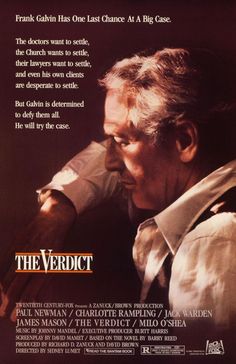
The Verdict (1982)

theverdictDirected by Sidney Lumet

I first recognized the existence of The Verdict when it was added to Netflix a little while back. It had Paul Newman! As a drunken lawyer! I had high hopes for it, but when I realized it was a best picture nominee, I made myself wait to watch it until I was actually reviewing the movies of 1982. When I finally got to watch it, I was so disappointed. It’s not terrible, but there’s nothing fabulously special about it, either.

So what’s the story? Ambulance-chasing lawyer Frank Galvin is a rather despicable man. He goes to funerals and tries to drum up business from widows. He spends most of his time drinking and reading the obituaries trying to find his next client. When an ex-partner takes pity on him and sends him an open-and-shut case that will settle out of court, Frank surprises everyone, even himself, when he decides to fight for his client truly deserves instead of taking the easy settlement.

The Good: Paul Newman is fantastic, as always. I’m not used to disliking him, so the first twenty minutes or so of the movie were kind of hard to watch. He’s good at playing a jerk. But the moment that he realizes that his client deserves more was a great bit of acting. I love watching actors show us what is going through their characters’ heads. He does a fabulous job throughout the rest of the movie, showing Frank’s frustration and triumph, nervousness and despair. It’s a very good bit of acting.

The supporting actors were just as good, with Charlotte Rampling playing Galvin’s new love interest, Laura; James Mason playing high-powered opposing attorney Ed Concannon; and Jack Warden as Galvin’s old friend and ex-partner Mickey Morrissey. They were all solid in complicated roles.

I loved the very ending of the movie. It wasn’t the typical ending for a movie like this, and I was glad, because if they had gone with what typically happens, what power this movie had would have been lost. It is so hard to write intelligibly about endings when you are trying so hard not to include spoilers, so please forgive me. But the ending packs a punch.

The Bad: I wouldn’t say it was bad, per se, but the story has nothing new to say. It felt in some ways like a reworking of Mr. Smith Goes to Washington, with Frank Galvin being incompetent instead of naïve like Mr. Smith. In other ways, it was a completely normal courtroom drama, with just the little twist of Galvin’s alcoholism being added.

The Ugly: Because it was so typical, The Verdict didn’t have much of an impact on me. There was nothing I could get worked up over. I was bothered all the way through the movie that Jack Warden didn’t have a moustache, because he looks like the kind of guy who would have one, but that was just a slight annoyance. I was more puzzled over this movie’s best picture nomination than anything else, and that’s not ugliness, just confusion. I expect more from a best picture nominee.

Oscars Won: None.

Oscar Nominations: Best picture; best actor in a leading role (Paul Newman); best actor in a supporting role (James Mason); best director; best writing, screenplay based on material from another medium.

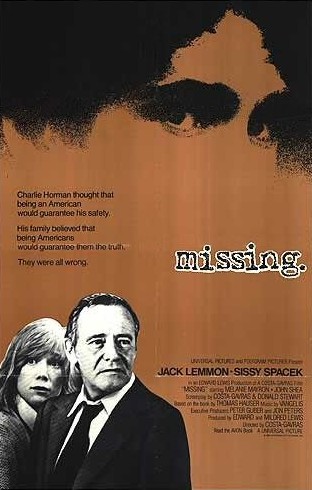
Missing (1982)

Missing_1982_filmDirected by Costa-Gravas

As I’ve been watching these Oscar-nominated movies, there have been many, especially from the 1970s and 1980s, that I haven’t really known anything about. Some of them have been less than stellar, and I can understand why they have fallen by the wayside, even for someone like me who likes watching good movies, no matter how old they are or what language they are in. Missing is not one of those movies. Missing is so awesome I want to show it to everyone I know, and I’ve been telling random people how sad I am that no one seems to have seen it. Missing makes me want to be a high school history or civics teacher so that I could show it to my class to teach them not to be too trusting of government. It makes me so mad that Missing is not a classic; it completely deserves to be one.

So what’s the story? Charlie and Beth Harmon are an idealistic young married couple who have been living in Chile for a couple of years when a right-wing coupe happens. They are going to leave the country soon, so Beth goes to say good-bye to a couple of friends. She gets stuck overnight because of the curfew. When she finally makes it home, Charlie is gone. About two weeks after his disappearance, Charlie’s conservative businessman father, Ed Horman, comes to help Beth navigate the waters of diplomacy and bureaucracy. What they find out together will change their lives forever.

The Good: I’m tired of starting with acting, so I’m going to start with music today. Vangelis’s score is beautiful and haunting. It’s more orchestral than the music in Chariots of Fire, and where he does use the synthesizer, it fits the time much better. The other thing that is great about the music is that it is not constant. Lots of the movie has no music, so that where there is music, it has a much greater impact.

The acting is wonderful. Sissy Spacek is wonderful as Beth, who changes from a vibrant, loving young woman to a frantic wife to a jaded and accepting woman in the course of just a few weeks. It’s a marvelous performance. Jack Lemmon is fantastic as Ed, who starts out so convinced that he’ll be able to fix everything with connections, but slowly comes to realize the truth. I’ve only ever seen Jack Lemmon in comedies, so this was a revelation. John Shea plays idealistic, happy-go-lucky Charlie. He’s not in the movie much, but he leaves an impact when his character is gone. Government agent Captain Ray Tower is played rather chillingly by Charles Cioffi. He’s so scary in part because he’s so friendly, but you can tell he’s hiding the truth.

This is going to sound silly, but the set decoration was so clever at one point. Beth and Ed are at the US Embassy, trying to get answers about what happened to Charlie. The US Ambassador is telling them that he’s probably in hiding and that they shouldn’t worry about him. While he is talking to them, he is standing directly under a picture of Richard Nixon. This movie takes place in 1973, so Nixon was the president then, but by the time Missing was made in 1982, everyone knew that Nixon was a liar. To see a man appointed by that president standing underneath him subtly, yet effectively, underscored the fact that the ambassador was also a liar.

The screenplay was very good. It made the characters come alive. It also made the movie completely gripping. I was so angry that I had to stop watching to go to work. I wanted to know what happened, and I wanted to know NOW! It was fantastic.

I have no concrete examples of why I felt this way, but I though the directing was very good. It’s hard to define good directing, because it’s hard for me to know how much of a hand the director had in various aspects of the movie, but I really felt good directing at play here.

The Bad: The only complaint I have is that Beth and Charlie’s friend Terry has 1980s poufy hair. As a free-spirited 1970s woman, Terry’s hair should have been longer and straighter. I know, tiny quibble. But it bothered me.

The Ugly: War is always ugly, and there are some shocking images and situations in this movie. It’s not the easiest movie to watch because of this, and also because this is a true story. Art that is great tends to bring up issues that might make people uncomfortable, but that doesn’t mean that these issues should be ignored. I think it’s better for people to know what is wrong in their world than to believe that everything is perfect when corruption is hiding underneath.

Oscar Won: Best writing, screenplay based on material from another medium.

Other Oscar Nominations: Best picture; best actor in a leading role (Jack Lemmon); best actress in a leading role (Sissy Spacek).

Moulin Rouge (1952)

Poster - Moulin Rouge (1952)_11Directed by John Huston

I will freely admit that part of the reason I’m doing 1952 right now is because after watching Moulin Rouge! (2001), I was curious about this movie. I wasn’t sure if the 2001 version was a drug-induced remake of the same story or a weird Baz Luhrmann fantasy that had nothing to do with John Huston’s movie. It turns out that except for the setting, they don’t really have much to do with each other. That made me glad, because I much prefer John Huston’s vision over Luhrmann’s, and I hate it when people are more familiar with subpar remakes than with the fantastic originals.

So what’s the story? Aristocrat Henri de Toulouse-Lautrec turns his back on his privileged upbringing to become an artist during the heady days of late 19th century France.

The Good: Josè Ferrer. Toulouse-Lautrec is a complicated character in this movie. He’s an angry drunk who is convinced that life won’t bring him anything good. Ferrer does an excellent job with that.

Henri has two different women in his life: Marie Chalet and Myriamme Hayam. Colette Marchand is Marie Chalet, a beautiful, yet poor, woman who doesn’t mind Henri’s deformities. Marie is a hateful, pettish gold-digger, and Marchand plays her perfectly. The more sympathetic, mature Myriamme is played heart-breakingly well by Suzanne Flon.

Another great thing about this movie is that it has Zsa Zsa Gabor. Even though she has top billing after Jose Ferrer, her role is rather small. But you can tell that she’s having so much fun basically playing herself that you just have to love her. I have to admit, I find the Gabor sisters fascinating; they were kind of like the Kardashians (famous for no good reason), but super classy. I think they would have interesting people to know. And I will stop crushing on Zsa Zsa now and move on.

There is some clever camera work in this movie. In real life, Toulouse-Lautrec was 5’1”. Josè Ferrer was much taller. He spent quite a bit of the movie walking on his knees to be closer to the right height. You can’t tell, and I love that you can’t tell. This movie would have been just silly if they had done a bad job with Henri’s height because it’s so central to the story.

The dancing in the movie is ridiculously amazing. I have never seen the cancan done in real life, but I had a vague idea that it involved high kicks while balancing on one foot. I would suggest that even if you don’t ever watch this movie, at least google the cancan scene from this movie. It takes serious skill and athleticism to do it. I was blown away. Oh, and in case you’re wondering (or worried), no, the dancers don’t wear split bloomers. The movie’s from the 1950s; that would have been too scandalous.

I love how 19th century Paris and Toulouse-Lautrec’s art were brought to life. The clothes and the colors and the costumes are all fantastic. There are rich people and poor people and you can differentiate between them (which isn’t always the case in the movies). The costume and makeup people paid close attention to the art and took some of the clothes, makeup, and hairstyles straight from his paintings. I loved it. I also loved the two interludes where the paintings themselves were flashed on the screen to music that matched them. It was a good way to show passage of time and also to highlight what Toulouse-Lautrec did and what lower-class Paris was like at the time. It was very cool.

Even though I minored in art history in college, I don’t know much about Toulouse-Lautrec’s life in general. Seeing as how this is a biopic based on a novel based on his life, it’s probably not completely accurate. But I liked the story. It didn’t make Henri out to be perfect, but it gave him more dignity than he had in Moulin Rouge! (2001), which was something that really bothered me about that movie.

The Bad: I can’t think of anything about this movie that’s bad. It’s mostly good, except for the ending, which flies past “bad” and lands in “ugly”.

The Ugly: The ending is so cheesily bad. It rivals Goodbye, Mr. Chips for cheesy badness.

Oscars Won: Best art direction-set decoration, color; best costume design, color.

Other Oscar Nominations: Best picture; best actor in a leading role (Josè Ferrer); best actress in a supporting role (Colette Marchand); best director; best film editing.

Random Fact: It is really hard to type “Moulin Rouge”. My fingers want to type “Moulin Rogue,” which works, too, but it sounds like a superhero who patrols the streets of Paris. (“Who was that masked man by the mill?” “Don’t you know? That was the Moulin Rogue!”)

Another Random Fact: Peter Cushing (AKA Grand Moff Tarkin) has a small role in this movie. Watch for him at the horse races!