I'd like to spank the Academy

Atlantic City (1981)

Atlantic-CityDirected by Louis Malle

It’s interesting to me that so many movies that were considered one of the five best movies made in any given year don’t last. I don’t mean that they become dated; they just fall out of the public consciousness. I’m more of an older movie person than 90% of people my age, and I had never heard of Atlantic City before I saw the name on the list of best picture nominees. It’s not a bad movie, and the emotions and yearnings of the main characters are timeless. It makes me wonder exactly what qualities a movie has to have to become a classic that is watched from generation to generation, because apparently being a good movie with a timeless message isn’t enough.

So what’s the story? Lou is an old man who used to be a low-level mobster. Now he’s a small-time bookie who also takes care of a mobster’s bedridden widow. He watches his neighbor, Sally, through his kitchen window. Sally is a young woman who dreams of becoming a blackjack dealer in Monte Carlo. When Sally’s estranged husband shows up with a bag of drugs that he’s stolen from a dealer in Philadelphia, both Sally’s and Lou’s lives change drastically.

The Good: Burt Lancaster makes Lou very sympathetic. I pitied Lou for feeling stuck in a life he didn’t want after having had a less than glorious life. Lancaster made it completely understandable that Lou would want to have the chance at being a more notorious criminal. It’s hard to describe, but Burt Lancaster makes Lou’s decisions more realistic.

Susan Sarandon is also good as Sally, a woman who is actively doing everything she can to make her dreams come true, but who is unfortunately dragged down by her past. I really felt for her as her frustration and unhappiness mounted.

There was some interesting cinematography. My favorite shot was where Dave is running from the drug kingpin in the car lift and the kingpin’s feet slowly come into the frame. That was one of the tensest shots I have ever seen.

The Bad: I didn’t understand all of Sally’s choices. I’m sorry, but if my husband who abandoned me showed up on my doorstep with my pregnant younger sister, I wouldn’t take them in. If my sister was as young and stupid as Chrissie, I might take her in, but there’s no way the husband is coming anywhere near me. Sally was a strong person. It didn’t seem to fit with her personality to allow Dave to stay with her. Sure, if she hadn’t there wouldn’t have been a movie, but still. It didn’t fit.

The Ugly: I don’t like movies that make criminals sympathetic. I feel like my emotions are being played with. Lou is such a nice old man, and he’s so happy when he’s able to get back into crime that I was happy for him. And then I thought, “Wait. No. I’m not happy for him. He’s selling drugs. That’s not okay.”

Oscars Won: None.

Oscar Nominations: Best picture; best actor in a leading role (Burt Lancaster); best actress in a leading role (Susan Sarandon); best director; best writing, screenplay written directly for the screen.

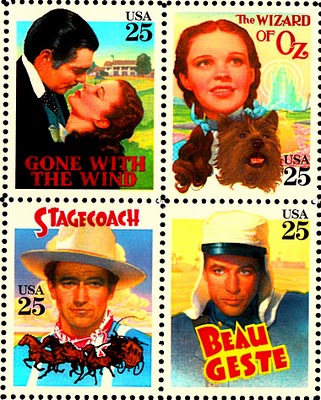
oscars-1940When I was a little girl helping out at my dad’s law office by putting stamps on envelopes, there was a set of stamps that honored movies from 1939. I knew The Wizard of Oz, of course, and I was vaguely familiar with Gone with the Wind, but I hadn’t seen Stagecoach or Beau Geste. The fact that they were on stamps meant they must be important, though; the Post Office wouldn’t let anything unimportant be on a stamp, I thought.  Now I’ve seen all four of those movies, and it turns out I was right. They were important. 1939 was an amazing year for movies. The fact that one of those movies on the stamps wasn’t even nominated for best picture shows how many excellent movies were made that year. Beau Geste isn’t the only amazing movie made that year that wasn’t nominated, either. Other classics that I’ve seen from 1939 include The Private Lives of Elizabeth and Essex; Gunga Din; The Hunchback of Notre Dame; Bachelor Mother; Young Mr. Lincoln; and Four Feathers. I’m sure there are even more that I haven’t seen. I don’t know why it happened that year, but people made some amazing movies.

1940_Hattie_McDaniel_Bainter

Hattie McDaniel receiving her Oscar for Best Supporting Actress from actress Fay Bainter.

After watching all the movies that were nominated for best picture, I became very grateful that I wasn’t a member of the Academy in 1939. The fact that I wasn’t born was a big deterrent to that possibility, of course, but I wouldn’t have wanted to try to choose what the best anything was for that year. So many amazing things happened. There was lots of good acting. Yes, Robert Donat won for Goodbye Mr. Chips, and I think he did an amazing  job and totally deserved an award for it, but that doesn’t mean that Clark Gable didn’t do just as well as Rhett Butler in Gone with the Wind. Geraldine Fitzgerald broke my heart as Isabella in Wuthering Heights, but if she had gotten official recognition, than Hattie McDaniel wouldn’t have gotten her Oscar, which she also completely deserved. How did those Academy members decide who was the best? I couldn’t have done it. Which score was best? Of Mice and Men? Gone with the Wind? The Wizard of Oz? The Wizard of Oz won, and it has wonderful music, but is it better than Gone with the Wind? Who can say? It almost makes me wonder if the Academy members got together to see if they could spread the awards around as much as possible instead of just giving them all automatically to Gone with the Wind. I can just see an old man saying, “Yes, Gone with the Wind has amazing music, but the music in The Wizard of Oz is every bit as good, and The Wizard of Oz won’t win any acting awards. Let’s give them music so that they know we recognize what a great movie it is.” Or maybe people truly voted for what they thought was the best in each category. I guess I will never know, but I’m glad I didn’t have to make any hard decisions about the movies that year.

Over the course of this project, I have noticed that every year, at least one actor is in more than one best picture-nominated movie. In 1998, both Geoffrey Rush and Joseph Fiennes were in Elizabeth and Shakespeare in Love. Sydney Poitier and Beah Richards had roles  in In the Heat of the Night and Guess Who’s Coming to Dinner in 1967. 2002 was the year of John C. Reilly. He appeared in three of the five movies that year and was nominated for his role in Chicago. In 1939, I noticed three people who were in at least two of the nominees. Astrid Allwyn played a pretty, slightly spoiled society girl in both Love Affair and Mr. Smith Goes to Washington. Geraldine Fitzgerald gave  excellent performances in Dark Victory and Wuthering Heights. And Thomas Mitchell played a drinking man in three movies. He was a drunk newspaperman in Mr. Smith Goes to Washington; in Gone with the Wind he plays Irish Southern gentleman Gerald O’Hara; and in Stagecoach, he plays a doctor who is being run out of town on account of his drunken ways. He won the best supporting actor Oscar for Stagecoach, and he did a good job, but I can’t help but wonder if the award was given with all of those performances in mind. I wonder that partially because I think Claude Rains should have won for Mr. Smith Goes to Washington, but maybe only doing one movie wasn’t enough to impress the Academy in 1939.

As I was watching all of these amazing movies, I kept thinking that it was a pity that they were made the same year as Gone with the Wind, because Gone with the Wind was just too big to fail. It was critically acclaimed and a runaway hit at the box office. Seeing all of these great movie that didn’t win made me wonder if Gone with the Wind was really better than all of those other movies, or if the hype was what made it win best picture. And then I watched Gone with the Wind again, and I realized that yes, it really did deserve its Oscar wins. David O. Selznick and Victor Fleming (and George Cukor, the director he replaced) and all the other men and women who worked on that movie did an amazing job. Everything–acting, cinematography, costume design, music, story and screenplay– came together to make (in my opinion, anyway) a near-perfect film. Although almost any one of those films would have won best picture any other year, Gone with the Wind truly was the best picture of 1939.

How do I rank the nominees?

10. Wuthering Heights
9. Dark Victory
8. Love Affair
7. Of Mice and Men
6. Goodbye, Mr. Chips
5. Ninotchka
4. The Wizard of Oz
3. Stagecoach
2. Mr. Smith Goes to Washington
1. Gone With the Wind

Join me next week to hear about Nazis, Communists, gangsters, old people, and missionaries!

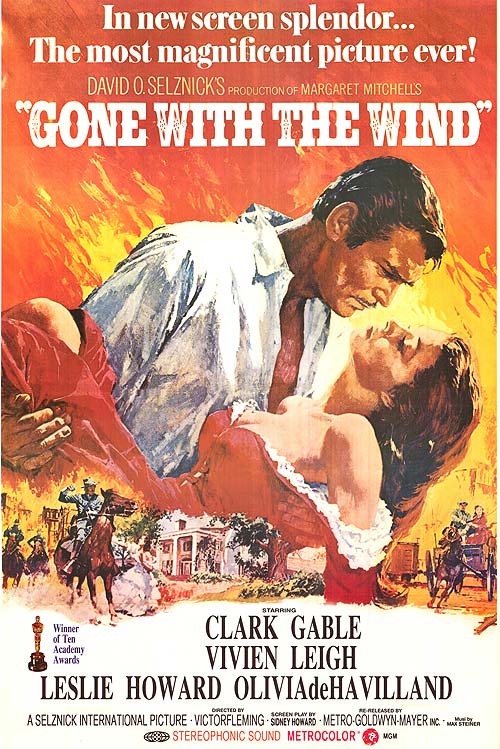
gone with the windDirected by Victor Fleming

As I’ve been doing this project, I’ve noticed something that a lot of nominees have in common: they are freaking long. I have felt every minute of some of those three-hour movies (I’m looking at you, Thin Red Line!), while others have kept me captivated. Gone with the Wind is almost four hours long, but I didn’t feel it. I had seen bits and pieces growing up, but I watched the whole movie in one sitting when I was eleven. I’ve seen it several times since, including once in the theater when it was re-released for an anniversary event. And every single time I’ve watched it, I’ve been glued to the screen. It doesn’t matter that I know how it ends. The world of Gone with the Wind was so skillfully built that I can’t tear myself out of it. The characters are so real that they almost feel like friends; their triumphs and miseries become ours. That, my friends, is how you make a three-hour-plus movie fly by.

So what’s the story? Spoiled Southern belle Scarlett O’Hara’s world comes crashing down around her when the American Civil War begins. Her life of parties and flirting is over. As she tries to adjust to the harsh realities of her new life, she learns that she will do anything to keep what she loves. (That summary makes it sound boring. Trust me, it’s not.)

The Good: There are so many good things in Gone with the Wind that it’s hard to know where to start. I think I will change it up and start with cinematography. Gone with the Wind is a beautiful movie, full of glowing sunsets and billowing ball gowns. It’s not always pretty, though; the scene at the depot where the soldiers are lying dead in rows is tragic. The birth of Melanie’s son, where everything is shown in silhouette, is exquisitely done. These are just the highlights, though; there are lots of scenes where the camera work more quietly underscores the action or the emotion of the scene.

The costume design is also good. This movie is why I can complain about other movies’ lack of good historical costume. In Gone with the Wind, the fashions change with the times, like fashion does in real life. Not only that, but the clothes are fairly accurate (as far as I know. I am not a fashion historian; I have only picked up tidbits here and there.). I do know that the shape of the hoops change correctly for the times, which may only be a small detail, but it shows that the designer cared enough to do actual research.

The score is sweeping and beautiful and just a little bit over the top, which fits the epicness of this movie. Everything about Scarlett is dramatic, and it’s appropriate that the music in her movie is, too.

It is very easy to forget in this day and age that in 1939, everything in a movie was real. If you wanted a huge crowd of people, you had to hire actual people. If you wanted a fire, you had to burn something. There are some crazy special effects in this movie. I seriously wonder how they managed to film some of the scenes. Special effects took a certain kind of creativity back in the day, and have to give kudos to the special effects people for this movie.

Whoever adapted the giant book Gone with the Wind into a single (albeit long) movie was amazing. He found the most important things, the things that would make a compelling movie and took those out. He knew what to leave out; it was all good stuff – Ellen’s backstory, Scarlett’s other children, Will Benteen – but wasn’t necessary to the movie. Those extra things that fleshed out the novel would have bogged down the movie. It’s an excellent adaptation.

The entire cast of Gone with the Wind is stellar. After I had watched Dark Victory, I was thinking that maybe Bette Davis should have gotten the best actress Oscar, but when I saw Vivien Leigh’s performance again, I had to admit that Vivien Leigh deserved it. Clark Gable as gave an awesome performance as Rhett Butler. He is so good as the strong, manly lover hiding his love behind pride and lust. The flash of hurt on his face when Scarlett admits that she’s marrying him for his money…so sad. And that kind of thing happens more than once. It’s very subtle and very good. Olivia de Havilland plays Melanie Wilkes so beautifully. She manages to be an angelic, self-sacrificing person and yet not make you hate her. And she was only 23 when the movie came out. That was some serious acting for such a young woman. There is some controversy over Hattie McDaniel’s role as Mammy, Scarlett’s nurse/surrogate mother, but she plays the role well and allows us to see the main characters in a different light as she isn’t shy about expressing her opinions.

The Bad: This is an extremely frustrating movie to watch. Rhett loves Scarlett, but is too proud to admit that he’s actually fallen in love. Scarlett is too caught up with her make-believe love for Ashley to notice. When Rhett makes her notice, he is so ashamed of what he’s done that he doesn’t see the opening Scarlett is giving him. When he rejects her at that point, Scarlett is too proud to say anything. Grrrrr. These are two very strong, proud people who are so scared of showing weakness that they can’t allow happiness in. It makes me want to shake them both.

The Ugly: The movie laments the passing of a “beautiful, genteel” culture, but glosses over the evils that that culture is built upon. Slavery made that lifestyle possible, and so it’s hard to feel too sorry for the O’Hara family when they have to pick their own cotton and for Ashley Wilkes when he is splitting rails. Yes, it’s hard, and it’s not what they were brought up to do, but they were brought up to live off of the misery of others. Ashley briefly acknowledges this, but only briefly. Frankly, it was a culture that deserved to die. I can still enjoy the movie, but it doesn’t make me mourn the passing of the Old South.

Oscars Won: Best picture; best actress in a leading role (Vivien Leigh); best actress in a supporting role (Hattie McDaniel); best director; best writing, screenplay; best cinematography, color; best art direction; best film editing.

Other Oscar Nominations: Best actor in a leading role (Clark Gable); best actress in a supporting role (Olivia de Havilland); best sound, recording; best effects, special effects; best music, original score.

Other Oscars Won: Honorary award to William Cameron Menzies “for outstanding achievement in the use of color for the enhancement of dramatic mood in the production of Gone with the Wind”.

Technical Achievement Award to R.D. Musgrave “for pioneering in the use of coordinated equipment in the production Gone with the Wind”.

The Wizard of Oz (1939)

wizard of ozDirected by Victor Fleming

I don’t remember the first time I saw The Wizard of Oz. It must have been before I was six, because that’s when I read the book for the first time, and I definitely noticed the differences. I have seen it many times since the first, as I sure many people in the United States have. My mom reminisced about how it always used to be on TV on Easter. It’s a classic that I think will never really leave the public consciousness.

So what’s the story? Dorothy Gale is running away from her Kansas farm when she gets caught in a tornado and transported to the magical land of Oz. She sings, dances, makes friends and learns a valuable lesson as she tries to avoid the Wicked Witch of the West.

The Good: Watching this as an adult, I was struck by the costumes and makeup. It must have taken serious creativity to make three grown men into a scarecrow, a tin man, and a lion. And those costumes are fairly convincing. Okay, so the Cowardly Lion walks on two legs instead of all fours, but watch carefully when he first appears; he is on four legs then, and it’s really quite impressive. The flying monkeys also must have taken some serious work. I don’t even want to know how long it took everyone to get into their makeup every day. The fantasy would have failed without those two things, so it’s a good thing they were both excellent.

I was very impressed by Ray Bolger, who plays the Scarecrow. He moves like his legs are really made of straw. It’s just a tiny detail, but I think it shows his ability. Also, I’m going to allow myself to be impressed with Frank Morgan, who plays five roles in this movie, which I didn’t realize until just now when I saw it on IMDb. It’s obvious that he plays the Wizard of Oz and Professor Marvel, but he also has three other parts. The costumes and makeup helped there, too, but his acting skills also needed to come into play.

I can’t decide how I feel about the music. I feel like just about everyone in the English-speaking world can sing along with many of them, but it is so easy for them to get stuck in your head. I’m not sure if that’s a sign of a good song or a bad song or if it means nothing at all, but it’s annoying. But the songs are fun, even if they don’t usually advance the plot or reveal much character. I’m guess I’m kind of neutral on the subject of the songs in the movie. I do like the background music, though.

The Bad: Some of the acting is hammy by today’s standards. I’m guessing it’s because they were making a movie based on a children’s book and were aiming to appeal to children, but occasionally I cringed.

I was also sad about the screenplay. L. Frank Baum’s book is not only a great adventure story, but it’s also a satire, and there are some lovely lines about people with no brains working in the government, etc. I wish the writers had kept some of those pointed little jabs in.

The Ugly: I hate the ending. It has always made me so mad that it’s just a dream. Why can’t it have been real? What’s wrong with having a little bit of magic in the world? It’s not a dream in the book. Dorothy really goes to Oz and eventually moves there with Uncle Henry and Aunt Em. I know it will probably never happen since this is a major classic, but I would love it if someone made another movie version of The Wonderful Wizard of Oz and stuck a little bit more closely to the source material.

Oscars Won: Best music, original song (“Somewhere Over the Rainbow”); best music, original score.

Other Oscar Nominations: Best picture; best cinematography, color; best art direction; best effects, special effects.

Stagecoach (1939)

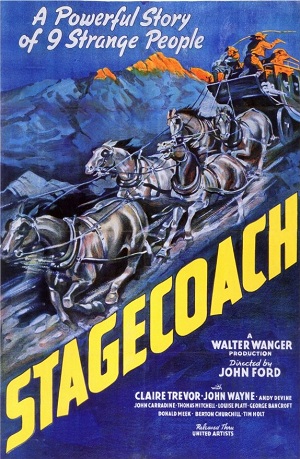
Stagecoach_movieposterDirected by John Ford

I grew up on westerns. I grew up on John Wayne westerns. And yet I had somehow never seen this movie. In some ways, that’s a good thing. I saw it for the first time when I was definitely old enough to appreciate it. But I think I would have liked it just fine when I was ten. I know I would have liked it when I went through my John Wayne phase and tried to watch all his movies when I was fourteen. So while I won’t be suing my dad for neglect because he didn’t show me this movie, I feel like I missed a lot of years when I could have been enjoying this movie. And that’s too bad, because this is a great movie. I liked it so much that I half wanted to start it over again from the beginning as soon as it was over.

So what’s the story? Despite the passengers knowing that Geronimo and his people are on the warpath, a stagecoach full of people begins its journey. Each stop brings more bad news and hardship, yet the oddly-assorted group of passengers presses on, determined to reach their final destination.

The Good: This is the first time in this batch of movies that I’ve been very impressed by the cinematography. Stagecoach is such a beautiful movie. John Ford knew how to compose a shot and how to use gorgeous scenery to its best advantage.

I’ve been rhapsodizing about acting a lot these past couple weeks, and I’m going to keep on doing it. This was yet another well-acted movie from 1939. Everyone was perfect. Claire Trevor especially stood out to me as the “dance hall girl” who is getting run out of town. I thought Trevor did a very good job of showcasing Dallas’s humanity and desire to be seen as a person. I have always liked John Wayne, but I liked seeing him so young in this movie. He had a different kind of energy as a young man than he did as an older one. Neither one is  better than the other; they’re just different. Thomas Mitchell as the doctor/town drunk was good, because Thomas Mitchell is always good, but when he stood up to Luke Plummer, he became superb. I’m also going to mention Andy Devine, mostly because Disney’s Robin Hood (1973) was my favorite Disney cartoon growing up, and it’s fun to hear Friar Tuck’s voice coming out of a real person’s mouth.

The Bad: I realize this movie was made in the 1930s, and I know that society’s mores have changed since then, but I live now, so I was a little bit unhappy with the portrayal of minorities, both the Native Americans and Hispanics. It’s definitely not the worst I’ve seen, and it didn’t detract from my enjoyment of the movie, but I did catch myself wondering if I should enjoy a movie so much when it put forth the opinion that the white men had every right to live on Indian land if they felt like it.

The Ugly: I can’t think of one ugly thing in this movie. That’s unusual for me. But Stagecoach is just an excellent movie.

Oscars Won: Best actor in a supporting role (Thomas Mitchell); best music, scoring.

Other Oscar Nominations: Best picture; best director; best cinematography, black-and-white; best art direction; best film editing.

Of Mice and Men (1939)

1939 Of mice and men - La fuerza bruta (ing) 03Directed by Lewis Milestone

I read the book Of Mice and Men when I was a junior in high school. I didn’t care for it much; I couldn’t figure out how John Steinbeck could fit so much misery into such a short book. And I haven’t read it since, but watching this movie made me want to, because even though the movie Of Mice and Men is still sad due to the utter hopelessness of these men’s lives, the fact that someone out there understands their situation and dreams and feelings gives hope back to those who feel downtrodden by life. I’m not a Depression-era drifter, but this movie gave me some hope. It made me realize that I am not alone in what I want out of life. That’s a very powerful thing for a work of art to do.

So what’s the story? During the Depression, friends George and Lennie go from ranch to ranch looking for work. George is a small guy, but he’s smart. Lennie is hulking giant; he’s mentally slow, but he works hard and is very kind-hearted, especially towards small animals. George and Lennie have a dream of having their own small place where they can farm for themselves and do what they want to do when they want to do it. They are starting work on a new ranch. Curly, the ranch owner’s proud, jealous son, has a wife, Mae, whom he constantly suspects of cheating. Being the only woman on the ranch is lonely for her, but it’s even worse because none of the ranch hands will talk to her because Curly doesn’t like it when they do. The tensions on the ranch are about to explode and take away George and Lennie’s dreams.

The Good: This movie was exceptionally well-cast. Lon Chaney, Jr. plays Lennie and does a wonderful job of playing a kind man who truly doesn’t understand his own strength. His performance is powerful, and I’m really trying to decide why he didn’t get nominated for an Oscar for it. Burgess Meredith plays George very well. He gives a very good performance of a man torn between his love and loyalty to a friend and his frustration when that friend makes mistakes that pull them both down. Betty Field, who plays Mae, also does a good job. Mae is kind of crass and low-class, but she’s also so lonely. Her desire to really live life is just bursting out of her. I felt much sorrier for her than I remember feeling when I read the book. The rest of the cast is good, too. The hands are especially sympathetic. I don’t know how they got such perfect people for every role, but it happened.

I noticed the music from the beginning. I kept thinking it sounded more symphonic, more complex somehow than a typical 1930s movie score. I found out that Aaron Copland wrote the music, and it suddenly made sense. It was beautiful music, and it didn’t overwhelm the movie like some scores did in the 1930s. It fit the movie just perfectly.

The Bad: I can’t exactly put my finger on just why I felt this way, but I feel like it dragged a bit in some places. I can’t really think of a boring scene, but the pacing was off somehow. Maybe it’s because when I watched it, my mind wasn’t the sharpest it’s ever been. So yeah. Take that comment with a grain of salt. Or better yet, watch the movie and tell me in the comments if I was right or wrong!

The Ugly: This is not a happy story. It’s the story of men living on the fringes of society, wanting no more than the freedom to make their own decisions about life, but who can’t rise above where their circumstances have placed them. The ending is heart-wrenching, because John Steinbeck understood life, and life is not easy.

Oscars Won: None.

Oscar Nominations: Best picture; best sound, recording; best music, scoring; best music, original score.

Random Fact: This movie was adapted from the play that was based on the book. Weird, huh?

Love Affair (1939)

Love_AffairDirected by Leo McCarey

This was the movie that was responsible for some of the difficulties last week. The first copy I checked out from the library was the worst quality DVD I had ever watched. The disc itself was fine; it didn’t have any scratches or divots. But the sound was so bad I couldn’t understand what anyone was saying half the time, and the picture looked like a bad transfer of a sub-par VHS. I didn’t feel like watching that DVD would give me a fair picture of Love Affair, so I had to dig up another copy from a different library. (It is available for streaming on Amazon, but Amazon was being extremely stubborn; while I could see that the movie was there, it wouldn’t let me stream it. Amazon kept trying to stream Downton Abbey, and wouldn’t believe me when I said I wanted anything else. True story.) Anyway, the second DVD I got wasn’t impressive, either, but at least I could understand what the characters were saying. The picture was clearer, too; it still looked like a VHS, but it was at least a higher quality one. It made me feel bad. This movie deserves better.

So what’s the story? Michel Marnay, a famous French playboy, is traveling by sea to New York to join his heiress fiancé. He meets Terry McKay, a down-to-earth American woman who is coming back from a business trip. She’s engaged to her boss. Michel and Terry fall in love, but decide to part for six months to give Michel a chance to prove to himself that he can be something more than just a playboy and that he’s worthy of Terry. They make plans to meet at the top of the Empire State Building after the six months. With so much determination between the two, what could possibly go wrong? If this story sounds suspiciously familiar, that’s probably because Leo McCarey remade his own movie in 1957 and called it An Affair to Remember.

The Good: I was a little bit nervous going in. I had only seen Charles Boyer in one movie before this one, and that was Gaslight. I don’t like Charles Boyer’s character in Gaslight, and I wasn’t sure he would be a good enough actor to erase that character from my mind. But Charles Boyer makes a very charming playboy turned good. Irene Dunne plays an independent woman who refuses to fall for silly pick-up lines equally well. They made a very good, very believable screen couple. I could understand why they would fall for each other, which is something that doesn’t always happen.

There is also another person who deserves mention in this movie for her acting. Maria Ouspenskaya plays Michel’s darling, elegant little grandmother. She’s not in the movie very long at all, but I couldn’t help falling in love with her. She is such a sweet, beautiful old lady.

The screenplay was very fun. Terry gets to say all sorts of things to remind Michel that as attractive and charming as he is, he’s still just a man. But Terry isn’t perfect, either, and she gets called out on her imperfections, too. I like the evenhanded treatment of both people.

The Bad: The one problem with the story is that I think it is inconsistent with Terry’s character that she doesn’t share her secret with Michel. I realize she is a proud and independent woman, but I feel like she would have trusted his love enough to at least give him a chance to react to it. But then I guess the story would have resolved too quickly.

The Ugly: Again, this isn’t the movie’s fault, but someone really needs to make a decent DVD of this movie. It’s inexplicable to me that no one has. I suppose it’s because this movie has been overshadowed by An Affair to Remember, but Love Affair is equally good and deserves a better DVD.

Oscars Won: None.

Oscar Nominations: Best picture; best actress in a leading role (Irene Dunne); best actress in a supporting role (Maria Ouspenskaya); best writing, original story; best art direction; best music, original song.

Wuthering Heights (1939)

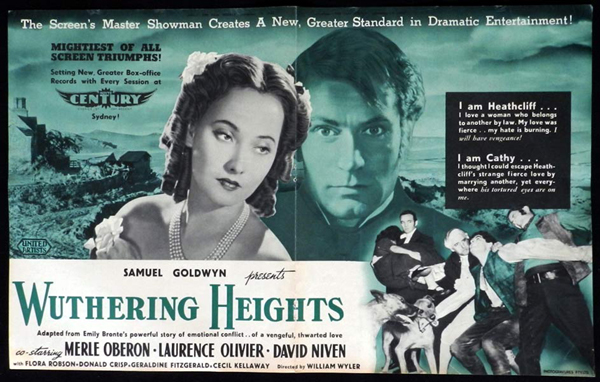
WUTHERINGHEIGHTSTRADEAD2Directed by William Wyler

Yep, this one is out of order, too. I had to take the DVD back to a somewhat far away library, so I had to watch Wuthering Heights instead of the more alphabetically appropriate movie I was planning on; ironically, it was Of Mice and Men. Best laid plans and all that. But they will all get reviewed eventually, so I don’t really suppose it matters the order that I do them in. I just like to do them alphabetically so that people know that I’m being impartial and not putting them in order of which I like best.

Film adaptations of books are tricky. Books are so personal, and everyone has their own interpretation, so you will never be able to please everyone. But I hate the book Wuthering Heights. Heathcliff is a terrible person who makes everyone around him miserable in his quest for revenge. I had heard that this wasn’t a very faithful adaptation, so I hoped that they would have been able to turn this movie into something that I liked. Sadly, they didn’t.

So what’s the story? Heathcliff, a starving, ragged orphan, is adopted off the streets of Liverpool by the kindly Mr. Earnshaw and taken to Earnshaw’s house, Wuthering Heights, to be raised with Earnshaw’s children, proud Hindley and impulsive Catherine. Cathy and Heathcliff become great friends and vow undying love, but when Mr. Earnshaw dies, Hindley takes over and makes Heathcliff a servant. As they grow up, Cathy and Heathcliff fall more deeply in love with (or become more obsessive about) each other, but Cathy wants to be rich. She urges Heathcliff to go away and make something of himself so that they can marry. After an accident, Cathy stays for some time with the Lintons, her wealthy, kindly neighbors and glimpses what a future with wealth and comfort would be like. When Edgar Linton proposes, Cathy accepts. What will Heathcliff do to get revenge for all the wrongs done to him?

The Good: Geraldine Fitzgerald, who also did an amazing job in Dark Victory, plays Isabella Linton heartbreakingly well. She’s a silly girl, but that doesn’t mean that she doesn’t feel the wrongs done to her by Heathcliff. So good.

Laurence Olivier plays Heathcliff. He was a very good-looking man and an incredible actor. I felt sorry for Heathcliff in this movie, which I never did while reading the book, so props to Olivier.

The Bad: Merle Oberon’s Cathy is a spoiled, selfish girl who is unwilling to give up her place in society and a comfortable home for true, pure love. If it’s the screenplay’s fault that she appeared like that, than she did a good job of acting. But I felt like they were trying to make her sympathetic, and that never came across for me. I was kind of hoping that Heathcliff would fall in love with someone else, just so she could see that she wasn’t that great.

This is another movie from the 1930s that fell victim to the idea that accurate costuming didn’t matter. If the director and/or producers decided to have it take place in the 1860s, which is what the clothes vaguely suggest, that’s fine, but Heathcliff was gone for a while, right? And yet the ladies are still wearing the same fashions that they were before he left. The passage of time through clothes wasn’t shown at all. That would have been a very nice touch, but since it didn’t happen, I was left with the feeling the Heathcliff didn’t really leave for all that long. I guess people could make fortunes in America incredibly quickly in those days.

The Ugly: The ending is so incredibly bad. It makes Cathy and Heathcliff out to be tragic lovers who, due to circumstances beyond their control, were unable to be happy in life, but can now be happy together after death. The movie was already melodramatic, but the ending takes the movie past melodramatic to beyond cheesy. Ugh.

Oscar Won: Best cinematography, black-and-white.

Other Oscar Nominations: Best picture; best actor in a leading role (Laurence Olivier); best actress in a supporting role (Geraldine Fitzgerald); best director; best writing, screenplay; best art direction; best music, original score.

The week is over, but the nominees of 1939 aren’t! Join me next week for the rest of the best of 1939, including the juggernaut: Gone with the Wind.

Mr. Smith Goes to WashingtonDirected by Frank Capra

Mr. Smith Goes to Washington is one of the movies I had seen before I started this project and was happy to watch again because it’s so good. I was also happy in a really weird way that I couldn’t get it from the library I work at; there was a waiting list. For a movie from 1939. So I have hope for the future now, even though I had to get the movie from a different library.

So what’s the story? A senator from an unnamed state dies, and the governor needs to appoint a replacement. The corrupt political boss that got him elected tells him to pick one person, while the unions and other state leaders give him another name. His savvy kids (all eight of them!) tell him to appoint their local scout leader, Jefferson Smith. Not wanting to offend anyone, the governor appoints Jefferson Smith. Jeff is a naive patriot who loves his country and believes in the Constitution, but the rest of the elected officials from his state are corrupt and trying to push graft through. It’s up to him and his cynical assistant to stop the evil political machine from succeeding.

The Good: There is lots of good acting in the movie. Jimmy Stewart plays Jefferson Smith, and he’s always good. Jean Arthur is the cynical assistant Saunders who is slowly won over by Smith’s naivety. The corrupt senior senator is Claude Rains, who is one of my personal favorites, and I think it’s a shame that he never won an Oscar. He did get a best supporting actor nomination for this movie, though. So did Harry Carey , who is listed as President of the Senate, but if I remember my Constitution correctly, doesn’t that make him Vice President of the United States? Anyway, he has almost no lines in this movie, but his face is incredibly expressive.

I actually wrote a paper in college about the music in this movie for an American history class where they required us to watch Mr. Smith Goes to Washington; the music is very instrumental (hahaha) to the drama of the movie. Dimitri Tiomkin used lots of American folk songs and patriotic songs to underscore Smith’s fight against corruption.

I’m going to award kudos to the makeup people for this movie, too. I had always thought that Mr. Smith Goes to Washington was made in the late forties, many years after The Adventures of Robin Hood (1938) and Casablanca (1942). I assumed this because of Claude Rains, who looks so much older in this movie than in the other two. But since that is all down to the makeup department and not natural aging, I have to congratulate the makeup department for fooling me.

While I was watching this movie, I assumed that they had gotten permission to film on location at the Capitol Building. Nope! They just rebuilt the Senate Chamber in complete detail in a studio in California. It’s crazy good, and it says to me that Frank Capra cared a lot about this movie.

Another detail that I appreciated was that Capra never named the state that Smith is from or the which political party any of the politicians belong to. He made it so that no one could say, “Well, it didn’t happen in my state or my party, so I’m fine.” He didn’t allow anyone to be complacent about corruption in the government.

The Bad: As Jefferson Smith is trying to expose the corruption, his Boy Rangers back home try to spread the word about what he’s doing. The political machine shuts them down, and it’s very hard to watch. It’s not graphic, but if you’re sensitive to children in danger, be warned. Watch the movie anyway, but know that that’s coming.

The (Possibly) Ugly: Patriotism, idealism, and optimism aren’t always highly regarded now. People are more cynical, especially about the government. Some people might say that this movie is unbearably cheesy because of that. I don’t find it so; I kind of wish there were more people now who did believe that what they do can make a difference.

Oscar Won: Best writing, original story.

Other Oscar Nominations: Best picture; best actor in a leading role(James Stewart); best actor in a supporting role (Harry Carey); best actor in a supporting role (Claude Rains); best director; best writing, screenplay; best art direction; best sound, recording; best film editing; best music, scoring.

Difficulties

TechnicalDifficultiesMy fabulous planning skills were foiled this week by some unforeseen technical difficulties, so there is no new post today. Be sure to come back tomorrow for more awesome movie reviews!