I'd like to spank the Academy

Archive for the ‘Historical’ Category

Friendly Persuasion (1956)

friendly-persuasion-movie-poster-1956-1020505962Directed by William Wyler

I had a bad day the day I watched this movie. I hadn’t felt well all day at work, but I didn’t feel bad enough to take time off. About five minutes after I got home from work, I was violently ill. It lasted about half an hour. I was feeling sick and weak when I put Friendly Persuasion in the DVD player.  But the moment the opening notes of the theme song started, I felt much better. Watching this movie is like being wrapped in a giant puffy quilt or getting a hug from someone you love. That may be because I was raised on this movie, but I like to think that the sweetness of this movie could make anyone’s day better.

So what’s the story? Jess and Eliza Birdwell are Quakers living in southern Indiana during the Civil War. Their older son, Joshua, is old enough to fight in the war, but the family’s pacifist beliefs keep him from joining up. Their daughter, Martha, is in love with their Methodist neighbor, who is a soldier. And their younger son, Little Jess, is in constant battle with Samantha the Goose. The family tries to simply go about their lives, but the war is about to come to them, forcing them all to make decisions of faith and love and conscience.

The Good: The cast is perfect. Jess is played by Gary Cooper, who makes Jess a slightly mischievous man who believes in his religion, but sometimes struggles to live up to the standards it sets for him. Dorothy McGuire plays Eliza, the Quaker minister who sometimes has to fight to keep her family on the straight and narrow. Anthony Perkins (yes, the same Anthony Perkins who is in Psycho) plays Josh, whose conscience tells him that fighting is a sin, but that his family is worth fighting for. Phyllis Love plays the lovesick Mattie almost uncomfortably perfectly. Robert Middleton plays family friend Sam Jordan with humor and love. Everyone is just good.

Okay, this is a weird thing, but I was struck as I watched  Friendly Persuasion this time by the goose. Or possibly geese? I’m not sure how one goes about training a goose. I can’t imagine that it’s easy. But that goose does all sorts of things. Even if it’s many geese all doing one trick, it would have taken lots of work. So hats off to the animal trainers for this movie!

I love the music for this movie. Pat Boone sings the theme song, and it’s beautiful. It reflects the mood of the movie: slow, yet loving. Dimitri Tiomkin’s score is also good, reinforcing the love and joy found in the Birdwells’ home life.

And speaking of the home life, I love that this family is a family. The children sometimes tease each other. They sometimes fight. The father defers to his wife, but he sometimes teases her and sometimes gangs up with his kids to get her to relax. The writers made the characters real people with faults and virtues. I love that.

The Bad: The plot isn’t perfectly linear. It meanders a bit. There are some scenes that add to the characterization of the people, but don’t necessarily add to the overarching Civil War plot. I’m okay with this in this movie because all these scenes are so delightful, but that also might be because I’ve loved Friendly Persuasion for a long time. Other people might not be so forgiving.

As Quakers, the Birdwells use speech that is a little bit different. They use “thee” and “thy” instead of “you” and “yours”. But to my German-speaking ear, they don’t use them quite correctly. This is apparently accurate for the Quakers, but it bothered me a little bit. It took me about a quarter of the movie to be okay with it.

The Ugly: I don’t think there is anything ugly about Friendly Persuasion, unless you object to a feel-good movie about a family trying to live according to their consciences.

Oscars Won: None

Oscar Nominations: Best picture; best actor in a supporting role (Anthony Perkins); best director; best writing, best screenplay – adapted; best sound, recording; best music, original song (“Friendly Persuasion (Thee I Love)”).
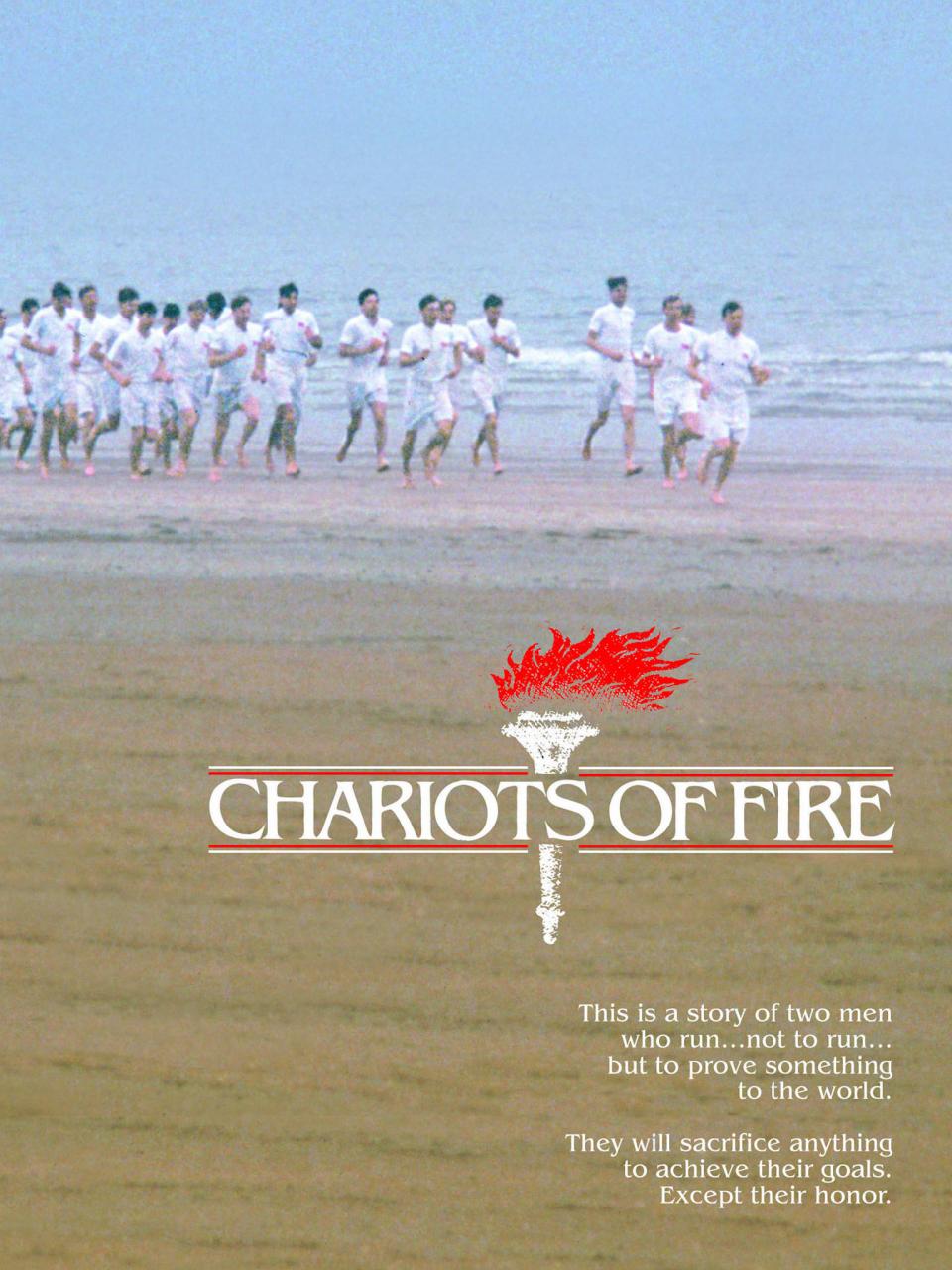
Chariots of Fire (1981)

ChariotsDirected by Hugh Hudson

This is another movie I grew up watching. My family must have an eclectic taste in movies, but I’ve never really realized that until now. Anyway, it’s always interesting to really pay attention to a movie you’ve seen a dozen times before. I noticed things and understood things differently than I ever had before. That might also have to do with the fact that I’m older and so see life a little bit differently than I did. But whatever the reason, watching Chariots of Fire again and trying to be impartial while doing so was a really good experience. And I think I will always be a little bit in love with Lord Lindsay.

So what’s the story? Harold Abrahams is an Englishman who goes to Cambridge and loves Gilbert and Sullivan. He’s also a Jew, which means that to some, he will never be entirely English. He runs to prove to everyone, not least himself, that he is as good as everyone else. Eric Liddell is a missionary who was born and grew up in China, but he also plays rugby for Scotland. He runs for the glory of God. These two men show their dedication in the 1924 Olympic games.

The Good: This movie has great acting. I’m honestly surprised that Ben Cross wasn’t nominated for a best actor Oscar for his portrayal of Harold Abrahams. Ian Charleston is just as good as Eric Liddell. The supporting actors are good as well. I noticed when I watched the famous running on the beach sequence that the four main runners (Harold, Eric, Aubrey Montague, Lord Lindsay) show their characters’ personalities in the few seconds that the camera is focused on them. It was all very well done.

This is the third movie that took place in a historical time this week, and this is the third one where the designer actually paid attention to what people were wearing at the time. Hooray for more correct historical costuming! Thank you, 1981!

I was impressed by the screenplay this time around. It’s based on a true story, but of course things are compressed or changed in time to make for a more streamlined story. All of the characters are distinct people with strong personalities. The story is inspiring, but it could have become overwhelmingly cheesy if the writers weren’t careful. The writers did an excellent job.

The Bad: I feel terrible saying this, but the music is bad. The themes are beautiful, and when the theme song is played on a piano or by an orchestra, I love it. However, the music in the movie is played on a synthesizer, and it just doesn’t work. It’s so very 1980s. It might have been fine if the movie took place in the 1980s, but it’s not okay in the 1920s. (And before anyone jumps down my throat for insulting the music, go and watch the movie. If you disagree with me after that…well, we will just have a difference of opinion. But it will be an informed difference of opinion.)

The Ugly: There is no ugly in this movie. It’s not perfect, but it’s really good.

Oscars Won: Best picture; best writing, screenplay written directly for the screen; best costume design; best music, original score.

Other Oscar Nominations: Best actor in a supporting role (Ian Holm); best director; best film editing.

Reds (1981)

220px-RedsposterDirected by Warren Beatty

I didn’t go into this movie with a very good attitude. I’m not a big Warren Beatty fan. I’m not sure why; he’s not a terrible actor. He just rubs me the wrong way, I guess. Maybe it has something to do with “You’re So Vain”. So I was already not looking forward to watching Reds because of Warren Beatty, and then I saw what the tagline was: “Not since Gone with the Wind has there been a great romantic epic like it!” That lowered my opinion of the movie even more. If a critic had compared it to Gone with the Wind, that would be one thing, but for people to say that about their own movie is silly. It makes filmmakers sound full of themselves, and it really lowered my expectations. But maybe the lowered expectations helped. Maybe I was able to enjoy Reds as much as I did only because it was better than I was expecting it to be.

So what’s the story? Louise Bryant is an outwardly respectable married woman living in Portland. She dreams of being a writer. She meets Jack Reed, a progressive journalist from the East and abandons her husband to go to New York with Jack. She meets his crowd of socialists and anarchists and is drawn in to their society as Jack travels the country agitating for socialism. Eventually the two travel to Russia and become involved in the Revolution.

The Good: Costume design! Yay! After watching many movies that couldn’t figure out how to do historical costuming, this was a nice change.

The supporting cast was very good. The standouts were Maureen Stapleton as activist and anarchist Emma Goldman and Jack Nicholson (whom I didn’t recognize behind the hair and the mustache) as playwright Eugene O’Neill. Each of them basically stole every scene they were in, and I wish they had both had a bigger part in the movie.

The Bad: I didn’t care for either Diane Keaton or Warren Beatty, which is bad since they play the main characters. Louise Bryant was supposedly this fascinating woman who attracted all kinds of men, but honestly, she was kind of bland. Yes, she got mad that her work wasn’t as good as Jack’s, but until that point and for a long while afterwards, she didn’t show much emotion. In fact, exasperation and anger with Jack were her two dominant emotions in the movie. Also, tiny annoyance, but her eye makeup was distractingly bad. Warren Beatty had a couple of good moments (the scene where Emma and Jack are arguing about the direction of the Revolution was fabulous), but there were not enough good moments to carry the movie.

This movie features elderly men and women who reminisce about Jack Reed and Louise Bryant and the times that Reds covers. While it was interesting to hear what they had to say, it really broke up the movie. The story would stop while the old people (“The Witnesses”) talked to the camera. The movie became half talking heads documentary, half biopic. While it was different and creative and probably why Warren Beatty won best director, it was distracting. Once or twice the words that The Witnesses were saying contradicted the story that was being told, which was jarring. And since there was a screenplay, it made me wonder whether what The Witnesses was saying was scripted. I felt like Beatty should have either made a documentary about Reed or just made Reds without The Witnesses. I really didn’t like it.

The Ugly: When your leads aren’t good and your story could be compelling but is too choppy due to interruptions from old people, a three hour movie doesn’t work. I got so very bored. I didn’t really care what happened to Jack and Louise. I thought that Louise was selfish and angry because she wasn’t as talented as Jack, and Jack was selfish and distracted because he was so talented, but I didn’t care about them. Gone with the Wind is forty-five minutes longer than Reds, but it flies by because the characters are so alive and compelling. You have to know what happens to them. Reds didn’t do that for me. I would have enjoyed a good documentary about Jack and Louise and their crazy New York group much more than this odd, indecisive, way-too-long movie.

Oscars Won: Best actress in a supporting role (Maureen Stapleton); best director; best cinematography.

Other Oscar Nominations: Best picture; best actress in a leading role (Diane Keaton); best actor in a leading role (Warren Beatty); best actor in a supporting role (Jack Nicholson); best writing, screenplay written directly for the screen; best art direction-set direction; best costume design; best sound; best film editing.

Raiders of the Lost Ark (1981)

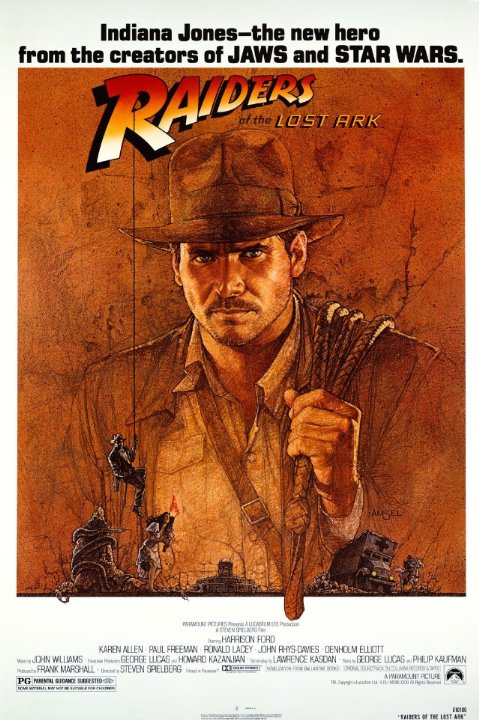
raidersDirected by Steven Spielberg

When I was little, I was seriously confused by this movie’s title. For a long time, I thought it was Raiders of the Lost Dark, and I could never figure out how the dark got lost. When I finally figured out it was Raiders of the Lost Ark, I was still confused. There was not a single reference to Noah in the entire movie. That didn’t keep me from liking the movie; I just ignored the confusing title and went along for the ride. And what a ride it is. Raiders of the Lost Ark remains one of the most purely fun movies I have ever seen, even though now it appears to have a new title: Indiana Jones and the Raiders of the Lost Ark.

So what’s the story? Dr. Indiana Jones, a professor of archaeology, is approached by two United States government officials. It seems that the Nazis are looking for the Ark of the Covenant because they believe it has mystical powers. Jones’s old mentor, Abner Ravenwood, is the world’s foremost expert on the Ark, but no one can locate him. Jones is tasked with finding first Ravenwood and then the Ark so that the Ark will be kept out of Nazi hands.

The Good: The thing that really sticks out for me in this movie is the pacing, which is kind of an odd thing to notice first off. But there is never a dull moment. It jumps from action scene to action scene. Even when there is a break from actual action, the scenes aren’t dull. The screenplay is fun enough and light enough to make even the longest talking scenes entertaining. It also means you can’t look away; you’ll miss something important if you do.

The characters in Raiders of the Lost Ark are very well-written, well-rounded characters. Marion Ravenwood is one of the best action movie heroines ever, I think. She never stands around and waits to be rescued. If there is danger, she always jumps in and gives as good as she gets. Yes, sometimes she does end up having to be rescued, but she only gets rescued after she’s done everything she possibly can to get out of the situation herself. She’s kind of an anomaly, not just for action movies, but for movies in general. Karen Allen played her perfectly. Indiana Jones is also a good character. He may be a terrible archaeologist since he is willing to destroy ancient temples to get the artifacts that he wants, but he’s still a good character. He can use a whip and shoot a gun and ride a horse and all those other things that good action heroes can do, but he’s also smart and not invincible. He gets hurt more than once. He would have completely lost that fight against the bald muscular German mechanic if not for the airplane propeller. I like that. What can I say? I’m a fan of imperfect main characters. Harrison Ford was a fabulous choice for the part.

I found myself admiring the production design that had been done for this movie. The designers not only had to make the audience believe that the action was taking place in the 1930s, but in various countries in the 1930s. It was really well done. Everything from the cars to the clothes to the buildings added up to a convincing 1930s.

John Williams wrote an amazing score for Raiders of the Lost Ark. It’s kind of dramatic, but so is the movie. The music underscores the action at the right moments and helps convey emotion. It’s very good, and it’s held up well. It’s as much fun to listen to now as it was thirty years ago.

The Bad: The action moves quickly, which prevents the viewer from asking too many questions. But something has always bothered me: how does Indiana Jones survive on the outside of a submarine that submerges? I know he’s pretty awesome, but I don’t think he can hold his breath that long. There might be other plot holes, too, but the awesomeness of the movie prevents me from thinking too hard about them.

The Ugly: If you don’t like spiders or snakes, beware. Raiders of the Lost Ark has plenty of both. It also has some graphic violence and special effects which hold up amazingly well. When I was a little girl, my parents would always tell me to close my eyes at certain parts so I wouldn’t get scared. As I grew up, I would close my eyes at those points out of habit. I don’t think I had seen the whole movie until I watched it this week. Sure enough, it is not much fun to watch faces melt and heads explode. (Honestly, though, it’s not the most violent or the worst violence I’ve seen in a movie; it’s not even the worst I’ve seen in the Oscar nominees. But I had to find something to put in The Ugly.)

Oscars Won: Best art direction-set direction; best sound; best film editing; best effects, visual effects.

Other Oscar Nominations: Best picture; best director; best cinematography; best music, original score.

Other Oscar Won: Special achievement award to Ben Burtt and Richard L. Anderson for sound effects editing.

Gone with the Wind (1939)

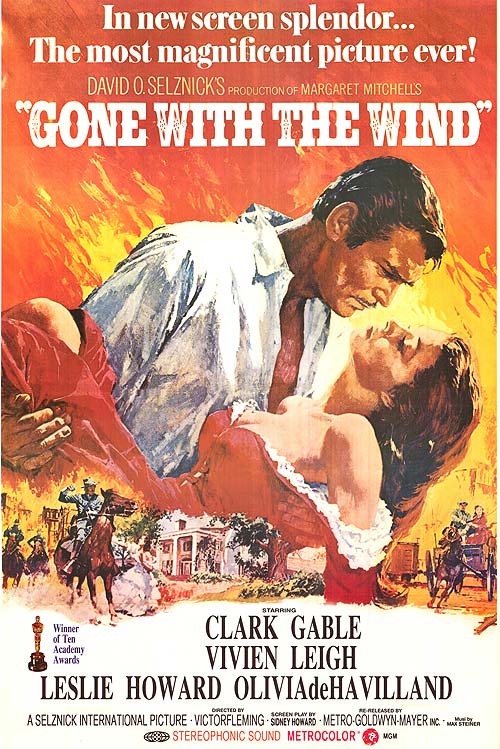
gone with the windDirected by Victor Fleming

As I’ve been doing this project, I’ve noticed something that a lot of nominees have in common: they are freaking long. I have felt every minute of some of those three-hour movies (I’m looking at you, Thin Red Line!), while others have kept me captivated. Gone with the Wind is almost four hours long, but I didn’t feel it. I had seen bits and pieces growing up, but I watched the whole movie in one sitting when I was eleven. I’ve seen it several times since, including once in the theater when it was re-released for an anniversary event. And every single time I’ve watched it, I’ve been glued to the screen. It doesn’t matter that I know how it ends. The world of Gone with the Wind was so skillfully built that I can’t tear myself out of it. The characters are so real that they almost feel like friends; their triumphs and miseries become ours. That, my friends, is how you make a three-hour-plus movie fly by.

So what’s the story? Spoiled Southern belle Scarlett O’Hara’s world comes crashing down around her when the American Civil War begins. Her life of parties and flirting is over. As she tries to adjust to the harsh realities of her new life, she learns that she will do anything to keep what she loves. (That summary makes it sound boring. Trust me, it’s not.)

The Good: There are so many good things in Gone with the Wind that it’s hard to know where to start. I think I will change it up and start with cinematography. Gone with the Wind is a beautiful movie, full of glowing sunsets and billowing ball gowns. It’s not always pretty, though; the scene at the depot where the soldiers are lying dead in rows is tragic. The birth of Melanie’s son, where everything is shown in silhouette, is exquisitely done. These are just the highlights, though; there are lots of scenes where the camera work more quietly underscores the action or the emotion of the scene.

The costume design is also good. This movie is why I can complain about other movies’ lack of good historical costume. In Gone with the Wind, the fashions change with the times, like fashion does in real life. Not only that, but the clothes are fairly accurate (as far as I know. I am not a fashion historian; I have only picked up tidbits here and there.). I do know that the shape of the hoops change correctly for the times, which may only be a small detail, but it shows that the designer cared enough to do actual research.

The score is sweeping and beautiful and just a little bit over the top, which fits the epicness of this movie. Everything about Scarlett is dramatic, and it’s appropriate that the music in her movie is, too.

It is very easy to forget in this day and age that in 1939, everything in a movie was real. If you wanted a huge crowd of people, you had to hire actual people. If you wanted a fire, you had to burn something. There are some crazy special effects in this movie. I seriously wonder how they managed to film some of the scenes. Special effects took a certain kind of creativity back in the day, and have to give kudos to the special effects people for this movie.

Whoever adapted the giant book Gone with the Wind into a single (albeit long) movie was amazing. He found the most important things, the things that would make a compelling movie and took those out. He knew what to leave out; it was all good stuff – Ellen’s backstory, Scarlett’s other children, Will Benteen – but wasn’t necessary to the movie. Those extra things that fleshed out the novel would have bogged down the movie. It’s an excellent adaptation.

The entire cast of Gone with the Wind is stellar. After I had watched Dark Victory, I was thinking that maybe Bette Davis should have gotten the best actress Oscar, but when I saw Vivien Leigh’s performance again, I had to admit that Vivien Leigh deserved it. Clark Gable as gave an awesome performance as Rhett Butler. He is so good as the strong, manly lover hiding his love behind pride and lust. The flash of hurt on his face when Scarlett admits that she’s marrying him for his money…so sad. And that kind of thing happens more than once. It’s very subtle and very good. Olivia de Havilland plays Melanie Wilkes so beautifully. She manages to be an angelic, self-sacrificing person and yet not make you hate her. And she was only 23 when the movie came out. That was some serious acting for such a young woman. There is some controversy over Hattie McDaniel’s role as Mammy, Scarlett’s nurse/surrogate mother, but she plays the role well and allows us to see the main characters in a different light as she isn’t shy about expressing her opinions.

The Bad: This is an extremely frustrating movie to watch. Rhett loves Scarlett, but is too proud to admit that he’s actually fallen in love. Scarlett is too caught up with her make-believe love for Ashley to notice. When Rhett makes her notice, he is so ashamed of what he’s done that he doesn’t see the opening Scarlett is giving him. When he rejects her at that point, Scarlett is too proud to say anything. Grrrrr. These are two very strong, proud people who are so scared of showing weakness that they can’t allow happiness in. It makes me want to shake them both.

The Ugly: The movie laments the passing of a “beautiful, genteel” culture, but glosses over the evils that that culture is built upon. Slavery made that lifestyle possible, and so it’s hard to feel too sorry for the O’Hara family when they have to pick their own cotton and for Ashley Wilkes when he is splitting rails. Yes, it’s hard, and it’s not what they were brought up to do, but they were brought up to live off of the misery of others. Ashley briefly acknowledges this, but only briefly. Frankly, it was a culture that deserved to die. I can still enjoy the movie, but it doesn’t make me mourn the passing of the Old South.

Oscars Won: Best picture; best actress in a leading role (Vivien Leigh); best actress in a supporting role (Hattie McDaniel); best director; best writing, screenplay; best cinematography, color; best art direction; best film editing.

Other Oscar Nominations: Best actor in a leading role (Clark Gable); best actress in a supporting role (Olivia de Havilland); best sound, recording; best effects, special effects; best music, original score.

Other Oscars Won: Honorary award to William Cameron Menzies “for outstanding achievement in the use of color for the enhancement of dramatic mood in the production of Gone with the Wind”.

Technical Achievement Award to R.D. Musgrave “for pioneering in the use of coordinated equipment in the production Gone with the Wind”.

Stagecoach (1939)

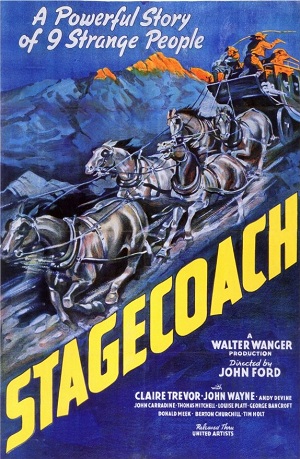
Stagecoach_movieposterDirected by John Ford

I grew up on westerns. I grew up on John Wayne westerns. And yet I had somehow never seen this movie. In some ways, that’s a good thing. I saw it for the first time when I was definitely old enough to appreciate it. But I think I would have liked it just fine when I was ten. I know I would have liked it when I went through my John Wayne phase and tried to watch all his movies when I was fourteen. So while I won’t be suing my dad for neglect because he didn’t show me this movie, I feel like I missed a lot of years when I could have been enjoying this movie. And that’s too bad, because this is a great movie. I liked it so much that I half wanted to start it over again from the beginning as soon as it was over.

So what’s the story? Despite the passengers knowing that Geronimo and his people are on the warpath, a stagecoach full of people begins its journey. Each stop brings more bad news and hardship, yet the oddly-assorted group of passengers presses on, determined to reach their final destination.

The Good: This is the first time in this batch of movies that I’ve been very impressed by the cinematography. Stagecoach is such a beautiful movie. John Ford knew how to compose a shot and how to use gorgeous scenery to its best advantage.

I’ve been rhapsodizing about acting a lot these past couple weeks, and I’m going to keep on doing it. This was yet another well-acted movie from 1939. Everyone was perfect. Claire Trevor especially stood out to me as the “dance hall girl” who is getting run out of town. I thought Trevor did a very good job of showcasing Dallas’s humanity and desire to be seen as a person. I have always liked John Wayne, but I liked seeing him so young in this movie. He had a different kind of energy as a young man than he did as an older one. Neither one is  better than the other; they’re just different. Thomas Mitchell as the doctor/town drunk was good, because Thomas Mitchell is always good, but when he stood up to Luke Plummer, he became superb. I’m also going to mention Andy Devine, mostly because Disney’s Robin Hood (1973) was my favorite Disney cartoon growing up, and it’s fun to hear Friar Tuck’s voice coming out of a real person’s mouth.

The Bad: I realize this movie was made in the 1930s, and I know that society’s mores have changed since then, but I live now, so I was a little bit unhappy with the portrayal of minorities, both the Native Americans and Hispanics. It’s definitely not the worst I’ve seen, and it didn’t detract from my enjoyment of the movie, but I did catch myself wondering if I should enjoy a movie so much when it put forth the opinion that the white men had every right to live on Indian land if they felt like it.

The Ugly: I can’t think of one ugly thing in this movie. That’s unusual for me. But Stagecoach is just an excellent movie.

Oscars Won: Best actor in a supporting role (Thomas Mitchell); best music, scoring.

Other Oscar Nominations: Best picture; best director; best cinematography, black-and-white; best art direction; best film editing.

Wuthering Heights (1939)

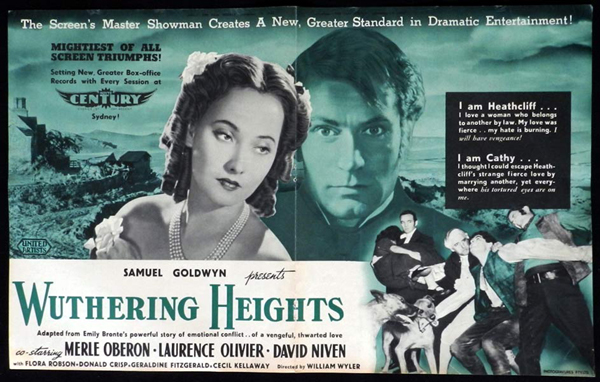
WUTHERINGHEIGHTSTRADEAD2Directed by William Wyler

Yep, this one is out of order, too. I had to take the DVD back to a somewhat far away library, so I had to watch Wuthering Heights instead of the more alphabetically appropriate movie I was planning on; ironically, it was Of Mice and Men. Best laid plans and all that. But they will all get reviewed eventually, so I don’t really suppose it matters the order that I do them in. I just like to do them alphabetically so that people know that I’m being impartial and not putting them in order of which I like best.

Film adaptations of books are tricky. Books are so personal, and everyone has their own interpretation, so you will never be able to please everyone. But I hate the book Wuthering Heights. Heathcliff is a terrible person who makes everyone around him miserable in his quest for revenge. I had heard that this wasn’t a very faithful adaptation, so I hoped that they would have been able to turn this movie into something that I liked. Sadly, they didn’t.

So what’s the story? Heathcliff, a starving, ragged orphan, is adopted off the streets of Liverpool by the kindly Mr. Earnshaw and taken to Earnshaw’s house, Wuthering Heights, to be raised with Earnshaw’s children, proud Hindley and impulsive Catherine. Cathy and Heathcliff become great friends and vow undying love, but when Mr. Earnshaw dies, Hindley takes over and makes Heathcliff a servant. As they grow up, Cathy and Heathcliff fall more deeply in love with (or become more obsessive about) each other, but Cathy wants to be rich. She urges Heathcliff to go away and make something of himself so that they can marry. After an accident, Cathy stays for some time with the Lintons, her wealthy, kindly neighbors and glimpses what a future with wealth and comfort would be like. When Edgar Linton proposes, Cathy accepts. What will Heathcliff do to get revenge for all the wrongs done to him?

The Good: Geraldine Fitzgerald, who also did an amazing job in Dark Victory, plays Isabella Linton heartbreakingly well. She’s a silly girl, but that doesn’t mean that she doesn’t feel the wrongs done to her by Heathcliff. So good.

Laurence Olivier plays Heathcliff. He was a very good-looking man and an incredible actor. I felt sorry for Heathcliff in this movie, which I never did while reading the book, so props to Olivier.

The Bad: Merle Oberon’s Cathy is a spoiled, selfish girl who is unwilling to give up her place in society and a comfortable home for true, pure love. If it’s the screenplay’s fault that she appeared like that, than she did a good job of acting. But I felt like they were trying to make her sympathetic, and that never came across for me. I was kind of hoping that Heathcliff would fall in love with someone else, just so she could see that she wasn’t that great.

This is another movie from the 1930s that fell victim to the idea that accurate costuming didn’t matter. If the director and/or producers decided to have it take place in the 1860s, which is what the clothes vaguely suggest, that’s fine, but Heathcliff was gone for a while, right? And yet the ladies are still wearing the same fashions that they were before he left. The passage of time through clothes wasn’t shown at all. That would have been a very nice touch, but since it didn’t happen, I was left with the feeling the Heathcliff didn’t really leave for all that long. I guess people could make fortunes in America incredibly quickly in those days.

The Ugly: The ending is so incredibly bad. It makes Cathy and Heathcliff out to be tragic lovers who, due to circumstances beyond their control, were unable to be happy in life, but can now be happy together after death. The movie was already melodramatic, but the ending takes the movie past melodramatic to beyond cheesy. Ugh.

Oscar Won: Best cinematography, black-and-white.

Other Oscar Nominations: Best picture; best actor in a leading role (Laurence Olivier); best actress in a supporting role (Geraldine Fitzgerald); best director; best writing, screenplay; best art direction; best music, original score.

The week is over, but the nominees of 1939 aren’t! Join me next week for the rest of the best of 1939, including the juggernaut: Gone with the Wind.

Goodbye, Mr. Chips (1939)

Goodbye,_Mr._Chips_(1939_film)_posterDirected by Sam Wood

I remember watching this movie when I was a young teenager. I liked it then. It’s a sweet movie. But watching it now was a totally different experience. Now I understand Mr. Chips so much better. We are actually very much alike; we are both slightly shy, rather reserved people who work with young people, but have a very hard time actually connecting to them. Because of this, I could empathize with his experiences, and I spent most of the last half of the movie in tears. It’s not an excessively tragic movie, but life itself is very sad sometimes.

So what’s the story? Mr. Chipping arrives at Brookfield School, a boarding school for English boys, in 1870. Over the next fifty-odd years, he experiences love and joy, heartache and heartbreak, all while teaching classics and other life lessons to the future leaders of England.

The Good: Often in movies that span a lot of time, two actors will play a single part, with one person playing the young man and the other playing the old man. That’s not the case in this movie. Robert Donat plays Chips from his twenties through his eighties — and he does a fantastic job. He walks differently as he gets older, he holds himself differently, he even moves his mouth differently. It’s very impressive. And that’s not all he does. Mr. Chipping changes dramatically personality-wise through the movie. It’s a struggle at first, but eventually being open and loving and caring towards the boys becomes second nature. Robert Donat shows us all of that through his portrayal of Mr. Chips. It’s an excellent performance.

The makeup artists did a very good job, too. They had to, or it would have been silly to pretend that a man in his mid-thirties was really in his eighties. They didn’t just put Donat in a grey wig and call it good(I’m looking at you, Giant!), but they gave him wrinkles and old man eyebrows and everything he needed to convincingly play an old man.

I also like how they showed the passage of time with the boys coming to the school in different uniforms and talking about current events. That was a nice way to handle a lot of years without something conventional like a fluttering calendar and without simply putting the date on the screen.

The Bad: When you are making a sentimental movie, it’s hard not to cross the line into cheesiness. Most of the time, this movie stayed on the right side of that, but the ending was a little much. Superimposing the face of Colley, who represents four generations of students, onto the screen was cringe-worthy. I know, I know, it was the 1930s, and people were less cynical then I think, but it was still a bit much.

This movie also has a slight costuming problem. I was trying to figure out about how old Chipping would have been when he met Katherine, but her clothes and hairstyle don’t quite match any era. Lots of movies throughout the history of movies have had the same problem; the actors are just put into clothes that feel old-timey without being from any specific time period. It can get ugly. Goodbye, Mr. Chips isn’t the worst I’ve seen, but it could have been better.

The Ugly: There wasn’t anything ugly about this movie unless you don’t like sweet sentimental movies about the difference one person can make to many. If that’s the case, don’t even bother with this one.

Oscars Won: Best actor in a leading role (Robert Donat).

Other Oscar Nominations: Best picture; best actress in a leading role (Greer Garson); best director; best writing, screenplay; best sound, recording; best film editing.

Chicago (2002)

chicagoDirected by Rob Marshall

This is the one of the movies (the other is Guess Who’s Coming to Dinner) that inspired me to watch all of the movies nominated for best picture. When I saw Chicago for the first time, I was not impressed; it made me wonder how bad the other nominees were for this movie to have won best picture.

So what’s the story? In 1920s Chicago, vaudeville star Velma Kelly murders her husband and sister when she finds them sleeping together. Actress wannabe Roxie Hart kills her lover when he decides to break off their relationship and reveals that he never had the connections to make her a star. Both women are represented by Billy Flynn, a defense attorney who has never lost a case. Will his defense be enough to save them from the hangman’s rope?

The Good: Catherine Zeta-Jones. She is amazing as Velma Kelly. She not only sings and dances, but she acts while she’s doing it. In the scene where she’s trying to convince Roxie to be her partner in a new act (the song “I Can’t Do It Alone”), you can see the desperation written on her face. She’s a proud woman begging for help, and it hurts her, but she does what she has to do. She completely deserved her Oscar for best supporting actress.

The musical numbers were fantastic. I don’t automatically like movie musicals. If the songs don’t add something either to the plot or to the development of character, they feel like a waste of time to me. But I loved the songs in Chicago. “Cell Block Tango” is my favorite. I liked the symbolism of “We Both Reached for the Gun” and Richard Gere’s tap dance. All of the musical numbers added to the movie.

I did like the trope of having the musical numbers be inside Roxie’s head. That was a good way to make a musical believable, because people don’t normally break into song in a courtroom. That meant the editing had to be good, and it was. The movie cut beautifully between what was happening in the real world and what was being sung in Roxie’s mind. Having Taye Diggs as the announcer to tie it all together was a smart choice, too.

The Bad: Renèe Zellweger is not a dancer, nor does she have a voice of the same caliber of Catherine Zeta-Jones’s or Queen Latifah’s. She wasn’t horrible, but when you put someone great next to someone merely good, it makes you cringe. That last dance number is particularly bad. Catherine Zeta-Jones looked like dancing is as natural to her as walking, which makes Renèe Zellweger look stiff. It’s just not good.

The Ugly: This movie has no heart or soul. The theme of the movie is that you can get away with anything if you are famous enough. While that might be true, I don’t feel like it’s something to celebrate.

Oscars Won: Best picture; best actress in a supporting role (Catherine Zeta-Jones); best art direction – set direction; best costume design; best film editing; best sound.

Other Oscar Nominations: Best actress in a leading role (Renèe Zellweger); best actor in a supporting role (John C. Reilly); best actress in a supporting role (Queen Latifah); best director; best writing, adapted screenplay; best cinematography; best music, original song (“I Move On”).

The Pianist (2002)

the-pianistDirected by Roman Polanski

When I was ten or so, I got interested in Holocaust literature. I think it’s because my teacher read us Daniel’s Story in class. Anyway, from that time on, I read lots of books written for children and teenagers about the Holocaust. I even read some written for adults. But that all stopped when I was sixteen. That year, my history teacher showed us footage of the liberation of the concentration camps. Reading all those books hadn’t prepared me for what the Holocaust really was. I hadn’t understood what it really meant, what it looked like when people were slowly being starved to death and being killed indiscriminately. But now I do, and now Holocaust movies are hard for me to watch. I don’t want to believe that people could treat other people that way. At the same time, even though they can be so terrible, movies about the Holocaust can also be testaments to human goodness and resilience.

So what’s the story? Wladyslaw Szpilman is a young pianist living and working in Warsaw in 1939. After Germany invades the country, Szpilman, who is Jewish, lives through the horrors of the Warsaw ghetto.

The Good: Adrien Brody. His performance is heartbreaking. His transformation from a carefree young musician to a starving, terrified shadow of a man is amazing. I cried as I watched him trying to open his can of food. Incredible.

I loved the costume design. It helped to tell the story in way I haven’t often seen. Wladyslaw starts out wearing fashionable suits, but as his life gets harder and harder, his clothes change, too. The contrasting clothing of the people in the ghetto also highlights the differences of the people. Some were dressed poorly; others had furs. Each of those people in the ghetto had a different story before they were forced together, and their clothes remind us of that. They aren’t just faceless people or numbers, but people with various pasts who faced a tragic future together.

The production design made me sad not just for the Jewish people, but for the Poles, also. Their capital was destroyed; many people died. I’m not sure how they were able to show such widespread destruction, but it was devastating to see a city in rubble.

The Bad: I know I’m not supposed to say this, especially about a Holocaust movie, but there are a couple of boring stretches in this movie. From the time Wladyslaw is separated from his family until he stops living in empty apartments, it’s not the most exciting movie. I suppose it really must have been boring trying to live silently in an apartment that is supposed to be empty, but it doesn’t make for thrilling cinema.

The Ugly: Roman Polanski was a Holocaust survivor who escaped from the Krakow ghetto, and he witnessed some horrific things. He doesn’t pull his punches in this movie, and so there is some very graphic and shocking violence. I don’t feel like it’s gratuitous in any way; it’s what happened. But that means there are some parts that are very difficult to watch.

Oscars Won: Best actor in a leading role (Adrien Brody); best director; best writing, adapted screenplay.

Other Oscar Nominations: Best picture; best cinematography; best costume design; best film editing.