I'd like to spank the Academy

Archive for the ‘Drama’ Category

Sounder (1972)

sounderDirected by Martin Ritt

I think my third grade teacher hated children. What is my evidence for this? She made us read not only The Red Pony by John Steinbeck, but also Sounder by William H. Armstrong. While both are good books (SPOILER ALERT), the beloved animal dies at the end of both books. It does not make for happy reading for eight and nine year old children. The only thing that could have made the year worse was if we had also read Where the Red Fern Grows by Wilson Rawls. (We read Summer of the Monkeys instead.) Because I remembered how depressing and sad that year was, I wasn’t particularly looking forward to watching Sounder. But the screenwriter was smart, and the movie ends much more happily than the book does.

So what’s the story? During the Depression, sharecroppers David Lee and his father Nathan spend their nights hunting with their dog, Sounder, hoping to get any kind of meat to put on the table. One day, in desperation, Nathan steals a ham from his work. He is arrested and sent to a work camp. The town sheriff won’t tell David Lee and his mother and younger siblings where Nathan has been sent, so David Lee and Sounder go off in search of Nathan.

The Good: There are some nice performances in this movie. Kevin Hooks did a great job of carrying the movie as David Lee, which is a hard job for a teenager. Cicely Tyson plays Rebecca, Nathan’s wife, who is determined to keep the farming going without her husband. She does a beautiful job as the tough, yet loving woman. Paul Winfield is Nathan, a man trying so hard to provide for his family in an impossible time. The major standout for me, though, was Janet MacLachlan, who plays Camille, a teacher who cares. She shone in every scene she was in.

I liked the plot. I like seeing movies about people who love each other and who try to help each other through bad times. Sounder managed to tell the story without being cheesy, which is a hard thing to do.

The Bad: Even though all the performances were lovely, and even though I liked the story of the family, I felt like the movie rambled some. There were some unnecessary scenes. Or maybe they were necessary, but they just didn’t feel like they tied in to the rest of the movie. It dragged a bit, and that made it hard for me to connect with the movie, even though I felt for the people and their plight.

The Ugly: This is a G-rated movie, and there’s not anything horribly offensive in it, but it’s sad. Black sharecroppers in the South during the Depression did not have an easy time of it. This is a so-called “family movie,” but I would suggest not letting small children watch it on their own. I think it’s a movie that parents should talk about with their children so that children can understand what the family was going through.

Oscars Won: None.

Oscar Nominations: Best picture; best actor in a leading role (Paul Winfield); best actress in a leading role (Cicely Tyson); best writing, screenplay based on material from another medium.
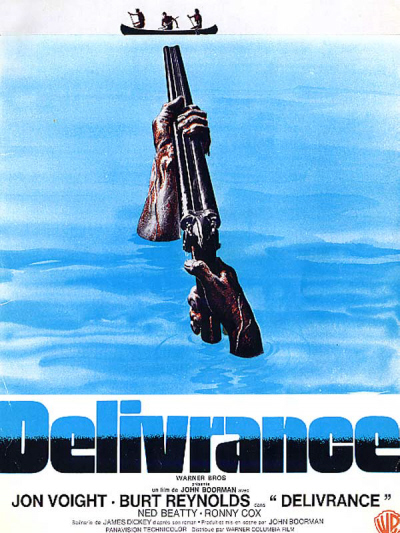
Deliverance (1972)

deliverance_posterDirected by John Boorman

I don’t know a lot about most of the Oscar-nominated movies from the 70s and 80s. I was raised on movies from the 30s through the 60s; I became at least semi-aware of the movies in the early 90s. But the 70s and 80s are just kind of a big, unexplored wilderness to me. Sometimes that’s a good thing; it means that I don’t have any preconceived ideas about the movies. But sometimes it means I get a nasty shock when something traumatic happens that I am not at all prepared for. That’s what happened to me with Deliverance, and that is why there will be a couple spoilers in this post. Normally I hate spoilers, and I try very hard to keep my posts spoiler-free, but I really wish someone had spoiled certain points about Deliverance for me.

So what’s the story? A dam is about to be built on a river in Georgia, so four friends decide to go canoeing down the river before the natural beauty of the area is destroyed. Although they are prepared for the dangers of nature, they aren’t ready for the dangerous men they will encounter.

The Good: The men who play the four friends do a phenomenal job. Burt Reynolds plays Lewis, the tough outdoor man who convinces everyone else to go on the trip. John Voight is his best buddy Ed. Gentle, music-loving Drew is played by Ronny Cox. Ned Beatty perfectly captures the cocky braggart Bobby. All four actors were terrific. I think the best scene was right after the tragedy when all four are reacting to it and trying to make a decision. Their personalities really shone through.

The cinematography was beautiful. Beautiful scenery makes gorgeous cinematography easier, so they definitely had a leg up when filming this movie, but the scenery wasn’t all there was to the cinematography. There were interesting and clever shooting angles. It was really cool.

The Bad: There were a couple of times in the movie that I had to rewind and watch very, very carefully to figure out what had just happened because it wasn’t clear.

Also, this movie has an awesome scene with the song “Dueling Banjos,” but because this movie left such a bad impression on me overall, I don’t think I will ever be able to listen to that happy song without thinking of this horrifying movie.

The Ugly: Okay, here’s the spoiler. If you don’t like spoilers, skip this section. If you read my blog regularly, you know that I’m not a huge fan of violence. Deliverance has one of the most horribly violent scenes I have ever seen. A man gets raped by another man. It was a terribly uncomfortable scene to watch, and the sick feeling it gave me made it hard to concentrate on the rest of the movie. I just can’t handle stuff like that, and not knowing that it was going to happen made it so much worse. I know not everyone is as sensitive to violence as I am, so it might not bother you, but it really bothered me. So there is my public service announcement about Deliverance.

Oscars Won: None.

Oscar Nominations: Best picture; best director; best film editing.

Cabaret (1972)

cabaretDirected by Bob Fosse

Okay, I’m back. I’m finally better enough that my writing once again makes sense. And I’m glad, because I’ve missed this. Now on to 1972!

I liked musicals when I was young. I’m not sure why. Maybe I liked believing in a place where people burst spontaneously into song and dancing with your enemy could solve problems. Maybe I didn’t notice that story and character development tend to suffer when the director has to make room for musical numbers. Maybe I liked the happy endings. But whatever it was that I liked as a child is gone now. Musicals make me very impatient. I still retain a nostalgic liking for the musicals I liked growing up, but I have a hard time with musicals that I am seeing for the first time. Since Cabaret has adult themes, it is not a musical I grew up with. Although I can see some of what people like about it, I didn’t particularly care for it.

So what’s the story? Young English author Brian Roberts moves to Germany in the 1930s. At his boardinghouse, he meets Sally Bowles, an effervescent American nightclub singer/aspiring actress. Together they experience the heady turmoil of pre-World War II Berlin.

The Good: I will give Cabaret props because even though it has musical numbers, all of the musical numbers take place in the nightclub. No one randomly breaks into song on the street or anywhere else. I did like that aspect of Cabaret as a musical. It made it realistic enough that I didn’t want to throw something at the TV.

The acting was good. Liza Minelli made a wonderful Sally, a woman who finds every experience in life worth trying, a woman who just loves life for life’s sake. I quite liked Michael York as Brian, the quiet Englishman who’s not quite sure of his sexuality or what he wants out of life. But the people who I really loved (and whose story I found more interesting than that of Sally and Brian’s) were Fritz Wepper and Marisa Berenson as a gold-digging man and a rich young woman, respectively. Both characters were extremely compelling, and being unsure if they will get a happy ending after all makes them semi-tragic.

The Bad: Even though the characters didn’t randomly burst into song, I didn’t feel like the songs added anything to the movie. The songs could have all been cut, and the only thing it would have done to the movie is make it shorter. There wasn’t even any fabulous dancing to make the musical numbers worth it. And I think some of the cabaret dancers were men in drag, but I couldn’t ever be sure, so I was distracted during the musical numbers trying to figure it out.

The Ugly: There wasn’t anything ugly about Cabaret per se, but I had a really hard time connecting to the movie at all. I can’t even blame being sick, because I was really into other movies I watched while I was sick. Anyway, I’m just going to have to risk the wrath of the internet and say I think Cabaret is overrated.

Oscars Won: Best actress in a leading role (Liza Minnelli); best actor in a supporting role (Joel Grey); best director; best cinematography; best art direction-set direction; best sound; best film editing; best music, scoring original song score and/or adaptation.

Other Oscar Nominations: Best picture; best writing, screenplay based on material from another medium.
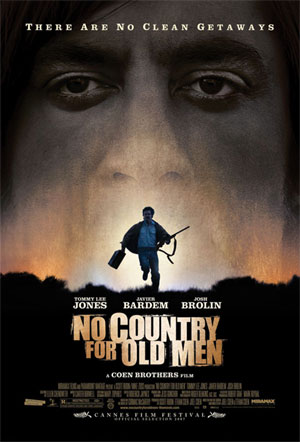
No Country for Old Men (2007)

No_Country_for_Old_Men_posterDirected by Ethan Coen and Joel Coen

I know it’s been a little while since I’ve posted, and I feel very bad about that. I know I left all my adoring fans hanging in 2007 (hahaha! Look at me, pretending I have fans!), but writing when you have a fever rarely produces anything that makes any sense, let alone anything readable. So in the future, I will attempt to not get sick until I’ve posted an entire week’s worth of reviews so that you, my loyal readers, will not be left without my wisdom.

I knew two things about this movie before I watched it: 1) It was based on a book by Cormac McCarthy and 2) It was a Coen brothers film. And this time, I was right on both counts! This movie makes a lot more sense for the Coen brothers. Although it’s a drama, it still has enough quirky characters and funny lines to bring that Coen brothers feel to it. Of course, that makes me extremely curious about the book that it’s based on. Does it have that same quirky feeling to it? Maybe one day when I have time in my life, I will find out.

So what’s the story? One day while he is out hunting (or poaching, maybe?) in the desert, Llewelyn Moss stumbles across the bloody aftermath of a drug deal gone wrong. He finds a case containing two million dollars, and instead of reporting it to the police, he decides to keep the money and run. Because he leaves his truck at the scene, he is soon being pursued by both the county sheriff and a psychopathic killer who works for the drug lord.

The Good: It’s extremely well-acted. Josh Brolin is Llewelyn Moss, a Vietnam veteran who wants more in his life. Tommy Lee Jones plays Ed Tom, the county sheriff who just can’t understand the mindless violence that has entered his life. And Javier Bardem won an Oscar for his portrayal of Anton Chigurh, the incredibly scary psychopathic killer. Side note: I realized while I was watching this movie that although Javier Bardem is an attractive man, I’ve only seen him in movies where he plays a really bad guy, so I’m a little bit scared of him. I’m sure he’s a perfectly nice man in real life, but I would need to see him being nice in real life to overcome the scary people I’ve seen him play. Kelly MacDonald is Moss’s innocent young wife with a backbone of steel. Her scene at the end was so well-played, I had to watch it twice.

I don’t know whether it was the acting or the screenplay or the direction, but No Country for Old Men is a gripping movie. I couldn’t stop watching. I got a phone call in the middle of the movie from someone I love, and getting pulled out of the movie made me really frustrated. I was so annoyed that I had to pause it; I was so into it and so absorbed in the world of the movie that coming out for a phone call was almost painful. And that was to talk to someone I care about. If it had been a telemarketer, I’m not sure what I would have done.

The Bad: Although I love Kelly MacDonald and think she’s a great actress, she looked so young that when I first saw her, I thought she was Josh Brolin’s teenaged daughter, which made it really creepy when he told her that if she didn’t stop talking, he was going to take her to the bedroom. It honestly took me a bit to realize she was supposed to be his wife. I think that’s more the fault of the makeup and costume people than anything. Everything else makeup and costumey worked, even Chigurh’s creepy haircut, but something needed to be done to make Kelly MacDonald not look like a sixteen-year-old.

I also felt like there was a lot of backstory to everyone which we as viewers never really get told about. Backstory is a good thing; it adds a lot of richness to a movie. But it left me with the feeling that there were things going on that I didn’t understand, and that frustrated me a bit. The questions didn’t all get answered, either. WHAT HAPPENED TO THE MONEY?

The Ugly: After watching No Country for Old Men, I feel kind of silly saying that There Will Be Blood was violent. No Country for Old Men is so much worse. People get shot left and right for no discernable purpose. I am also now afraid of oxygen tanks, although I recognize that Chigurh’s was a special cattle tool. Still. They are scary. And because there were so many deaths, I was left feeling empty at the end. I thought, “Wait. That’s it? That’s all there is to this story? What? How? Who? No, there has to be another ten minutes or so.” I didn’t have a feeling of closure; the movie just…ended. I didn’t like that at all. I felt like if that’s how it was going to end, then there wasn’t much point to the two hours that led up to the ending.

Oscars Won: Best motion picture of the year; best performance by an actor in a supporting role (Javier Bardem); best achievement in directing; best writing, adapted screenplay.

Other Oscar Nominations: Best achievement in cinematography; best achievement in film editing; best achievement in sound mixing; best achievement in sound editing.

There Will Be Blood (2007)

600full-there-will-be-blood-poster-finalDirected by Paul Thomas Anderson

I knew two things about There Will Be Blood before I watched it: 1)it was based on a book by Upton Sinclair; 2)it was a Coen brothers film. As I watched it, I couldn’t help but think it was a very odd film for the Coen brothers. It was just so serious and everything was played completely straight. About midway through, I looked it up on IMDb and realized that I had only known one thing about There Will Be Blood: it was based on a book by Upton Sinclair.

So what’s the story? On a tip from a young man named Paul Sunday, prospector-turned-oilman Daniel Plainview travels with his son to the community of Little Boston to see if he can start some oil wells. The land is promising, but Paul’s creepy twin brother, Eli Sunday, has a strange hold over the people of Little Boston.

The Good: I’m not very familiar with Daniel Day-Lewis as an actor, but I didn’t think very much of his performance in Gangs of New York, so I wasn’t exactly jumping with excitement to see him in There Will Be Blood. But his performance as Daniel Plainview was excellent. It had to be; Daniel is in almost the entire movie and for some of the movie, he’s the only person onscreen. The movie wouldn’t have worked with a lesser actor.

I really liked the soundtrack. It wasn’t constant; at times there was no music at all. I like that. It makes it feel more real and less manipulative. I liked, too, that the music was usually played by a smaller group, not necessarily a full orchestra. It reflected the bare bones of the frontier places Plainview was.

The Bad: There were a couple questions I had that never really got answered. Why did HW stop talking? He had the capability to speak. Why did he not? And what happened to Paul Sunday? I suppose if I had a creepy brother like Eli, I might leave and never come back, but why does his family never mention him again? I kept waiting for him to show up again, but he never did. I felt like other people disappeared, too, like Ciaran Hinds’ character. What happened to all those people?

The Ugly: I’m not a big fan of violence, whether it’s intentional or accidental, and many distressingly violent things happen in this movie. My cat finally moved off my lap in disgust because I kept jumping and gasping at things that were happening. Mining and oil well-digging were very dangerous jobs back then, and I didn’t like seeing what could happen to people while they practiced those professions. I’m not mortally offended by it; I’m just not good at handling that kind of stuff.

Oscars Won: Best performance by an actor in a leading role (Daniel Day-Lewis); best achievement in cinematography.

Other Oscar Nominations: Best motion picture of the year; best achievement in directing; best writing, adapted screenplay; best achievement in film editing; best achievement in art direction; best achievement in sound editing.

Michael Clayton (2007)

michael claytonDirected by Tony Gilroy

When I was growing up, my dad would turn a movie on while he finished up paperwork at night. When the movie ended, he would simply rewind it and start the same movie over again. It never really bothered me too much (except when the movie was Groundhog Day), but I’ve never had the urge to do that myself until I watched Michael Clayton. It’s a very subtle corporate thriller, and I feel like I didn’t quite pick up on everything the first time through. I would like to watch it a couple more times, but since I have a full-time job which not my blog, I can’t do everything I want.

So what’s the story? Michael Clayton is his law firm’s clean-up man. Whenever anything goes wrong, he’s called on to fix it. So when the firm gets a call that one of the partners who was at a deposition has stripped himself and started chasing a witness through the parking lot, Michael Clayton is sent to see what can be done. When he gets there, Michael finds out that everything is not as it seems…

The Good: There were some fabulous performances in this movie. George Clooney plays Michael Clayton, a man who’s dealing with all kinds of stress at work and in his family life. It’s a very understated performance. His acting in the last few minutes of the movie and into the end credits was incredible. Tilda Swinton is the head legal counsel for the company that Clayton’s team is supposed to be representing. She is a fascinating character; she is smart and capable, but not at all confident. I’ve never been a huge fan of hers, but I have to admit that she is fabulous in Michael Clayton. Tom Wilkinson plays Arthur Edens, the partner whose breakdown leads Michael Clayton on a search for the truth. Movie director Sydney Pollack does a good acting job as one of the heads of the firm, and Austin Williams plays Michael’s fantasy-novel obsessed young son.

The cinematography really set the mood for the movie. It takes place during the late fall or early winter, and the cold, dying landscape and the wintry light reflected Michael’s mood.

The Bad: I like to think that I’m an intelligent person, but I know I missed some plot points. I will admit that I was tired and my brain wasn’t functioning at full capacity, but feel like I shouldn’t have to watch a movie more than once to understand all of what’s going on.

Also, why were the horses in the field bridled? I’m no horse expert, but I have always thought that horses don’t wear their bridles when they are left in the pasture. It’s a silly thing, but it disquieted me for the whole movie.

The Ugly: Even though Michael Clayton was interesting and had good acting, I never connected with the movie on an emotional level. I feel like I should have felt something, but the movie felt more like an intellectual logic puzzle than a work that touched my soul. I think an excellent movie should touch the viewer in some way.

Oscar Won: Best performance by an actress in a supporting role (Tilda Swinton).

Other Oscar Nominations: Best motion picture of the year; best performance by an actor in a leading role (George Clooney); best performance by an actor in a supporting role (Tom Wilkinson); best achievement in directing; best writing, original screenplay; best achievement in music written for motion pictures, original score.

Atonement (2007)

Atonement-movie-posterDirected by Joe Wright

It was five or six years ago when I read Ian McEwan’s novel Atonement, but it has stayed with me. Even though I liked the writing style and thought that the characters were very well drawn, it was a hard book for me to get through. As soon as Robbie handed Briony his note, I knew things were going to take a turn for the worse; I didn’t want that to happen, so I put the book down for a while. I couldn’t stay away, though; I had to find out exactly what happened to all of these great characters. I finished it and loved it, but never felt like I had to emotional strength to read it again. So it was with a feeling of trepidation that I watched Atonement. I didn’t want to see all the bad things happen to the people I cared about. I needn’t have worried. Although it’s a good film, I didn’t get as emotionally caught up with the characters as I did when I read the book. Maybe it’s because I already knew what was going to happen, so I subconsciously made the decision to stay detached.

So what’s the story? On a hot summer’s day in 1935 England, thirteen-year-old Briony witnesses some things that she doesn’t understand and so misinterprets as menacing. When her cousin is attacked, Briony makes an accusation based on what she’s seen earlier. This accusation has serious repercussions for Briony’s sister, Cecelia, and Cecelia’s lover, Robbie, that will echo throughout the rest of their lives.

The Good: The music struck me from the very beginning. I really liked the way that the typewriter was used almost as a percussion instrument. It was very clever and somehow added to the tension of the movie.

The acting was very good. I don’t usually like Keira Knightly, but she really fit her part here. James McAvoy made an excellent Robbie. Saoirse Ronan was nominated for best supporting actress for her role as thirteen-year-old Briony. She has very expressive eyes. Romola Garai plays eighteen-year-old Briony, a young woman haunted by what she did five years before. They are all excellent in their roles.

The cinematography was lovely. The very long tracking shot on the beach emphasized the hopelessness and chaos of the situation. The cinematographer also somehow made the scenes at the country house glow like a long-cherished memory. It’s a very pretty movie.

The screenplay was well-done, too. I was wondering how they were going to show what really happened and also what Briony saw and interpreted. They did an excellent job with that.

The Bad: I kept wondering about the scene between Cecelia and Robbie in the coffee shop/at the bus stop. (SPOILER ALERT): If everything we see in the movie up until the interview is Briony’s story that she’s rewritten for Robbie and Cecelia’s happy ending, how did Briony know about that meeting and the summer cottage? Because when we see Robbie dying, he has the photograph of the beach house. That kind of bugged me.

The Ugly: The movie itself didn’t have anything ugly about it, but the story is frustrating and sad. It’s probably not a good movie for the easily depressed to watch.

Oscar Won: Best achievement in music written for motion pictures, original score.

Other Oscar Nominations: Best motion picture of the year; best performance by an actress in a supporting role (Saoirse Ronan); best writing, adapted screenplay; best achievement in cinematography; best achievement in art direction; best achievement in costume design. (When did the names of the awards get so long?)

The Ten Commandments (1956)

ten_commandments_ver2Directed by Cecil B. DeMille

I was brought up in a religious family, and when I was growing up, TV and movies were not allowed on Sunday. The only exception was religious movies. I am from a family that loves movies, so I have seen The Ten Commandments a ridiculous amount of times. (Well, I’ve seen the first couple hours many times; I was usually sent to bed before the very end, so I’ve only seen the end probably five times.) My sisters and I can do entire scenes from memory, and we each have our favorite lines (“To me you’re a lily, and I want water!”). So the only way I could watch The Ten Commandments this time was in my parents’ basement with my family. We had two big bowls of popcorn and a solemn oath that we wouldn’t quote the lines before they happened because my brother-in-law had never seen it before. That was a hard promise to keep. Man, I love this movie.

So what’s the story? This epic (and epically long) movie tells the story of Moses from his birth to his death. It tells of his young manhood in Pharaoh’s palace, his banishment to the desert, his marriage to a shepherd girl and subsequent return to Egypt to free the Hebrew slaves. And yes, in the end he receives the Ten Commandments.

The Good: I think I will always marvel that epic movies with casts of thousands were made at all. For a movie this scale to work, so many people have to be involved. And The Ten Commandments takes this a step further. I felt like Cecil B. DeMille wanted everything to be as authentic as possible, so many things were meticulously researched. As I watched the opening credits, I was impressed not just by the number of experts that were consulted, but also their caliber. DeMille didn’t just make stuff up or go for a vaguely Egyptian feel. He found people who knew what they were talking about so that things would be authentic. This leads to amazing production design and great costumes.

Elmer Berstein’s score is amazing. It is at times melodramatic (Nefretiri’s theme, anyone?), but that is the nature of the film. The score manages to be dramatic and sweeping, but also reverent when it deals with religious things. That’s an impressive thing to do. Also, I have apparently seen this movie so many times that I can listen to the soundtrack and know what lines are being said. But that means that although the music has themes, Bernstein doesn’t repeat himself too much.

The acting is good all around. Charlton Heston does a good job playing a man trying to figure out who he is and what his place is in the world. Yul Brynner plays another man in authority, but Rameses is a totally different king than the one in The King and I, even though both men think Moses is a fool. I think that displays how good an actor Brynner really was. Anne Baxter schemes most convincingly, playing woman who is not necessarily bad, but willing to do whatever it takes to get what she wants (did she get this role because she was typecast after All About Eve?). Yvonne de Carlo as Sephora, Moses’s wife, Nina Foch as Bithiah, Cedric Hardwicke as Sethi –everyone is so good in this movie. I would name everyone, but again, there is a huge cast.

The special effects were amazing for their time. Some haven’t held up, of course, because The Ten Commandments was made almost sixty years ago. But some have held up surprisingly well. The hail that turns to fire still looks believable. That’s incredible to me.

The Bad: As much as I love this movie, I will be the first to admit that the screenplay is not the best. There are many, many cheesy lines.  These lines make the movie really fun to watch, but they are not an example of fabulous writing.

The Ugly: I didn’t find anything ugly in this movie. I enjoyed watching it as much this last time as I did when I was a kid. That’s not always the case for me.

Oscar Won: Best effects, special effects.

Other Oscar Nominations: Best picture; best cinematography, color; best art direction-set direction, color; best costume design, color; best sound, recording; best film editing.

Giant (1956)

giantDirected by George Stevens

I had seen Giant before I watched it for my blog, but only once. I was probably seventeen, and while I was seriously underwhemed with the way the stars were aged, I liked the movie overall. But now that I’m older and more analytical (and possibly more cynical), I’m not as impressed with it as I once was.

So what’s the story? Texas rancher Jordan “Bick” Benedict, Jr. has come to Maryland to buy a stallion to improve his breeding stock. There he meets Leslie, a lovely and spirited society girl. After talking to each other for less than ten minutes, they are deeply in love. They marry and go back to Reata, Jordan’s ranch in dry, dusty Texas. They spend the next 25 years adjusting not only to each other, but to the changing world around them.

The Good: Perhaps because of his early death, James Dean still haunts pop culture. Before I actually saw him in anything, I thought people were overreacting a bit when they talked about how a great young actor was lost. But he really was that good. He brings a pathos to Jett Rink, a low-class ranch hand who strikes oil. Without James Dean, Jett would have been a slightly ridiculous character, but James Dean allows us to see his motivations, his dreams and desires. He makes him human. James Dean died before the filming of Giant was completed, but he left his mark on the film and on film history.

Three supporting actors really stood out. Mercedes McCambridge is Luz Benedict, Jordan’s crusty older sister. She loves Reata more than anything and can do anything a man can do on the ranch. (SPOILER ALERT)Her death, which happens so conveniently soon after Leslie comes to Texas, is really quite touching. Chill Wills plays Uncle Bawley, a kindly older gentleman who helps Leslie understand Texas and the Benedict children understand life. Jordan Benedict III is played by Dennis Hopper in what must have been one of his first big movie roles. Jordy is a rather quiet young man, but he is deeply passionate below the surface. It’s a very fine performance.

The Bad: I really enjoyed the first half of Giant. Up until the point where Jett finds his oil, it’s tight and focused. After that, it feels looser and more meandering. It doesn’t feel like it has a central focus. Jordan and Leslie and their relationship aren’t as important as they were, but nothing steps up to fill that vacuum. I don’t know if that’s how it is in the novel that Giant is based on, but it made the second half feel less meaningful and somewhat disconnected from the first half.

Giant must begin sometime in the 1920s since the movie spans 25 or 30 years, but you can’t really tell from the costume design. Elizabeth Taylor’s clothes are waaaay too 1950s-fashionable for the 1920s. The other costumes are not as bad. I guess it was decided that it wouldn’t do to have Elizabeth Taylor wearing thirty-year-old fashions. But I want Luz II’s white formal. It’s gorgeous.

The Ugly: The makeup in this movie is so bad that I have been using it as my standard of bad makeup for fifteen years. Elizabeth Taylor, Rock Hudson, and James Dean are “aged” thirty years by wearing grey wigs. That’s about it. That makes it hard to believe that Elizabeth Taylor and Rock Hudson are parents with grown children, let alone grandparents. It’s a little bit silly.

The thing I hated most about this movie is Leslie. She doesn’t grow or change at all in the course of the movie, even though she’s supposed to be about eighteen when she marries Jordan. She swoops in from Maryland and teaches all the ignorant, backward Texans what is acceptable in life. Yes, the Texans do have some deplorable attitudes, but the fact that Leslie is the only enlightened one is very grating. How exactly did a rich doctor’s daughter have so much life experience at eighteen that she has so much wisdom? It’s hard to watch a three-hour movie with a paragon as the main character. It makes it hard to suspend your disbelief.

Oscars Won: Best director.

Other Oscar Nominations: Best picture; best actor in a leading role (James Dean); best actor in a leading role (Rock Hudson); best actress in a supporting role (Mercedes McCambridge); best writing, best screenplay – adapted; best art direction-set direction, color; best costume design, color; best film editing; best music, scoring of a dramatic or comedy picture.

Friendly Persuasion (1956)

friendly-persuasion-movie-poster-1956-1020505962Directed by William Wyler

I had a bad day the day I watched this movie. I hadn’t felt well all day at work, but I didn’t feel bad enough to take time off. About five minutes after I got home from work, I was violently ill. It lasted about half an hour. I was feeling sick and weak when I put Friendly Persuasion in the DVD player.  But the moment the opening notes of the theme song started, I felt much better. Watching this movie is like being wrapped in a giant puffy quilt or getting a hug from someone you love. That may be because I was raised on this movie, but I like to think that the sweetness of this movie could make anyone’s day better.

So what’s the story? Jess and Eliza Birdwell are Quakers living in southern Indiana during the Civil War. Their older son, Joshua, is old enough to fight in the war, but the family’s pacifist beliefs keep him from joining up. Their daughter, Martha, is in love with their Methodist neighbor, who is a soldier. And their younger son, Little Jess, is in constant battle with Samantha the Goose. The family tries to simply go about their lives, but the war is about to come to them, forcing them all to make decisions of faith and love and conscience.

The Good: The cast is perfect. Jess is played by Gary Cooper, who makes Jess a slightly mischievous man who believes in his religion, but sometimes struggles to live up to the standards it sets for him. Dorothy McGuire plays Eliza, the Quaker minister who sometimes has to fight to keep her family on the straight and narrow. Anthony Perkins (yes, the same Anthony Perkins who is in Psycho) plays Josh, whose conscience tells him that fighting is a sin, but that his family is worth fighting for. Phyllis Love plays the lovesick Mattie almost uncomfortably perfectly. Robert Middleton plays family friend Sam Jordan with humor and love. Everyone is just good.

Okay, this is a weird thing, but I was struck as I watched  Friendly Persuasion this time by the goose. Or possibly geese? I’m not sure how one goes about training a goose. I can’t imagine that it’s easy. But that goose does all sorts of things. Even if it’s many geese all doing one trick, it would have taken lots of work. So hats off to the animal trainers for this movie!

I love the music for this movie. Pat Boone sings the theme song, and it’s beautiful. It reflects the mood of the movie: slow, yet loving. Dimitri Tiomkin’s score is also good, reinforcing the love and joy found in the Birdwells’ home life.

And speaking of the home life, I love that this family is a family. The children sometimes tease each other. They sometimes fight. The father defers to his wife, but he sometimes teases her and sometimes gangs up with his kids to get her to relax. The writers made the characters real people with faults and virtues. I love that.

The Bad: The plot isn’t perfectly linear. It meanders a bit. There are some scenes that add to the characterization of the people, but don’t necessarily add to the overarching Civil War plot. I’m okay with this in this movie because all these scenes are so delightful, but that also might be because I’ve loved Friendly Persuasion for a long time. Other people might not be so forgiving.

As Quakers, the Birdwells use speech that is a little bit different. They use “thee” and “thy” instead of “you” and “yours”. But to my German-speaking ear, they don’t use them quite correctly. This is apparently accurate for the Quakers, but it bothered me a little bit. It took me about a quarter of the movie to be okay with it.

The Ugly: I don’t think there is anything ugly about Friendly Persuasion, unless you object to a feel-good movie about a family trying to live according to their consciences.

Oscars Won: None

Oscar Nominations: Best picture; best actor in a supporting role (Anthony Perkins); best director; best writing, best screenplay – adapted; best sound, recording; best music, original song (“Friendly Persuasion (Thee I Love)”).