I'd like to spank the Academy

Archive for the ‘Drama’ Category

An Unmarried Woman (1978)

unmarried_womanAn Unmarried Woman
Directed by Paul Mazursky

Before I watched An Unmarried Woman, I knew two things about it: that it was about a woman going through a divorce, and that it hadn’t been released on DVD. These two little pieces of information made me assume that it wasn’t going to be very good. There are lots of mediocre movies about divorced women, and if it had never been released on DVD, how good could it be, really? And then I actually watched it, and I was blown away.

So what’s the story? Erica loves her life. She loves her husband, he loves her, and they have an amazing sex life. She has wonderful friends, a great relationship with her teenaged daughter, and the financial freedom to work a part-time job at an art gallery. When her husband tells her he’s leaving her for a younger woman, Erica’s life is turned upside down. She’s been with him for most of her adult life and doesn’t know who she is without him. With the support of her daughter, friends, therapist, and new men in her life, Erica learns for the first time in her life how to be herself.

The Good: The screenplay is amazing. It is so completely real, both emotionally and conversationally. It’s not dated at all; only three things would have to be changed to make it completely up to date: Erica’s friend refers to herself as “manic depressive,” where today we would use “bipolar;” the same friend uses lithium to deal with her mental illness, which is not commonly used today; and Erica’s daughter Patti tells her mother that her friend got an abortion for $200, but (based on an internet search), abortions are more expensive than that now. Setting those tiny details aside, Paul Mazursky’s screenplay could have been written today. It captures exactly what it feels like to be a woman in transition. As a woman whose life has not turned out how she planned it, I could completely relate.

The cast was wonderful. Jill Clayburgh was utterly fantastic as Erica, showing the range of emotions that a woman goes through when the life that she knew was gone. Erica’s husband, Martin, is played by Michael Murphy, who shows the nuances of emotion that people feel when they are trying to make themselves happy, even when it ends up hurting others. Lisa Lucas, who plays Patti, Erica and Martin’s daughter, is equally good at portraying the emotions of a teenager who is dealing not only with her parents’ breakup, but with the minefield of teenage life. Cliff Gorman plays the role of the sleazy artist perfectly. Kelly Bishop gives a wonderful performance as Erica’s supportive, feminist, manic depressive friend Elaine. Another thing I really love about the cast is that besides being incredibly talented, they are all normal-looking. They look like people you could run into on the street in any city in America. I find it much easier to believe a story about normal (albeit fairly wealthy) people when they look like normal people than when they look like models.

The music in An Unmarried Woman reflected the story in a way that I’m not sure I’ve ever seen before. There is really only one melody (I would call it Erica’s leitmotif), but the instrumentation and key are changed based on the situation. Sometimes it is happy, sometimes it is angry, sometimes sad. It reflects Erica’s mood and emotions throughout the movie.

Because this is a character-driven movie as opposed to a plot-driven one, some of the scenes don’t seem to advance the plot. They are basically little vignettes of moments in Erica’s life. But because of the placement of these little scenes throughout the movie, these moments are able to subtly show Erica’s growth and development as she accepts her new life. That is one of the wonders of editing.

The Bad: Although I loved what the music did, I didn’t always love the music itself. While I loved having the emotions portrayed through one melody, the saxophone-heavy instrumentation was one of the few things that made me remember that this movie came out almost forty years ago. It’s very dated and sometimes distracting.

I had a problem with some of the things that Erica’s daughter Patti said. Some of her lines were flat-out perfect, but I have a hard time believing that Patti, a fifteen-year-old girl, would tell her mother’s boyfriend, whom Patti has just met, that she (Patti) is still a virgin. I was never in the situation of meeting a parent’s new love interest, so maybe some people would do it, but it didn’t feel natural to me. There were a couple of interactions like that throughout the movie that made me feel that although Mazursky apparently understands women incredibly well, he doesn’t know that much about teenaged girls.

The Ugly: Beyond some of the clothes, there is nothing that can be called ugly in this movie. (And the clothes are really more dated than ugly. I think there is a difference.)

Oscars Won: None.

Oscar Nominations: Best picture; best actress in a leading role (Jill Clayburgh); best writing, screenplay written directly for the screen.

Justification: Yes, I fully realize that An Unmarried Woman only comes first in alphabetical order if we throw out one of the rules of alphabetization and don’t ignore the “an”. But it gets to come first because it was the first best picture nominee that I had watched in a long time. So I will stifle my librarian instincts and acknowledge the “an”.

Star Wars (1977)

star warsDirected by George Lucas

Happy Star Wars Day! Because it’s May the Fourth, I decided I needed to review Star Wars today. Yes, it was nominated for best picture. Even though Star Wars is an awesome movie, it seems kind of odd today when Star Wars is just a fact of life. Also, the Academy doesn’t always recognize the amazing science fiction blockbusters; it tends to skew towards the brooding independent dramas nowadays. Anyway, Star Wars blew everyone away when it came out. I’m too young to remember that. Like most of my generation, I grew up watching Star Wars. I literally don’t remember not knowing that SPOILER ALERT Darth Vader is Luke’s father. My personal favorite of the original trilogy was Return of the Jedi, because I really liked watching the primitive Ewoks destroy the Stormtroopers. Also, the Ewoks are cute. But I grew up watching them all. Often. I was incredibly excited when the movies were rereleased on big screen in 1997, although I was incredibly disappointed at some of the changes George Lucas made. I was super excited for the new trilogy that started with The Phantom Menace, but now I pretend those movies just don’t exist. I cried last December when I sat in a theatre and watched those yellow letters move across the screen. I cried when Han and Leia saw each other again. So yeah. You could say I like Star Wars. That made it really hard to write an objective review. But I have tried my best, and for those who think I am being too hard on Star Wars, reach out with your feelings, and you’ll know the truth.

So what’s the story? For those of you who don’t know, farm boy Luke Skywalker accidentally becomes embroiled in a fight for the freedom of the galaxy when two droids with the plans to destroy the evil Empire come into his life.

The Good: There really are many amazing things about Star Wars that I think even a non-fan would admit to. The soundtrack, for example. John William’s score may be one of the best movie scores ever written. I love that many of the characters have their own musical themes, or leitmotifs, if we want to be fancy about it. And the orchestrations are wonderful. It seems like the perfect instrument is always chosen to play at a particular time. It’s truly a magical soundtrack.

For the most part, the acting is good. Alec Guinness was apparently annoyed that he was remembered for Star Wars instead of his other movies (if you haven’t seen it, I recommend Kind Hearts and Coronets; it’s hilarious and Guinness is amazing), but he did a good job anyway. Harrison Ford was perfectly cast as Han Solo, the mercenary smuggler with a conscience. Carrie Fisher is fabulously fierce as Princess Leia, a princess with attitude who withstands torture to protect what she believes in. Leia may be a diplomat, but she’s not a prim and proper princess. She’s fantastic. All of the other roles, from the droids to the aliens to denizens of the Empire, are also well cast. There are too many people to mention in one post, but everyone does wonderful work (with one exception that I discuss later).

Once again, special effects win over CGI. Most of the special effects still look good almost forty years later. That’s just amazing to me. When so many movies nowadays looking dated after two or three years because they used CGI, it makes me happy that older movies still look realistic because of old-fashioned effects. The sound effects were also ridiculously good. Every alien race, every droid sounds different. That must have taken some serious creativity to be able to come up with sounds for all of those different creatures.

The story might not be original (more on that later), but the screenplay is. Lucas managed to balance humor and seriousness perfectly. I also think that it’s very clever how George Lucas let us know what Chewbacca and R2-D2 are saying by the reactions of Han Solo and C-3PO, respectively, instead of using subtitles. It draws the viewer more into the movie, I think. And honestly, who doesn’t know at least one quote from Star Wars? It’s a very memorable screenplay.

All of these elements – the music, the acting, the special effects, the screenplay – are great, but what really makes Star Wars so special is the world building. George Lucas created an entire galaxy and filled it with all sorts of different aliens and droids and humans. He imagined different sorts of planets, from planets that are nothing but deserts to swamp planets inhabited by seven-foot-tall furry aliens to planets that are completely peaceful and have no weapons. He imagined a princess who rescues her rescuers when their plan goes wrong. There are good guys and bad guys, yes, but there are also people who couldn’t care less about the Empire and are just trying to live their lives the best way they know how. The many books that have been written that take place in the Star Wars galaxy is a testament to what a fertile field it is for all kinds of stories. To me, that is the most amazing thing about Star Wars.

The Bad: The story is completely unoriginal. George Lucas himself has admitted that he closely followed elements of Joseph Campbell’s book The Hero with a Thousand Faces as he wrote the story of Star Wars. Of course, having Luke follow the same familiar pattern that we’ve seen heroes go through throughout literature for thousands of years may be what makes the story so endearing. One could argue that even though much of the “far, far away” galaxy is unfamiliar, placing Luke in the story pattern as many of our myths connects the story back to us. Still, if you’re looking for story originality, you will not find it in Star Wars.

Like I said before, most of the actors are great. However, Mark Hamill has some cringe-worthy moments as Luke Skywalker. He doesn’t do quiet sadness very well. He’s not terrible throughout the entire movie, but sometimes it’s so bad.

The Ugly: Even though Star Wars takes place “a long time ago, in a galaxy far, far away”, the men all have Earth-style 1970s haircuts. The style isn’t really flattering on anyone, even the swoon-worthy rogue Han Solo. That was a bad call by the hair and makeup people.

Another thing that I find terrible is how hard it is to find the original 1977 theatrical version instead of the updated one released in the late 1990s. People should be able to have access to the movie that they fell in love with. My theory is that once an artist releases his work to the public, it belongs to the public as much as it belongs to the artist. Thanks to my awesome brother who was far-sighted enough to snap up the originals on DVD during the short time they were available, I was able to see the movie I grew up with (Thanks, Jon!). But even on those DVDs, the original movies are only on the bonus disc. They aren’t the main event. I would really like to see a beautifully restored edition of the original versions on DVD. (Are you listening, Disney? Or Fox? Or whoever owns the original movies? It would be a big money-maker. Lots of people would love you. Please?)

Oscars Won: Best art direction-set direction; best costume design; best sound; best film editing; best effects, visual effects; best music, original score; special achievement award for Ben Burtt for sound effects for the creation of the alien, creature, and robot voices.

Other Oscar Nominations: Best picture; best actor in a supporting role (Alec Guinness); best director; best writing, screenplay written directly for the screen.

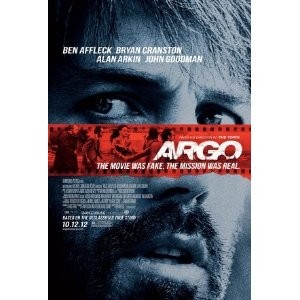
Argo (2012)

Directed by Ben Affleck

Okay, so argoit’s been awhile again. Apparently, because I wrote about my depression and how it was doing so much better in my Silver Linings Playbook post, my depression decided to remind me how powerful it actually can be. So yeah. Sorry if you’ve been waiting and hoping and wishing for my Argo review and my wrap-up of 2012; I’ve been trying not to slit my wrists. But at least I’ve been successful!

As I said in my Zero Dark Thirty review, I was excited for the 2012 movies because I got to watch two action movies that had been nominated for best picture. But just like Zero Dark Thirty, Argo is also not an action movie. It’s exciting, and it’s fun, and it has wonderfully tense moments, but it’s not an action movie. I think I might have watched the only action movie ever nominated when I watched Raiders of the Lost Ark. Argo is a fantastic movie, and I truly enjoyed it, but it’s not an action movie. It was also weird watching it on the heels of Zero Dark Thirty because they are so similar. Both movies are more spy film than action flick, both are based on true stories, both take place in the Middle East, both even have Kyle Chandler. So while I recommend seeing both films, don’t watch them back to back.

So what’s the story? During the takeover of the American embassy in Iran in 1979, six Americans manage to escape to the home of the Canadian ambassador. As the occupation of the embassy drags on, the U.S. government tries frantically to come up with an idea to get the six out before the Iranians realize that they aren’t in the embassy with the other civil servants they have taken hostage. Tony Mendez, a CIA officer whose job is extracting people from bad situations, finally comes up with “the best bad idea”—produce a fake movie, complete with screenplay, casting, and movie posters. He will then fly to Iran to “scout locations” and fly back with the six Americans as members of the production company. It’s a risky plan; can they pull it off?

The Good: I don’t know the term for what I’m about to admire, but I love that Argo looks like a movie from the late seventies or early eighties. The film quality is grainier, less sharp than current movies. No high definition here! I liked that the old Warner Brothers logo was used at the beginning of the film, too. It was a small thing, but helped set the tone for the movie.

Argo was a well-cast film. Everyone from Ben Affleck as Tony Mendez to John Goodman as legendary make-up artist John Chambers to Bryan Cranston as Mendez’s boss, Jack O’Donnell was fantastic. I was especially glad to see Victor Garber playing a sympathetic character (the Canadian ambassador) for once. He seems like the nicest man, but in the movies I’ve seen him in, his characters are always jerks (Mayor Shinn in The Music Man, the lecherous professor in Legally Blond, the money-grubbing lawyer in Eli Stone). Alan Arkin is a delight as the “producer” of Mendez’s movie, and the people playing the six non-hostages were also good. I didn’t feel like there was a false note in the casting.

The pacing of the movie was great. The director managed to keep the feeling of a lot of time going by balanced with the tension of having to get the people out. It would have been very easy to err in either direction – either with the movie dragging as the hostages stayed inside for months, or with the action happening too quickly to be believable.

Even though I feel like I know more about history than the average American, I didn’t know much about the Iran Hostage Crisis. We didn’t tend to get to more recent things in any of my history classes just because there was so much to cover in a year, and I wasn’t alive when it actually happened, so I appreciated the overview of the modern history of Iran at the beginning. Some of the movie wouldn’t have made sense without that background.

Alexandre Desplat’s score was a haunting, beautiful mix of Middle Eastern and Western music. It was subtle enough to underscore the drama of the situation without being overwhelming.

The Bad: While the casting was all good, I had a hard time keeping the six escapees straight. They didn’t get enough screen time for the viewers to understand their characters, so they all kind of blended together. I would have liked to have seen more of John Goodman and Alan Arkin and the Hollywood end of things, also. I feel like a lot of that was glossed over to give Ben Affleck more screen time and make Mendez seem more heroic.

Because I put off writing this review, I had to watch Argo twice in order to feel like I could give it an honest, helpful review. The first time, I loved it. It was one of those moments when you want to tell everyone you know that they should see it. A few weeks later, when I saw it for the second time, I just couldn’t get into it. I already knew what was going to happen, so there was no tension for me. This seems to be a flaw in the movie, but I can’t put my finger on why I didn’t care so much the second time around. It might be because I felt no connection to the characters; I’m not sure. But I feel like a movie that is named the best picture of the year should be able to be enjoyed more than once.

The Ugly: I didn’t find anything bad enough about Argo to be in this category. It’s flaws were minor.

Oscars Won: Best motion picture of the year; best writing, adapted screenplay; best achievement in film editing.

Other Oscar Nominations: Best performance by an actor in a supporting role (Alan Arkin); best achievement in music written for motion pictures, original score; best achievement in sound mixing; best achievement in sound editing.

Zero Dark Thirty (2012)

PrintDirected by Kathryn Bigelow

When I’m deciding which year of movies I want to watch next, sometimes I let a random number generator pick. But when I chose the movies of 2012, I had a very specific reason in mind: I was in the mood to watch an action movie. There haven’t been a lot of action movies nominated for best picture, but I was certain that 2012 had two: Zero Dark Thirty and Argo. I hadn’t seen either one, but I knew that Zero Dark Thirty was about the assassination of Osama Bin Laden, which was exciting, so it had to be an action movie, right? Guess what. I was wrong. Don’t get me wrong; it’s a fantastic movie. It’s definitely not an action movie, though.

So what’s the story? Maya is a young CIA operative sent to Pakistan to protect the US from future terrorist attacks. It takes her ten long years of ferreting out information from the thinnest threads, but she is finally certain that she knows where Osama Bin Laden is hiding. Now she just has to convince the rest of the CIA.

The Good: Jessica Chastain is fabulous as Maya, the woman who believes in what she’s doing and refuses to budge on what she believes is correct. She’s tenacious and single-minded and tough. She doesn’t care about what other people think and she’s not ever going to give up. The part itself may seem a little cold, but Jessica Chastain does an excellent job. Her acting makes the ending perfect.

The supporting cast is solid. I love it when a movie has even the smallest role perfectly cast, and Zero Dark Thirty is one of those movies. If I made a list of everyone who does an amazing job in this movie, it would be really long, so I will just mention a couple. Jason Clarke and Jennifer Ehle both make fantastic CIA operatives. Kyle Chandler is good as Joseph Bradley, Maya’s boss who doesn’t really believe in her lead, but who knows that ignoring her is a bad idea. Joel Edgerton and Chris Pratt make excellent Seal Team Six members. But again, everyone is so spot on that it’s hard to pick out the best people.

I’ve watched other movies based on historical events that play fast and loose with dates and places (cough, Elizabeth, cough). I appreciated how places and dates were so specific. I even like the “chapters” that helped keep the story moving and showed how time passed, because frankly, spy work seems to move very slowly sometimes, and it would have been boring if every single step that Maya made to draw the lines and make the connections had been shown.

I loved the beginning. The lack of any images made the voices of September 11th so compelling that it drew me in and made me remember my September 11th experience. I don’t think that could have been done nearly so well if scenes from that day had been splashed on the screen.

The soundtrack is amazing. Music is used sparingly, so that when it happens, it really makes an impact. Most of the action happens to natural noises, which makes it more realistic, and the occasional music unobtrusively underscores the emotion. That was an excellent choice.

The screenplay manages not only to tell the story of what happened, but to make the characters feel real and believable. They have backstories and lives outside of what’s going on thanks to the screenplay, which I understand was rewritten after Osama Bin Laden was killed. I think it would be fascinating to know what the ending was going to be before that happened.

The Bad: Even though we all know how the story ends, the tension during the Seal Team Six scene is almost unbearable. That’s probably a good thing from a storytelling point of view, but for me, it’s as uncomfortable as watching a horror movie, especially since there are innocents involved.

The Ugly: The first twenty minutes or so of the movie are mostly scenes of torture, and there are other scenes of torture throughout. Bigelow doesn’t pull any punches or soften these scenes, and they are hard to watch. I know a lot of people believe that torture is sometimes necessary; I don’t want to get involved in any discussion about that. I’m just saying that it’s not an easy thing to see, especially knowing that torture happens in real life.

Oscar Won: Best achievement in sound editing (tied with Skyfall).

Other Oscar Nominations: Best motion picture of the year; best performance by an actress in a leading role (Jessica Chastain); best writing, original screenplay; best achievement in film editing.

Lincoln (2012)

Lincoln_2012_Teaser_PosterDirected by Steven Spielberg

This is yet another post that I had already written, but lost when I lost my flashdrive. On the bright side, that means I get to celebrate President’s Day by posting about Lincoln, which is a happy coincidence. It’s a great movie about a great man. I feel like I’m gushing, and I’m sorry, but it really is an amazing movie.

So what’s the story? In the last days of the American Civil War, Abraham Lincoln wheels and deals and does everything he can in order to pass the 13th Amendment to the Constitution, which will abolish slavery in the United States forever. He has a deadline, however; if the South rejoins the Union before the amendment passes, they will defeat the amendment and keep slavery legal.

The Good: Daniel Day-Lewis does it again. The man is a chameleon. I could pass him on the street and not have a clue who he is because he always becomes his character. I felt like I was watching real footage of Abraham Lincoln. Before I started watching these Oscar-nominated movies, I thought Daniel Day-Lewis was overrated. I will never think that again. I cannot believe how amazing he is in this part.

I am rarely struck by makeup and hairstyling, but there are so many actors in Lincoln that I am familiar with – and I didn’t recognize any of them except for Tommy Lee Jones. Even Sally Field is practically unrecognizable. Everyone looks period-correct, and it is impressive. The costuming adds to this, of course. You can see the different classes and stations in society through the clothes, and I love it.

Speaking of actors, the supporting cast is fantastic. Sally Field makes a wonderful Mary Todd Lincoln. She shows all the complexities of the woman, including her awareness of how her illness made Lincoln’s life more difficult. Tommy Lee Jones always plays crusty men well, but he is also tender in his portrayal of Thaddeus Stevens. I don’t usually like James Spader, because he always makes me feel slimy, but since his character is slimy, he works so perfectly. I didn’t feel that anyone did a poor job. This is another perfectly-cast movie.

The production design and the sets were another aspect that made the movie historically believable. The rooms were low-ceilinged and dim, even during the day. Everything is slightly dingy, as if covered by the ash of the fires. There is mud and dirt and grime and that’s how life was then.

John William’s score is surprisingly subtle for him. It’s beautiful and stirring and simple and just right for a movie about a brave, simple man.

The Bad: There is nothing bad about this movie. Nothing bothered me about it at all, except perhaps Tommy Lee Jones’ wig, but Thaddeus Stevens had a bad wig in real life, so there wasn’t much choice there.

The Ugly: There are some short ugly war scenes and reminders of the cost of keeping the war going so that the amendment could pass, but that’s realism, not bad filmmaking.

Oscars Won: Best performance by an actor in a leading role (Daniel Day-Lewis); best achievement in production design.

Other Oscar Nominations: Best motion picture of the year; best performance by an actor in a supporting role (Tommy Lee Jones); best performance by an actress in a supporting role (Sally Field); best achievement in directing; best writing, adapted screenplay; best achievement in cinematography; best achievement in film editing; best achievement in costume design; best achievement in music written for motion pictures, original score; best achievement in sound mixing.

Les Misèrables (2012)

Les-miserables-movie-poster1Directed by Tom Hooper

This was one of the posts that I lost when I lost my flash drive. As much as I hate rewriting things that I’ve already written, I won’t have a hard time rewriting this one. I have a lot to say about Les Misèrables in general, the musical and this movie version of it in particular.

When I went to study in London about ten years ago, I wasn’t planning on seeing the stage version of Les Misèrables. The touring coming comes to my town often enough, and I wanted to see things I wouldn’t have the chance to see at home. But then I saw a poster of the cast, and the man playing Enjolras was really attractive (I might use the term “super hot” if I weren’t trying to be taken seriously), so I let my friends persuade me to go with them. I knew many people who had seen the musical and thought it was the best thing ever, and I had read an abridged version of the book before I saw the play and seen the movie version from the 1930s and knew that there was fantastic material to work with, so I was expecting really good things. I was really disappointed. I kind of wish I could find the scathing essay I wrote about it. I told my friends that I didn’t really like it, and that got spread around the entire group I had come with, kind of like in the claymation version of Rudolph the Red-Nosed Reindeer when they find out that Herbie doesn’t like to make toys.  (“Melanie didn’t like Les Misèrables!”) I got a lot of weird looks after that from people in my study abroad group, but I didn’t care. I got that same kind of look when I told people I had no desire to see this movie because I didn’t much care for the musical, kind of a mix of shock and disgust. I was never planning on seeing this movie. Stupid best picture nomination. I wasted three hours of my life to see a subpar version of a subpar play.

So what’s the story? Convict Jean Valjean is released from prison. He steals some silver from a priest, who tells the police that he gave Jean Valjean the silver. The priest then tells Valjean that he has to turn his life around. Valjean does so, changing his name so that the stigma of having been a convict won’t follow him throughout his life. However, Javert, a policeman who worked at the prison, recognizes Jean Valjean for who he was, and Valjean must go on the run, taking the daughter of a factory worker with him.

The Good: Les Misèrables has some truly beautiful music. They may not be all completely memorable, and some are hard to tell from others (when I’m not actively listening to them, I always get “Bring Him Home” and “On My Own” mixed up), but they are beautiful nonetheless. I have never forgotten “Castle on a Cloud,” which I learned over twenty years ago in school, and “Stars,” “Empty Chairs at Empty Tables,” and “Do You Hear the People Sing” always give me goosebumps.

There was some decent acting. Hugh Jackman and Russell Crowe both did fine jobs as Valjean and Javert, respectively. Crowe does especially well as Javert, who is perfectly convinced that the law is always right and simply cannot reconcile justice and mercy. Anne Hathaway and Samantha Barks both gave excellent performances as women torn apart by the way French society works. Aaron Tveit and Eddie Redmayne were very good as young revolutionaries Enjolras and Marius, and although I think they took up too much time in the movie, Helena Bonham Carter and Sacha Baron Cohen were perfectly cast as the comic relief-bringing Thènardiers.

The costuming, production design, and makeup were all admirable. Early 19th century France was brought to life thanks to those elements. I always like seeing a historical movie that doesn’t only involve wealthy people. It always makes me happy to have people acknowledge that a)poor people existed, and b)that poor people had different hairstyles, homes, and clothes than wealthy people.

The Bad: I don’t whose idea it was to have the actors sing live instead of lip-synching and putting in the songs later, but it was a bad idea. This movie would have been so much easier to watch if there hadn’t been so many cringe-worthy notes. I think the only person who pulled off all her singing with no problems was Samantha Barks, who played Èponine.

I have never understood the ending. It makes no sense to me to have all the people who have died throughout the movie/Jean Valjean’s life would be together in one place singing about the same thing. All those various people weren’t fighting for the same future, exactly. Also, if Heaven is a barricade as the finale hints, I don’t really want to go to Heaven.

The Ugly: Amanda Seyfried should never have been cast in this movie. Her singing is terrible to the point of distraction. She does have the right look, but I’m sure there are other innocent-looking blondes who could have sung the part much, much better.

Most of the other reasons I didn’t like the movie have to do with the weaknesses of the musical itself. Way too much time is spent on the Thènardiers at the expense of other things from the novel that would have made things make more sense. I wish a bit more time had been spent on the bishop, for example; that felt kind of glossed over. I hated that Javert didn’t recognize Valjean because of his face, but because he was strong. I can understand that people change after twenty years, but I’m sure that Javert had met other strong men in prison before. There was nothing really special for Javert to recognize him. (In the novel, in case you’re wondering, Valjean acts like a human jack to get carts off of men. That’s not something you see often, and makes a lot more sense. Not sure why that was changed.) I was annoyed by Marius and Cosette’s literal love at first sight. They did nothing except see each other, and suddenly life wasn’t worth living without each other? There are other little bits and pieces like that throughout the movie that just add up to me being annoyed with the whole thing.

Okay, now I get to talk about how the book compares to the movie. Since seeing the musical ten years ago, I have read the unabridged version. It’s not perfect. Victor Hugo needed a friend to tell him that when your characters are racing through the sewers in a life-and-death situation, you don’t need to cut from the action to give an entire history of the sewers of Paris. But one amazing, amazing thing that Hugo did do was give everyone a history. The first fifty to one hundred pages are not about Jean Valjean at all, but about the bishop, who, we learn, has given up all of his privileges and only keeps enough of his salary to keep himself fed. The rest he gives to the poor. The only thing he kept was his silver, so when he not only allows Jean Valjean to keep the plate, but also gives him the candlesticks, it’s a huge deal. The students all have back stories, so we care a lot more when they die so uselessly. The Thènardiers are not funny at all. They show the corruption and evil that can happen in poorer classes. They are menacing and horrible. Also, they are the parents of Gavroche, which gets skipped over in the movie completely. There are more connections which make everything that happens much more meaningful. I realize that not everything from a 1500 page book can make it into a three-hour movie, but that’s why making  Les Misèrables into a musical was just a bad idea to begin with. My final advice? If you haven’t seen the movie already, skip it and read the unabridged book. If you have seen the movie already, read the unabridged book. You will be amazed at the depth of feeling.

Oscars Won: Best performance by an actress in a supporting role (Anne Hathaway); best achievement in makeup and hairstyling; best achievement in sound mixing.

Other Oscar Nominations: Best motion picture of the year; best performance by an actor in a leading role (Hugh Jackman); best achievement in costume design; best achievement in music written for motion pictures, original song (“Suddenly”); best achievement in production design.

Silver Linings Playbook (2012)

silver linings playbookDirected by David O. Russell

I’ve mentioned before that I have mental health issues; depression is what I have to put up with. It’s not fun, and it’s not easy. It has been especially hard in the past because mental illnesses aren’t something you talk about. If you tell someone you have cancer or diabetes, they will sympathize with you, whereas there are still people out there who don’t believe that depression is a real thing. “Just look on the bright side,” they say. “Go running. Eat better. You’re just feeling down.” But people who are just having a bad day don’t seriously fantasize about slitting their wrists or driving their car off a cliff. They haven’t written letters to their families explaining why they felt the need to do this. People who are just feeling down don’t skip their favorite activity of the year for which they have VIP passes because they are crying all day for no particular reason and can’t stop. They don’t sit and think about how worthless they are and how no one really would miss them if they were gone and how their pets would really be happier with another family anyway. Yes, everyone has off days now and then, but for me, those things were my reality. Every. Single. Day. Now that I’ve found an antidepressant that works for me, those things are thankfully not a part of my life as often as they were, but this is why I appreciate movies like Silver Linings Playbook that bring to life people struggling with real issues that are so misunderstood. It’s also why I started this movie three or four times before I could actually watch it all the way through and why I still wouldn’t have seen it if it weren’t for my medication. It’s too real and too painful, too hard to watch when I wasn’t doing well. Sorry for the very long ramble, but it’s a subject close to my heart and I apparently had a lot to say about it.

So what’s the story? Pat Salitano has just been released from a mental institution after fulfilling a court-ordered eight month stint there. He is determined to get his life back to normal and win back his ex-wife, Nikki, who has not only left him, but gotten a restraining order against him. He meets a young woman named Tiffany who wants him to join a dance contest with her. Hoping that this will show Nikki that he has turned his life around, Pat agrees.

The Good: The acting was wonderful. Bradley Cooper as Pat, Jennifer Lawrence as Tiffany, and Robert De Niro and Jacki Weaver as Pat’s parents were amazing. I loved the subtle hints in Robert De Niro’s acting and character that showed that he, too, was dealing with mental health issues, although they were undiagnosed in his case. I thought that casting grumpy-faced Julia Stiles in the part of Veronica, a woman not really satisfied with anything, was brilliant, and I also liked John Oritz in the role of Ronnie, Veronica’s husband.

The music fit the movie perfectly, just kind of laid-back piano and guitar music. Nothing overblown or loud or fancy, because the story isn’t any of those things. It’s a small, intimate story about people working through their problems and finding out that when dreams die, it’s okay to find new ones.

I liked the screenplay. It made all the characters very real, not caricatures of people with mental illness. Or of people living in Philadelphia, for that matter. It helped make the people come alive. I appreciated, too, the humor in the screenplay. Yes, mental illnesses are serious, but funny, random things happen to everyone, regardless of their health. Also, I have felt the same way as Pat about Hemingway (and other authors) at times, so I loved that someone finally said it.

The Bad: I don’t really have anything to complain about here. I really liked the movie, except for two issues that were so bad for me that they have to go in the ugly category.

The Ugly: The age difference between Jennifer Lawrence and Bradley Cooper bothered me throughout the entire movie. I didn’t know at the time what the age difference was, but I would have put Pat at 42 and Tiffany around 23 just looking at them. There is really only a fifteen year age gap between Bradley Cooper and Jennifer Lawrence, but still. It felt kind of icky to me. While Jennifer Lawrence did a fabulous job, I would have been happier with someone a little older.

I would have been fine with it, though, except for the ending.  (SPOILER ALERT) I talked myself into being okay with the age gap because they were just friends, two people who were dealing with similar issues. Age isn’t as big an issue there. But then they were shown being in love and having a relationship, and I didn’t like that. It didn’t seem to fit the movie. I really, really wanted them to just stay friends. I wanted them to each know that they had someone they could depend on who understood them, but somehow by having them fall in love, it cheapened the movie for me. That ending made it seem that unless a man and a woman fall in love, their relationship is pointless. The movie became just another romantic comedy instead of a comedy about people dealing realistically with mental issues, and that bothered me. Silver Linings Playbook is still worth watching, but it became less meaningful to me personally.

Oscars Won: Best performance by an actress in a leading role (Jennifer Lawrence).

Other Oscar Nominations: Best motion picture of the year; best performance by an actor in a leading role (Bradley Cooper); best performance by an actor in a supporting role (Robert De Niro); best performance by an actress in a supporting role (Jacki Weaver); best achievement in directing; best writing, adapted screenplay; best achievement in film editing.

Life of Pi (2012)

Life_of_Pi_2012_PosterDirected by Ang Lee

Just as there are movies that I’m watching for this blog that I have been wanting to see for a long time, there are movies for that I’m watching for this blog that I have never had any intention of seeing. These are not the movies that I haven’t heard of before or ones that I think are violent, but movies that for some reason or other I really, really don’t want to see. Life of Pi was one of those movies. I read the book about ten years ago, and I loved it – until the part where Pi comes to the mysterious island. After that happened, I lost my ability to suspend my disbelief. Because of this, I developed an antipathy towards the book, and I really didn’t care to see the movie. But since I make sacrifices to fulfill my goals, I watched Life of Pi.

So what’s the story? Teenager Pi’s family, along with their literal zoo full of animals, is moving from India to Canada. Before they make it to their new home, there is a shipwreck, and Pi ends up as the only human survivor on a lifeboat with four of the animals, including a Bengal tiger named Richard Parker.

The Good: Life of Pi is based on a rather complex book. It’s not just the story of a boy on a lifeboat with a tiger. His unusual name is explained, as is his conversion to three different religions. I was impressed at how well the book was adapted as a screenplay. The writer, David Magee, managed to fit in the frame story as well as the flashbacks to great effect.

I didn’t see the 3D version of Life of Pi, so I can’t judge that aspect of the cinematography, but what I would call the “regular” cinematography was fabulous. The shots were so beautiful and so carefully set up; it was almost like watching a living painting.

The acting was very good. Pi was played by several different people, young and old, and all were good. Pi’s mother Gita and father Santosh were played by Tabu and Adil Hussain respectively. They made a good couple did a wonderful job playing off each other, the mother trying to protect her son by keeping him safe from the world, the father trying to protect his son by showing him harsh realities of life.

The Bad: I don’t know if it was because I had already knew the book and therefore knew what was going to happen, but I found Life of Pi to be rather tedious. I loved the first hour or so; in fact, it made me wish that I had been born in a zoo in India. But not long after the shipwreck happened, I realized that I was no longer mentally involved in the movie. I’m not sure exactly why I stopped caring about Pi, but I just wanted it all to be over.

I also felt that Pi’s conversion to Islam was glossed over. His first introduction to Hinduism was fully covered, as were the beginnings of his interest in Christianity, but we don’t really know how he became interested in Islam. Since all his religions were important to him, I feel like they all should have been given equal weight.

I was a little annoyed at how small Gerard Depardieu’s role was. He’s an amazing actor, and his part was little more than a cameo. I seem to remember the cook having a larger role in the book, and I wish they had taken advantage of the great actor they had hired and let him do more.

The Ugly: Three years ago, this movie won the Academy Award for best visual effects. Today, it looks fake. This is why I am so against CGI; it just doesn’t hold up well. ET, made over thirty years ago with puppets and green screens, looks more real today than Life of Pi. During many of the ocean scenes, I couldn’t help but think of The Truman Show (1998), where Truman believes himself to be sailing on the ocean but is in reality in an artificial pool of water that is nowhere near as deep as the ocean. The animals were sometimes obviously, disappointingly fake, too. It niggled at my mind and kept me from enjoying the movie as fully as I wanted to.

Oscars Won: Best achievement in directing; best achievement in cinematography; best achievement in music written for motion pictures, original score; best achievement in visual effects.

Other Oscar Nominations: Best motion picture of the year; best writing, adapted screenplay; best achievement in film editing; best achievement in sound mixing; best achievement in sound editing; best achievement in music written for motion pictures, original song (“Pi’s Lullaby”); best achievement in production design.

Beasts of the Southern Wild (2012)

beasts-of-the-southern-wild-posterDirected by Benh Zeitlin

The nice thing about doing this project is that sometimes, I get around to watching movies that I’ve been meaning to watch for a while. Beasts of the Southern Wild is one of those movies. I’ve been wanting to see it since it came out, but I haven’t ever had the time, the desire, and the DVD at the same time. Now that the stars have aligned and I’ve seen the movie, my opinion of it is: huh? I had heard it was a fantasy, so I was expecting something along the lines of Pan’s Labyrinth. It wasn’t like that at all. I liked it, but was left confused (and a little disappointed) when it was over.

So what’s the story? Little Hushpuppy lives with her daddy, Wink, in a poverty-stricken Mississippi River Delta area known as The Bathtub. She loves her community and her daddy, but when the polar ice caps melt, The Bathtub is flooded, ancient animals called aurochs are released from the ice, and Wink becomes desperately ill. Hushpuppy must confront her fears and go on an epic journey to save her daddy.

The Good: The whole time I was watching Beasts of the Southern Wild, a quote from Shakespeare’s A Midsummer Night’s Dream kept running through my head: “And though she be but little, she is fierce.” Quvenzhané Wallis was fantastic as Hushpuppy. She had the most determined, ferocious look I have ever seen on a child. I couldn’t believe she was only five when she did that acting. And she didn’t do a good job of acting for a child; she did a good job of acting, period. It was an incredible performance. I can’t get over it.

The soundtrack fits the movie (and Hushpuppy) perfectly. There are moments of dreamy bells that reminded me of childhood fantasies and imagination. There are some great zydeco fiddles and accordions that are reminiscent of the area. It’s very moving and very well-done.

I don’t know the technical term for this, but I really liked the look of the movie. The blending of the fantastical elements with the more realistic elements of the Southern poverty worked really well. It’s not quite set decoration; maybe art direction fits. Whatever you choose to call, it was artfully done.

The Bad: I don’t like the feeling that I don’t know what to make of this movie. I admired Hushpuppy’s ferocity and determination, the love that everyone had for The Bathtub, but I don’t understand how that translates into their need to blow up the levees. I kept thinking that it reminded me of something like The Odyssey, but it wasn’t quite a direct retelling of that story. The lines were extremely blurred between the reality of Hushpuppy’s situation and the fantasies that she created to cope with reality, so it’s hard for me to know what happened and what didn’t. I really don’t like feeling this way about a movie. Maybe I just need to watch it again someday.

The Ugly: I didn’t find anything bad enough about this movie to make it into the ugly category. Beasts of the Southern Wild is very good as a whole. It’s just a confusing good.

Oscars Won: None.

Oscar Nominations: Best motion picture of the year; best performance by an actress in a leading role (Quvenzhané Wallis); best achievement in directing; best writing, adapted screenplay.

Amour (2012)

amourDirected by Michael Haneke

I wasn’t planning on taking this last week off. I had watched several of the movies and was reviewing my notes to write my posts when I got hit by a migraine that didn’t wear off for a few days. This meant that I got ahead in the audiobooks I’m currently listening to (Pinocchio: bizarre and pedantic; and Two Years Eight Months and Twenty-Eight Nights: bizarre and amazing, in case you were curious), but it was not helpful for blogging. But it’s gone and I’m glad to be back writing again.

I’m not hugely familiar with French cinema, but I like to think that I’ve seen more French movies than the average American. The French movies I have seen tend to be move a little more slowly, be a little more introspective, and end much more depressingly than American movies, so I wasn’t expecting a happy love story about an elderly French couple when I watched this movie, no matter what the cover looked like. But Amour was so much sadder than I would have been able to anticipate, mostly because it was so heartbreakingly real.

So what’s the story? Anne and Georges are a happily married couple. They are elderly retired music teachers, but they still live in their beautiful apartment by themselves. They read books and go to concerts and see their friends and play Chopin on their beloved piano. All that changes when Anne has a stroke and the realities of old age intrude upon their lives.

The Good: The acting is superb. Emmanuelle Riva was so perfect as Anne that I forgot that she was an actress playing a stroke victim; I thought that I was truly watching a woman whose body and mind had failed her. Jean-Louis Trintignant was amazing as Georges, a man watching his beloved wife slip away, but stubbornly doing his best to fight for her and care for her.

The soundtrack for the movie was also perfect. The only music in the movie was music that the couple played themselves on the piano or that they  were actually listening to. It added to the realism of the film. Any musical score that had played in the background to underscore the emotions or tell the viewer what they were supposed to be feeling would have detracted from the emotion that the movie brings just from the subject matter and acting.

The Bad: Because the movie is so realistic and captures so perfectly the burden of caring for a disabled loved one, it drags sometimes. Taking care of sick people isn’t fun or glamorous, and sometimes it’s downright dull. Amour needed to be that way, but watching people do dull things isn’t a completely fascinating way to spend two hours. I will admit to nodding off a couple of times. (And no, I do not wish to hear any comments along of the lines of “if you think this is boring, go watch Transformers!” Life is boring sometimes, and watching someone else’s life is boring. This truth doesn’t detract from my intelligence or from the beauty of the movie.)

The Ugly: There is nothing lovely about physical and mental decline. It is a horrible thing to see. Just like life can be boring, life can be horrible. This movie is very hard to watch because of that. Amour is a stark reminder of reality and not for the faint of heart, for those who only wish to see movies about the young and happy. It’s a beautiful portrayal of a terrible subject. Although I’m glad that I saw it, I don’t think I will ever be able to watch it again.

Oscar Won: Best foreign language film of the year.

Other Oscar Nominations: Best motion picture of the year; best performance by an actress in a leading role (Emmanuelle Riva); best achievement in directing; best writing, original screenplay.