I'd like to spank the Academy

Archive for the ‘Best Picture’ Category

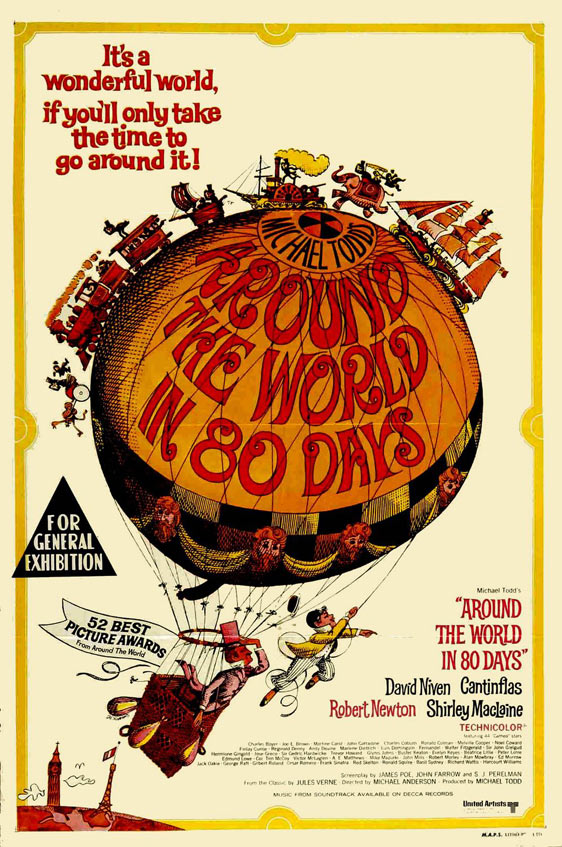
Around the World in Eighty Days (1956)

around_world_80_daysDirected by Michael Anderson

I had a patron come into the library where I work one day and ask for Cantinflas movies. I had no clue what he was talking about. He wrote the name down for me because I couldn’t spell it well enough to look it up in the catalogue, and I found some Spanish-language movies for him. The patron was honestly surprised that I had never heard of Cantinflas. I was surprised, but very pleased, to find Cantinflas in Around the World in Eighty Days. I’ve read the book, but I hadn’t seen the film before this week. The entire movie was a delightful surprise.

So what’s the story? Phileas Fogg, a wealthy, eccentric Englishman, bets the men in his club that he can travel all the way around the world in just eighty days. With nothing more than his newly hired manservant Passepartout and a carpetbag full of money, Fogg sets out on an amazing adventure.

The Good: This is another epic with thousands and thousands of people in it. It seriously boggles the mind that movies like this can come together. Coordinating all the details must have been ridiculous, but the work paid off. There are very many good things in this movie.

The cinematography is gorgeous. Many scenes were filmed on location, which takes extra work, but was absolutely worth it. Besides the beautiful scenery they were able to capture, it means that there were no places where you could tell that the actors were standing in front of a screen with a movie projected behind them. (I’m sure there’s a technical term for that, but I have no idea what it is. If anyone knows, please enlighten me!)

The music, by Victor Young, is also fabulous. At times it is sweeping and beautiful; other times, it is cheerful and jaunty. It fits the movie very well.

The cast was fun. Cantinflas, a Mexican comedic actor, is really good as Passepartout. He has a wide range of skills that fit the role and brought some good comedy to the movie. David Niven is good as a very English Englishman. But what is really fun about this movie is the cameos. So many famous people are in this movie, from Noel Coward to Marlene Dietrich to Frank Sinatra. My personal favorite was Buster Keaton, who talks! I’ve seen lots of his movies, but I’ve never heard him talk before. And he was a train conductor like in The General, which may be literally the funniest movie I have ever seen. Anyway, if you like classic movies, then you will enjoy spotting the stars.

The Bad: Shirley MacLaine was cast as an Indian (eastern, not American) princess. It was an odd choice. She didn’t do a horrible job, but she never convinced me that she was Indian, either.

The Ugly:  This movie needed some more editing. Some scenes are fine for a while, but then they don’t end. The bullfighting scene was the worst offender here. It just went on and on.  Around the World in Eighty Days didn’t need to be a three-hour movie. It would have been just fine at two and a half hours. As it is, there are some boring times.

Again, there is some ugly racial stereotyping because not only was this movie made in the 1950s, it is based on a book written in 1872. It’s not surprising, but it’s not good, either.

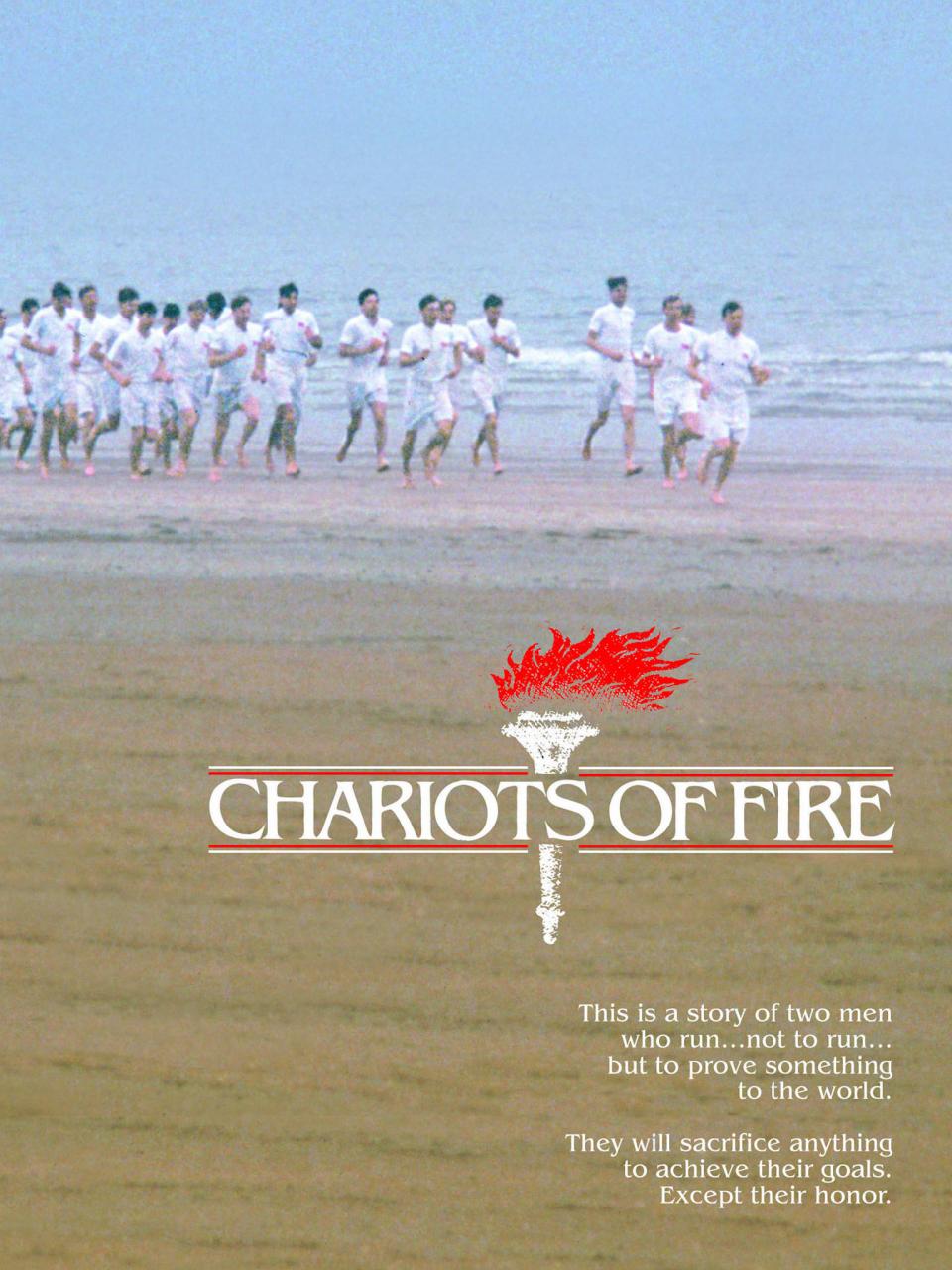
Chariots of Fire (1981)

ChariotsDirected by Hugh Hudson

This is another movie I grew up watching. My family must have an eclectic taste in movies, but I’ve never really realized that until now. Anyway, it’s always interesting to really pay attention to a movie you’ve seen a dozen times before. I noticed things and understood things differently than I ever had before. That might also have to do with the fact that I’m older and so see life a little bit differently than I did. But whatever the reason, watching Chariots of Fire again and trying to be impartial while doing so was a really good experience. And I think I will always be a little bit in love with Lord Lindsay.

So what’s the story? Harold Abrahams is an Englishman who goes to Cambridge and loves Gilbert and Sullivan. He’s also a Jew, which means that to some, he will never be entirely English. He runs to prove to everyone, not least himself, that he is as good as everyone else. Eric Liddell is a missionary who was born and grew up in China, but he also plays rugby for Scotland. He runs for the glory of God. These two men show their dedication in the 1924 Olympic games.

The Good: This movie has great acting. I’m honestly surprised that Ben Cross wasn’t nominated for a best actor Oscar for his portrayal of Harold Abrahams. Ian Charleston is just as good as Eric Liddell. The supporting actors are good as well. I noticed when I watched the famous running on the beach sequence that the four main runners (Harold, Eric, Aubrey Montague, Lord Lindsay) show their characters’ personalities in the few seconds that the camera is focused on them. It was all very well done.

This is the third movie that took place in a historical time this week, and this is the third one where the designer actually paid attention to what people were wearing at the time. Hooray for more correct historical costuming! Thank you, 1981!

I was impressed by the screenplay this time around. It’s based on a true story, but of course things are compressed or changed in time to make for a more streamlined story. All of the characters are distinct people with strong personalities. The story is inspiring, but it could have become overwhelmingly cheesy if the writers weren’t careful. The writers did an excellent job.

The Bad: I feel terrible saying this, but the music is bad. The themes are beautiful, and when the theme song is played on a piano or by an orchestra, I love it. However, the music in the movie is played on a synthesizer, and it just doesn’t work. It’s so very 1980s. It might have been fine if the movie took place in the 1980s, but it’s not okay in the 1920s. (And before anyone jumps down my throat for insulting the music, go and watch the movie. If you disagree with me after that…well, we will just have a difference of opinion. But it will be an informed difference of opinion.)

The Ugly: There is no ugly in this movie. It’s not perfect, but it’s really good.

Oscars Won: Best picture; best writing, screenplay written directly for the screen; best costume design; best music, original score.

Other Oscar Nominations: Best actor in a supporting role (Ian Holm); best director; best film editing.

The 12th Academy Awards: My Verdict

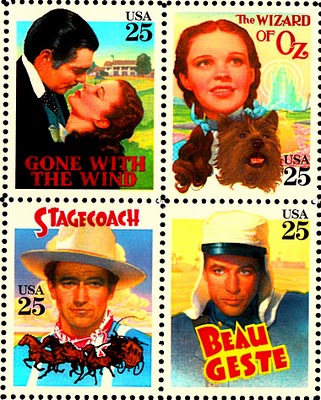
oscars-1940When I was a little girl helping out at my dad’s law office by putting stamps on envelopes, there was a set of stamps that honored movies from 1939. I knew The Wizard of Oz, of course, and I was vaguely familiar with Gone with the Wind, but I hadn’t seen Stagecoach or Beau Geste. The fact that they were on stamps meant they must be important, though; the Post Office wouldn’t let anything unimportant be on a stamp, I thought.  Now I’ve seen all four of those movies, and it turns out I was right. They were important. 1939 was an amazing year for movies. The fact that one of those movies on the stamps wasn’t even nominated for best picture shows how many excellent movies were made that year. Beau Geste isn’t the only amazing movie made that year that wasn’t nominated, either. Other classics that I’ve seen from 1939 include The Private Lives of Elizabeth and Essex; Gunga Din; The Hunchback of Notre Dame; Bachelor Mother; Young Mr. Lincoln; and Four Feathers. I’m sure there are even more that I haven’t seen. I don’t know why it happened that year, but people made some amazing movies.

1940_Hattie_McDaniel_Bainter

Hattie McDaniel receiving her Oscar for Best Supporting Actress from actress Fay Bainter.

After watching all the movies that were nominated for best picture, I became very grateful that I wasn’t a member of the Academy in 1939. The fact that I wasn’t born was a big deterrent to that possibility, of course, but I wouldn’t have wanted to try to choose what the best anything was for that year. So many amazing things happened. There was lots of good acting. Yes, Robert Donat won for Goodbye Mr. Chips, and I think he did an amazing  job and totally deserved an award for it, but that doesn’t mean that Clark Gable didn’t do just as well as Rhett Butler in Gone with the Wind. Geraldine Fitzgerald broke my heart as Isabella in Wuthering Heights, but if she had gotten official recognition, than Hattie McDaniel wouldn’t have gotten her Oscar, which she also completely deserved. How did those Academy members decide who was the best? I couldn’t have done it. Which score was best? Of Mice and Men? Gone with the Wind? The Wizard of Oz? The Wizard of Oz won, and it has wonderful music, but is it better than Gone with the Wind? Who can say? It almost makes me wonder if the Academy members got together to see if they could spread the awards around as much as possible instead of just giving them all automatically to Gone with the Wind. I can just see an old man saying, “Yes, Gone with the Wind has amazing music, but the music in The Wizard of Oz is every bit as good, and The Wizard of Oz won’t win any acting awards. Let’s give them music so that they know we recognize what a great movie it is.” Or maybe people truly voted for what they thought was the best in each category. I guess I will never know, but I’m glad I didn’t have to make any hard decisions about the movies that year.

Over the course of this project, I have noticed that every year, at least one actor is in more than one best picture-nominated movie. In 1998, both Geoffrey Rush and Joseph Fiennes were in Elizabeth and Shakespeare in Love. Sydney Poitier and Beah Richards had roles  in In the Heat of the Night and Guess Who’s Coming to Dinner in 1967. 2002 was the year of John C. Reilly. He appeared in three of the five movies that year and was nominated for his role in Chicago. In 1939, I noticed three people who were in at least two of the nominees. Astrid Allwyn played a pretty, slightly spoiled society girl in both Love Affair and Mr. Smith Goes to Washington. Geraldine Fitzgerald gave  excellent performances in Dark Victory and Wuthering Heights. And Thomas Mitchell played a drinking man in three movies. He was a drunk newspaperman in Mr. Smith Goes to Washington; in Gone with the Wind he plays Irish Southern gentleman Gerald O’Hara; and in Stagecoach, he plays a doctor who is being run out of town on account of his drunken ways. He won the best supporting actor Oscar for Stagecoach, and he did a good job, but I can’t help but wonder if the award was given with all of those performances in mind. I wonder that partially because I think Claude Rains should have won for Mr. Smith Goes to Washington, but maybe only doing one movie wasn’t enough to impress the Academy in 1939.

As I was watching all of these amazing movies, I kept thinking that it was a pity that they were made the same year as Gone with the Wind, because Gone with the Wind was just too big to fail. It was critically acclaimed and a runaway hit at the box office. Seeing all of these great movie that didn’t win made me wonder if Gone with the Wind was really better than all of those other movies, or if the hype was what made it win best picture. And then I watched Gone with the Wind again, and I realized that yes, it really did deserve its Oscar wins. David O. Selznick and Victor Fleming (and George Cukor, the director he replaced) and all the other men and women who worked on that movie did an amazing job. Everything–acting, cinematography, costume design, music, story and screenplay– came together to make (in my opinion, anyway) a near-perfect film. Although almost any one of those films would have won best picture any other year, Gone with the Wind truly was the best picture of 1939.

How do I rank the nominees?

10. Wuthering Heights
9. Dark Victory
8. Love Affair
7. Of Mice and Men
6. Goodbye, Mr. Chips
5. Ninotchka
4. The Wizard of Oz
3. Stagecoach
2. Mr. Smith Goes to Washington
1. Gone With the Wind

Join me next week to hear about Nazis, Communists, gangsters, old people, and missionaries!

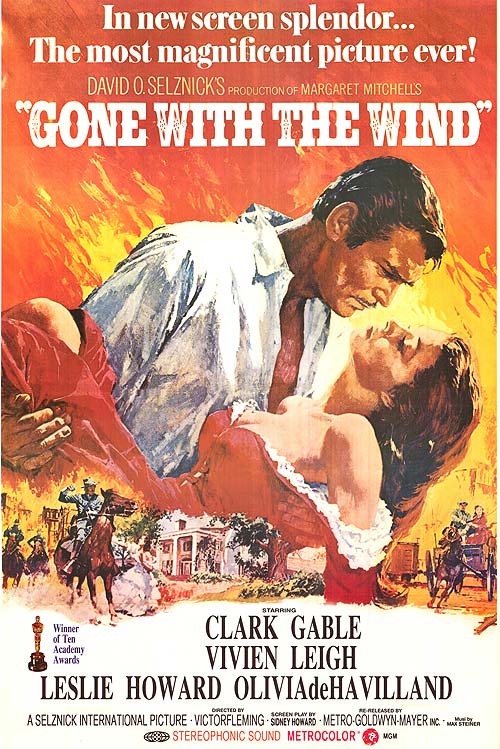
Gone with the Wind (1939)

gone with the windDirected by Victor Fleming

As I’ve been doing this project, I’ve noticed something that a lot of nominees have in common: they are freaking long. I have felt every minute of some of those three-hour movies (I’m looking at you, Thin Red Line!), while others have kept me captivated. Gone with the Wind is almost four hours long, but I didn’t feel it. I had seen bits and pieces growing up, but I watched the whole movie in one sitting when I was eleven. I’ve seen it several times since, including once in the theater when it was re-released for an anniversary event. And every single time I’ve watched it, I’ve been glued to the screen. It doesn’t matter that I know how it ends. The world of Gone with the Wind was so skillfully built that I can’t tear myself out of it. The characters are so real that they almost feel like friends; their triumphs and miseries become ours. That, my friends, is how you make a three-hour-plus movie fly by.

So what’s the story? Spoiled Southern belle Scarlett O’Hara’s world comes crashing down around her when the American Civil War begins. Her life of parties and flirting is over. As she tries to adjust to the harsh realities of her new life, she learns that she will do anything to keep what she loves. (That summary makes it sound boring. Trust me, it’s not.)

The Good: There are so many good things in Gone with the Wind that it’s hard to know where to start. I think I will change it up and start with cinematography. Gone with the Wind is a beautiful movie, full of glowing sunsets and billowing ball gowns. It’s not always pretty, though; the scene at the depot where the soldiers are lying dead in rows is tragic. The birth of Melanie’s son, where everything is shown in silhouette, is exquisitely done. These are just the highlights, though; there are lots of scenes where the camera work more quietly underscores the action or the emotion of the scene.

The costume design is also good. This movie is why I can complain about other movies’ lack of good historical costume. In Gone with the Wind, the fashions change with the times, like fashion does in real life. Not only that, but the clothes are fairly accurate (as far as I know. I am not a fashion historian; I have only picked up tidbits here and there.). I do know that the shape of the hoops change correctly for the times, which may only be a small detail, but it shows that the designer cared enough to do actual research.

The score is sweeping and beautiful and just a little bit over the top, which fits the epicness of this movie. Everything about Scarlett is dramatic, and it’s appropriate that the music in her movie is, too.

It is very easy to forget in this day and age that in 1939, everything in a movie was real. If you wanted a huge crowd of people, you had to hire actual people. If you wanted a fire, you had to burn something. There are some crazy special effects in this movie. I seriously wonder how they managed to film some of the scenes. Special effects took a certain kind of creativity back in the day, and have to give kudos to the special effects people for this movie.

Whoever adapted the giant book Gone with the Wind into a single (albeit long) movie was amazing. He found the most important things, the things that would make a compelling movie and took those out. He knew what to leave out; it was all good stuff – Ellen’s backstory, Scarlett’s other children, Will Benteen – but wasn’t necessary to the movie. Those extra things that fleshed out the novel would have bogged down the movie. It’s an excellent adaptation.

The entire cast of Gone with the Wind is stellar. After I had watched Dark Victory, I was thinking that maybe Bette Davis should have gotten the best actress Oscar, but when I saw Vivien Leigh’s performance again, I had to admit that Vivien Leigh deserved it. Clark Gable as gave an awesome performance as Rhett Butler. He is so good as the strong, manly lover hiding his love behind pride and lust. The flash of hurt on his face when Scarlett admits that she’s marrying him for his money…so sad. And that kind of thing happens more than once. It’s very subtle and very good. Olivia de Havilland plays Melanie Wilkes so beautifully. She manages to be an angelic, self-sacrificing person and yet not make you hate her. And she was only 23 when the movie came out. That was some serious acting for such a young woman. There is some controversy over Hattie McDaniel’s role as Mammy, Scarlett’s nurse/surrogate mother, but she plays the role well and allows us to see the main characters in a different light as she isn’t shy about expressing her opinions.

The Bad: This is an extremely frustrating movie to watch. Rhett loves Scarlett, but is too proud to admit that he’s actually fallen in love. Scarlett is too caught up with her make-believe love for Ashley to notice. When Rhett makes her notice, he is so ashamed of what he’s done that he doesn’t see the opening Scarlett is giving him. When he rejects her at that point, Scarlett is too proud to say anything. Grrrrr. These are two very strong, proud people who are so scared of showing weakness that they can’t allow happiness in. It makes me want to shake them both.

The Ugly: The movie laments the passing of a “beautiful, genteel” culture, but glosses over the evils that that culture is built upon. Slavery made that lifestyle possible, and so it’s hard to feel too sorry for the O’Hara family when they have to pick their own cotton and for Ashley Wilkes when he is splitting rails. Yes, it’s hard, and it’s not what they were brought up to do, but they were brought up to live off of the misery of others. Ashley briefly acknowledges this, but only briefly. Frankly, it was a culture that deserved to die. I can still enjoy the movie, but it doesn’t make me mourn the passing of the Old South.

Oscars Won: Best picture; best actress in a leading role (Vivien Leigh); best actress in a supporting role (Hattie McDaniel); best director; best writing, screenplay; best cinematography, color; best art direction; best film editing.

Other Oscar Nominations: Best actor in a leading role (Clark Gable); best actress in a supporting role (Olivia de Havilland); best sound, recording; best effects, special effects; best music, original score.

Other Oscars Won: Honorary award to William Cameron Menzies “for outstanding achievement in the use of color for the enhancement of dramatic mood in the production of Gone with the Wind”.

Technical Achievement Award to R.D. Musgrave “for pioneering in the use of coordinated equipment in the production Gone with the Wind”.
The 75th Academy Awards: My Verdict

75th-annual-academy-awardsThe 2002 best picture nominees are really a mixed bag. We’ve got a musical about murderesses, a drama about women reading a classic novel, a fantasy flick about short heroes, a Holocaust picture, and a non-musical West Side Story. It was all over the map. But they did have one thing in common: they were all based on/inspired by other works. Nothing was very original. Gangs of New York, being inspired by a nonfiction book about gangs in New York, did have to make up a story to tie all the things about gangs together, but still. I found it interesting that a bunch of not-so-fabulous movies were all based on something else. Is that why they were all not-so-fabulous? People were trying to tell other people’s stories instead of their own?

As I have looked at past winners and nominees, I have noticed a couple of trends. The Academy likes World War II/Holocaust movies (Schindler’s List, Life is Beautiful, Saving Private Ryan, Casablanca) and movies about show business (All About Eve, The Artist, even this year’s winner Birdman). In 2002, they had to make a choice between a show business movie and a Holocaust movie, and apparently, the Academy prefers show business over the Holocaust. It’s not terribly surprising, I suppose, because everyone likes movies they can relate to. People also like to feel like their lives are important enough to make movies about, so show business movies make show business people feel validated, I suppose. But really, how did Chicago win, considering its lack of meaning? I think there is a song from that musical that explains it:

Give ’em the old Razzle Dazzle
Razzle dazzle ’em
Show ’em the first rate sorcerer you are
Long as you keep ’em way off balance
How can they spot you’ve got no talents?
Razzle dazzle ’em
And they’ll make you a star!

Chicago was a dazzling movie. It was big and loud and fun and there were lots of flashy costumes and it had Richard Gere tap dancing. Richard Gere! It made people excited, and they didn’t notice what was lacking. The Pianist, on the other hand, wasn’t exactly flashy, and it definitely wasn’t fun. It was heartbreaking and hard to watch. But I think it was the better movie. Roman Polanski knew what he wanted to say with his story, while Rob Marshall presented a beautiful package filled with nothing.

How do I rank the nominees?

5.Gangs of New York
4.The Lord of the Rings: The Two Towers
3.Chicago
2.The Hours
1.The Pianist

Join me next week for a bunch of movies that are always overshadowed by Gone with the Wind and The Wizard of Oz!

Chicago (2002)

chicagoDirected by Rob Marshall

This is the one of the movies (the other is Guess Who’s Coming to Dinner) that inspired me to watch all of the movies nominated for best picture. When I saw Chicago for the first time, I was not impressed; it made me wonder how bad the other nominees were for this movie to have won best picture.

So what’s the story? In 1920s Chicago, vaudeville star Velma Kelly murders her husband and sister when she finds them sleeping together. Actress wannabe Roxie Hart kills her lover when he decides to break off their relationship and reveals that he never had the connections to make her a star. Both women are represented by Billy Flynn, a defense attorney who has never lost a case. Will his defense be enough to save them from the hangman’s rope?

The Good: Catherine Zeta-Jones. She is amazing as Velma Kelly. She not only sings and dances, but she acts while she’s doing it. In the scene where she’s trying to convince Roxie to be her partner in a new act (the song “I Can’t Do It Alone”), you can see the desperation written on her face. She’s a proud woman begging for help, and it hurts her, but she does what she has to do. She completely deserved her Oscar for best supporting actress.

The musical numbers were fantastic. I don’t automatically like movie musicals. If the songs don’t add something either to the plot or to the development of character, they feel like a waste of time to me. But I loved the songs in Chicago. “Cell Block Tango” is my favorite. I liked the symbolism of “We Both Reached for the Gun” and Richard Gere’s tap dance. All of the musical numbers added to the movie.

I did like the trope of having the musical numbers be inside Roxie’s head. That was a good way to make a musical believable, because people don’t normally break into song in a courtroom. That meant the editing had to be good, and it was. The movie cut beautifully between what was happening in the real world and what was being sung in Roxie’s mind. Having Taye Diggs as the announcer to tie it all together was a smart choice, too.

The Bad: Renèe Zellweger is not a dancer, nor does she have a voice of the same caliber of Catherine Zeta-Jones’s or Queen Latifah’s. She wasn’t horrible, but when you put someone great next to someone merely good, it makes you cringe. That last dance number is particularly bad. Catherine Zeta-Jones looked like dancing is as natural to her as walking, which makes Renèe Zellweger look stiff. It’s just not good.

The Ugly: This movie has no heart or soul. The theme of the movie is that you can get away with anything if you are famous enough. While that might be true, I don’t feel like it’s something to celebrate.

Oscars Won: Best picture; best actress in a supporting role (Catherine Zeta-Jones); best art direction – set direction; best costume design; best film editing; best sound.

Other Oscar Nominations: Best actress in a leading role (Renèe Zellweger); best actor in a supporting role (John C. Reilly); best actress in a supporting role (Queen Latifah); best director; best writing, adapted screenplay; best cinematography; best music, original song (“I Move On”).

The 40th Academy Awards: My Verdict

40th_Academy_Awards1967 was a year of turmoil in America. The US was fighting the unpopular Vietnam War, which lead to many protests. There were race riots in Buffalo, Tampa, Newark, Minneapolis, and Milwaukee. It was the year of the Summer of Love in San Francisco. Thurgood Marshall became the first African American Supreme Court Justice. Society was changing, and the best picture nominees for that year (well, most of them anyway) reflect that change. Two of the movies were about race relations. Two were about sticking it to the man and living your own life. And one was about a man in 19th century England who could talk to animals.

After I watched Doctor Dolittle, I tried to figure out why it had been nominated. I came to the conclusion that maybe only five movies had been made that year, that every person in Hollywood was so busy working on those five that they didn’t have time to make any more. But that turned out not to be true. Lots of movies came out that year. Then I thought that maybe all the other movies that year were terrible, even worse than Doctor Dolittle. But here is a list of movies that also came out in 1967:

Camelot (although I’m grateful it wasn’t nominated, because I saw it once years ago and have no desire to ever see it again).
Cool Hand Luke
The Dirty Dozen
In Cold Blood
The Jungle Book
Thoroughly Modern Millie (see comment to Camelot above)
To Sir, With Love (which also starred Sydney Poitier. How did he have time to be in so many movies?)
Wait Until Dark

I haven’t seen all of them, but I have seen most of them, and even the worst ones from that list are better than Doctor Dolittle. So now the only explanations I can think of are bribery or nepotism, but I have no proof (or foundation, really) for that bit of conjecture. And now I am done with thinking about that anomaly of awfulness and can go on to the movies that were actually good.

It was Guess Who’s Coming to Dinner that started me on this blog journey. It is so amazingly good. When I looked up to see if it had won best picture, I was shocked to see that it hadn’t. But then when I saw the list of nominees, I suddenly wasn’t surprised anymore. I hadn’t seen any of the movies except Doctor Dolittle, which I had seen as a child, but I recognized them all. They have become iconic.

After watching them all, I thought it was interesting that even though the movies were exploring the same themes, they were all so different. Guess Who’s Coming to Dinner brought race relations to a simple home setting, while In the Heat of the Night explored bigotry in a southern town. Bonnie and Clyde dealt with people rebelling by going on a crime spree; Ben Braddock in The Graduate chose to rebel by having an affair. But all four of those movies showed people who weren’t going to accept the world they were presented. They were going to do whatever they could to break the chains of tradition that were holding them back from the life they wanted.

Lots of people think that the Academy got it wrong this year. They think that The Graduate should have won. And in some respects, it is a better movie than In the Heat of the Night. It was more innovative in some of its techniques. It played around with editing and cinematography in new and interesting ways. But I think the reason people wish The Graduate had won has more to do with relatability. Lots of people have felt like they wanted something different from life than what their parents expect from them. Many people have been in situations that have made them feel as awkward as Ben. Not as many people have found themselves risking their lives to solve a crime in small-town Mississippi.

But I feel like In the Heat of the Night deserved the win. I partly feel that way because I feel like In the Heat of the Night  had a more important message. Don’t get me wrong. I really liked The Graduate and I could sympathize with Ben, but his problems are more first-world problems. He can’t figure out what he wants to do with his life? That’s a problem, but at least he has options. In the Heat of the Night takes place in a town where many people don’t have options. Because of the attitudes of the people around them, they are stuck with the hard lives they are born in to. I don’t know whether something like message is considered when people actually vote for best picture, but it matters to me. In the Heat of the Night has both good technique and an important message. To me, that makes it the best picture of 1967.

How do I rank the nominees?

5. Doctor Dolittle
4. Bonnie and Clyde
2. The Graduate and Guess Who’s Coming to Dinner (tie, because I really can’t decide between them)
1. In the Heat of the Night

Be sure to join me next week for music, epic heroism, mental illness, and truly terrible plaid pants!

In the Heat of the Night (1967)

In_the_Heat_of_the_Night_(film)Directed by Norman Jewison

I have a hard time sitting still and doing nothing when I watch movies. I get kind of antsy unless I have another project to occupy my time, so I’ll paint my nails or play a game on my phone or crochet a hat while the movie plays in the background. But doing this project has forced me to change all that. If I want to appreciate good acting or interesting camera work or immerse myself in another time through excellent production design, I have to give the movie my full attention. The first time I watched In the Heat of the Night, I was messing around on my computer. I thought it was a good movie, an interesting movie, but not that great. Then I watched it again on my big TV instead of my little computer screen, and I didn’t do anything but watch the movie. I was blown away. It was a totally different experience, and I understood the (well-deserved) acclaim.

So what’s the story? Late one summer’s night in Sparta, Mississippi, a police officer finds the murdered body of a prominent man lying in the street. The police start searching for the murderer, and they soon find and arrest the perfect suspect: Virgil Tibbs, a black man who is sitting in the train station. However, Virgil says he’s not a transient or a criminal, but a police officer from Philadelphia; he was just waiting for his train home. Sheriff Gillespie, the head of police in Sparta, calls Philadelphia to verify this, and the police chief in Philadelphia tells Gillespie that Tibbs is the best homicide detective in Philadelphia and that Tibbs should help on the case. None of the (white) police officers in Sparta want to accept help from black man, but the widow of the murdered man insists that Tibbs remain on the case. Tibbs and Gillespie now have to overcome their prejudices to work together to solve the murder.

The Good: I always seem to start with the acting, but I think that’s because bad acting ruins a  movie so quickly. There was some good acting here. Rod Steiger won an Oscar for his portrayal of Gillespie. I wasn’t completely convinced that he deserved it over Spencer Tracy in Guess Who’s Coming to Dinner until the scene where the four thugs have cornered Tibbs in the warehouse. At that point, something clicked for me, and I realized what a truly stellar job he was doing. Sydney Poitier is excellent as he always is as Virgil Tibbs. Lee Grant plays the widow; she isn’t in the movie much, but she commands every scene she’s in. Her heartbreak when she’s told of her husband’s death is so painful that it’s difficult to watch.

The story here is excellent. It’s based on a novel that I haven’t read, so I’m not sure what’s been changed and what was original, but it makes a great movie. I love how well-developed all the characters are. It would have been so easy to make Tibbs perfect, but he has his flaws, too, which are shown when he fixates so strongly on a suspect (who is admittedly a terrible person) that he loses all perspective on the case. The story and screenplay are so well done. And this movie gave us a classic line: “They call me Mr. Tibbs!”

The cinematography was interesting. I loved the part where Tibbs is examining the body. The camera cuts to his hands to show his skill and confidence as he explains what he will need to do a proper examination. The camera focuses hands in another scene, too. When Tibbs and Gillespie are going to go visit the wealthy cotton planter, they drive past a field of cotton being picked by black workers. Here, the camera’s focus serves to contrast Tibbs’s job and skills with those of the workers. If Tibbs had lived here, it seems to say, this is what he might be doing. At other times, the cinematography feels almost musical. As the cameraman zooms in on a fleeing suspect, for instance, it accentuates the tension almost like a crescendo in a piece of music. It adds a lot to the movie.

The Bad: The only thing that made this movie feel dated was the music. It just screamed the 1960s to me. It might have been groundbreaking at the time, but it feels very old-fashioned now.

The Ugly: The ugliest thing in this movie is the attitudes of the people, from the moment Tibbs is arrested because he’s an unknown black man to the climax where the thugs show up at Mama Caleba’s. But it’s this ugliness that allows the beauty of the eventual mutual acceptance and respect of Tibbs and Gillespie shine through.

Oscars Won: Best picture; best sound; best actor in a leading role (Rod Steiger); best film editing; best writing, screenplay based on material from another medium.

Other Oscar Nominations: Best director; best effects, sound effects.

The 71st Academy Awards: My Verdict

Gwyneth Paltrow, Judi Dench, James Coburn, Roberto Benigni

Gwyneth Paltrow, Judi Dench, James Coburn, Roberto Benigni

These movies were the Oscar nominees when I was a sophomore in high school, and I remember thinking even then how odd it was that all five were historical movies. Not only that, they only came from two time periods: World War II and Tudor England. Filmmakers had all of human history to choose from, and they made that many movies from two time periods in one year? It was just strange coincidence.

At the same time, it made it kind of fun for me to watch them all at once. It was interesting to watch the World War II movies, all of which are about different aspects of that war (Pacific theater, European theater, the Holocaust) and reflect on the very different experiences of people in the same war. Watching Guido fight for his family made me think about Captain Miller and his men, and how they were fighting so that Guido and others like him could live in his town and have a bookshop and be happy. Although the movies didn’t really overlap, together they made me see a bigger picture.

The two Elizabethan pictures, on the other hand, just made me kind of hate Joseph Fiennes. He plays the same role in both movies: a slightly slimy married man having an affair with a naïve young woman who is unaware of his marriage. I’m not sure how he ended up in both movies in such similar roles, but I guess he plays Elizabethan adulterers well. Geoffrey Rush is in both films, too, but the men he plays are polar opposites: Elizabeth’s spy and assassin in Elizabeth; a slightly befuddled producer in Shakespeare in Love. Because they are so different, he makes it work much better than Joseph Fiennes.

But that brings up another issue I saw in all these historical movies. The makeup has to be done very well, or else the viewer will see the actor, not the character. As much as I loved Ben Affleck and Rupert Everett in Shakespeare in Love, they didn’t look like 16th century men. They looked like Ben Affleck and Rupert Everett in funny clothes. Thin Red Line had the same problem; so did Saving Private Ryan, although to a lesser extent. I wasn’t familiar with any of the actors in Life is Beautiful, so it wasn’t a problem there. Elizabeth was the one movie where I didn’t feel that with any actor. Yes, Joseph Fiennes was obviously Joseph Fiennes, but since I’ve only ever seen him in Elizabethan garb, my first thought was not, “Oh, there’s Joseph Fiennes!”, but “Oh, there’s Shakespeare!” Since I’m not a makeup artist, I’m not sure what would have to be done to fix it, but it is a problem.

So do I believe Shakespeare in Love truly was the best picture of the year? Nope. It was a fine movie. It was a cute love story. But I feel that in order to be the best picture, a movie should be more than cute. A movie needs to mean something, to reveal something about the human condition. And while Shakespeare in Love did many things well, it didn’t have a deeper meaning. Life is Beautiful did. Saving Private Ryan did. I would have accepted either of those as best picture over Shakespeare in Love. The fact that Shakespeare in Love won makes me wonder exactly what Harvey Weinstein did in his campaign to convince the Academy that it was the best movie.

If I could change the past, which would I have picked?  For me, it would have been a contest solely between Life is Beautiful and Saving Private Ryan, but in the end I would have to go with Saving Private Ryan. I don’t like feeling like I’m jumping on a bandwagon, but I really do feel that Saving Private Ryan was unfairly slighted. It is a masterful piece of storytelling and filmmaking. The meticulous recreation of D-Day alone should have been enough to win the Oscar, but it went beyond that. It really is an amazing movie, and in my opinion, the best picture of 1998.

How do I rank the nominees?

5. Elizabeth
4. The Thin Red Line
3. Shakespeare in Love
2. Life is Beautiful
1. Saving Private Ryan

Join me next week for sex, crime, race relations, and talking animals!

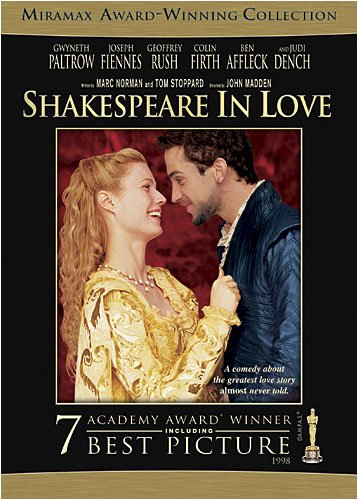
Shakespeare in Love (1998)

shakespeare in love posterDirected by John Madden

I hadn’t seen this movie when it first came out, so all I really knew about it was that according to everyone, it stole the best picture Oscar from Saving Private Ryan (which I also hadn’t seen). I think I was half expecting it to be terrible after all the outrage. And I know I am about to damn this movie with faint praise, but it was cute. There was nothing really wrong with it.

So what’s the story? Shakespeare, a young playwright with a good reputation, is struggling to write his next play. He finds a muse in Viola De Lesseps, a young woman so obsessed with the theater that she is willing to break the law and perform on stage disguised as a man. There are some misunderstandings and mishaps, but eventually Shakespeare writes his masterpiece Romeo and Juliet.

The Good: I loved the production design. I felt like it was a very full picture of Elizabethan England, from the formality of the court to the disgusting dirtiness of the streets. It felt very alive. It almost made me want to live in those times. Well, no. Really too dirty for my taste. But maybe visit!

The music! It was fun and upbeat and just…fit. Loved it.

The supporting cast was great. I’m not a huge fan of either Gwyneth Paltrow or Joseph Fiennes, but I loved everyone else. Imelda Staunton as the nurse was a huge favorite of mine, as was Geoffrey Rush in his role as a befuddled producer. Colin Firth was surprising as a slightly evil stuffed shirt nobleman, and I loved Mark Williams as the tailor who wanted to be an actor. Judi Dench was good in her expanded cameo as Queen Elizabeth, even though I don’t think that eight minutes of a movie is enough to count as a supporting role. I even liked Ben Affleck’s egotistical actor. The cast was really just stellar.

The Bad: The writers played around with history a little too much for my liking. Romeo and Juliet was written in the 1590s; no one was settling Virginia until the early 1600s. But since I feel like the filmmakers weren’t trying to make any kind of serious movie, but just present a fun alternative backstory to Romeo and Juliet, I suppose I can forgive them.

The Ugly: There’s nothing really ugly about this movie. It’s just cute and sweet. But I do have a little rant. Everyone thinks the ending of this movie is so sad. But guess what? It wouldn’t have lasted. And no one seems to understand that. Whatever the real Shakespeare was like, the character in this movie was a philanderer who fell in and out of love with ease, just like Romeo. Which has always bugged me about Romeo, incidentally. I guess I just have never felt that Romeo and Juliet was a particularly romantic play, so I carry those feelings over to this movie.

Oscars Won: Best picture; best actress in a leading role; best actress in a leading role; best writing, screenplay written directly for the screen; best art direction-set direction; best costume design; best music, original musical or comedy score.

Other Oscar Nominations: Best actor in a supporting role (Geoffrey Rush); best director; best cinematography; best sound; best film editing; best makeup.